
To quickly check if your car battery is failing, turn off your engine and headlights, then use a multimeter to measure the voltage across the terminals. A healthy battery should read around 12.6 volts. If it drops below 12.4 volts, your battery may be weak or aging. Keep an eye on signs like slow engine starts or dimming lights. For more simple tests and tips to keep your battery in top shape, continue exploring helpful advice.
Key Takeaways
- Check the battery voltage with a multimeter; below 12.4 volts indicates a potential issue.
- Turn on the headlights for 10-15 minutes with the engine off; dimming suggests a weak battery.
- Attempt to start the engine; sluggish cranking or hesitation signals declining battery health.
- Inspect terminals for corrosion or loose connections, which can impair electrical performance.
- Observe electrical accessories and lights; flickering or dimming indicates insufficient power supply.
Why You Should Test Your Car Battery Before a Long Trip

Before hitting the road for a long trip, it’s vital to test your car battery to avoid unexpected breakdowns. Your battery’s chemistry impacts how well it stores and releases energy, affecting its overall reliability. If the chemical reactions inside your battery are compromised, it might struggle to hold a charge or deliver power when needed. Additionally, your vehicle’s charging system plays a pivotal role in maintaining battery health. A malfunctioning alternator or faulty wiring can cause your battery to drain faster or fail unexpectedly. Testing your battery beforehand ensures it’s capable of handling the demands of a long journey. Understanding battery chemistry helps in identifying potential issues early. Regularly monitoring electrical performance can also provide early warnings of declining battery health. Furthermore, diagnosing electrical issues can prevent unforeseen failures during your trip. Addressing potential issues related to battery chemistry and charging systems ahead of time keeps you safe, saves money, and prevents inconvenient breakdowns miles away from help.
Signs Your Car Battery Might Be Failing
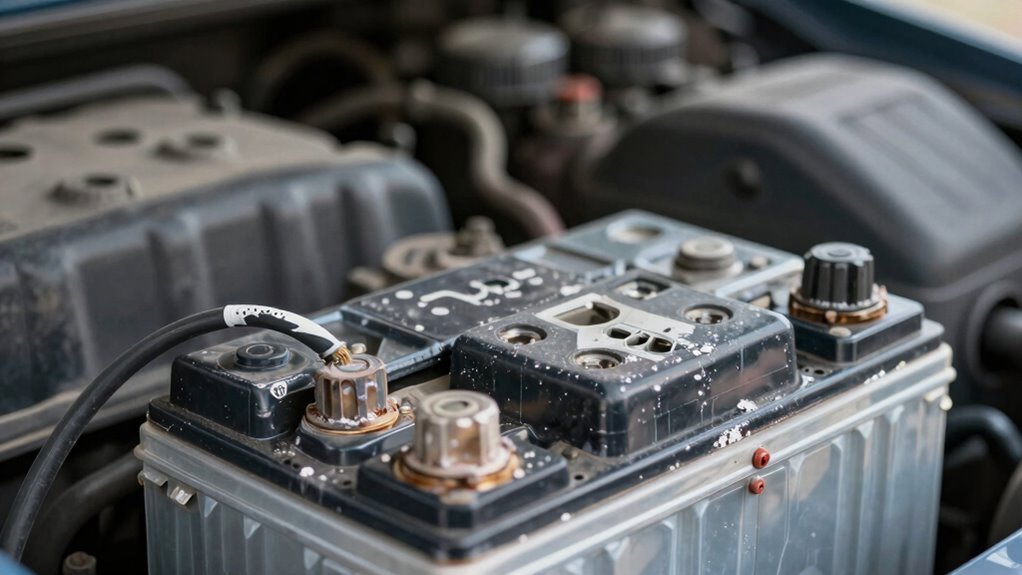
If your engine turns over slowly, your battery could be weakening. You might also notice your headlights dimming or flickering as you drive. Additionally, electrical issues like malfunctioning accessories often signal your battery needs attention. Monitoring your vehicle’s battery capacity can help determine if your battery is nearing the end of its lifespan. Recognizing these warning signs early can help you practice inspiring leadership over vehicle maintenance and prevent unexpected breakdowns. Regular battery testing can provide an extra layer of assurance regarding your battery’s health. Ensuring your air purification system is well-maintained can also contribute to a healthier driving environment and overall vehicle performance. Proper piercing care and hygiene, including avoiding irritants, can help prevent infections that might lead to complications and discomfort.
Slow Engine Crank
A slow engine crank is often one of the first signs your car battery may be failing. When you turn the key or push the start button, if your engine hesitates or cranks sluggishly, it indicates insufficient power. Battery corrosion on the terminals can block the flow of electricity, making it harder for the battery to deliver the necessary charge. Additionally, alternator issues may prevent your battery from charging properly, causing weak starts. If your engine struggles to turn over or takes longer than usual to start, don’t ignore it. These symptoms suggest your battery’s capacity is diminishing, and addressing corrosion or checking your alternator can help prevent a complete failure. Acting early keeps you from being stranded unexpectedly. Regular maintenance and understanding how battery health impacts performance can save you time and money. For example, battery age can significantly influence its ability to hold a charge and operate effectively. Monitoring precise battery specifications can also help determine if a replacement is necessary before complete failure occurs. Additionally, paying attention to warning signs can help you identify potential issues early on.
Dimming Headlights Brightness
Have you noticed your headlights seem dimmer than usual? This headlight dimming could be a sign that your battery is struggling to supply consistent power. When your battery begins to fail, it can’t keep up with the electrical system’s demands, especially when the engine is idling or under load. As a result, your headlights may appear less bright, flicker, or even flicker intermittently. Dimming headlights often indicate that the electrical system isn’t receiving stable voltage, which can be caused by a weakening or failing battery. Ignoring this sign can lead to further electrical issues and potentially leave you stranded. A battery’s capacity decline can also affect other electronic components in your vehicle, amplifying the importance of timely diagnosis. Regular battery maintenance can help prevent electrical system failures and keep your vehicle running smoothly. Additionally, a voltage fluctuation caused by a failing battery may also impact other sensitive electronics, such as your vehicle’s control modules, further complicating repairs and increasing costs.
Frequent Electrical Issues
Frequent electrical issues are often a clear sign that your car battery is failing. If you notice dimming lights, flickering displays, or power windows that move slowly, it could point to a weak battery or charging system problems. Battery corrosion on the terminals may disrupt electrical flow, making your vehicle struggle to start or operate accessories properly. Additionally, if your car’s charging system isn’t functioning correctly, it won’t recharge the battery efficiently, leading to recurring electrical glitches. These issues don’t usually resolve on their own and could worsen over time. Regularly inspect for corrosion and listen for warning signs like difficulty starting or electrical components acting up. Addressing these symptoms early can prevent complete battery failure and keep your vehicle running smoothly. Ensuring proper battery maintenance and understanding how environmental factors affect your vehicle’s electrical system can help prolong battery life. Being aware of battery lifespan and regularly testing your battery’s condition can also help you catch problems before they leave you stranded. Incorporating proper storage techniques can further protect your battery from environmental damage and extend its service life. Additionally, considering the performance of electric dirt bikes and related electrical components can offer insight into maintaining a reliable energy system.
Gather Your Tools and Prepare Your Car for Testing
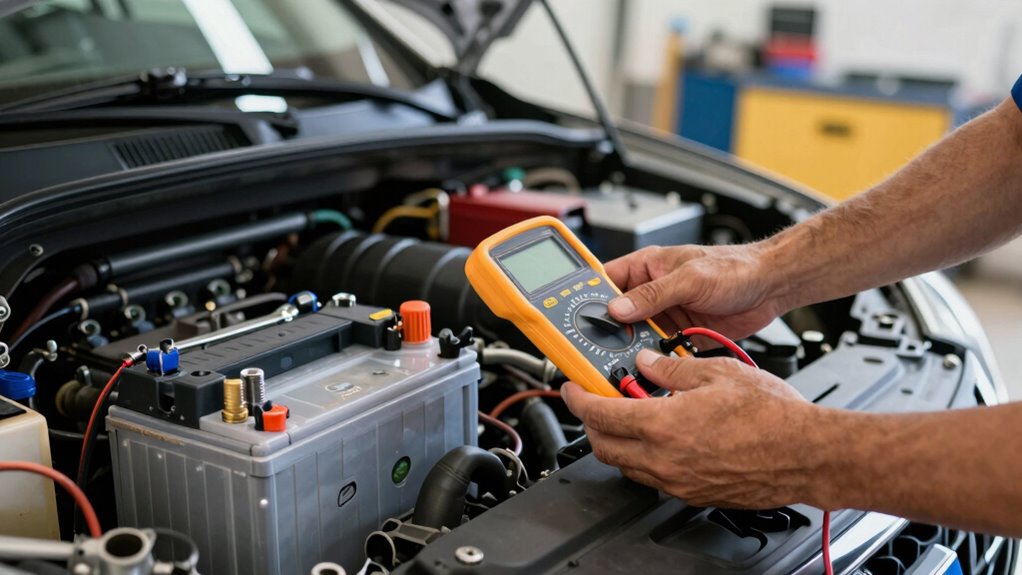
First, gather the tools you’ll need, like a multimeter or battery tester, to make certain you have everything ready. Next, prepare your vehicle by turning off the engine and opening the hood to access the battery. Taking these steps helps you get set up efficiently for an accurate battery test. Additionally, ensure your solar system components are safely powered down if you plan to test batteries connected to your solar setup. Being aware of privacy policies related to your data can help you understand how your information is handled during testing procedures. Also, verifying the battery capacity and discharge rates can help you assess the health of your battery more accurately. To ensure your LiFePO4 battery’s longevity, it is helpful to understand correct charger settings and avoid low-voltage cutoffs that can damage the battery. Familiarizing yourself with regional flavors and chicory blends can also provide insights into optimal settings for specialty batteries used in unique environments.
Gather Necessary Tools
Before you start testing your car’s battery, gather all the necessary tools to make certain a smooth process. You’ll need a multimeter, gloves, and safety glasses. Also, inspect your battery for corrosion, which can affect readings, and check the charging system to ensure proper function later. Here’s a quick list:
| Tool | Purpose | Notes |
|---|---|---|
| Multimeter | Measure voltage and health | Ensure accurate readings |
| Gloves | Protect your hands | Prevent contact with corrosion |
| Safety glasses | Protect your eyes | Safety first |
Having these tools ready helps you avoid interruptions, making the test efficient and safe. Confirm your battery is free of corrosion and that your charging system is in good shape for accurate results.
Prepare Your Vehicle
To guarantee an accurate battery test, you need to gather your tools and prepare your vehicle properly. Start by making sure your car is turned off, parked on a level surface, and keys are removed. Check that all accessories, like lights or radios, are off to prevent false readings. This step is essential for proper battery maintenance and accurate results. Keep your multimeter or testing device nearby, along with gloves and safety glasses for protection. Preparing your vehicle also includes inspecting for corrosion or loose connections that can affect testing. Being ready reduces surprises and enhances emergency preparedness, so you can quickly address any issues if your battery shows signs of failure. Proper preparation ensures a smooth, safe testing process and reliable results.
How to Check Your Car Battery Voltage at Home
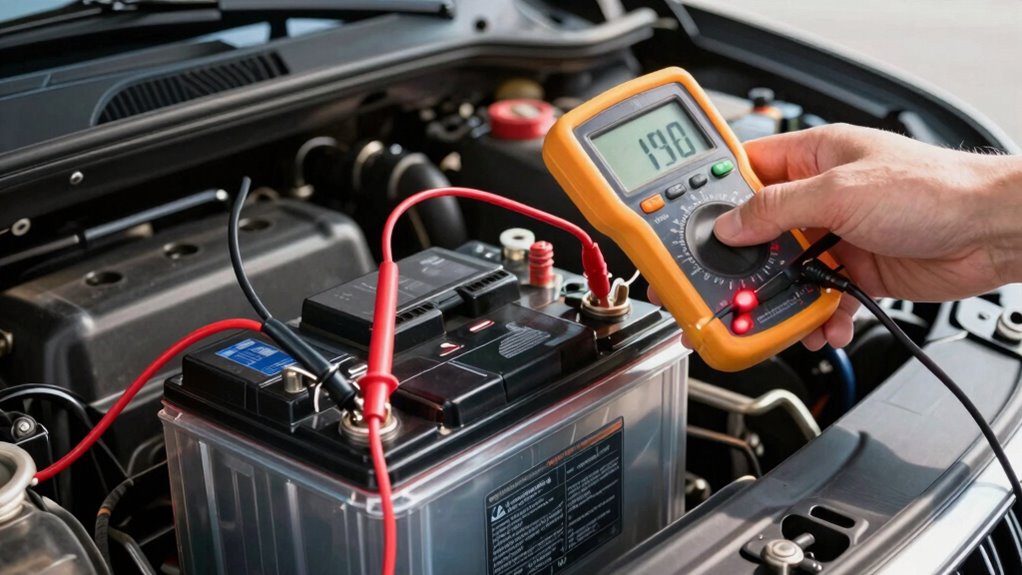
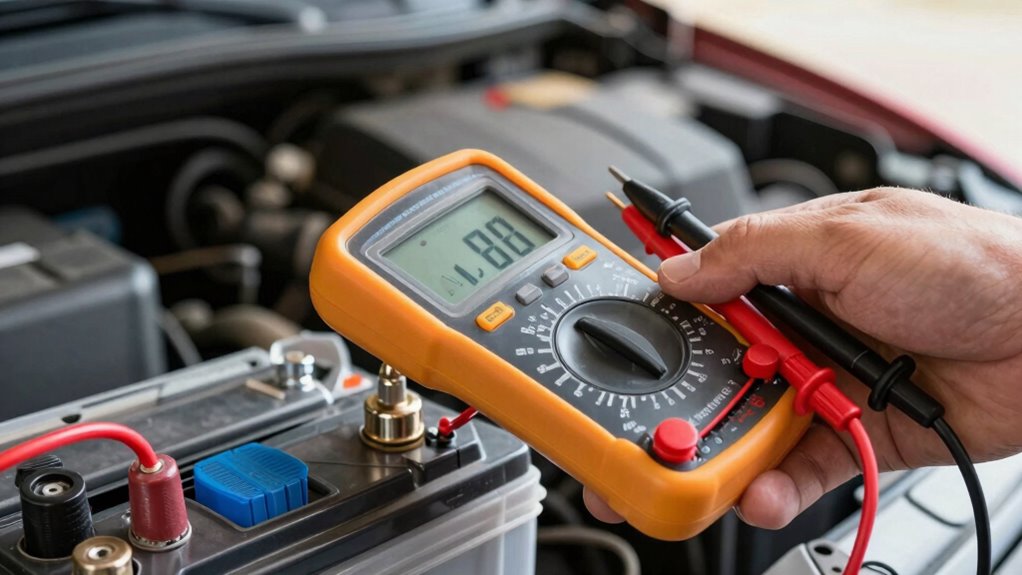
Checking your car battery voltage at home is a straightforward process that can help you identify potential issues before they leave you stranded. First, ensure your engine is off and the car is in park. Use a digital multimeter set to DC volts, and connect the red lead to the positive terminal and the black lead to the negative terminal. A healthy battery should read around 12.6 volts. If you notice corrosion around the terminals, clean it off with a wire brush before testing, as corrosion can affect readings. Also, consider your charging methods; if the voltage is low, try jump-starting or charging the battery with a charger. Regular checks can reveal declining voltage, indicating it might be time for a replacement or further inspection.
Understanding Your Battery Voltage: What’s Healthy and What’s Not

Understanding your battery voltage is essential because it indicates the health of your car’s electrical system. A healthy battery typically shows a voltage around 12.6 volts when the engine is off, reflecting proper battery chemistry and full charge. If your voltage drops below 12.4 volts, your battery may be partially discharged or aging. During engine operation, voltage regulation should keep the reading between 13.7 and 14.7 volts, ensuring the alternator charges the battery correctly. Significant deviations from these ranges can signal issues with the battery chemistry or faulty voltage regulation. Monitoring these numbers helps you identify early signs of trouble before your battery fails, so you can take action and avoid unexpected breakdowns.
Performing a Load Test Without Special Equipment
Performing a load test on your battery helps determine its ability to deliver power under real-world conditions, without needing specialized equipment. To do this, turn on your headlights for about 10-15 minutes with the engine off. Then, start your vehicle; if the headlights dim markedly or the engine struggles to turn over, your battery may be failing. Keep in mind that battery chemistry influences how quickly a battery loses its charge and responds to charging methods. If your battery is old or has been through repeated charge cycles, it might not hold a proper charge anymore. This simple test gives you a snapshot of your battery’s health without tools, helping you identify if a more thorough inspection or replacement is necessary.
Tips to Keep Your Car Battery Healthy and Extend Its Life
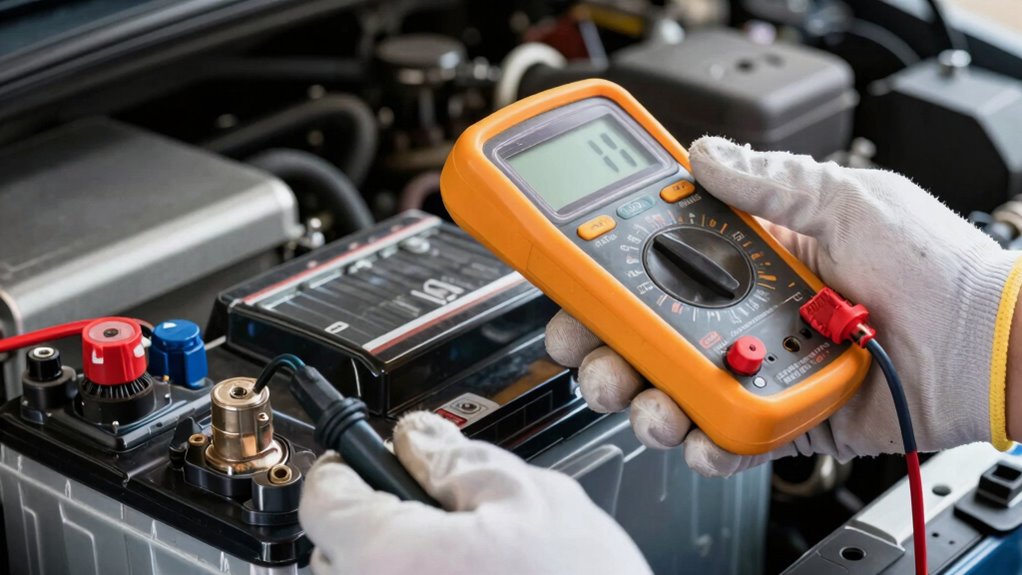
To keep your car battery healthy and extend its lifespan, regular maintenance is essential. Start by checking the battery terminals for corrosion and clean them with a mixture of baking soda and water if needed. Ensure the battery is securely mounted to prevent vibrations that can accelerate wear. Keep an eye on your charging system; a healthy alternator helps maintain proper battery voltage. Avoid leaving lights or electronics on when the engine isn’t running, as this drains the battery unnecessarily. Regularly testing your battery’s health can catch issues early, preventing unexpected failures. Proper battery maintenance not only boosts your battery lifespan but also ensures reliable starting power. By staying proactive, you’ll maximize your battery’s performance and avoid costly replacements down the road.
When to Replace Your Car Battery Based on Your Test Results
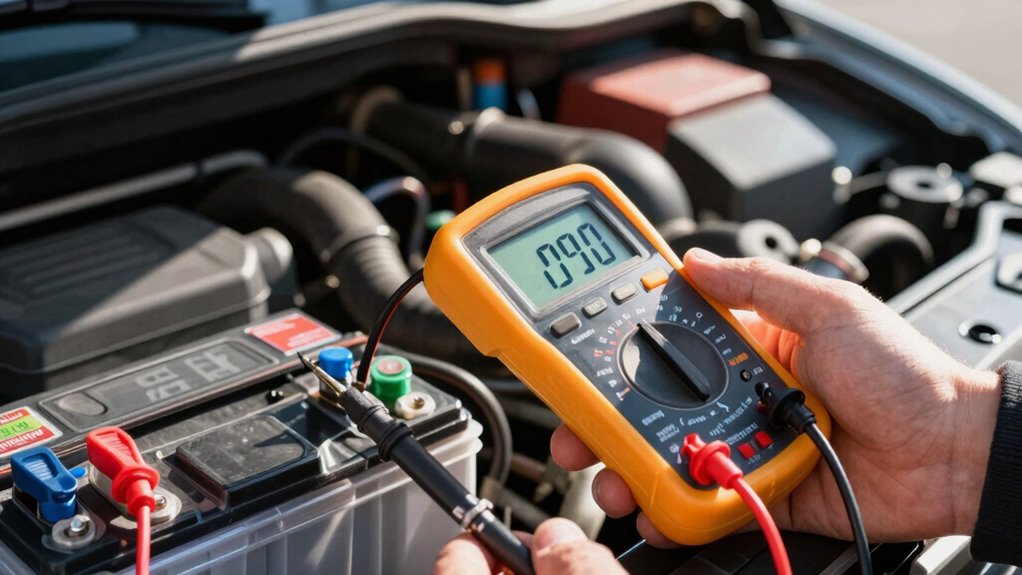
Knowing when to replace your car battery depends on your test results. If your test shows low voltage, signs of corrosion, or difficulty starting your vehicle, it’s time for a replacement. Check for battery corrosion around the terminals, which can hinder performance. If corrosion is extensive, clean it or consider replacing the battery altogether. When replacing, choose a battery that matches your car’s specifications and ensures proper recycling. Regularly inspecting your battery can prevent unexpected breakdowns. Here’s a quick reference:
| Test Result | Action | Additional Notes |
|---|---|---|
| Voltage below 12.4V | Replace immediately | Check for corrosion |
| Visible corrosion | Clean or replace | Recycle old batteries properly |
| Difficulty starting | Consider replacement | Prevent future failures |
| Battery age >3 years | Replace proactively | Recycle old batteries responsibly |
| Battery shows swelling | Replace promptly | Avoid safety hazards |
Troubleshooting Common Battery Problems and Next Steps

When your car battery isn’t performing as it should, troubleshooting can help identify the root cause of the problem. Start by checking the battery chemistry, as corrosion or buildup can hinder performance. Ensure the terminals are clean and tightly connected. Next, test your charging system—if the alternator isn’t functioning properly, your battery won’t recharge correctly, causing it to fail prematurely. Use a multimeter to measure voltage; a healthy system typically reads around 13.7 to 14.7 volts when running. If your voltage is low or fluctuates, the charging system may need repair or replacement. If these steps don’t resolve the issue, consider professional diagnostics to identify underlying problems with the battery or charging system, preventing unexpected breakdowns and extending your battery’s lifespan.
Frequently Asked Questions
How Often Should I Test My Car Battery?
You should test your car battery at least once every six months to guarantee ideal battery maintenance. Regular testing helps identify issues early, especially considering your battery’s charging cycles and overall health. If you often take short trips or notice slow engine starts, more frequent checks are advisable. Keeping an eye on your battery’s condition prevents unexpected failures and extends its lifespan, saving you time and money on repairs.
Can I Test My Battery if It’s Cold Outside?
Did you know that cold weather can reduce your battery’s efficiency by up to 50%? You can test your battery in cold conditions, but keep in mind that cold weather affects battery performance, making tests less accurate. It’s best to warm the battery slightly or perform tests indoors if possible. Cold temperatures can hide potential issues, so regular checks are vital for reliable starts during winter.
What Is the Ideal Voltage for a Healthy Car Battery?
A healthy car battery should read around 12.6 volts when the engine’s off, which indicates good battery maintenance. During voltage monitoring, if your reading drops below 12.4 volts, it’s time to verify your battery’s condition. Keep an eye on fluctuations, especially in cold weather, to prevent unexpected failures. Regular testing ensures your battery stays reliable, and addressing issues early can save you from unexpected breakdowns.
Do All Car Batteries Require the Same Testing Method?
Did you know that over 70% of battery failures are caused by corrosion? Not all car batteries require the same testing method. You should consider factors like battery age, type, and your vehicle’s alternator performance. Some batteries need a simple voltage check, while others require load testing or inspecting for corrosion. Regular testing guarantees your battery’s health, preventing unexpected breakdowns and maintaining ideal performance.
How Do I Know if My Battery Needs Professional Testing?
If your car experiences charging issues or you notice battery corrosion around the terminals, it’s time for professional testing. Signs include difficulty starting your engine, dimming headlights, or frequent electrical problems. Don’t ignore these symptoms, as they can indicate a failing battery. A technician will perform thorough tests to determine if your battery needs replacing or maintenance, ensuring your vehicle stays reliable and safe.
Conclusion
Remember, an ounce of prevention is worth a pound of cure. Regularly testing your car battery can save you from unexpected breakdowns and costly repairs. Keep an eye out for warning signs, perform simple checks, and stay proactive. Your car’s reliability depends on it, and a little effort now can prevent bigger headaches later. Stay vigilant, and your vehicle will thank you for it—after all, a stitch in time saves nine.