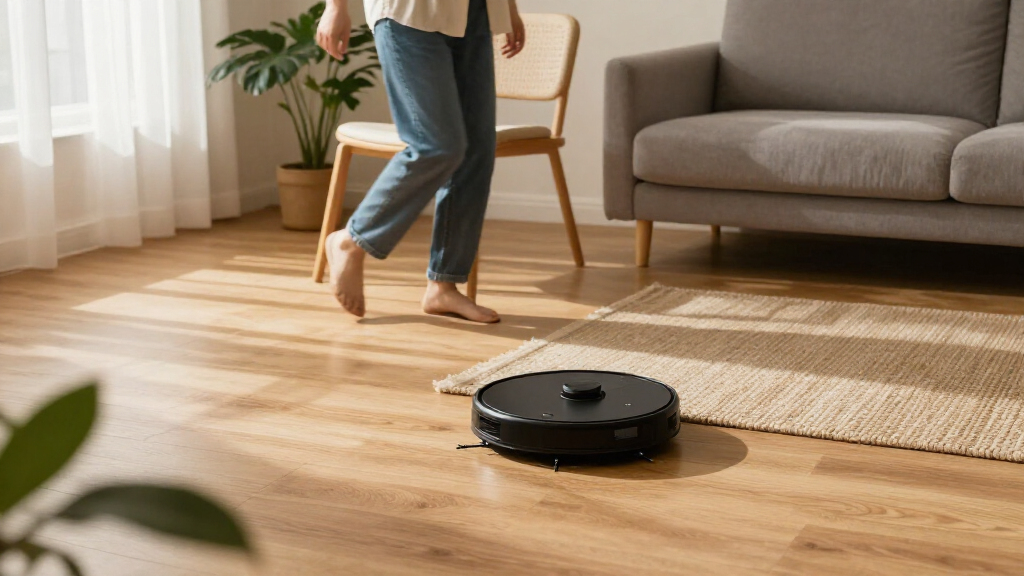

Budget and premium robot vacuums both promise to take routine floor cleaning off your list, but they differ in how reliably they cover a home and how much attention they need. Budget models suit smaller or simpler spaces where an occasional rescue or manual bin emptying is acceptable. Premium models usually cost more for more precise mapping, stronger obstacle handling and self-emptying or mop-maintenance docks. The choice is less about whether a robot can clean at all and more about whether its extra convenience earns its price in your home.

Get cleaning gear delivered free with Prime
- Fast, free delivery on millions of items
- Prime Video, Amazon Music and more included
- Member-only deals all year

Roborock Qrevo S Pro Robot Vacuum and Mop
- ✔ Suction: 18,500 Pa
- ✔ Battery life: Up to 180 minutes
- ✔ Navigation: LiDAR

Shark AV2501AE AI Robot Vacuum with XL HEPA Self-Empty Base
- ✔ Navigation: 360° LiDAR and Matrix Clean
- ✔ Base: Bagless self-emptying; up to 60 days of debris capacity
- ✔ Filter: HEPA; captures 99.97% of dust and allergens down to 0.3 microns

ROPVACNIC S1 Robot Vacuum and Mop Combo, 5200 Pa
- ✔ Suction power: 5,200 Pa
- ✔ Battery life: Up to 120 minutes
- ✔ Surface compatibility: Hardwood floors and low-pile carpets
At a Glance
| Criteria | Budget robot vacuum cleaners | Premium robot vacuum cleaners | Winner |
|---|---|---|---|
| Upfront cost and value | Lower purchase cost; strong value for basic, regular cleaning | Higher purchase cost; value depends on use of added features | A |
| Navigation and mapping | Often simpler navigation; some models use mapping, but capabilities vary | Typically more detailed mapping, room control and route planning | B |
| Routine cleaning | Adequate for frequent pickup on accessible floors | Often more consistent coverage and may offer stronger suction | B |
| Obstacle handling | May miss or get caught on cords, clutter and small objects | More likely to identify or avoid common obstacles, though not infallibly | B |
| Mopping and dock automation | Usually basic or absent mopping; smaller docks or manual emptying are common | More capable mopping and docks may empty dust or manage mop pads | B |
| Maintenance and reliability | More frequent bin, brush and tank attention may be needed | Docks can reduce routine work, but add components to clean and maintain | Depends |
Roborock Qrevo S Pro Robot Vacuum and Mop
The Qrevo S Pro earns our top spot because it addresses the most jobs in this group. It pairs vacuuming with dual spinning mop pads, and the pads can lift by 10 mm when the robot moves onto carpet. Carpet adjustments and adjustable suction make it the most explicitly prepared of these three for a home that alternates between hard floors and carpet. The Shark is a stronger fit if mopping is outside your routine, while the ROPVACNIC also mops but is specified for low-pile carpet.The dock is the main convenience differentiator. It empties collected dust into a 2.7 L bag, washes the mops with hot water, and dries them with warm air. That can reduce the hands-on work between mopping runs compared with a basic combination cleaner, though it also means a more elaborate dock and a dust bag to replace. LiDAR mapping, obstacle avoidance, multi-floor maps, and room-specific cleaning give us useful tools for directing a run around a particular home rather than relying on a single undifferentiated schedule.Its headline suction specification is 18,500 Pa, and its listed battery life is up to 180 minutes, both higher than the figures supplied for the other two models. We should treat those numbers as listed specifications, not a guarantee of superior results in every room. There are practical caveats: Wi-Fi support is limited to 2.4 GHz, and the supplied noise information differs, listing both 55 dB and 60 dB elsewhere. Buyers who want a simpler vacuum-only machine may find the Shark’s setup more appropriate, and buyers with newer Wi-Fi configurations should check compatibility before choosing this one.
Pros:
- Dock empties dust and washes mops with hot water, then dries them with warm air.
- Liftable mops and carpet adjustments are designed to support transitions between hard floors and carpet.
- LiDAR mapping, multi-floor maps, room-specific cleaning, and obstacle avoidance offer detailed control.
- The listed 180-minute battery life is the longest of these three.
Cons:
- Supports 2.4 GHz Wi-Fi only, which may not suit every home network setup.
- Noise level is listed as both 55 dB and 60 dB in the supplied details.
- Its mopping dock adds equipment and upkeep that vacuum-only buyers may not need.
Best for: Households with mixed hard floors and carpets that want scheduled vacuuming and mopping with dock-based mop care.
Not ideal for: Buyers who need 5 GHz-only Wi-Fi support, want a basic vacuum-only robot, or prefer to avoid a more involved cleaning dock.
Bottom line: We recommend the Qrevo S Pro for buyers who want the broadest stated mix of carpet handling, mopping, mapping, and dock-based maintenance.
“We recommend the Qrevo S Pro for buyers who want the broadest stated mix of carpet handling, mopping, mapping, and dock-based maintenance.”
Shark AV2501AE AI Robot Vacuum with XL HEPA Self-Empty Base
The Shark takes second place because it is a focused vacuuming choice with useful features for people who want less frequent bin handling. Its bagless self-emptying base is specified to hold up to 60 days of debris, so it avoids the replacement dust bag used by the Roborock. The trade is clear: this base handles debris, but the Shark does not wash or dry mop pads because it has no mopping system. If hard-floor mopping is part of the job, the Roborock or ROPVACNIC is a better match.For navigation, the AV2501AE combines 360° LiDAR mapping with Matrix Clean navigation and object detection and avoidance. That package is intended to map rooms and clean systematically, while Recharge and Resume lets it continue after recharging. Its HEPA filter is specified to capture 99.97% of dust and allergens down to 0.3 microns, a meaningful distinction for buyers who are prioritizing filtration alongside routine carpet and hard-floor vacuuming. The ROPVACNIC offers more control methods and mopping, but its description does not specify this kind of HEPA filtration.The limits matter. The supplied details list one power level, giving buyers less stated suction adjustment than the ROPVACNIC’s three levels or the Roborock’s adjustable suction. Battery life is up to 120 minutes, matching the ROPVACNIC’s listed duration and below the Roborock’s figure. We also have a listed cleaning path width of 5.67 inches, but that number alone does not tell us how quickly a whole home will be cleaned. Choose the Shark for its self-emptying and filtration priorities; skip it if you expect one robot to vacuum and mop.
Pros:
- Bagless self-emptying base is specified to hold up to 60 days of debris.
- HEPA filtration is listed to capture 99.97% of dust and allergens down to 0.3 microns.
- 360° LiDAR, Matrix Clean navigation, and object avoidance support mapped cleaning.
- Recharge and Resume can continue a cleaning run after the robot recharges.
Cons:
- Does not include a mopping system, unlike the Roborock and ROPVACNIC.
- Product information specifies one power level.
- Listed battery life is up to 120 minutes, shorter than the Roborock’s stated duration.
Best for: Buyers who want mapped vacuuming across carpets and hard floors, HEPA filtration, and a bagless self-empty base.
Not ideal for: Households that need mopping, want multiple listed suction levels, or specifically prefer mop washing and drying at the dock.
Bottom line: We favor the AV2501AE when vacuuming, filtration, and a bagless self-empty base matter more than mopping versatility.
“We favor the AV2501AE when vacuuming, filtration, and a bagless self-empty base matter more than mopping versatility.”
ROPVACNIC S1 Robot Vacuum and Mop Combo, 5200 Pa
The ROPVACNIC S1 is our pick for buyers who want a combination robot with a familiar set of control choices. It supports an app, remote, touchpad, and voice commands, while the Roborock centers its described control set on app, buttons, and voice. That range can be useful if different household members prefer different ways to start a cleaning run. The S1 also lets us adjust water flow across four stages and choose among three suction levels, making it more configurable than the Shark, whose supplied details list one power level.Its brush-free design and dual rotating side brushes are intended to collect pet hair while reducing tangles. The machine also detects obstacles and returns automatically to its charging dock. These conveniences make it a reasonable option for regular upkeep, especially on hardwood and other hard floors. But the product is specified for low-pile carpets, which is a narrower stated fit than the Roborock’s carpet adjustments or the Shark’s compatibility with carpets and hard floors. If a home has substantial or varied carpeting, we would look at those options first.The listed 5,200 Pa suction and up to 120-minute battery life give us concrete reference points, but the supplied description does not include the Roborock’s detailed multi-floor mapping or the Shark’s LiDAR and Matrix Clean system. Its advantage is a simpler combination of vacuuming and electric mopping with multiple controls; its drawback is that the information here gives less detail about advanced mapping and limits its stated carpet suitability. We would choose it for hard-floor-focused homes that want adjustable mopping without the Roborock’s mop-washing dock, and skip it for buyers seeking broad carpet support or the most detailed navigation package.
Pros:
- Four-stage water adjustment and three suction levels allow cleaning settings to be varied.
- App, remote, touchpad, and voice controls provide several ways to operate the robot.
- Brush-free design with dual rotating side brushes is intended to reduce hair tangles.
- Obstacle detection and automatic return to the charging dock are included.
Cons:
- Surface compatibility is specified for hardwood and low-pile carpets, limiting its stated carpet range.
- Listed battery life is up to 120 minutes, compared with 180 minutes for the Roborock.
- Supplied details do not specify LiDAR mapping or a self-emptying dock.
Best for: Hard-floor-focused households looking for an accessible vacuum-and-mop robot with adjustable water flow and several control options.
Not ideal for: Homes with medium- or high-pile carpet, or buyers who want a dock that washes and dries mops or detailed LiDAR mapping.
Bottom line: We recommend the S1 for buyers who want adjustable vacuuming and mopping on hard floors and value flexible controls over advanced dock features.
“We recommend the S1 for buyers who want adjustable vacuuming and mopping on hard floors and value flexible controls over advanced dock features.”
As an Amazon Associate we earn from qualifying purchases.
Key Differences
The largest practical gap is usually automation. A budget robot may clean well when floors are clear and its route is simple, but you may need to tidy cords, move it between floors, empty its bin and restart it after a snag. A premium model is more likely to map rooms, follow repeatable routes and pair with a dock that handles some routine upkeep. Those features matter most when cleaning often, covering a larger home or managing pet hair.
Premium does not automatically mean a better purchase. If you have a small apartment, mostly hard floors and little clutter, a basic vacuum can cover the daily dust and crumbs at much lower cost. The premium price makes more sense when its particular features remove recurring chores you would otherwise do yourself. Check the exact model: navigation, obstacle detection, mopping and dock functions vary even within each price tier.
Detailed Comparison
Upfront cost and value (Budget robot vacuum cleaners wins — major)
Budget models win on entry price, a major difference for shoppers who need routine vacuuming rather than an automated cleaning system. Premium models ask for more money, and the extra cost pays off only if mapping, obstacle handling or dock automation will see regular use. For a small, uncluttered home, spending less is often the better value.
Premium models generally offer more detailed maps, room selection and repeatable routes, a moderate-to-major advantage in multi-room homes. Budget robots can clean adequately with simpler navigation, but may take less direct paths or need more supervision. The difference is minor in one open room and more noticeable across several rooms or levels.
Premium models often combine more consistent coverage with stronger suction options, so they tend to win for mixed floors, larger areas and heavier debris. Budget models remain useful for frequent pickup of dust and crumbs, especially on hard flooring. This is a moderate gap for everyday maintenance, not a substitute for occasional deeper cleaning.
Premium robots are more likely to detect and avoid objects such as shoes or cords, which can reduce interruptions. That is a moderate advantage in lived-in rooms, but sensors do not make every model snag-proof. Budget buyers can close some of the gap by clearing floors before a run; in consistently tidy spaces, the difference is minor.
Premium models are more likely to include useful mopping functions or docks that empty dust and maintain mop pads. This can be a major convenience gain for people running the robot frequently. Basic models may have no mop or only a simple water tank, so they suit vacuuming better than replacing manual floor washing.
Maintenance and reliability (moderate difference)
Budget units commonly require more hands-on bin emptying and may need help when they lose their way or encounter clutter. Premium docks reduce some of that work but add bags, tanks, pads and mechanisms that also need upkeep. The winner depends on whether you prefer simple equipment with regular manual care or more automation with additional components to maintain.
Budget robot vacuum cleaners: Pros and Cons
Pros:
- Lower purchase cost
- Good for regular dust and crumb pickup in simple layouts
- Fewer dock features and components to manage
Cons:
- Often needs more manual emptying and intervention
- Simpler mapping can mean less predictable coverage
- Basic obstacle handling and mopping vary by model
Pros:
- More detailed navigation and room control are common
- Often better suited to larger homes, pets and frequent cleaning
- Self-emptying and mop-care docks can reduce routine chores
Cons:
- Higher upfront cost
- Docks and added features take space and require upkeep
- Obstacle avoidance and mopping performance are not guaranteed
Who Should Choose What
Choose Budget robot vacuum cleaners if:
- You live in a small or open-plan home with mostly hard floors.
- You want routine pickup at the lowest sensible cost and do not mind emptying the bin yourself.
- Your floors are generally clear and you do not need mapping or mopping automation.
Choose Premium robot vacuum cleaners if:
- You have a larger or multi-room home and want room-by-room schedules.
- Pet hair, frequent runs or daily debris make a self-emptying dock useful.
- You will use advanced mapping, obstacle detection or mop maintenance often enough to justify the price.
Skip both if: Your floors are crowded with cords and small objects, you need deep carpet cleaning, or you expect a robot to replace all manual vacuuming and mopping; address those needs before buying either tier.
Value for Money
Pay more when the premium features remove work you regularly do: carrying a robot between rooms, clearing frequent snags, emptying a small bin or maintaining mop pads after repeated runs. In a busy home with pets, those savings in attention can justify the higher price. If the robot will run occasionally in a compact, tidy space, budget models usually deliver better value because their simpler cleaning is enough. Compare the specific dock and mapping features rather than assuming every premium model includes the same automation.
Final Verdict
For most shoppers with a small, tidy home and basic pickup needs, choose a budget robot vacuum: it handles routine cleaning without charging you for automation you may not use. Choose premium if you have more rooms, pets, frequent cleaning needs or a clear reason to value a self-emptying or mop-care dock. The deciding factor is how much ongoing intervention you want to avoid. Pay more for features that solve a recurring chore in your home; otherwise, save the money.
Frequently Asked Questions
Are premium robot vacuums worth the higher price?
They can be, if better mapping, obstacle handling or dock automation will reduce chores you face regularly. For occasional cleaning in a small, clear space, a budget model is usually better value.
Will a budget robot vacuum clean a whole home?
It can, depending on layout, battery life and navigation. Simple models may need more time or intervention across multiple rooms, so check coverage and mapping features for the specific model.
Do robot vacuums handle pet hair?
Many can collect routine pet hair, but performance depends on brush design, suction, floor type and how much hair accumulates. Frequent shedding makes larger bins and self-emptying docks more useful.
Does a robot vacuum with a mop replace mopping by hand?
Usually not completely. Robot mops can help with light, regular maintenance, while dried spills and stubborn grime may still need manual attention. Premium dock features can reduce pad upkeep but do not guarantee deep cleaning.