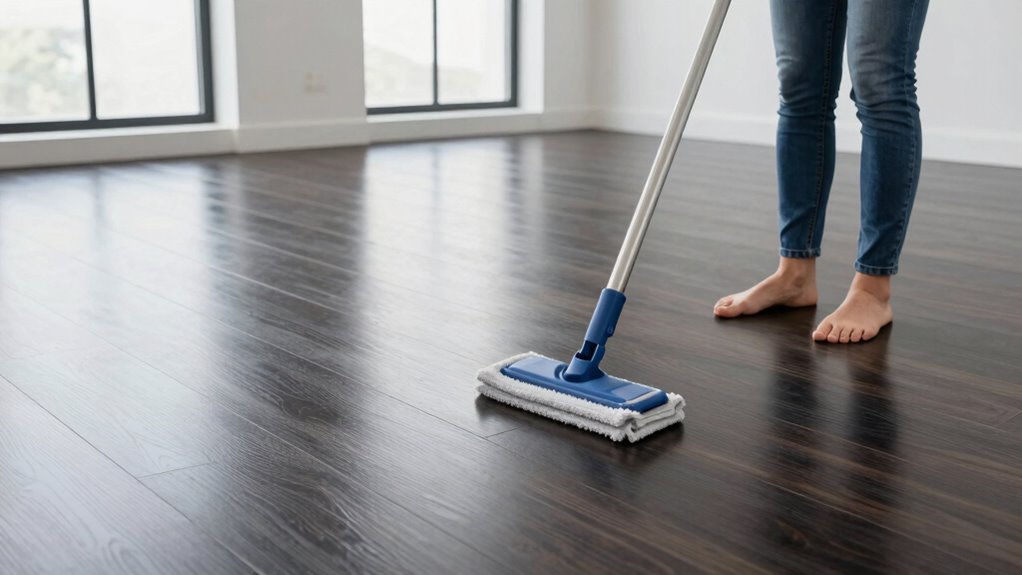
To prevent warping when mopping vinyl planks, always use lukewarm water and avoid hot temperatures or steam cleaners. Use a damp, well-wrung microfiber mop and work in small sections with gentle, sweeping motions. Don’t let water pool on the surface or soak the floors. After cleaning, dry the floor thoroughly and maintain steady humidity levels. For more tips on setting your cleaning routine to protect your floors, keep exploring this guide.
Key Takeaways
- Use lukewarm water instead of hot to prevent vinyl expansion and warping.
- Ensure the mop is damp, not soaked, to avoid excess water on the floor.
- Test steam cleaning on a small area to prevent heat damage.
- Employ microfiber mops that generate less heat and moisture during cleaning.
- Monitor and control cleaning temperature settings to avoid exposing vinyl to excessive heat.
Why Vinyl Plank Floors Warp and How Proper Mopping Can Help

Vinyl plank floors can warp when exposed to excessive moisture or heat, causing them to lift or buckle over time. This warping happens because vinyl expands when the floor temperature rises or humidity levels increase. If your home gets too hot or humid, vinyl expansion occurs, putting stress on the planks. When you mop, using too much water or high-temperature cleaning solutions can accelerate this process. Proper mopping techniques help maintain suitable floor temperature and moisture levels, preventing warping. Always use a damp, not soaking, mop, and avoid hot water. Controlling humidity levels and keeping the room’s temperature stable are essential for preventing vinyl expansion. Keeping the room’s humidity stable and maintaining a consistent floor temperature reduces vinyl expansion. Additionally, proper cleaning techniques play a crucial role in preventing damage. Using appropriate cleaning solutions minimizes the risk of heat or moisture damage, further protecting your floors. Being mindful of temperature fluctuations helps prevent unnecessary expansion and contraction that can lead to warping. Incorporating regular floor inspections allows you to catch early signs of warping before they worsen. This careful approach ensures your floors stay flat, durable, and free from unsightly buckling or lifting.
Choosing Safe Cleaning Solutions to Protect Your Floors

Choosing the right cleaning solutions is essential for maintaining the integrity of your vinyl plank floors. You want products that are gentle yet effective, preventing damage or warping. Eco friendly cleaning options are ideal because they reduce chemical exposure and protect your flooring. DIY solutions, like a mix of vinegar and water, can be safe and inexpensive. Imagine:
- Fresh citrus scents that lift dirt naturally
- Mild soap blends that won’t strip your floor’s finish
- Natural disinfectants derived from herbs or essential oils
- Gentle scrubbing tools that avoid scratches
- Biodegradable cleaners that break down quickly
Using gentle cleaning agents specifically formulated for vinyl floors helps prevent warping and discoloration, ensuring your floors stay in top condition. These choices help keep your floors looking new without risking warping or discoloration. Always opt for solutions that emphasize safety and environmental friendliness to ensure your vinyl planks stay durable and beautiful. Proper cleaning techniques are also important to prevent long-term damage to your flooring, especially when combined with appropriate cleaning schedules. Incorporating environmentally friendly products reduces the likelihood of chemical buildup that could harm your floors over time, and selecting safe cleaning solutions ensures ongoing floor health and longevity.
How to Set Water and Mop Temperature Correctly
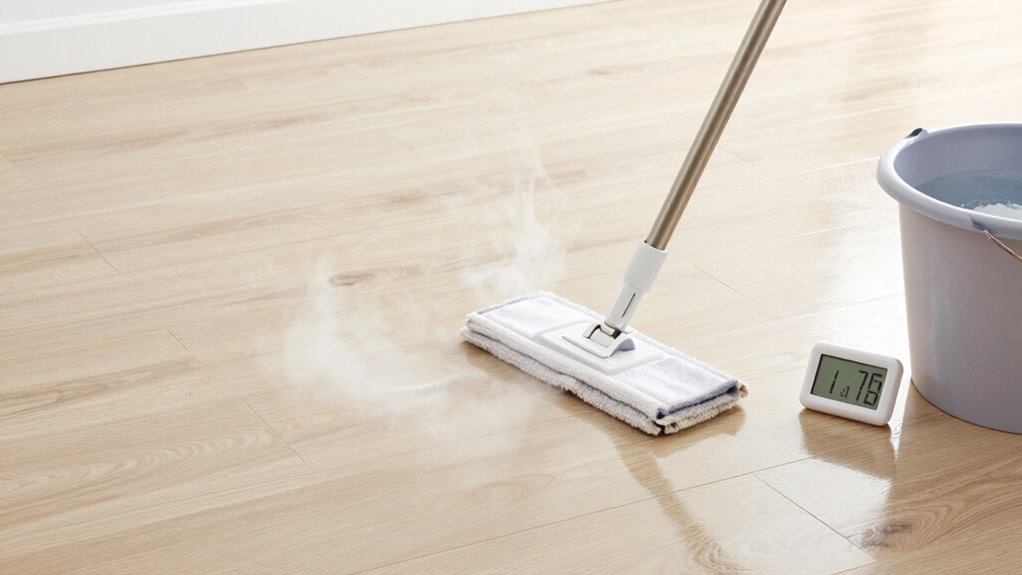
Proper water and mop temperature play an essential role in keeping your vinyl plank floors clean and looking their best. Use warm water, but avoid hot temperatures that can cause warping or damage. When steam cleaning, confirm the steam isn’t too intense, as excessive heat can compromise the floor’s integrity. Microfiber mops are ideal because they clean effectively with less water and heat, reducing the risk of warping. Always test your mop’s temperature on a small, hidden area first. For regular mopping, stick to lukewarm water, and avoid excessive moisture. Monitoring temperature helps prevent the floor from absorbing too much water or heat, which can lead to warping or swelling over time. This careful approach helps maintain your vinyl planks’ durability and appearance. Additionally, choosing the right mop accessories can enhance cleaning efficiency while safeguarding your flooring. Incorporating proper cleaning techniques ensures that your floors stay pristine without risking damage. Being mindful of digital maintenance practices can also help you track cleaning routines and prevent accidental harm to your floors. Regularly inspecting your cleaning tools and methods can further prevent damage, ensuring your vinyl floors remain in excellent condition.
Mopping Techniques That Prevent Warping
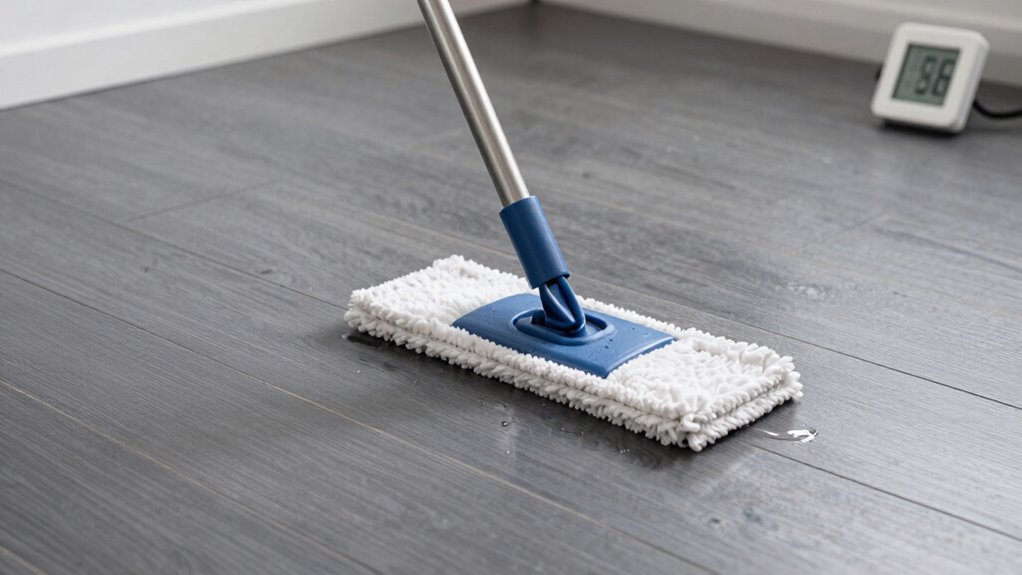
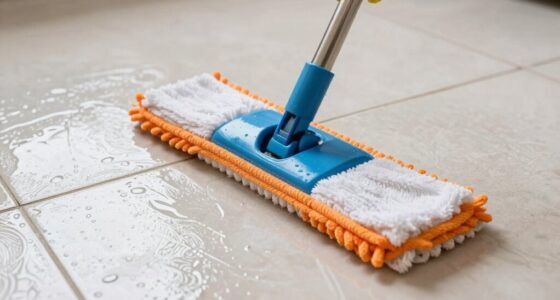
To prevent warping, you should focus on using the right mopping techniques that minimize excess moisture and heat exposure. Keep your mopping frequency moderate—don’t overdo it—and use appropriate cleaning tools like a microfiber mop or a well-wrung cloth to avoid water pooling. When mopping, ensure the mop is damp, not soaked, to prevent water from seeping into seams. Work in small sections, rinsing out your cleaning tools frequently to avoid spreading dirt and excess moisture. Use a gentle, sweeping motion rather than scrubbing aggressively. Visualize:
- Light, even strokes across the surface
- Minimal water on the mop, just damp enough to clean
- Regularly wrung-out cleaning tools
- Short, focused mopping sessions
- Avoiding excessive heat from hot water or steam
Additionally, choosing appropriate cleaning tools that are gentle on vinyl plank flooring can help maintain its integrity and prevent warping. Using correct cleaning frequency also plays a crucial role in maintaining the floor’s shape and durability. Incorporating proper drying techniques after mopping can further reduce the risk of moisture-related damage. For optimal protection, consider monitoring the temperature and humidity levels in your home, as fluctuations can also impact the flooring’s stability.
Post-Cleaning Tips to Keep Your Vinyl Floors Looking Great
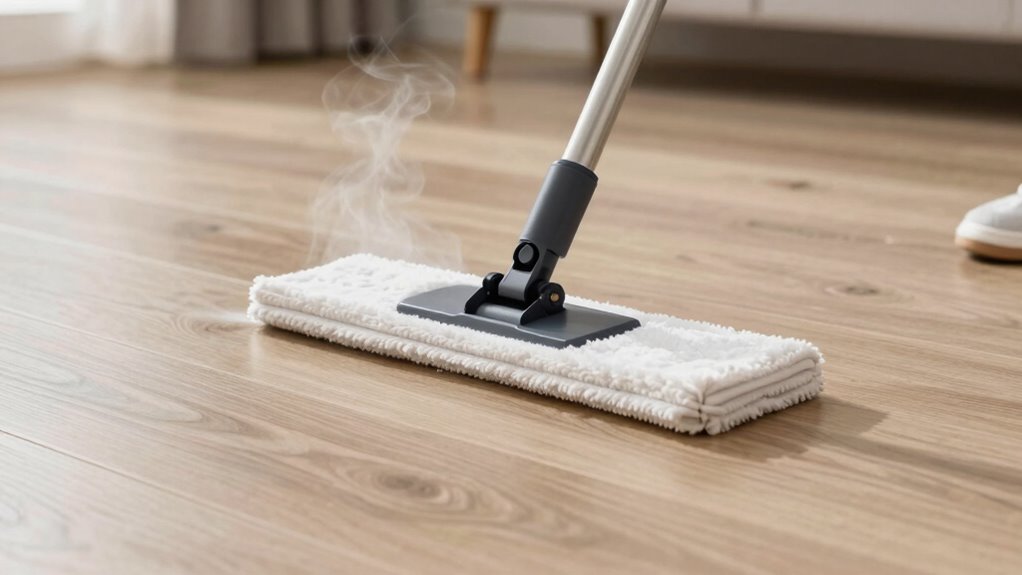
After you finish mopping, taking a few simple steps can help maintain the beauty of your vinyl floors. Start by vacuuming maintenance regularly to remove dirt and debris that can cause scratches. Use furniture protection pads under heavy or sharp furniture to prevent dents and scratches. Avoid dragging items across the surface, which can damage the vinyl. Always dry the floor with a soft cloth or mop to prevent water spots and warping. Keep high-traffic areas clean and free of grit that can wear down the finish. Additionally, adjusting your vinyl cutter settings appropriately during installation can help reduce the risk of warping caused by improper sealing or adhesive application. Maintaining proper indoor humidity levels can also prevent vinyl warping and extend the lifespan of your flooring. Proper floor cleaning techniques are essential to avoid damaging the surface and preserving its appearance.
Frequently Asked Questions
Can Using a Steam Mop Damage Vinyl Plank Flooring?
Using a steam mop can damage vinyl plank flooring if you’re not careful. Steam cleaning introduces excess moisture and heat that can cause warping or bubbling over time. To avoid this, opt for mop maintenance with a damp, not soaked, cloth and avoid direct steam on the floors. Always check your flooring manufacturer’s guidelines before using a steam mop, and use low heat settings if you choose to steam clean.
How Often Should I Deep Clean My Vinyl Floors?
Is your vinyl flooring crying out for attention? You should deep clean your vinyl floors every 4-6 months, depending on foot traffic and dirt buildup. Your cleaning frequency keeps your floors looking fresh and prevents grime from settling in. Follow a consistent deep cleaning schedule to remove stubborn stains and maintain their beauty. Regular upkeep not only preserves the surface but also extends the lifespan of your vinyl planks.
Are There Specific Brands of Mops Recommended for Vinyl Floors?
For vinyl floor mopping, choose mop brand recommendations like O-Cedar, Bona, or Shark, which are known for gentle, effective cleaning. These brands offer microfiber or spray mops that won’t scratch or damage your vinyl floors. When mopping, use a damp, not soaking, cloth to prevent warping. Always follow manufacturer instructions, and avoid harsh chemicals to keep your vinyl floors looking new longer.
What Signs Indicate My Vinyl Floors Are Warping?
If your vinyl floors are warping, you’ll notice signs of damage like curling edges, bubbling, or uneven surfaces. These are clear indicators of floor warping, often caused by excess moisture or improper cleaning. You should act promptly to prevent further damage—avoid using too much water and opt for gentle cleaning methods. Recognizing these signs early helps you maintain your floor’s integrity and prolong its lifespan.
Is It Safe to Use Vinegar on Vinyl Plank Floors?
Using vinegar on vinyl plank floors isn’t recommended because it can damage the surface. Vinegar cleaning may strip the floor finish, leading to dullness or warping over time. Always check floor finish compatibility before using any cleaning solution. For safe cleaning, opt for a pH-neutral cleaner specifically designed for vinyl floors. This guarantees your floors stay beautiful and protected without risking warping or other damage.
Conclusion
By following the right mopping settings and techniques, you can keep your vinyl plank floors looking great for years. Remember, using too much water or high temperatures can cause warping—something 60% of homeowners overlook. Properly setting your mop’s water level and temperature, along with gentle cleaning methods, can prevent costly damage. Keep these tips in mind, and your floors will stay durable, beautiful, and warp-free for the long run.