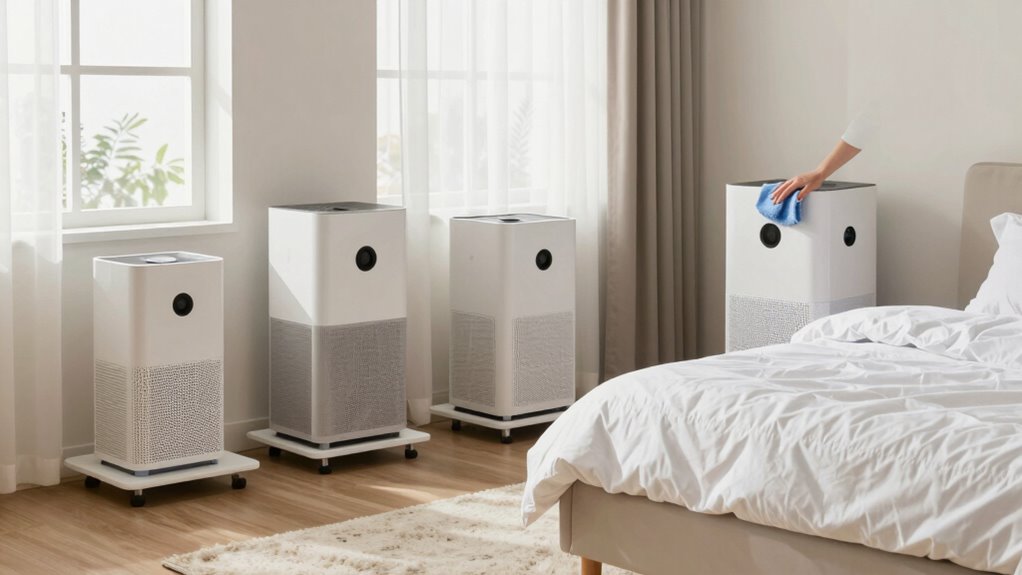

To keep dust levels down in allergy households, focus on improving airflow, using HEPA air purifiers, and choosing dust-resistant furniture like leather or smooth fabrics. Regularly clean and vacuum with filters, manage clutter, and wash textiles frequently. Proper ventilation and strategic placement of air purifiers help reduce airborne particles. Maintaining these habits creates a healthier home environment, easing allergy symptoms. Keep exploring for more tips to make your space even safer and dust-free.

Get cleaning gear delivered free with Prime
- Fast, free delivery on millions of items
- Prime Video, Amazon Music and more included
- Member-only deals all year
Key Takeaways
- Use HEPA air purifiers and ensure proper placement to trap airborne dust particles effectively.
- Regularly dust surfaces with a damp cloth and vacuum with HEPA filters twice weekly.
- Minimize clutter and choose dust-resistant furniture, like leather or allergen-resistant fabrics.
- Improve ventilation with exhaust fans and unobstructed vents to enhance airflow and reduce dust buildup.
- Wash bedding, curtains, and textiles regularly to prevent dust accumulation and allergen proliferation.
Products Worth Considering

Levoit Vital 100S-P Air Purifier with Washable Pre-Filter

Levoit Core 300S-P Smart Wi-Fi Air Purifier

LEVOIT Vital 200S-P Smart Air Purifier for Large Rooms, White
As an affiliate, we earn on qualifying purchases.
How Dust Affects Allergies and What You Can Do About It

Dust is a common allergy trigger that can worsen your symptoms if not managed properly. Poor air quality increases allergen exposure, making allergy symptoms more intense. Dust contains particles like skin flakes, pollen, mold spores, and pet dander, which can aggravate your allergies when inhaled. When dust accumulates, it reduces the air’s clarity and quality, leading to more frequent or severe reactions. To combat this, keep your home well-ventilated and use air purifiers with HEPA filters to improve air quality. Regular dusting and vacuuming can help reduce allergen buildup, preventing dust from lingering in the air. Additionally, controlling humidity levels with devices like dehumidifiers can inhibit mold growth and dust mites, further reducing allergens microplastics in dust. Implementing air filtration systems with advanced capabilities can also significantly decrease airborne dust particles. Using humidifiers in dry environments can help maintain optimal humidity levels and reduce dust suspension in the air. Managing dust not only minimizes allergen exposure but also improves indoor air quality, creating a healthier environment, easing allergy symptoms and making your home more comfortable.
Assessing Your Home’s Dust Levels to Plan Your Setup

Before making changes to your home setup, evaluating how much dust is present in your environment is vital. Start by monitoring air quality metrics, which can reveal pollution levels and dust concentrations. Use simple tools like air quality monitors or check for visible dust on surfaces and furniture. Identifying household dust sources—such as carpets, pet dander, bedding, or clutter—helps you understand where dust accumulates most. Conduct a quick visual inspection and note areas with frequent dust buildup. Understanding your home’s baseline dust levels allows you to plan targeted improvements effectively. Incorporating traditional practices into your cleaning routines and air filtration strategies can also enhance dust control. This assessment enables you to prioritize cleaning routines and air filtration strategies, creating a healthier environment tailored to your specific needs. Additionally, understanding dust control methods can help you implement more effective strategies to reduce airborne particles in your home. Regularly updating your knowledge on allergy-friendly setups can further optimize your environment for dust reduction.
Choosing the Best Air Purifiers for Dust Reduction

When selecting an air purifier for dust, you need to take into account filter types and how effective they are, especially HEPA filters. Make sure the unit matches your room size to guarantee it cleans the air properly, and factor in maintenance costs like filter replacements. Knowing these points helps you find a purifier that’s efficient, affordable, and suited to your space. Additionally, regularly checking and cleaning filters according to manufacturer guidelines can significantly extend the lifespan and performance of your device filter maintenance practices. Choosing a model with high-quality filtration can further enhance dust removal efficiency and improve overall air quality. Considering the installation and placement of your air purifier can also optimize its dust-reducing capabilities. Ensuring proper airflow patterns within your room can help maximize the device’s effectiveness in reducing dust. Proper placement and air circulation are crucial for achieving the best dust reduction results.
Filter Types and Efficiency
Choosing the right air purifier depends largely on the filter type and its efficiency in capturing dust particles. HEPA filters are essential because they trap 99.97% of particles as small as 0.3 microns, including dust, pollen, and pet dander. This makes them highly effective for allergy sufferers. Activated carbon filters are also beneficial, especially for absorbing odors and chemical pollutants that can worsen indoor air quality. While HEPA filters focus on dust removal, activated carbon targets airborne smells and toxins. For ideal dust reduction, look for devices that combine both filters, ensuring thorough cleaning. Keep in mind that filter efficiency depends on proper maintenance and regular replacement, so choose a purifier with accessible, easy-to-change filters for sustained performance. Additionally, selecting a device with technological integration can enhance overall efficiency and user experience. Regularly updating your knowledge on air purification technologies can help you choose the most effective system for your needs. Moreover, understanding the regulatory standards for air purifiers can ensure you select a device that meets safety and performance benchmarks. Staying informed about filter maintenance practices can further optimize your purifier’s lifespan and effectiveness. Also, considering advanced filtering methods can improve dust removal capabilities and overall air quality.
Room Size Compatibility
Selecting an air purifier that matches your room size is essential for effective dust reduction. If the unit is too small for your space, it won’t circulate the air efficiently, leaving dust particles behind. Conversely, an oversized purifier can be louder and waste energy. Measure your room’s square footage and choose a model with a suitable coverage area. Proper furniture placement also matters; keep the purifier away from walls and large furniture to ensure unobstructed airflow. This allows the device to maximize dust capture and improve overall air quality. Additionally, understanding air quality standards can help you select the most effective purifier for your needs. Remember, a well-matched purifier works best when it’s appropriately sized for your space and positioned correctly. Doing so helps you maintain a cleaner, healthier environment and reduces dust buildup over time. To optimize performance, consider filter sizing/flow to ensure the device operates efficiently within your space. Ensuring proper airflow not only enhances dust removal but also prolongs the lifespan of your air purifier. Proper air quality monitoring can further assist in maintaining optimal indoor air conditions. Selecting a purifier with adjustable fan speed settings can also help tailor the air cleaning process to your specific needs.
Maintenance and Cost
Ever wonder how much maintenance and ongoing costs impact your choice of an air purifier for dust reduction? Conducting a thorough cost analysis helps you weigh upfront expenses against long-term savings. Look for models with washable filters or long-lasting HEPA filters to reduce replacement frequency and costs. Maintenance tips include regularly cleaning pre-filters, checking for debris, and replacing filters as recommended by the manufacturer. Some purifiers also have smart features that alert you when filters need attention, saving you from unnecessary replacements. Keep in mind that more advanced models may have higher initial costs but can save money over time through durability and efficiency. Additionally, understanding filter lifespan can help you make more informed purchasing decisions that suit your budget and needs. Considering long-term operating costs can further guide you toward a more economical choice. Remember that proper air purifier placement can enhance its effectiveness and potentially extend the lifespan of filters. Balancing your budget with these factors ensures you pick an air purifier that’s both effective and economical for dust control.
Picking Dust-Resistant Furniture and Soft Furnishings

When choosing furniture and soft furnishings, opt for materials that resist dust buildup, like leather upholstery and smooth, non-porous surfaces. Machine-washable fabrics make cleaning easier and more effective at removing allergens. Additionally, incorporating indoor plants with dust-absorbing leaves can further improve air quality and reduce dust in your home. Incorporating architectural solutions designed for easy maintenance can also help keep dust at bay and promote a healthier living environment. By selecting these options, you can markedly reduce dust accumulation in your home.
Opt for Leather Upholstery
Opting for leather upholstery can substantially reduce dust accumulation and make cleaning easier in allergy-friendly households. Unlike fabric options, leather furniture doesn’t trap dust, pet dander, or allergens as easily. It’s also easier to wipe clean, helping you maintain a healthier environment. For added allergen resistance, choose furniture with allergen resistant fabrics or treatments. Consider these options:
| Material | Maintenance | Allergen Resistance |
|---|---|---|
| Leather furniture | Wipe with damp cloth | Naturally resistant |
| Allergen resistant fabrics | Machine washable | Treated for durability |
| Regular upholstery | Vacuum regularly | Less resistant |
Switching to leather or allergen resistant fabrics helps minimize dust buildup, supporting your allergy management efforts.
Use Machine-Washable Fabrics
Choosing furniture made from machine-washable fabrics can considerably improve your allergy management by making it easy to remove dust, pet dander, and allergens. Opt for soft furnishings that are labeled as machine washable fabrics, so you can regularly clean them without hassle. This helps reduce the buildup of allergens and keeps your environment healthier. Additionally, use allergy-friendly bedding that’s designed to be washed frequently, further decreasing dust and dander exposure. These fabrics are less likely to trap allergens over time, unlike traditional materials. By selecting furniture and soft furnishings that are easy to clean, you create a more allergy-friendly space. Regular washing and maintenance ensure dust and allergens stay at bay, providing relief and a healthier home environment.
Choose Smooth, Non-Porous Surfaces
Switching to smooth, non-porous surfaces for your furniture and soft furnishings makes a significant difference in allergy management. Smooth surfaces, like glass, metal, or sealed wood, don’t trap dust, allergens, or pet dander as easily as porous materials. Non-porous materials prevent dust mites and other allergens from settling deep into furniture, making cleaning more effective. When choosing furniture, opt for pieces with sleek, non-porous surfaces that can be wiped down quickly and thoroughly. Soft furnishings like cushions or curtains made from non-porous fabrics also help reduce dust accumulation. Regularly cleaning these surfaces with a damp cloth minimizes dust buildup and allergen presence. By prioritizing smooth surfaces and non-porous materials, you create a cleaner, healthier environment that’s easier to maintain and less allergenic.
Creating a Cleaning Routine to Keep Dust at Bay

Establishing a consistent cleaning routine is essential for keeping dust under control in allergy-friendly households. Regularly dust surfaces with a damp cloth to trap dust rather than spread it around. Incorporate air purifier maintenance into your routine—check filters monthly and replace them as recommended to guarantee maximum dust mite prevention. Vacuum carpets and upholstery at least twice a week using a HEPA filter vacuum to remove dust mites and allergens effectively. Don’t forget to clean under furniture and behind appliances regularly. Consistency is key; setting a schedule helps prevent dust from accumulating. By maintaining your cleaning routine and prioritizing air purifier upkeep, you create an environment less hospitable to dust mites and allergens, making your home more comfortable and allergy-friendly.
Decluttering and Managing Textiles to Reduce Dust Traps
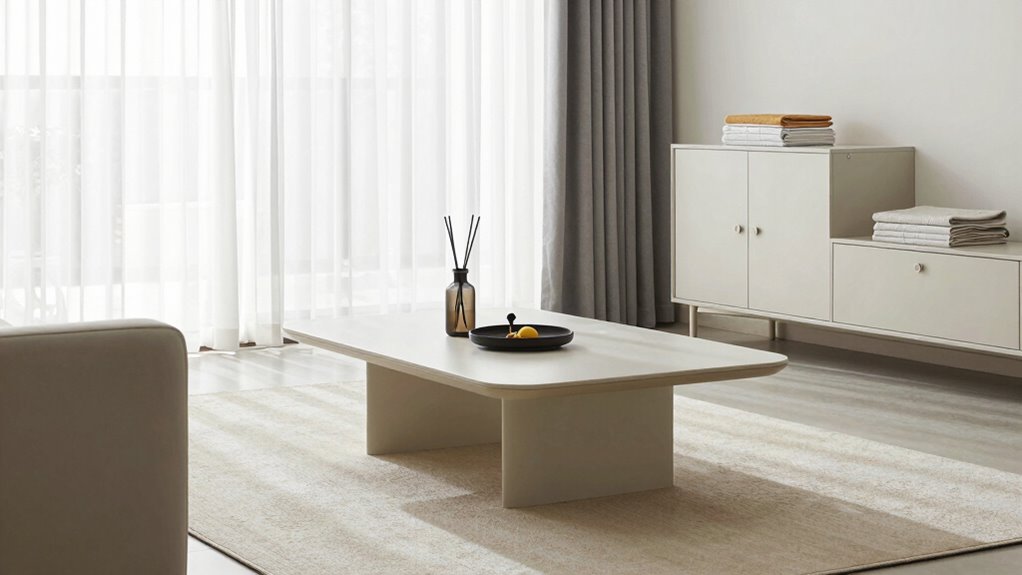
Have you ever noticed how cluttered spaces can trap dust and make allergy symptoms worse? Reducing clutter and managing textiles is key. Use smart storage solutions like bins, shelves, and under-bed organizers to clear surfaces and hide excess items. This clutter reduction not only makes your space look cleaner but also minimizes dust traps. Focus on regularly washing or vacuuming textiles such as curtains, throw pillows, and blankets. Opt for washable covers on furniture and bedding to keep dust mites at bay. Decluttering creates airflow pathways, preventing dust buildup. Remember, a tidy environment directly impacts your allergy symptoms, making your home a healthier place to breathe.
| Cluttered Space | Dust Trap | Emotional Impact |
|---|---|---|
| Overstuffed shelves | Dust accumulation | Overwhelmed and exhausted |
| Piled-up textiles | Hidden allergens | Anxious about health |
| Cluttered surfaces | Reduced airflow | Frustration and stress |
Optimizing Ventilation and Airflow for Cleaner Air

Proper ventilation is essential for maintaining cleaner indoor air and reducing airborne allergens. You can optimize airflow patterns by ensuring air moves smoothly throughout your space, preventing stagnant zones where dust and allergens settle. Use ventilation systems like exhaust fans in kitchens and bathrooms to remove moisture and pollutants at their source. Consider installing HEPA filters in your ventilation setup to trap tiny particles. Keep vents unobstructed and regularly clean filters to maintain efficiency. Proper airflow helps dilute indoor allergens and improve air quality overall. Adjusting fan speeds and ensuring consistent airflow can make a noticeable difference. By actively managing your ventilation systems, you create a healthier environment that reduces dust accumulation and minimizes allergy triggers.
Maintaining a Dust-Free Home Environment Over Time
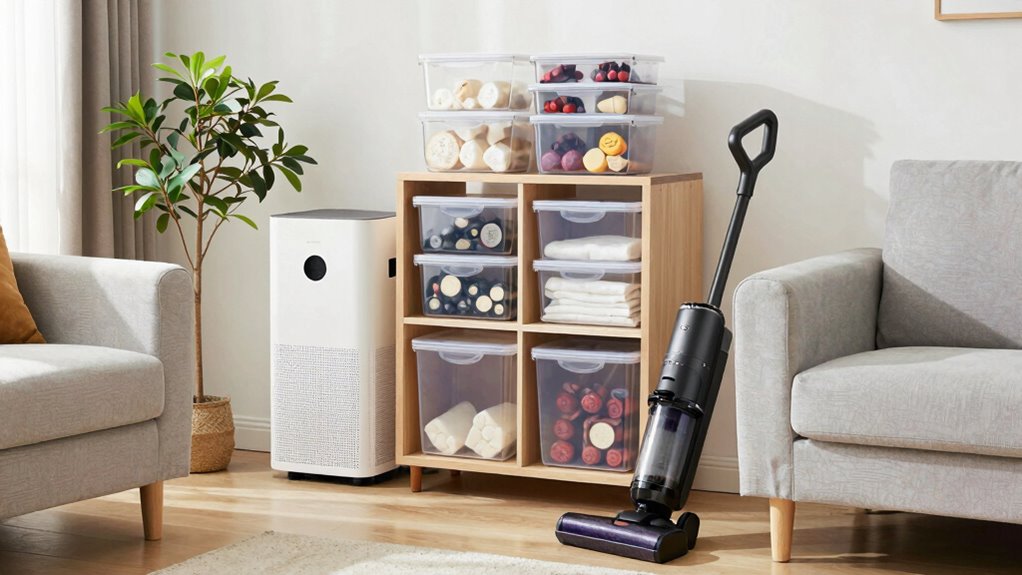
To keep your home consistently dust-free, it’s important to develop a routine for regular cleaning and maintenance. Use air filtration systems with HEPA filters to trap airborne allergens and prevent dust buildup. Regularly replace filters to guarantee peak performance and allergen avoidance. Dust surfaces weekly with a damp cloth to prevent dust particles from becoming airborne. Vacuum carpets and upholstery at least twice a week using a vacuum with a HEPA filter. Maintain low humidity levels to reduce dust mites and mold growth. Keep clutter to a minimum, as it traps dust and makes cleaning harder. Consistent cleaning not only reduces dust but also improves airflow and air quality, making your home safer for allergy sufferers. Over time, these habits help sustain a dust-free environment and minimize allergy symptoms.
Frequently Asked Questions
How Often Should I Replace Air Filters for Optimal Dust Control?
You should replace your air filter every 1 to 3 months for maximum dust control. The air filter lifespan depends on the filter type—pleated filters last longer than basic ones. Dust filter types like HEPA or electrostatic filters are highly effective in trapping dust and allergens. Regular replacement ensures your HVAC system runs efficiently and reduces dust buildup, helping keep your household allergy-friendly and comfortable.
Can Houseplants Help Reduce Dust and Allergens Effectively?
Yes, houseplants can help reduce dust and allergens effectively. Plant benefits include trapping airborne particles and increasing humidity, which minimizes dust and allergen buildup. You should choose plants like peace lilies or pothos, known for their air-purifying qualities. Regular watering and dusting the leaves enhance their allergen reduction benefits. Incorporate plants into your home to create a healthier, dust-reduced environment naturally.
What Are the Best DIY Methods to Minimize Dust Buildup?
To minimize dust buildup, you should focus on DIY cleaning and dust prevention strategies. Regularly dust surfaces with a damp cloth to trap particles, and vacuum with a HEPA filter to remove allergens effectively. Declutter your space to reduce dust traps, and wash bedding weekly in hot water. Use washable curtains and avoid heavy textiles that trap dust. These simple DIY methods will keep dust levels lower and improve indoor air quality.
Are There Specific Cleaning Products That Trap Less Dust?
You should look for eco-friendly vacuums with HEPA filters, as they trap more dust and allergens. Use cleaning products labeled hypoallergenic or fragrance-free to reduce airborne particles. These products help minimize dust resettling. Additionally, opt for hypoallergenic fabrics for your curtains and upholstery, which attract less dust. Regularly vacuum and wash surfaces with these gentle, effective products to keep dust levels low and improve air quality in your home.
How Does Humidity Level Influence Dust Accumulation in Homes?
You might be surprised how humidity levels impact dust buildup. When humidity is too high, it encourages dust mite proliferation, making dust more stubborn and harder to remove. Conversely, keeping humidity controlled around 40-50% reduces these tiny pests and minimizes dust accumulation. Proper humidity control creates an environment less inviting for dust mites, making your home cleaner and more comfortable. Don’t overlook this simple step—your allergy symptoms could improve dramatically.
Conclusion
By mastering minimalism and maintaining mindful movement, you can minimize mess and monster dust. Regular routines, smart selections, and savvy ventilation create a sanctuary where sneezing and sniffles stay at bay. Keep clutter clear, clean consistently, and choose dust-resistant décor to deliver a delightful, dust-free domain. With these simple steps, you’ll swiftly strengthen your space, turning your home into a haven of health, happiness, and fresh, fuss-free airflow.