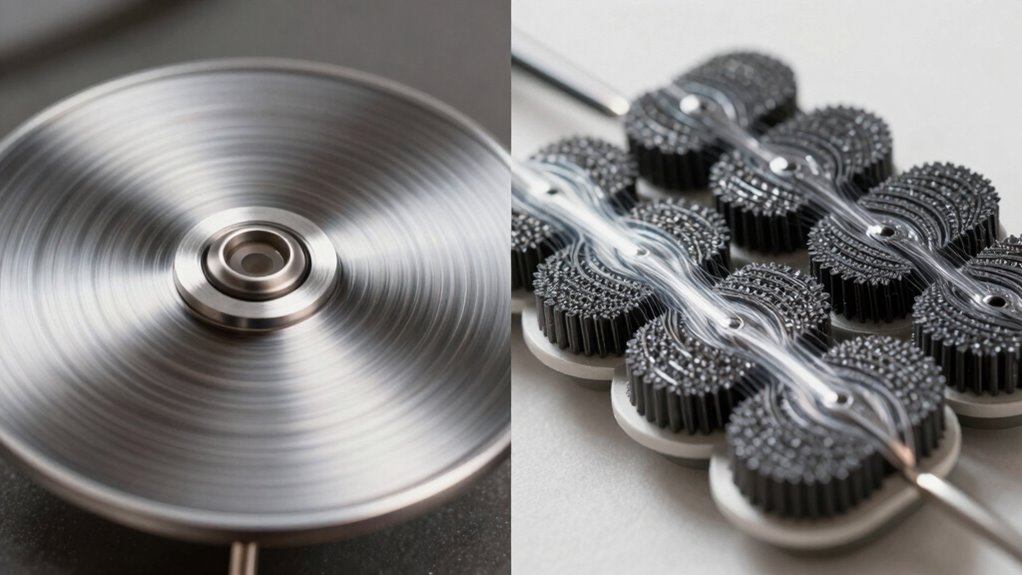
Spinning pads use rotation and firm abrasives to scrub away dirt quickly, making them effective for stubborn grime, but they can sometimes be harsh on delicate surfaces. Vibrating pads rely on high-frequency movements to loosen dirt gently, ideal for sensitive areas and light cleaning tasks. Your choice depends on the surface and dirt type. Want to understand which pad suits your needs best? Keep exploring to uncover the full cleaning truth.
Key Takeaways
- Spinning pads use rapid rotation and microfiber technology for aggressive cleaning, while vibrating pads rely on high-frequency vibrations for gentle dirt removal.
- Spinning pads are more effective on stubborn grime but may cause surface scratches; vibrating pads are safer for delicate surfaces.
- Spinning pads typically operate at higher speeds, providing more vigorous scrubbing, whereas vibrating pads offer easier, quieter, and user-friendly cleaning.
- Material quality and maintenance significantly impact the durability and longevity of both pad types, influencing long-term cleaning efficiency.
- Choosing between them depends on cleaning task, surface delicacy, and user preference for power, ease of use, and safety.

Cordless Electric Mop Pads, 6.3in Spin Mop Pads Compatible with vmai/alfabot/devoac/idoo/eous/verazon/kojeo Cordless Electric Mop, Round Mop Replacement Pads for Floor Cleaning(8 Pack)
- Package Includes: 8 replacement mop pads
- Pad Size: 6.3 inches in diameter
- Soft Cleaning Pads: Loosen and lift dirt
As an affiliate, we earn on qualifying purchases.
As an affiliate, we earn on qualifying purchases.
How Do Spinning Pads and Vibrating Pads Work to Clean?
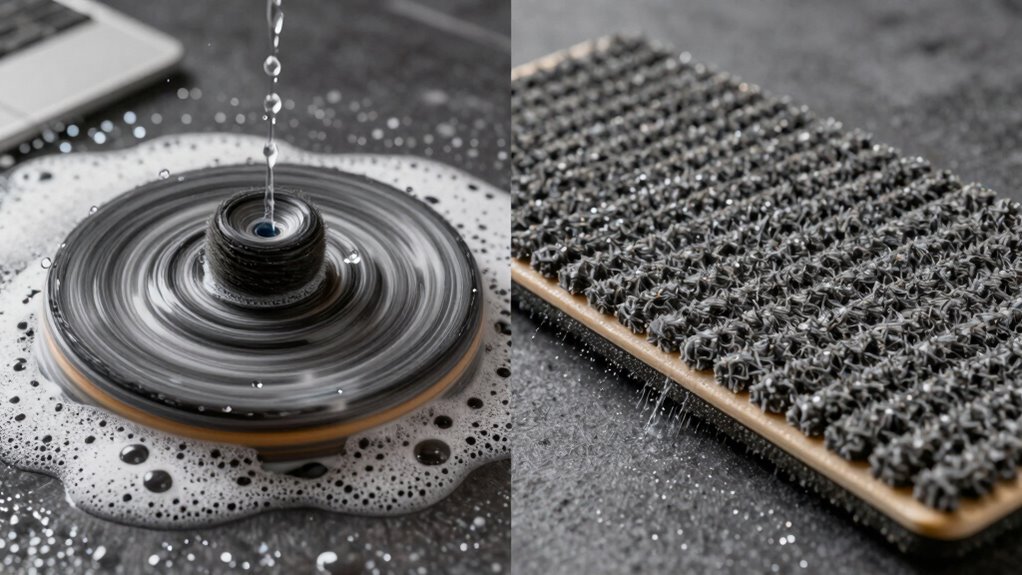
Spinning pads and vibrating pads work differently to clean surfaces, but both rely on mechanical action to remove dirt and grime. Spinning pads use microfiber technology, which enhances their ability to lift and trap dirt as they rotate rapidly. This rotation creates a scrubbing motion that loosens debris from surfaces. Vibrating pads, on the other hand, rely on high-frequency vibrations to dislodge dirt particles, which are then pushed away or absorbed. The power source differences are significant: spinning pads typically operate with a motor powered by electricity or batteries to sustain rotation, while vibrating pads may use oscillating motors that produce rapid vibrations. Both methods aim to maximize cleaning efficiency through their unique mechanical actions, making surface cleaning easier and more effective. Additionally, cleaning effectiveness can be improved by choosing the right pad type for specific surfaces and dirt levels. Understanding the mechanical action behind each type of pad can help users select the most suitable cleaning tool for their needs. Furthermore, considering the energy source required for each can influence the convenience and usability during cleaning routines. Knowing the design features of each pad type can also assist in selecting the best option for different cleaning tasks. For example, user comfort and ergonomics play a crucial role in long cleaning sessions, especially with vibrating pads that may produce more noise and vibration.
Cordless Electric Mop Pads, 6.3in Spin Mop Pads Compatible with vmai/alfabot/devoac/idoo/eous/verazon/kojeo Cordless Electric Mop, Round Mop Replacement Pads for Floor Cleaning(8 Pack)
- Package Includes: 8 replacement mop pads
- Pad Size: 6.3 inches in diameter
- Soft Cleaning Pads: Loosen and lift dirt
As an affiliate, we earn on qualifying purchases.
As an affiliate, we earn on qualifying purchases.
What Are Spinning Pads, and How Do They Remove Dirt?

Spinning pads are specialized cleaning tools designed to remove dirt efficiently through rapid rotation. They use abrasive textures that scrub surfaces, breaking down stubborn grime and loosening debris. The high-speed spinning creates friction, which lifts dirt from the surface without excessive effort. To maximize effectiveness, it’s important to guarantee chemical compatibility; some pads work better with specific cleaning agents, preventing damage or ineffective cleaning.
| Abrasive Textures | Chemical Compatibility |
|---|---|
| Rigid, coarse | Suitable for heavy-duty cleaning |
| Soft, fine | Best for delicate surfaces |
| Multi-layered | Versatile for various tasks |
| Textured surfaces | Compatible with specific cleaners |
| Smooth surfaces | Less aggressive cleaning |

Michao Spin Mop Bucket Deluxe 360 Spinning Floor Cleaning System
- Powerful Spin Wringing: 4x drier than foot pedal models
- Adjustable Telescoping Handle: Extends up to 62 inches for comfort
- Durable Stainless Steel Construction: Basket, wringer, pallet, handle made of stainless steel and PP
As an affiliate, we earn on qualifying purchases.
As an affiliate, we earn on qualifying purchases.
How Do Vibrating Pads Differ From Spinning Pads?

While spinning pads rely on rapid rotation to scrub and lift dirt through friction, vibrating pads use high-frequency movements to loosen debris without necessarily scrubbing. The key difference lies in their pad material and cleaning speed. Spinning pads are often made of dense, durable materials designed for aggressive scrubbing, which makes them effective for tough grime. In contrast, vibrating pads typically feature softer, more flexible materials that allow for gentle, consistent vibrations. This design can help prevent surface damage when cleaning delicate materials. Additionally, spinning pads operate at higher speeds to maximize friction, while vibrating pads work at lower, more controlled speeds focused on loosening dirt. Understanding the mechanics of each pad type can help determine the best choice for different cleaning tasks. Moreover, selecting the appropriate pad type is crucial for surface compatibility and achieving optimal cleaning results. Both pad types serve different purposes based on the cleaning task and surface sensitivity. Recognizing the differences in operation can assist in choosing the most effective cleaning method for various surfaces. For example, understanding cleaning efficiency can guide users toward the most suitable option for their specific needs. Optimal cleaning techniques can depend on understanding these differences for best results.

EZBASICS Silicone Facial Cleansing Brush, IPX7 Waterproof, Violet
- Hygienic Soft Silicone Material: Gentle cleansing for all skin types
- Effective Dirt and Oil Removal: Deep cleanses and unclogs pores
- Portable Oval Design: Easy to hold and carry
As an affiliate, we earn on qualifying purchases.
As an affiliate, we earn on qualifying purchases.
Which Pad Is More Effective for Different Types of Dirt?

Different types of dirt respond better to specific pad technologies, making it important to choose the right one for the job. For light dust and fine debris, microfiber technology excels because it traps particles effectively without scratching surfaces. Microplastics in dust can be effectively removed using microfiber pads, reducing indoor pollutants. Stubborn grime, like grease or mud, benefits from pads with high chemical compatibility, allowing you to use cleaning agents that break down tough residues. For sticky or oily spots, spinning pads with aggressive bristle action can dislodge dirt quickly. Conversely, vibrating pads are ideal for delicate surfaces and gentle cleaning. Visualize these options:
Choosing the right pad ensures effective cleaning of dust, grease, mud, or delicate surfaces.
- A microfiber pad absorbing dust effortlessly
- A chemical-compatible pad dissolving grease
- A spinning pad scrubbing away mud
- A vibrating pad softly cleaning a fragile surface
Understanding the specific dirt type and matching it with the appropriate pad technology ensures superior cleaning results for optimal effectiveness in different cleaning scenarios. Recognizing pad technology differences can significantly enhance cleaning efficiency and surface safety. Additionally, technology advancements continue to improve the versatility and performance of these cleaning tools, making informed choices even more critical.
Are Spinning or Vibrating Pads Easier to Use?

Deciding which pad type is easier to use depends largely on your experience and the task at hand. Spinning pads often feature an ergonomic design that makes handling straightforward, especially for those familiar with rotary tools. They tend to be intuitive, allowing you to control pressure and movement more easily. Vibrating pads, on the other hand, usually have simpler controls with minimal setup, making them accessible for beginners. When it comes to noise levels, vibrating pads are generally quieter, which can make your cleaning experience more comfortable. Spinning pads might produce more noise due to their motorized rotation, but their ergonomic design helps reduce fatigue. Additionally, ergonomic design can significantly impact user comfort during extended use. Moreover, considering machine operation and how each pad responds during cleaning can also influence your preference. The user experience with each type can vary based on individual familiarity and cleaning needs. Overall, if you prefer ease of use with less noise, vibrating pads could be your best choice. Furthermore, understanding performance differences can help you select the most suitable option for your cleaning tasks.
Which Cleaning Pad Offers Better Value Over Time?

When comparing the long-term value of spinning and vibrating pads, durability and how often you need replacements matter most. You’ll want to contemplate how well each type holds up over time and what maintenance they require. Additionally, considering the material quality of each pad can also influence their longevity and overall cost-effectiveness, especially if they are designed with free floating components that can impact their wear and tear. Understanding the wear resistance of different materials helps determine which pad will maintain its effectiveness longer. Moreover, examining the client satisfaction and feedback on each type can provide insights into their real-world performance and reliability. Ultimately, the pad that lasts longer and costs less to keep in good shape offers better value for your money.
Durability and Longevity
While both spinning pads and vibrating pads are designed for durability, their longevity depends on how you use and maintain them. The pad material plays a vital role; high-quality foam or microfiber resists wear better over time. Consider these factors:
- Frequent use on rough surfaces can cause premature wear.
- Poor storage exposes pads to dirt and moisture, degrading the material.
- Using cleaning solutions incompatible with your pad material can weaken it.
- Consistent cleaning efficiency relies on maintaining the integrity of the pad’s surface.
A sturdy pad material maintains its shape longer, ensuring effective cleaning over time. Vibrating pads with durable materials often last longer, offering better value. Proper care extends lifespan, making your investment more worthwhile.
Maintenance and Replacement
Maintenance and replacement play a significant role in determining which cleaning pad offers better value over time. Spinning pads require regular upkeep of their electric motor, ensuring it stays free of debris to prevent overheating or failure. You’ll need to check for wear on the pad itself and replace it when it becomes worn or damaged. Sustainable options are increasingly available, providing longer-lasting durability and reducing waste. Additionally, selecting eco-friendly materials can contribute to a more sustainable cleaning routine. Vibrating pads generally have fewer moving parts, making maintenance simpler and often less costly. They tend to produce a lower noise level, which can be a benefit if you prefer a quieter operation. Over time, the cost of replacing parts or entire units influences overall value. If you prioritize durability with minimal maintenance, vibrating pads might be more economical long-term. However, spinning pads could be worth the investment if their performance justifies the upkeep.
How Durable Are Spinning and Vibrating Pads?

Both spinning and vibrating pads are designed to withstand regular use, but their durability can vary based on construction and materials. The pad material plays a vital role in how long your pad lasts and how well it maintains cleaning efficiency. Consider these factors:
- High-quality foam resists tearing and keeps its shape during repeated use.
- Durable microfiber ensures longevity and effective dirt pickup.
- Sturdy backing prevents peeling or cracking over time.
- Water-resistant coatings protect against moisture damage, extending your pad’s lifespan.
Ultimately, a well-made pad with quality materials offers better durability, so you won’t need frequent replacements. This means consistent cleaning efficiency, saving you time and money in the long run.
Which Pad Is Safer for Delicate Surfaces?

When choosing between spinning and vibrating pads for delicate surfaces, you’ll want to take into account the risk of scratching and how the pad material interacts with your surface. Different materials have varying levels of softness and abrasiveness, affecting compatibility. Understanding these factors helps ensure you pick a safer option that won’t damage your surfaces.
Risk of Scratching
Vibrating pads tend to be safer for delicate surfaces because they typically use softer, less abrasive materials that reduce the risk of scratching. Their lower abrasion potential means you’re less likely to damage sensitive finishes. Imagine these scenarios:
- You glide the vibrating pad gently over a glass table, barely touching, minimizing contact.
- The pad’s soft surface cushions against fine china, preventing scuffs.
- The motion is smooth, avoiding harsh scrapes on polished wood.
- The gentle vibrations dislodge dirt without scraping or gouging delicate surfaces.
Because of these factors, vibrating pads generally offer better surface safety. They’re designed to clean effectively while minimizing the risk of scratching, making them a safer choice for fragile or easily scratched surfaces.
Pad Material Differences
The materials used in pads play a crucial role in determining their safety for delicate surfaces. Soft, non-abrasive pad materials like microfiber or foam are gentler and less likely to cause damage, making them ideal for sensitive areas. On the other hand, pads made from denser or more abrasive materials may improve cleaning effectiveness but risk scratching delicate surfaces. Choosing the right pad material depends on balancing cleaning power with surface safety. For delicate surfaces, opt for softer materials that provide gentle cleaning without sacrificing effectiveness. Remember, a pad’s material influences not only how well it cleans but also how safe it is to use. Always select a pad designed specifically for delicate surfaces to prevent damage and ensure ideal cleaning results.
Surface Compatibility
Choosing the right pad for delicate surfaces depends largely on its surface compatibility. You want to avoid scratches or damage, so consider these factors:
- Surface texture—smooth pads are gentler, reducing abrasion on fragile finishes.
- Chemical compatibility—ensure cleaning agents won’t react with the pad material, preventing discoloration or deterioration.
- Material softness—softer pads minimize impact on delicate surfaces like painted or glass finishes.
- Pad design—flat, even contact helps distribute pressure evenly, avoiding hotspots that can cause damage.
A spinning pad with a softer surface texture is generally safer, but always verify chemical compatibility with your cleaning products to prevent unintended harm. The right combination keeps your delicate surfaces pristine without risking scratches or chemical reactions.
How to Choose the Best Cleaning Pad for Your Needs

Selecting the right cleaning pad depends on understanding your specific needs and the surfaces you plan to clean. Start by deciding between electric vs manual options; electric pads often offer more power and efficiency, ideal for heavy-duty tasks, while manual pads give you more control and are typically more affordable. Consider your budget considerations—if you’re on a tight budget, a manual pad might suffice, but investing in an electric pad can save time for frequent or tough cleaning jobs. Think about the surface material and dirt level. For delicate surfaces, a gentle manual pad works best, while stubborn grime might require a more powerful electric spinning or vibrating pad. Choosing the right pad guarantees effective cleaning without damaging your surfaces or breaking your budget.
Frequently Asked Questions
Can Spinning or Vibrating Pads Damage Sensitive Surfaces?
Spinning or vibrating pads can damage sensitive surfaces if they aren’t compatible. You need to check the surface compatibility before use, as some materials may scratch or wear down. Also, consider pad durability; low-quality pads might tear or cause abrasions. By choosing the right pad for your surface and ensuring it’s durable, you prevent damage and keep your surfaces safe during cleaning or polishing.
Do Specific Cleaning Pads Work Better for Certain Stains?
Yes, specific cleaning pads do work better for certain stains. For stain removal, choose pads designed for your stain type, like abrasive pads for tough spots or softer ones for delicate surfaces. Pad effectiveness varies based on the material and stain, so matching the pad to the stain guarantees better cleaning results. Always test a small area first to avoid damage and maximize your cleaning efficiency.
How Often Should I Replace My Cleaning Pads?
Think of your cleaning pads as loyal tools in your cleaning arsenal. Typically, you should replace your cleaning pads when their lifespan diminishes—usually every 3 to 6 months, depending on usage and build-up. Pay attention to signs like fraying, persistent odors, or reduced effectiveness. Regular replacement ensures peak cleaning, prevents spreading germs, and keeps your device working efficiently. Don’t wait too long—fresh pads make a world of difference!
Are There Environmental Impacts of Using Spinning Vs Vibrating Pads?
You might wonder about the environmental impacts of spinning versus vibrating pads. Spinning pads often have higher manufacturing emissions due to complex machinery, but they can be more durable, reducing waste. Vibrating pads typically have a smaller carbon footprint initially but may need replacement sooner. Recycling benefits are similar for both, but choosing durable, recyclable pads and properly disposing of them helps minimize environmental harm, regardless of the type.
Can These Pads Be Used on Outdoor Surfaces?
Yes, you can use spinning and vibrating pads on outdoor surfaces, but you should consider outdoor durability and surface compatibility. Make certain the pads are designed for outdoor use to withstand weather conditions. Check that they won’t damage delicate surfaces like painted or wooden areas. Using the right pad for your outdoor surface helps prevent scratches, prolongs the pad’s life, and ensures effective cleaning without harm.
Conclusion
Ultimately, whether you choose spinning or vibrating pads, the right choice depends on your cleaning needs—sometimes, a simple tool can surprise you, just like how a small pad can make a big difference. Both methods have their strengths and quirks, reminding us that even the smallest decisions can lead to cleaner surfaces and smoother days. Trust your instincts, because often, it’s the little things that reveal the biggest truths.