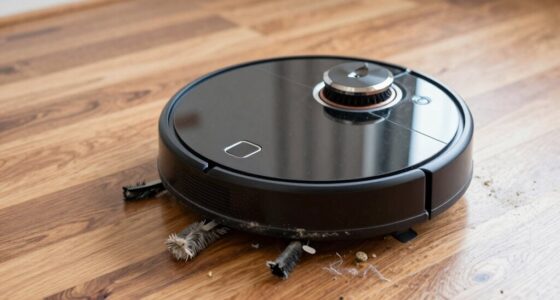
Even expensive robot vacuums can lose suction over time because their filters, brushes, and internal parts get clogged or wear out. Battery degradation and design flaws, like leaks or poor seals, also weaken suction power. Regular maintenance helps prevent some issues, but gradual component wear is inevitable. If you want to understand how to keep your vacuum performing at its best, there’s more to know about troubleshooting and maintenance tips.
Key Takeaways
- Clogged filters and brushes restrict airflow, reducing suction efficiency over time.
- Battery degradation leads to decreased power, causing weaker suction in expensive robots.
- Sensor calibration issues can mismanage suction levels, resulting in performance drops.
- Design flaws like worn seals or leaks allow air escape, diminishing suction strength.
- Regular maintenance, including cleaning and replacing components, is essential to sustain optimal suction.
Why Does My Robot Vacuum Lose Suction Over Time?

Over time, your robot vacuum can lose suction because its filters and brushes become clogged with dirt and debris. But other factors can also play a role. Battery degradation affects performance; as the battery weakens, the vacuum may not generate enough power to maintain strong suction. Additionally, sensor calibration is crucial for peak operation—if sensors aren’t correctly calibrated, the vacuum might not navigate efficiently or adjust suction levels properly. Poor calibration can cause it to miss dirt spots or reduce suction in certain areas. Regularly cleaning filters and brushes helps with clogging, while checking the battery health and recalibrating sensors ensures your vacuum maintains its suction power. Proper maintenance and addressing these factors prevents unnecessary performance drops and keeps your vacuum running effectively. Regularly inspecting sensor accuracy is essential for optimal operation and consistent suction. Moreover, incorporating high-tech features like digital displays can assist in identifying issues early and optimizing maintenance routines. To further improve performance, understanding how component wear impacts suction can help you take proactive measures before significant issues develop.
Wear and Tear That Reduce Your Robot Vacuum’s Suction

As your robot vacuum ages, its components naturally wear down, which can lead to a decline in suction power. Battery degradation reduces overall power supply, causing the motor to struggle and operate less efficiently. Over time, the motor’s efficiency decreases due to worn brushes or internal parts, making it less capable of generating strong suction. This wear can be accelerated by regular maintenance and proper usage habits. Additionally, older batteries may cause inconsistent power delivery, further impacting suction. Regularly checking the battery’s health and understanding that motor wear is inevitable helps you recognize when your vacuum needs maintenance or replacement parts. component wear and engine upgrades are critical factors to consider when maintaining optimal suction performance in your robot vacuum. Understanding these wear and tear factors and addressing these issues through maintenance can help prolong your robot vacuum’s effectiveness. Addressing these wear and tear factors is essential to keeping your robot vacuum’s suction at ideal levels.
How Clogged Filters and Blockages Lower Suction Power

Clogged filters and blockages are common culprits behind reduced suction power in your robot vacuum. Over time, dust, hair, and debris build up in the filter, causing airflow obstruction that hampers cleaning performance. Regular filter maintenance is essential to keep your vacuum working efficiently; neglecting it leads to decreased suction and longer cleaning times. Blockages can also occur in the intake or hose, further restricting airflow. When filters are dirty or clogged, your robot has to work harder to pull in debris, which can strain the motor and diminish suction. To prevent this, check and clean filters frequently, replace them as needed, and clear any obstructions in the intake path. Proper maintenance guarantees maximum airflow and consistent suction power. Additionally, being aware of potential scams and faulty products when purchasing replacement filters can ensure your vacuum performs optimally. Regularly inspecting and maintaining all airflow pathways will help sustain consistent suction, and using quality filters can also improve overall performance and reduce the likelihood of future blockages. Ensuring the use of original manufacturer parts can also help maintain optimal vacuum function and prevent unexpected issues.
Design Flaws That Cause Suction Loss in Robot Vacuums

Design flaws in robot vacuum models can substantially contribute to suction loss, often without you noticing. Poorly designed seals or gaps create suction leaks, reducing overall power. For example, models with misaligned parts or cheap materials are prone to air escaping, diminishing suction efficiency. These issues can be exacerbated by seasonal temperature changes, which cause materials to expand or contract and compromise seals. Additionally, material durability plays a crucial role in maintaining long-term suction strength, as inferior materials are more susceptible to damage. Regularly inspecting sealing mechanisms can help prevent unnoticed suction drops. Understanding how design specifications influence performance can guide you in selecting more reliable models. These design flaws mean that even expensive robots can suffer from weak suction over time. To help you identify common issues, here’s a quick overview:
| Flaw Type | Effect | Solution Tip |
|---|---|---|
| Poor Seals | Causes suction leaks | Check and replace worn seals |
| Loose Fittings | Air escapes, reduces suction | Tighten or replace fittings |
| Inadequate Material Choice | Leads to cracks, leaks | Opt for models with durable parts |
Addressing these design flaws can restore suction power and improve cleaning performance.
How to Maintain and Boost Your Robot Vacuum’s Suction

To keep your robot vacuum’s suction at its best, regular maintenance is essential. Start by checking the dust compartment; empty it frequently to prevent clogging and airflow restrictions. A full dust bin reduces suction power, so clear it after each use. Battery degradation can also impact performance, so ensure your battery is functioning properly—replace it if it’s no longer holding a charge. Clean the filters and brushes regularly, as dirt buildup hampers suction and motor efficiency. Consider upgrading to higher-quality filters if possible. Keeping these components clean and replacing worn parts will help maintain ideal suction. Additionally, battery health plays a crucial role in overall device performance, so monitor it regularly. Regularly inspecting and maintaining the vacuum’s motor ensures consistent suction levels. Using manufacturer-recommended parts and following the maintenance schedule provided will further optimize performance. Keeping these components clean and replacing worn parts will help maintain ideal suction. Proper airflow management around the robot vacuum is also vital to prevent performance drops. For long-term efficiency, it’s important to understand how dust accumulation can affect the device and address it promptly. By staying proactive with maintenance, you’ll maximize your robot vacuum’s cleaning power and extend its lifespan.
Frequently Asked Questions
Can Using the Vacuum on Different Surfaces Affect Suction Longevity?
Yes, using your vacuum on different surfaces can affect suction longevity. Surface compatibility plays a role, as some materials like carpets or textured surfaces require more suction, which can wear out components faster. Material variability also impacts performance; harder or uneven surfaces may cause strain on the vacuum’s parts, leading to decreased suction over time. Always adjust settings or use appropriate attachments to help maintain peak suction and extend your vacuum’s lifespan.
Do Battery Health Issues Impact the Vacuum’s Suction Power?
If your vacuum’s suction weakens, battery health issues could be the culprit. For example, battery degradation causes power fluctuations, reducing overall suction strength. As the battery ages, it can’t supply consistent energy, leading to decreased performance even on high-end models. You might notice shorter run times or weaker suction, especially after extended use. Keeping the battery healthy ensures your vacuum maintains peak suction and cleans efficiently.
Is There a Difference in Suction Loss Between Robot Vacuum Brands?
Yes, there is a difference in suction loss between robot vacuum brands. Brand comparison shows that some brands maintain consistent suction power longer, thanks to better motor design and quality components. Feature differences, like advanced sensors and stronger brushes, also impact performance. You’ll notice that higher-end models often retain suction better over time, but it’s essential to evaluate specific features and reviews to find the best fit for your cleaning needs.
How Does Frequent Cleaning of Brushes Affect Overall Suction Performance?
Frequent cleaning of your robot vacuum’s brushes improves overall suction performance by preventing debris buildup that can clog the system. When you regularly perform brush maintenance, you reduce blockages and ensure better airflow, which helps maintain ideal suction. Neglecting this task allows dirt and hair to accumulate, decreasing efficiency. So, make it a habit to clean your brushes often; it keeps your robot working at its best and extends its lifespan.
Can Software Updates Improve or Worsen Suction Efficiency?
Think of software updates like tuning a musical instrument—you can improve harmony or create discord. Sometimes, a firmware glitch or software bug from an update can temporarily reduce your robot’s suction efficiency, like a sour note. But generally, updates are designed to optimize performance, fixing bugs that cause suction drops. Keep your software current, and if issues arise, report them; manufacturers often release patches to restore harmony.
Conclusion
Remember, even the best tools need care to perform their best. Regular maintenance, like cleaning filters and checking for blockages, can keep your robot vacuum’s suction strong. Don’t ignore signs of wear or design flaws—address them early. After all, a stitch in time saves nine. By staying proactive, you’ll ensure your vacuum continues to clean effectively, saving you time and money in the long run. Keep it maintained, and it’ll serve you well.