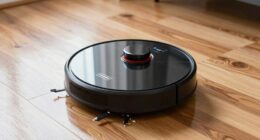

During allergy season, choose a robot vacuum with a HEPA filter to trap tiny allergens like pollen and dust mites effectively. Set your vacuum to its highest suction mode and schedule regular cleanings, at least daily or multiple times a week, to reduce allergen buildup. Keep your space clutter-free and maintain the filters often for peak performance. Want more tips on maximizing your vacuum’s allergy-fighting power? Keep exploring for useful strategies.
Key Takeaways
- Choose robot vacuums with HEPA filters to trap tiny allergens like pollen and dust mites effectively.
- Schedule regular cleaning sessions, ideally daily or multiple times weekly, to reduce allergen buildup.
- Use the highest suction setting and allergy-focused modes for deep cleaning of high-traffic areas.
- Keep the environment clutter-free and designate no-go zones to enhance cleaning efficiency and prevent spreading debris.
- Regularly empty the dustbin and replace or clean filters to maintain optimal allergen removal performance.
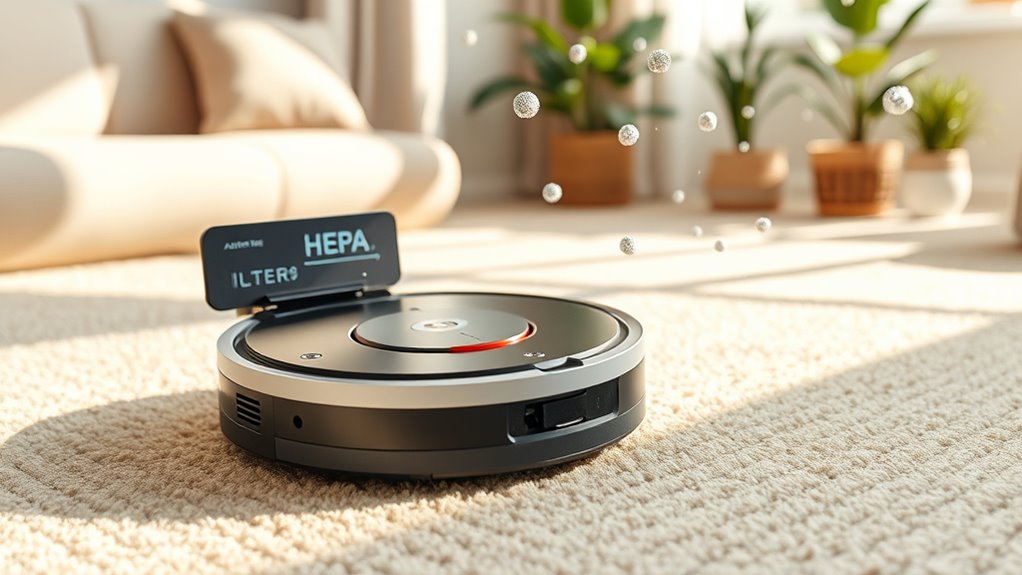
As allergy season ramps up, cleaning becomes more important than ever, and robot vacuums can be a game-changer. They help you maintain a cleaner environment by efficiently tackling dust, pet dander, pollen, and other allergens that trigger allergy symptoms. One of the key features to look for is effective air filtering. Modern robot vacuums equipped with HEPA filters can trap tiny particles, including pollen and microscopic dust mites, preventing them from being recirculated into your home’s air. When you choose a robot vacuum with superior air filtering, you’re not just cleaning your floors—you’re actively improving your indoor air quality, which is essential for allergy sufferers.
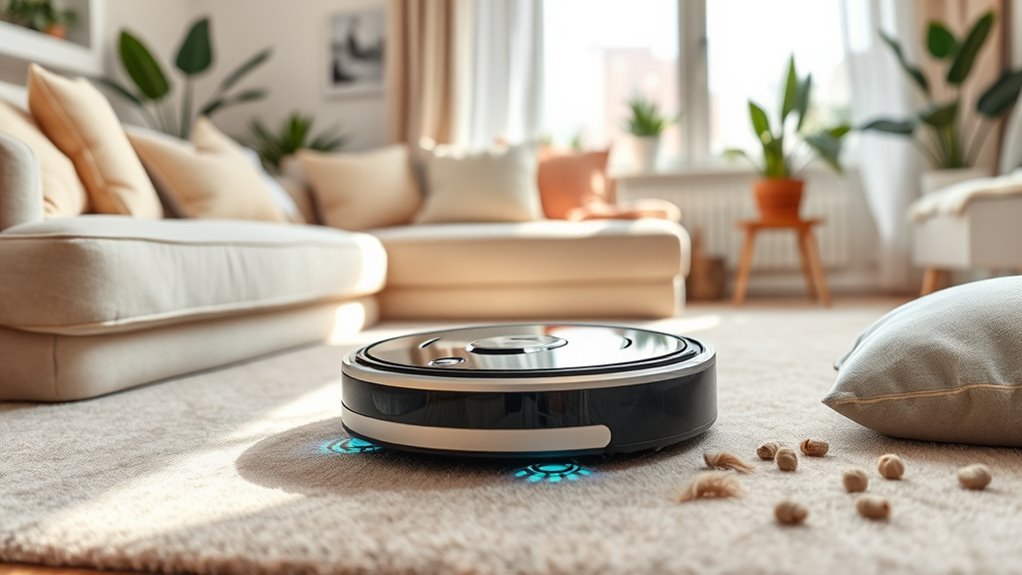
Allergen removal is at the heart of why robot vacuums are so valuable during allergy season. These devices can be programmed for consistent, scheduled cleaning, ensuring that your floors and carpets are regularly cleared of potential allergens. Unlike manual vacuuming, which might be skipped or inconsistent, a robot vacuum can run daily or multiple times a week, reducing the buildup of allergens over time. This consistent cleaning routine minimizes dust and pet dander in your environment, helping you breathe easier and reducing allergy flare-ups.
When setting up your robot vacuum, consider using the highest suction setting available. This maximizes its ability to lift embedded dirt, pet hair, and allergens from deep within carpets and rugs. Pay attention to the specific cleaning modes designed for allergy relief; many models feature targeted cleaning options that focus on high-traffic areas or spaces prone to dust accumulation. Also, ensure your vacuum’s filters are properly maintained—regularly replacing or cleaning HEPA filters keeps the device working at peak efficiency for allergen removal.
Another tip is to designate certain areas as “no-go zones” to prevent the vacuum from spreading debris from non-cleaning surfaces or cluttered spaces. Keep your floors free of loose cords and small objects, which can interfere with deep cleaning and allergen removal. The more clutter-free and well-maintained your space, the more effective your robot vacuum will be at removing allergens and improving air quality.
Incorporate routine maintenance into your cleaning schedule. Empty the dustbin frequently, especially during allergy season, and check filters regularly to ensure they’re functioning correctly. Proper upkeep guarantees your robot vacuum continues to deliver ideal air filtering and allergen removal. With the right settings, regular use, and good maintenance, your robot vacuum becomes an essential tool, helping you breathe easier and enjoy a cleaner, healthier home during allergy season.
Frequently Asked Questions
Can Robot Vacuums Detect and Avoid Allergen-Rich Areas?
You might wonder if robot vacuums can detect and avoid allergen-rich areas. Many models now feature allergen detection sensors that help identify high-allergen zones. Combined with obstacle avoidance technology, these vacuums can navigate around sensitive spots or clutter, reducing allergen disturbance. Keep in mind, though, that while they improve cleaning efficiency, they might not entirely prevent allergens from spreading, so additional cleaning methods could be necessary for allergy sufferers.
Are Robot Vacuums Safe for Homes With Pets During Allergy Season?
During allergy season, you might wonder if robot vacuums are safe for homes with pets. They’re generally safe, but you should choose models designed to handle pet hair and reduce allergy triggers. Look for vacuums with HEPA filters, which trap pet dander and allergens, and confirm they avoid pet-sensitive areas. Regularly cleaning the vacuum also minimizes allergen buildup, making your home safer and more comfortable for both you and your pets.
How Often Should I Schedule My Robot Vacuum for Allergy Cleaning?
You want to keep your home allergen-free, so scheduling frequency is key. During allergy season, you should vacuum more often—at least once daily or every other day—to prevent allergen buildup. Regular cleaning reduces dust, pet dander, and pollen, making your environment healthier. Adjust your robot vacuum’s schedule based on your allergy severity, home size, and pet presence. Consistency is your best defense against allergy triggers.
Do Robot Vacuums With HEPA Filters Effectively Reduce Allergens?
Yes, robot vacuums with HEPA filters effectively reduce allergens in your home. They capture tiny particles like pet dander, pollen, and dust mites, improving air quality. To maintain allergen capture efficiency, you should regularly check and replace HEPA filters as recommended. Proper HEPA filter maintenance guarantees your robot vacuum continues to minimize allergens, helping you breathe easier during allergy season.
Can Robot Vacuums Be Used on All Types of Flooring During Allergy Season?
You can use robot vacuums on most flooring types during allergy season, but check their floor compatibility first. Many models work well on hardwood, tile, and low-pile carpets, helping with allergen reduction. For carpet cleaning, guarantee your robot has strong suction and appropriate brushes. Keep in mind, some high-pile carpets might be challenging, so select a model designed for thorough cleaning across different surfaces to keep allergens at bay.
Conclusion
To keep your home allergen-free, you need the right robot vacuum, the right settings, and the right routine. Use your vacuum’s allergy-friendly features, schedule regular cleanings, and maintain filters for ideal performance. Stay consistent, stay proactive, and stay vigilant. With the right approach, you can reduce allergens, improve air quality, and enjoy a healthier home. Keep up with your cleaning, customize your settings, and breathe easier this allergy season.