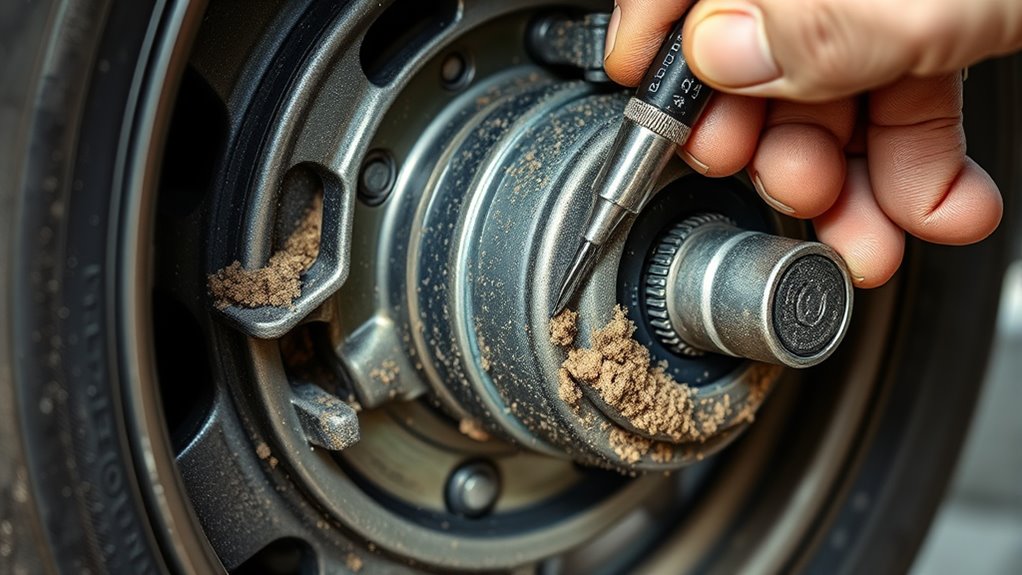

To remove debris from your wheels and axles, start by rinsing off loose dirt, mud, and grime with water. Use a soft brush and suitable cleaning solutions to scrub both the tire surfaces and around the axle joints. Be sure to inspect for rust or damage and address issues promptly. Regular maintenance keeps your vehicle running smoothly and prevents costly repairs—keep going to discover more tips for effective debris removal.
Key Takeaways
- Use gentle brushes and appropriate cleaning solutions to remove dirt, mud, and grime from wheels and axles.
- Focus on cleaning around axle joints, bearings, and seals with wire brushes or compressed air.
- Rinse thoroughly to eliminate residual debris and prevent corrosion or buildup.
- Inspect hubs and surrounding components for rust, cracks, or damage, addressing issues promptly.
- Incorporate debris removal into regular maintenance to ensure smooth operation and prolong vehicle lifespan.
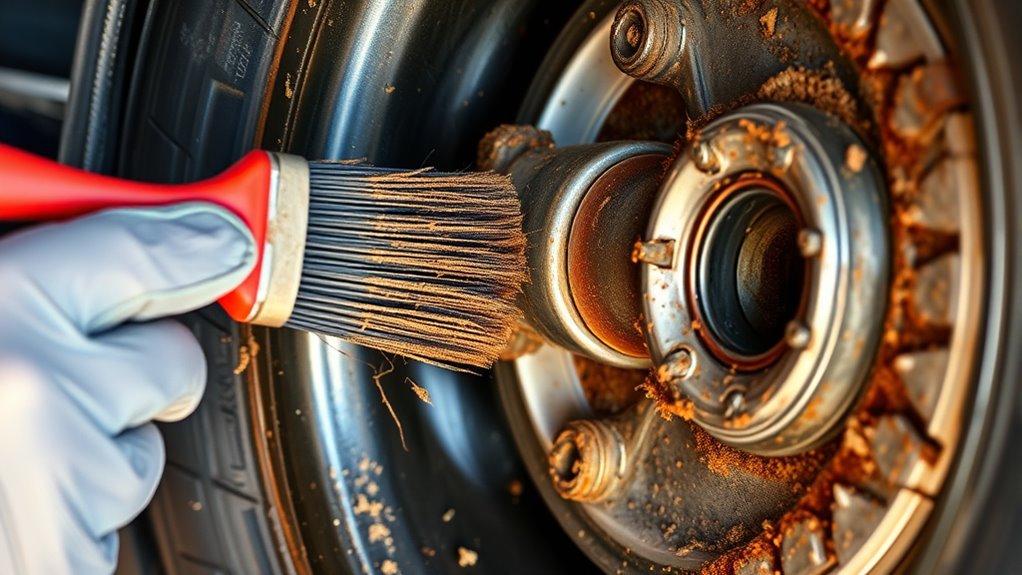
Regularly removing debris from wheels and axles is essential to keep your vehicle running smoothly. When debris accumulates, it can cause unnecessary wear and tear, leading to costly repairs down the line. One of the most important aspects of this maintenance is tire cleaning. Dirt, mud, and grime can settle in the tread and sidewalls, reducing traction and potentially causing uneven wear. By routinely cleaning your tires, you ensure better grip on the road and extend the lifespan of your tires. Use a gentle brush and appropriate cleaning solutions to remove stubborn dirt without damaging the rubber. Don’t forget to rinse thoroughly to wash away any residual debris, which can otherwise cause deterioration over time.
Regular tire cleaning prevents wear and extends lifespan through debris removal and proper maintenance.
Along with tire cleaning, axle maintenance plays a crucial role in vehicle health. Axles support your vehicle’s weight and enable smooth rotation of the wheels. When debris such as dirt, stones, or road grime gets lodged around the axle area, it can hinder proper movement and accelerate corrosion. Regularly inspecting and cleaning the axle area helps prevent these issues. You should focus on removing debris from around the axle joints, bearings, and seals. Use a wire brush or compressed air to dislodge stubborn particles, and apply lubrication where necessary to maintain smooth operation. Proper axle maintenance not only reduces noise and vibration but also prevents more serious mechanical failures.
Pay close attention to the hubs and surrounding components during your cleaning routine. Accumulated debris can sometimes hide cracks or damage, so take the time to visually inspect these areas. If you notice any rust or corrosion, address it immediately with rust removers or protective coatings. Keeping the axle areas free of debris also helps maintain proper lubrication, which is vital for avoiding premature wear or seizure. Regular cleaning and maintenance can also reduce the risk of cognitive impairment caused by long-term exposure to debris and corrosion in mechanical parts. Remember, neglecting these small details can lead to larger issues, such as axle failure or wheel misalignment, which can compromise your safety on the road.
Incorporate these cleaning practices into your regular vehicle maintenance schedule. Not only does this keep your wheels and axles in top shape, but it also helps you catch potential problems early. Consistent tire cleaning and axle maintenance are cost-effective ways to prolong your vehicle’s lifespan and ensure reliable performance. You’ll find that a little effort now saves you a lot of time and money later. So, make it a point to remove debris from your wheels and axles regularly, and your vehicle will thank you with smoother rides and fewer breakdowns.
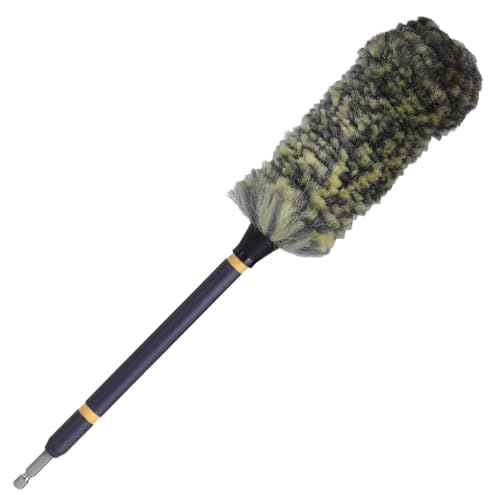
Mr. Detroit – Drill Wheel Brush w/Durable Soft Wool Microfiber Bristles
- Scratch-Free Cleaning: Safely removes dirt without surface damage
- Efficient Cleaning Power: Removes brake dust and grime easily
- Versatile Application: Suitable for cars, motorcycles, and bikes
As an affiliate, we earn on qualifying purchases.
As an affiliate, we earn on qualifying purchases.
Frequently Asked Questions
Can Debris Damage Wheel Bearings Over Time?
Yes, debris can damage wheel bearings over time, especially if it causes bearing corrosion or affects wheel alignment. When dirt, mud, or debris gets into the bearings, it can accelerate corrosion and wear. Misaligned wheels put extra stress on bearings, making them more vulnerable. Regular cleaning and inspections help prevent debris buildup, protecting your wheel bearings and ensuring smooth operation. Proper maintenance extends the lifespan of your wheel components.
How Often Should I Check for Debris Buildup?
Don’t delay detecting debris debris buildup—check your tire tread and brake dirt weekly. Regular inspections prevent potential problems like uneven wear or damage to wheel bearings. If you notice stubborn grime or debris, clean it promptly to keep wheels spinning smoothly. Staying vigilant ensures your vehicle’s safety, prevents costly repairs, and maintains ideal performance. So, make debris checks part of your routine, and enjoy a safer, smoother ride every time.
Are There Specific Tools Recommended for Cleaning Wheels?
For wheel cleaning, you should use soft brushes, microfiber cloths, and a gentle degreaser or soap. These tools help with debris removal methods by gently loosening and removing dirt without damaging the wheel surface. A small detailing brush works well for tight spots, while a hose with a spray nozzle helps rinse away loosened debris. Always dry your wheels thoroughly afterward to prevent rust and maintain their shine.
What Are Signs of Axle Damage Caused by Debris?
When debris causes damage, you’ll notice uneven tire wear, vibrations, or strange noises, signaling your axle may be out of whack. Keep an eye on axle alignment and practice debris prevention to avoid costly repairs. If left unchecked, debris can cause bent axles or damaged bearings. Don’t let small problems snowball—regular inspections can catch issues early and keep your wheels rolling smoothly.
Is Professional Cleaning Necessary for Heavily Contaminated Axles?
Yes, professional cleaning is necessary for heavily contaminated axles. When debris is extensive, it can cause damage, so specialists use specialized lubricants to clean and protect the components. They also check tire alignment to guarantee proper vehicle handling. Regular professional cleaning helps prevent long-term wear and keeps your axles functioning smoothly, reducing the risk of costly repairs down the line. Trust experts to keep your axles in ideal condition.

Tresalto Auto Trim Removal Tool Kit – 5 Piece set for Dash, Door Panel, Clip Remover – Scratch-Resist Nylon Pry Tools for Interior Car Trims Work – Panel Prying Tools Included – Blue
- Non-Scratch Nylon Pry Tools: Protects surfaces from scratches
- Versatile Panel Removal: Ideal for dashboards and door panels
- Flexible and Durable Design: Handles tight angles without damage
As an affiliate, we earn on qualifying purchases.
As an affiliate, we earn on qualifying purchases.
Conclusion
So, next time you ignore those stubborn bits of debris on your wheels and axles, remember—they might just be the tiny troublemakers causing bigger problems. It’s ironic how something so small can lead to bigger issues if left unchecked. Taking a moment to remove debris now saves you from costly repairs later. After all, neglecting little things often results in bigger headaches—who knew cleanliness could be so vital?

oesee Professional 4 Pack Long Handle Wheel Brush Kit for Cleaning Wheel and Tire- 2X Soft Wheel Cleaning Brush, Detailing Brush and Stiff Tire Brush, Bendable& Durable Wheel Rim Cleaner Brush Set
- Complete Wheel and Tire Cleaning Set: Includes 4 brushes for rims and tires
- Soft and Stiff Brush Options: Ultra soft for rims, stiff for tires
- Scratch-Free, High-Quality Materials: Metal-free design and soft plush for safety
As an affiliate, we earn on qualifying purchases.
As an affiliate, we earn on qualifying purchases.

2 Brightvision Early Redline Tune-Up Tools – Axle and Wheel Straightener
- Proven Design for Over 25 Years: Trusted and reliable tool design
- Premier Reproduction: High-quality reproduction product
- Compatible with 1968-1972 Redlines: Fits specific Redline models
As an affiliate, we earn on qualifying purchases.
As an affiliate, we earn on qualifying purchases.