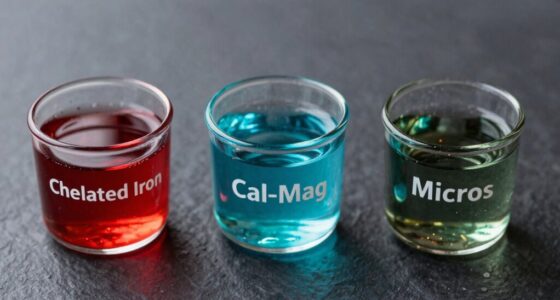
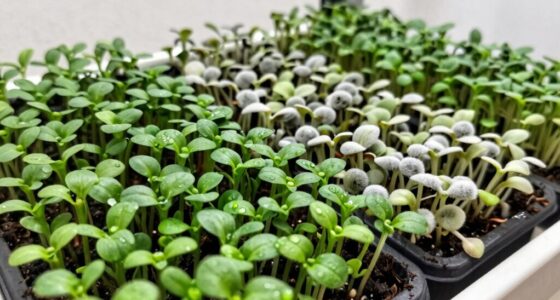
Hard water contains high mineral levels like calcium and magnesium, which can interfere with nutrient uptake and cause mineral buildup, risking clogs and deficiencies. Soft water, on the other hand, may lack essential minerals and has higher sodium levels, leading to pH fluctuations and nutrient imbalances. Both water types require proper management, filtration, and pH control to maintain healthy plants. To guarantee ideal growth, understand these effects and discover ways to enhance your system.

Get cleaning gear delivered free with Prime
- Fast, free delivery on millions of items
- Prime Video, Amazon Music and more included
- Member-only deals all year
Key Takeaways
- Hard water’s high mineral content causes nutrient lockout and buildup, reducing nutrient availability for plants.
- Soft water’s low mineral levels can lead to nutrient deficiencies and pH fluctuations in hydroponic systems.
- Hard water often requires filtration or reverse osmosis to prevent mineral clogging and maintain system efficiency.
- Soft water may need mineral supplementation to balance nutrients and stabilize pH for optimal plant growth.
- Both water types influence pH stability and nutrient uptake, requiring tailored management strategies for hydroponic success.
Products Worth Considering

Ring Alarm 8-Piece Kit (Newest Model) – Home Security System

Ring Alarm 14-Piece Kit

Arlo Pro 2K HDR Wireless Security Camera (6th Gen), 4-Camera Kit
As an affiliate, we earn on qualifying purchases.
How to Test If You Have Hard or Soft Water for Hydroponics?
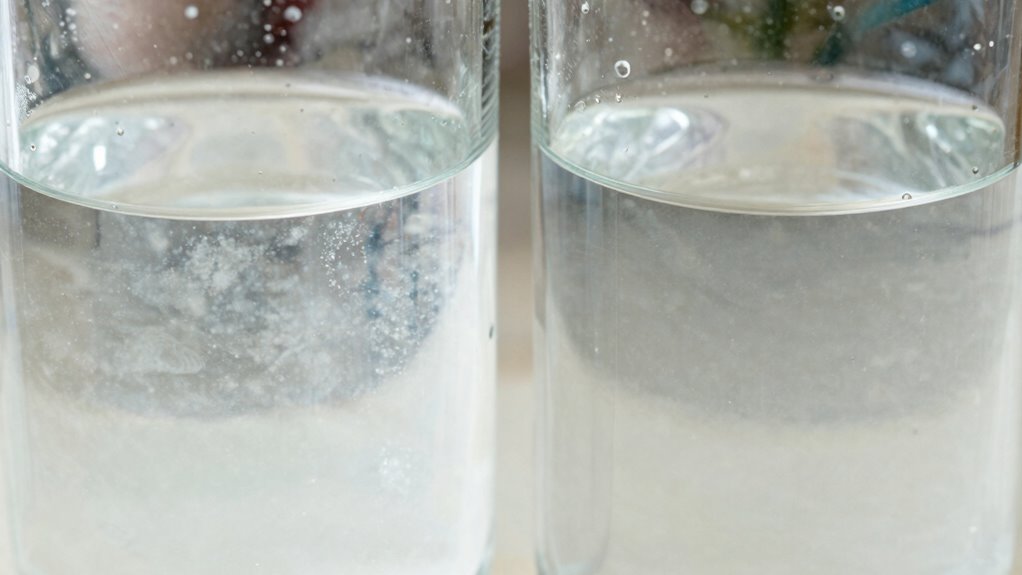
If you’re unsure whether your water is hard or soft, testing is the first step to determine its suitability for hydroponics. Start by analyzing the water composition through a simple mineral analysis. You can purchase a water testing kit or send a sample to a lab for detailed results. These tests reveal the levels of calcium, magnesium, and other minerals that influence water hardness. A high mineral content indicates hard water, while low levels suggest soft water. Knowing these details helps you make informed decisions about adjusting or treating your water before using it in your hydroponic system. Accurate testing guarantees you understand your water’s properties, preventing potential issues with nutrient availability and plant health.
What Are the Effects of Hard Water on Hydroponic Nutrients?

Hard water can considerably impact the availability and balance of nutrients in your hydroponic system. The high mineral content, especially calcium and magnesium, can interfere with water purification processes, making it harder to maintain ideal nutrient levels. These minerals can bind with essential nutrients, reducing their solubility and making them less accessible to plants. As a result, you might notice deficiencies despite adding nutrient additives. Hard water also increases the likelihood of mineral buildup in your system, which can clog emitters and filters. To counteract these effects, you may need to use specialized water purification methods, such as reverse osmosis, to remove excess minerals. This guarantees your nutrient solution remains balanced and readily available for healthy plant growth. Additionally, color accuracy in your hydroponic system can also play a vital role in ensuring plants utilize available nutrients effectively.
How Does Soft Water Impact Nutrient Solutions in Hydroponics?

Soft water can cause mineral imbalances in your nutrient solutions, making it harder to maintain proper nutrient levels. It also leads to pH fluctuations that can stress your plants and reduce nutrient uptake. Understanding these impacts helps you optimize your hydroponic system for healthier growth. Additionally, filter sizing/flow is crucial for ensuring that the water quality meets the specific needs of your hydroponic setup. To promote biodiversity with native plants, consider integrating eco-friendly practices into your hydroponic design for optimal results.
Mineral Imbalance Effects
When soft water is used in hydroponic nutrient solutions, it can lead to mineral imbalances that affect plant health. Low water hardness means fewer minerals like calcium and magnesium, causing mineral saturation issues in the solution. Without enough of these essential nutrients, plants can become deficient, leading to poor growth and weak development. Conversely, soft water can sometimes result in an excess of sodium or other unwanted minerals if not properly managed. This imbalance disrupts nutrient uptake and can cause toxicity or deficiencies. To maintain healthy plant growth, you need to monitor mineral saturation levels carefully. Adjusting nutrient formulations or supplementing with necessary minerals can help counteract the effects of mineral imbalances caused by soft water. Additionally, understanding aquatic exercise can aid in better communicating the importance of mineral balance in hydroponics. Implementing empathy and collaboration in nutrient management strategies can further enhance plant health and yield. Regularly assessing work-life harmony can also help ensure that the time spent on nutrient management doesn’t lead to burnout among hydroponic growers.
pH Fluctuation Challenges
Because soft water contains fewer dissolved minerals to buffer pH levels, it can cause significant fluctuations in nutrient solutions used in hydroponics. Without adequate mineral content, your nutrient solution becomes more vulnerable to pH swings, which can harm plant health. Water filtration becomes essential to remove any residual impurities that might contribute to instability. To maintain pH stability, you may need to regularly monitor and adjust the pH levels, as soft water’s lack of buffering capacity means even small changes can have a big impact. Consistent pH control is crucial for nutrient uptake and overall plant growth. By implementing proper water filtration and actively managing pH levels, you can minimize fluctuation challenges and create a more stable environment for your hydroponic system. Additionally, understanding home essentials can help you choose the right filtration system for your needs.
Why Does Mineral Buildup Happen With Hard Water, and How Can You Prevent It?
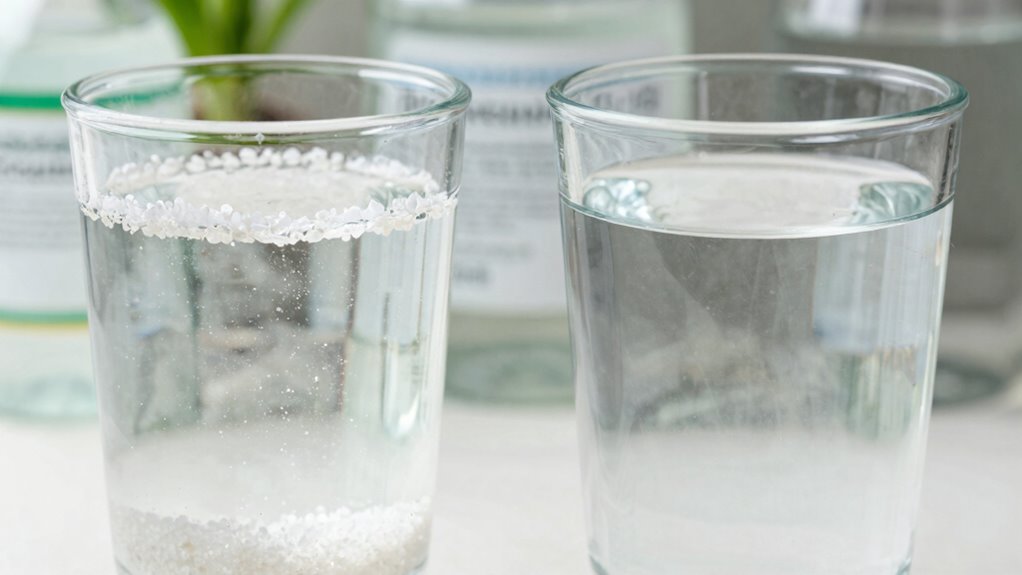
Mineral buildup occurs with hard water because it contains high levels of dissolved minerals like calcium and magnesium, which tend to settle out and accumulate on surfaces over time. This buildup creates mineral deposits that can clog your hydroponic system and hinder nutrient absorption. The water hardness intensifies this issue, making mineral accumulation more frequent and problematic. To prevent this, you can:
- Use water softeners or reverse osmosis systems to reduce mineral content
- Regularly clean your system to remove accumulated mineral deposits
- Avoid overfeeding with hard water and opt for pre-treated water when possible
In addition, using eco-friendly alternatives can help minimize the environmental impact of tissue paper on your overall hydroponic setup.
How to Manage Sodium and Other Substances in Soft Water for Healthy Plants?

Soft water often contains higher levels of sodium and other substances that can affect plant health. To manage sodium accumulation, regularly monitor your water’s sodium levels and consider using filtration systems like reverse osmosis to lower sodium content. Incorporating calcium or potassium supplements can help counteract sodium’s effects and support nutrient balance. Be mindful of mineral leaching, as excess sodium can displace essential nutrients, leading to deficiencies. To prevent this, periodically flush your hydroponic system with clean water to remove accumulated salts and substances. Additionally, using performance parts in your hydroponic setup can enhance overall plant health. Certain essential oils can also promote healthy plant growth by supporting stress management. It’s important to maintain consistent testing of your water quality to ensure optimal nutrient uptake. Adjust your nutrient solution accordingly, ensuring it supplies the necessary minerals without excess sodium. Consistent testing and careful management help maintain a healthy environment for your plants, preventing issues caused by the unique challenges of soft water. Additionally, understanding astrological compatibility can help inform decisions about which plants to grow in different environments, enhancing your approach to nutrient management.
Troubleshooting Nutrient Imbalances Caused by Water Quality?

Sure! Here’s the revised content with the requested changes:
—
Water quality can directly influence the nutrient balance in your growing environment, often causing deficiencies or toxicities if not properly managed. To troubleshoot these issues, start with proper water filtration to remove excess minerals or contaminants that disrupt nutrient uptake. Regularly monitor and adjust pH to maintain pH stability, preventing nutrient lockout or toxicity. Keep an eye on your water’s mineral content, especially if using hard or soft water, and adjust nutrient formulas accordingly. Consistent testing helps catch imbalances early, saving your plants from stress. Additionally, understanding the transformative power of curiosity can inspire innovative approaches to optimizing your gardening practices. Moreover, consider using buffering agents to stabilize pH and optimize nutrient availability. Animated movies can also provide valuable insights into themes of resilience and growth that can be applied to your gardening practices.
- Use water filtration systems to reduce unwanted minerals
- Regularly monitor and adjust pH for stability
- Balance mineral levels to prevent deficiencies or toxicities
Furthermore, understanding the impact of early detection methods for nutrient imbalances can help you achieve optimal plant health.
Tips to Optimize Nutrients When Using Hard Water in Hydroponics?

When using hard water in hydroponics, managing its mineral content is key to ensuring your plants receive the proper nutrients. Start with water filtration to reduce excess minerals like calcium and magnesium that can interfere with nutrient absorption. Using a filtration system helps maintain consistent mineral levels, preventing nutrient lockout. Additionally, focus on pH stability, as hard water tends to raise pH levels over time. Regularly test and adjust your nutrient solution’s pH to keep it within the ideal range for your plants. Adding pH buffers can help maintain stability, ensuring nutrients remain available. By controlling mineral buildup through filtration and maintaining pH stability, you create a balanced environment that maximizes nutrient uptake and promotes healthy plant growth. Implementing essential DIY tools for water management can further enhance your hydroponic setup. Moreover, consider monitoring indoor air quality since it can influence overall plant health and nutrient absorption.
Best Practices for Using Soft Water Effectively in Hydroponic Systems?
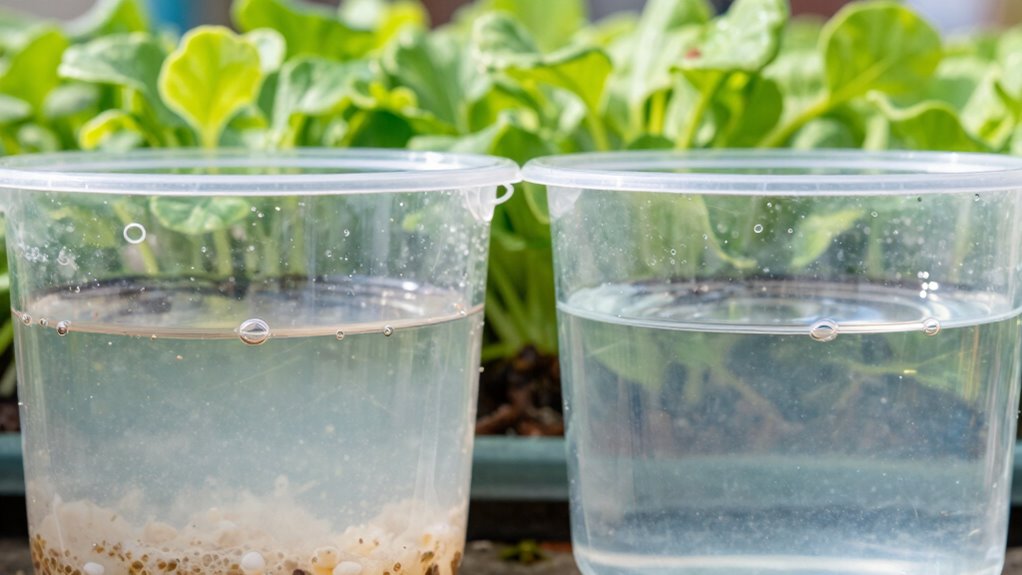
Have you considered how to enhance soft water for your hydroponic system? To do so effectively, focus on proper water filtration to remove impurities and prevent nutrient imbalances. Regularly check and adjust the pH level, since soft water tends to be more acidic, which can harm plants if left uncorrected. Use pH adjustment solutions to maintain the ideal range for your crops. Additionally, monitor your nutrient solution closely, as soft water can deplete certain minerals, requiring supplementation.
- Install a reliable water filtration system to guarantee purity and consistency
- Regularly test and adjust pH to keep it within excellent levels
- Supplement with minerals if necessary to prevent deficiencies
Frequently Asked Questions
Can Water Hardness Levels Change Over Time in a Hydroponic System?
Yes, water hardness levels can change over time in your hydroponic system due to mineral fluctuations and water composition. As plants take up nutrients, minerals like calcium and magnesium may decrease, altering water hardness. Additionally, evaporation and water additions can concentrate or dilute minerals, causing fluctuations. Regular testing helps you monitor these changes, ensuring ideal conditions for your plants and preventing nutrient imbalances caused by shifting mineral levels.
Are There Specific Plants That Tolerate Hard or Soft Water Better?
Ever wondered if certain plants handle water types better? You’ll find that some plants, like spinach and lettuce, tolerate hard water due to their high mineral absorption, while others, like strawberries, prefer soft water. Plant tolerance varies, affecting how well they absorb nutrients. Choosing the right water type for your plants can boost growth and health, ensuring you get the best yields without stressing your hydroponic system.
How Often Should Water Quality Be Tested in Hydroponic Setups?
You should test your water quality at least once a week in your hydroponic setup. Regular testing helps you monitor for issues like pH imbalance and mineral buildup. Use water filtration if needed to reduce impurities, and adjust pH levels for the best nutrient absorption. Consistent testing ensures your plants get the right nutrients and prevents problems caused by hard or soft water, keeping your hydroponic system healthy.
What Are Natural Methods to Soften Hard Water for Hydroponics?
You can naturally soften hard water for hydroponics through mineral removal methods like boiling or letting water sit overnight, which allows calcium and magnesium to settle. Using organic materials like peat moss or biochar can also help by binding minerals. These natural softening techniques avoid chemical additives, ensuring your nutrient solution remains balanced while reducing mineral buildup, ultimately supporting healthier plant growth in your hydroponic system.
Does Water Temperature Influence Mineral Buildup in Hydroponic Systems?
Yes, water temperature influences mineral buildup in hydroponic systems. Higher temperatures accelerate mineral precipitation, leading to more deposits and potential clogging. Conversely, lower temperatures slow down mineral release and buildup, reducing clogging risks. Temperature effects are essential because they directly impact how minerals dissolve or crystallize in your system. Monitoring and controlling water temperature helps minimize mineral buildup, keeping your hydroponic system running smoothly and preventing costly blockages.
Conclusion
Just as a gardener tends to their plants with care, understanding your water’s nature guides your hydroponic success. Whether hard or soft, each type presents challenges and opportunities—like a compass pointing true north. Embrace their lessons, adapt your approach, and nurture your plants wisely. In this delicate dance of nutrients and water, remember: mastery lies in harmony, much like the silent symphony beneath a thriving garden, where every element plays its part in fostering growth.