
Robot vacuums with vacuum-only mode let me clean carpets and hard floors without running a wet mop cycle, but some models handle that job more gracefully than others. I rank the Roborock Q10 S5+ as the best overall because its 10,000Pa suction, anti-tangle system, self-emptying dock, and auto-lifting mop create the strongest balance of cleaning power and low-effort ownership. The Tikom G8000 Max is the better value choice, while the eufy RoboVac 11S MAX suits beginners who want a simple vacuum-only machine without app-based mode management. The main tradeoffs are mapping versus simplicity, hands-off maintenance versus price, and a removable or lifting mop versus a robot built solely for dry cleaning. Continue reading for the full breakdown of which design fits each home and where paying more actually helps.

Get cleaning gear delivered free — and shop member deals
- Fast, free delivery on millions of items
- Access to Prime Big Deal Days deals on October 6–7
- Prime Video, Amazon Music and more included
Complete the kit


Key Takeaways
- Roborock Q10 S5+ takes the top position because it combines strong suction, anti-tangle hardware, self-emptying, and an auto-lifting mop without reaching the Qrevo 2 Pro’s premium price tier.
- Roborock Qrevo 2 Pro has the most powerful specification set, but buyers who rarely mop may pay for edge mopping and dock-cleaning functions they seldom use.
- eufy RoboVac 11S MAX and ILIFE V2 provide the clearest vacuum-only experience because neither depends on managing a mop module, water tank, or wet-cleaning setting.
- Tikom G8000 Max occupies the value sweet spot with 5,000Pa suction, a 150-minute battery, and both app and remote control, though it lacks the advanced dock and carpet handling of the leading Roborock.
- ILIFE A30s is the stronger choice for mapped room cleaning and no-go zones, while the less specific 3-in-1 combo models require closer scrutiny of app controls and mop-removal requirements.
| ROPVACNIC Robot S1 Vacuum and Mop Combo |  | Best for Pet Hair | Suction Power: 5200Pa | Cleaning Modes: Multiple customizable modes | Water Adjustment: Four-stage electronic control | VIEW ON AMAZON | See Our Full Breakdown |
| 5000Pa 3-in-1 Robot Vacuum and Mop Combo |  | Best for Mixed Floors | Suction Power: 5000Pa | Dustbin Capacity: 250ml | Water Tank Capacity: 200ml | VIEW ON AMAZON | See Our Full Breakdown |
| Robot Vacuum and Mop with App, Voice, and Remote Control |  | Best for Low Furniture | Suction Power: 2300Pa | Dustbin Capacity: 200ml | Water Tank Capacity: 230ml | VIEW ON AMAZON | See Our Full Breakdown |
| Robot Vacuum and Mop Combo with Self-Emptying Base |  | Best for Large Homes | Navigation: Smart LiDAR mapping | Battery Life: 220 minutes | Self-Emptying Interval: Up to 2–3 months | VIEW ON AMAZON | See Our Full Breakdown |
| 5000Pa LiDAR Robot Vacuum and Mop |  | Best for Multi-Level Homes | Suction Power: 5000Pa with 3 levels | Navigation: LiDAR with obstacle avoidance | Map Storage: Up to 5 maps | VIEW ON AMAZON | See Our Full Breakdown |
| ILIFE A30s |  | Best Overall Vacuum-Only Pick | Suction Power: 10,000Pa | Navigation: LiDAR with home mapping | Battery Life: 150 minutes | VIEW ON AMAZON | See Our Full Breakdown |
| Roborock Q10 S5+ |  | Best Self-Emptying Pick | Suction Power: 10,000Pa | Dock Dust Capacity: 2.7L | Self-Emptying Duration: Up to 70 days | VIEW ON AMAZON | See Our Full Breakdown |
| ILIFE V2 |  | Best No-App Pick | Runtime: 120 minutes | Height: 2.99 inches | Cleaning Modes: Auto, spot, and edge | VIEW ON AMAZON | See Our Full Breakdown |
| Tikom G8000 Max |  | Best Slim Hybrid | Suction Power: 5000Pa | Battery Life: 150 minutes | Dustbin Capacity: 450ml | VIEW ON AMAZON | See Our Full Breakdown |
| Roborock Qrevo 2 Pro |  | Best Premium Pick | Suction Power: 20,000Pa | Edge Cleaning: FlexiArm system reaches within 1.85mm of walls | Brush System: Zero-tangle design | VIEW ON AMAZON | See Our Full Breakdown |
| eufy RoboVac 11S MAX |  | Best No-App Vacuum-Only Pick | Recommended Surfaces: Hard floors, tile, and medium-pile carpet | Battery Life: Up to 100 minutes | Control Method: Remote control | VIEW ON AMAZON | See Our Full Breakdown |
| robot vacuums with vacuumonly mode | Suction Power | Dimensions |
|---|---|---|
| ROPVACNIC Robot S1 Vacuum and | 5200Pa | — |
| 5000Pa 3-in-1 Robot Vacuum and | 5000Pa | 12.2 x 12.2 x 3.15 inches |
| Robot Vacuum and Mop with App | 2300Pa | — |
| Robot Vacuum and Mop Combo wit | — | 12.99 x 12.99 x 3.94 inches |
| 5000Pa LiDAR Robot Vacuum and | 5000Pa with 3 levels | 12 x 12 x 3 inches |
| ILIFE A30s | 10,000Pa | 12.99 x 12.99 x 3.74 inches |
| Roborock Q10 S5+ | 10,000Pa | — |
| ILIFE V2 | — | — |
| Tikom G8000 Max | 5000Pa | 12.6 x 12.6 x 3 inches |
| Roborock Qrevo 2 Pro | 20,000Pa | — |
| eufy RoboVac 11S MAX | — | 12.79 x 12.79 x 2.85 inches |
More Details on Our Top Picks
ROPVACNIC Robot S1 Vacuum and Mop Combo
I rank the ROPVACNIC Robot S1 as the pet-hair specialist because its 5200Pa suction and no-entanglement brush design address both pickup power and the hair wrapped around conventional rollers. Its customizable modes and four-stage water adjustment also make it easier to favor dry vacuuming when mopping is unnecessary. Compared with the Tikom G8000 Max, the S1 offers slightly stronger stated suction and a more explicitly pet-focused brush system. The compromise is certainty: ROPVACNIC does not provide runtime, bin capacity, or mapping specifications here, making it harder to judge coverage in a large home. App and voice controls add flexibility, but the initial configuration may feel excessive for buyers who only want push-button vacuuming. This model earns its place through hair-handling hardware, not through the clearest ownership experience.
Pros:- 5200Pa suction is the strongest stated rating among these five products
- No-entanglement design helps reduce maintenance caused by pet hair
- Customizable cleaning modes support vacuum-focused routines
- App and Alexa or Google Assistant control allow remote operation
Cons:- Runtime and dustbin capacity are not provided
- Advanced controls may require more setup than a basic robot
- Navigation details do not confirm LiDAR mapping or multi-floor map storage
Best for: Pet owners with hard floors or low-pile carpet who want strong vacuum-focused pickup with fewer brush tangles
Not ideal for: Buyers with large floor plans who need confirmed runtime, bin capacity, and detailed mapping specifications before purchasing
- Suction Power:5200Pa
- Cleaning Modes:Multiple customizable modes
- Water Adjustment:Four-stage electronic control
- Control:App, Alexa, and Google Assistant
- Navigation:Obstacle avoidance with autonomous recharging
- Pet Hair System:No-entanglement design with dual electric side brushes
Our verdict“Choose the ROPVACNIC S1 when pet-hair pickup and reduced brush tangling matter more than detailed mapping and capacity specifications.”
5000Pa 3-in-1 Robot Vacuum and Mop Combo
This 3-in-1 model takes my mixed-floor slot because carpet auto-boost pairs with 5000Pa suction, helping it move from hard flooring to low-pile carpet without relying on one fixed power level. Its five cleaning modes provide more routine choices than the simpler eufy RoboVac 11S MAX, while app and Alexa support suit scheduled vacuum-only cleaning. The 3.15-inch body reaches beneath many beds and cabinets, though the 2.87-inch Robot Vacuum and Mop with App Control fits into tighter gaps. Capacity is the main sacrifice: a 250ml dustbin can fill quickly in a shedding-pet household, and 120 minutes is less useful for sprawling layouts than the self-emptying model’s 220-minute runtime. The supplied battery information is also inconsistent, so I would verify what arrives in the box before ordering.
Pros:- 5000Pa suction provides strong dry-debris pickup
- Carpet auto-boost adapts power across mixed flooring
- Five cleaning modes offer useful routine flexibility
- Two-year warranty is longer than many unspecified marketplace warranties
Cons:- 250ml dustbin limits unattended cleaning in debris-heavy homes
- 120-minute runtime trails the longer-running mapping models
- Battery-inclusion information is contradictory and should be verified
Best for: Apartment and midsize-home owners who alternate between hard floors and low-pile carpet and want automatic suction adjustment
Not ideal for: Large households with heavy pet shedding, since the 250ml bin needs more frequent emptying
- Suction Power:5000Pa
- Dustbin Capacity:250ml
- Water Tank Capacity:200ml
- Runtime:120 minutes
- Dimensions:12.2 x 12.2 x 3.15 inches
- Cleaning Modes:5 modes with carpet auto-boost
- Control:App and Alexa
- Warranty:2 years
Our verdict“This is the practical choice for mixed hard floors and low-pile carpet, provided its small bin and middling runtime suit the home.”
Robot Vacuum and Mop with App, Voice, and Remote Control
I would choose this model when physical clearance matters more than maximum suction. Its 2.87-inch body is slimmer than the 3.15-inch 5000Pa 3-in-1 Robot Vacuum and Mop Combo and much lower than the 3.94-inch self-emptying model, giving it access beneath furniture that can hide recurring dust. For vacuum-only routines, app, remote, and voice controls offer welcome flexibility, particularly for someone who does not want every command tied to a phone. The tradeoff is cleaning muscle: 2300Pa sits well below the ROPVACNIC S1’s 5200Pa, so thick debris and carpet hair may require repeat passes. A 200ml bin and 100-minute battery also suit apartments better than large homes. I see its four straightforward cleaning patterns as more useful for compact spaces than its modest capacity is limiting.
Pros:- 2.87-inch body reaches beneath unusually low furniture
- App, physical remote, and voice control provide several operating choices
- Four cleaning modes cover routine, edge, spot, and structured passes
- Separate 230ml water tank and 200ml dustbin support dual-purpose cleaning
Cons:- 2300Pa suction is substantially lower than the 5000Pa-plus alternatives
- A 200ml dustbin fills quickly during pet-hair cleanup
- App connectivity requires a 2.4GHz Wi-Fi network
Best for: Apartment residents with low-clearance beds, sofas, or cabinets who want remote-controlled vacuuming on hard floors
Not ideal for: Carpet-heavy homes with deep pet hair, where 2300Pa suction and the small dustbin may require repeated intervention
- Suction Power:2300Pa
- Dustbin Capacity:200ml
- Water Tank Capacity:230ml
- Battery Life:100 minutes
- Body Thickness:2.87 inches
- Control Methods:App, remote, and voice
- Cleaning Modes:Auto, Spot, Edge, and Zig-Zag
- Connectivity:2.4GHz Wi-Fi and Google Assistant
Our verdict“Pick this model for hard-to-reach dust in a smaller home, but choose a stronger alternative for demanding carpet cleanup.”
Robot Vacuum and Mop Combo with Self-Emptying Base
This is my large-home pick because 220 minutes of runtime, LiDAR mapping, and a self-emptying base reduce the two interruptions that commonly undermine automated vacuuming: recharging and bin emptying. The claimed two to three months between base cleanouts gives it a major convenience advantage over the ROPVACNIC S1 and the 5000Pa LiDAR Robot Vacuum and Mop, both of which lack a self-emptying station in the supplied data. Customizable cleaning modes make it suitable for dry vacuum schedules across hard floors and low-pile carpet. Yet buyers receive no stated suction rating, so its pickup strength cannot be compared cleanly with the 10,000Pa ILIFE A30s or Roborock Q10 S5+. The 3.94-inch height also restricts access beneath low furniture, and its mapping and connected controls create a steeper setup process.
Pros:- 220-minute runtime supports large cleaning areas
- Self-emptying base can reduce manual bin handling for two to three months
- LiDAR navigation supports planned, efficient routes
- App and voice controls allow remote scheduling and mode selection
Cons:- No suction-power rating is supplied
- 3.94-inch body may not fit beneath low sofas or cabinets
- Connected mapping and base setup may overwhelm buyers seeking simple controls
Best for: Owners of large single-level homes who want long vacuuming sessions and minimal hands-on dustbin maintenance
Not ideal for: Homes dominated by low-clearance furniture or buyers who need a published suction rating before comparing cleaning power
- Navigation:Smart LiDAR mapping
- Battery Life:220 minutes
- Self-Emptying Interval:Up to 2–3 months
- Recommended Surfaces:Hard floors, tile, wood, and low-pile carpet
- Control:App and voice
- Dimensions:12.99 x 12.99 x 3.94 inches
- Robot Weight:7.7 pounds
- Battery:Lithium-ion battery included
Our verdict“Choose this model for long, low-maintenance vacuum cycles in a large home, not for low furniture or transparent suction comparisons.”
5000Pa LiDAR Robot Vacuum and Mop
I give this model the multi-level role because storage for up to five maps prevents owners from rebuilding a floor plan each time the robot moves between stories. Its 5000Pa suction, three power levels, and removable mop holder create a particularly clear vacuum-only configuration; removing the holder also keeps carpets dry. Compared with the Tikom G8000 Max, this option adds LiDAR navigation and multi-map storage while matching its stated suction and 150-minute runtime. It covers up to 2,100 square feet per charge, but carrying a seven-pound robot between floors remains manual, and there is no self-emptying base. The Roborock Q10 S5+ is better suited to buyers wanting automated debris disposal and stronger 10,000Pa suction. I rank this model highly for mapping flexibility, though 2.4GHz-only Wi-Fi may complicate setup on some networks.
Pros:- Stores up to five maps for multi-level floor plans
- 5000Pa suction and three power levels support varied dry-cleaning tasks
- LiDAR navigation provides structured coverage and mapped scheduling
- Three-inch profile reaches beneath more furniture than taller LiDAR models
Cons:- Mop holder must be removed manually before carpet cleaning
- No self-emptying base is included
- App connectivity supports only 2.4GHz Wi-Fi
Best for: Owners of two- to five-level homes who want saved maps and a removable mopping attachment for carpet-safe vacuuming
Not ideal for: Buyers seeking fully hands-off cleaning, since the robot must be carried between floors and its bin is not self-emptying
- Suction Power:5000Pa with 3 levels
- Navigation:LiDAR with obstacle avoidance
- Map Storage:Up to 5 maps
- Maximum Runtime:150 minutes
- Maximum Coverage:2100 sq ft
- Dimensions:12 x 12 x 3 inches
- Weight:7 pounds
- Control:App, Alexa, and Google Assistant
- Wi-Fi:2.4GHz
Our verdict“This is the strongest fit for multi-story mapping and deliberate vacuum-only use, as long as manual carrying and bin emptying are acceptable.”
ILIFE A30s
I rank the ILIFE A30s first because it is purpose-built for dry cleaning rather than carrying mopping hardware that may go unused. Its 10,000Pa suction and LiDAR mapping provide a strong balance of debris pickup and orderly coverage, while no-go zones help keep it away from cables, pet bowls, or delicate rugs. Compared with the ILIFE V2, it offers far better navigation, stronger suction, and app-based scheduling. It also matches the Roborock Q10 S5+ on stated suction without adding mop care. The tradeoff is convenience: its 450ml onboard bin needs manual emptying, whereas the Q10 S5+ includes a self-emptying station. The 3.74-inch body is also less likely to fit beneath low furniture than the slimmer V2 or Tikom G8000 Max.
Pros:- Dedicated vacuum-only design avoids unused mopping hardware
- 10,000Pa suction is competitive with the Roborock Q10 S5+
- LiDAR mapping supports planned coverage and no-go zones
- App, voice, and remote controls suit different household preferences
Cons:- 450ml dustbin requires manual emptying
- No mopping option for households that want occasional wet cleaning
- App features require a 2.4GHz Wi-Fi connection
Best for: Pet owners who want mapped, high-suction dry cleaning without paying for or maintaining a mopping system
Not ideal for: Buyers who want automatic bin emptying, wet cleaning, or app control over a 5GHz-only Wi-Fi network
- Suction Power:10,000Pa
- Navigation:LiDAR with home mapping
- Battery Life:150 minutes
- Dustbin Capacity:450ml
- Surface Recommendation:Hard floors and carpet
- Control Methods:App, voice, and remote
- Dimensions:12.99 x 12.99 x 3.74 inches
- Weight:6 pounds
Our verdict“I recommend the ILIFE A30s to buyers who want strong, mapped vacuum-only cleaning without the upkeep of a hybrid system.”
Roborock Q10 S5+
The Roborock Q10 S5+ earns its place for buyers who want vacuum-only routines with far less bin handling. Its station can hold debris for up to 70 days, a major convenience advantage over the manually emptied ILIFE A30s and ILIFE V2. It pairs 10,000Pa suction with LiDAR mapping and structured-light obstacle avoidance, making it better suited to busy rooms where toys or shoes may interrupt a cleaning run. Auto mop lifting also reduces carpet trouble when the mopping hardware is attached. I place it below the A30s for this roundup because the hybrid cleaning system adds upkeep that dry-cleaning purists may not want. Compared with the Qrevo 2 Pro, it has half the stated suction and a less elaborate dock, but its simpler feature set may be easier to justify.
Pros:- Self-emptying station stores debris for up to 70 days
- 10,000Pa suction handles pet hair and tracked-in debris
- LiDAR mapping supports organized multi-level cleaning
- Structured-light obstacle avoidance helps in cluttered rooms
Cons:- Mopping components add cleaning and setup work for vacuum-only users
- Supports only 2.4GHz Wi-Fi
- More settings create a steeper learning curve than the ILIFE V2
Best for: Pet-owning households that primarily vacuum and want weeks of automatic debris storage
Not ideal for: Dry-cleaning purists who do not want to maintain mop hardware or buyers using only a 5GHz Wi-Fi network
- Suction Power:10,000Pa
- Dock Dust Capacity:2.7L
- Self-Emptying Duration:Up to 70 days
- Navigation:LiDAR with multi-level mapping
- Obstacle Avoidance:ReactiveTech structured light
- Mopping System:VibraRise 2.0 sonic mopping with automatic lift
- Wi-Fi:2.4GHz only
- Color:Black
Our verdict“I would choose the Q10 S5+ when self-emptying matters more than having a dedicated vacuum-only machine.”
ILIFE V2
I see the ILIFE V2 as the straightforward choice for buyers who want dry floor care without mapping, apps, or mop attachments. Its 2.99-inch body reaches beneath furniture that may block the taller ILIFE A30s, while tangle-free suction reduces the brush maintenance commonly caused by pet hair. Auto, spot, and edge modes offer more control than a single random-cleaning setting, and the 120-minute runtime is ample for routine upkeep in smaller homes. Simplicity brings clear limits: compared with the A30s, it lacks LiDAR, no-go zones, and scheduled app control, so coverage will be less methodical. It is also a weaker match for substantial carpeting than the Roborock models. The infrared navigation system is best viewed as basic collision and stair protection, not precise room awareness.
Pros:- Slim 2.99-inch profile reaches under low furniture
- Tangle-free suction reduces pet-hair wrap
- Dedicated dry-cleaning design has no mop components to maintain
- Auto, spot, and edge modes cover common cleaning tasks
Cons:- Infrared navigation is less systematic than LiDAR mapping
- No app control, scheduling, or virtual no-go zones
- Best limited to hard floors and low-pile carpet
Best for: Apartment dwellers and pet owners who want a slim, dedicated vacuum without apps or mapping setup
Not ideal for: Large multiroom homes or carpet-heavy spaces that need systematic mapping, virtual boundaries, and stronger deep-cleaning performance
- Runtime:120 minutes
- Height:2.99 inches
- Cleaning Modes:Auto, spot, and edge
- Sensors:Infrared obstacle and drop detection
- Charging:Automatic dock return
- Recommended Surfaces:Hard floors and low-pile carpet
- Warranty:12 months
Our verdict“I recommend the ILIFE V2 for smaller, hard-floor homes where simple controls and low-clearance access matter most.”
Tikom G8000 Max
The Tikom G8000 Max makes the most sense when vacuuming is the everyday job but occasional mopping still has value. At just 3 inches tall and 5.3 pounds, it is easier to place under furniture and handle manually than either Roborock model. Its 5,000Pa suction falls well short of the Qrevo 2 Pro’s 20,000Pa rating, yet it should be adequate for surface debris, dust, and pet hair across hard floors and lighter carpets. A 150-minute battery also matches the ILIFE A30s. I rank it below the dedicated ILIFE models because its simultaneous vacuum-and-mop design is less focused on dry-only ownership. It also relies on anti-collision and anti-fall sensors rather than listed LiDAR mapping, so coverage is less precise than with the A30s or Q10 S5+.
Pros:- Three-inch body fits beneath many sofas and cabinets
- 150-minute runtime suits larger hard-floor areas
- 5000Pa suction supports routine dust and pet-hair pickup
- App, remote, voice, and onboard controls offer broad accessibility
Cons:- No LiDAR or stored mapping is listed, limiting route precision
- 5000Pa suction is much lower than either Roborock model
- Combined mopping hardware adds upkeep for buyers focused only on vacuuming
Best for: Hard-floor households that want a low-profile robot for regular vacuuming plus occasional combined mopping
Not ideal for: Carpet-heavy or cluttered multiroom homes that need LiDAR mapping, no-go zones, and stronger suction
- Suction Power:5000Pa
- Battery Life:150 minutes
- Dustbin Capacity:450ml
- Water Tank Capacity:300ml
- Control Methods:App, remote, voice, and button
- Sensor Technology:Anti-collision and anti-fall
- Dimensions:12.6 x 12.6 x 3 inches
- Weight:5.3 pounds
Our verdict“I would pick the Tikom G8000 Max for a low-profile hard-floor cleaner when occasional mopping outweighs the benefits of advanced mapping.”
Roborock Qrevo 2 Pro
I reserve the premium slot for the Roborock Qrevo 2 Pro, whose 20,000Pa suction is double the stated power of the Q10 S5+ and four times that of the Tikom G8000 Max. That extra headroom makes it the strongest candidate here for dense pet hair, carpet debris, and demanding vacuum-only runs. Zero-tangle brushes and obstacle avoidance further reduce interruptions, while the dock washes and dries the mops when wet cleaning is used. Compared with the Q10 S5+, its FlexiArm system also reaches closer to walls during mopping. Yet much of its cost and dock complexity serves wet cleaning rather than the title’s dry-only priority. Buyers who rarely mop may get better value from the ILIFE A30s. The 2.4GHz Wi-Fi requirement and more involved setup also make it less approachable than the ILIFE V2.
Pros:- 20,000Pa suction leads this five-product group
- Zero-tangle brush system reduces hair-wrap maintenance
- Obstacle avoidance helps preserve cleaning continuity
- Self-cleaning dock washes and dries the mop system
Cons:- Premium mopping hardware offers limited value to dry-only users
- Full smart functionality depends on 2.4GHz Wi-Fi
- More elaborate setup and dock care than dedicated vacuum-only models
Best for: Premium buyers with pets, mixed flooring, and heavy debris who want maximum suction alongside automated mop care
Not ideal for: Vacuum-only households that would be paying for an advanced mop dock they rarely use
- Suction Power:20,000Pa
- Edge Cleaning:FlexiArm system reaches within 1.85mm of walls
- Brush System:Zero-tangle design
- Dock:Self-cleaning with high-temperature mop washing and drying
- Obstacle Avoidance:Reactive Tech
- Connectivity:2.4GHz Wi-Fi
- Noise Level:54dB
- Color:White
Our verdict“I recommend the Qrevo 2 Pro when maximum suction and premium automation justify paying for a mopping system as well.”
eufy RoboVac 11S MAX
I rank the eufy RoboVac 11S MAX as the best no-app vacuum-only pick because it keeps floor care simple: there is no mop tank to fill, pad to wash, account to create, or Wi-Fi setup to manage. Unlike the Tikom G8000 Max, this model relies on a physical remote, making it better suited to buyers who prefer direct controls. Its 2.85-inch profile can reach beneath more low furniture, while BoostIQ adjusts suction when extra pickup power is needed on medium-pile carpet. The tradeoff is limited automation: there is no app, mapping, or voice control, and the 100-minute battery trails the Tikom’s 150-minute runtime. I would choose it for compact homes where quiet, straightforward vacuuming matters more than room-by-room scheduling or advanced navigation.
Pros:- Dedicated vacuum-only design avoids mop maintenance
- 2.85-inch height reaches beneath low furniture
- BoostIQ adapts suction for changing floor surfaces
- Quiet operation and automatic recharging support low-effort daily cleaning
Cons:- No Wi-Fi, mobile app, or voice-assistant support
- Lacks smart mapping and room-specific controls
- 100-minute runtime may require multiple sessions in larger homes
Best for: Apartment dwellers and technology-averse buyers who want a slim, dedicated vacuum robot with physical remote controls
Not ideal for: Large-home owners who need smart mapping, app scheduling, voice control, or more than 100 minutes of cleaning per charge
- Recommended Surfaces:Hard floors, tile, and medium-pile carpet
- Battery Life:Up to 100 minutes
- Control Method:Remote control
- Dustbin Capacity:600 mL
- Cleaning Path Width:12.8 inches
- Dimensions:12.79 x 12.79 x 2.85 inches
- Weight:2.88 kg
- Filter Type:Washable
Our verdict“Choose the RoboVac 11S MAX for uncomplicated vacuum-only cleaning in a smaller home, but skip it if mapping and connected controls matter.”
How We Picked
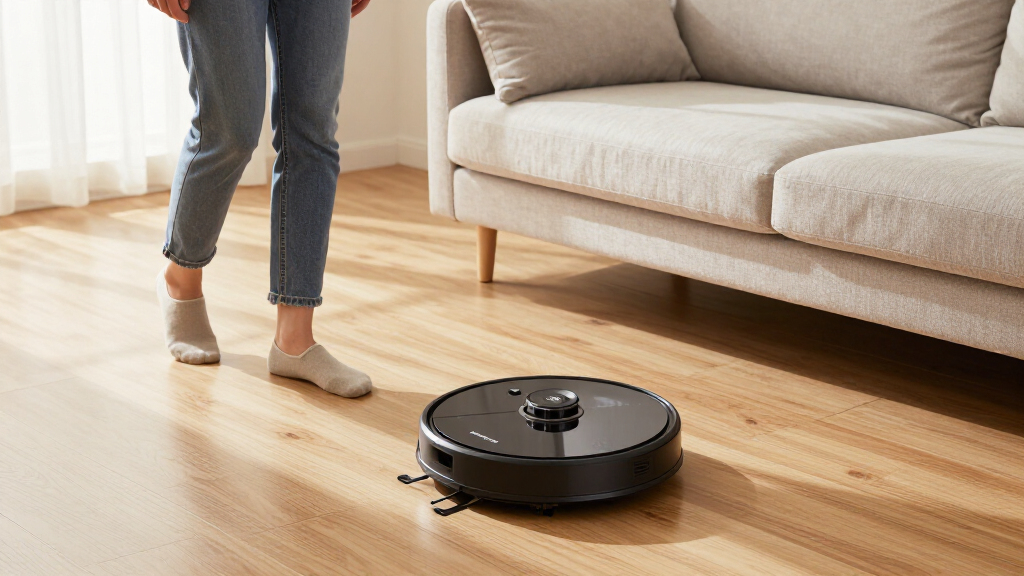
I evaluated these 11 models around how well their designs support repeatable dry vacuuming, rather than treating mopping as an automatic advantage. My highest weights went to vacuum-only control, carpet behavior, suction delivery, navigation, and hair management. A robot earned more credit when it could keep moisture away from rugs through a dedicated setting, mop removal, or automatic mop lifting. I also compared mapping precision, room selection, no-go zones, obstacle handling, runtime, and control options because these features determine whether a vacuum-only cycle cleans the intended space without constant intervention.
The ranking also accounts for maintenance workload, design complexity, and price-to-feature value. Self-emptying and anti-tangle systems moved models upward when they reduced recurring chores, while large multifunction docks received less credit if their main benefits served mopping rather than dry cleaning. I placed simple vacuum-only robots higher for beginners when their straightforward operation outweighed the loss of LiDAR mapping or advanced automation. This logic puts the Roborock Q10 S5+ ahead as the most balanced choice, the Tikom G8000 Max in the value role, and the Roborock Qrevo 2 Pro in the premium position.
Factors to Consider When Choosing Robot Vacuums With Vacuumonly Mode
I recommend starting with the way a robot creates a dry-only cycle, then matching its navigation, cleaning hardware, and upkeep to the home. A vacuum-only button or app mode is not always the whole story: mop attachment design, carpet detection, and dock behavior can change how convenient that setting feels day to day. The sections below address the choices that separate a useful dry-cleaning routine from an awkward combo system.
Confirm How Vacuum-Only Cleaning Actually Works
I separate true vacuum-only robots from combo models that merely allow the water flow to be switched off. A dry water tank does not always stop a fixed mop pad from dragging across carpet, so I would check whether the pad can be removed or lifted. Automatic mop lifting is the easiest arrangement for mixed flooring because the robot can cross rugs during one scheduled run. Manual removal costs less, but it adds a setup step every time the cleaning plan changes. A dedicated vacuum-only model avoids this issue entirely, though it gives up future wet-cleaning flexibility. The common mistake is buying for the words vacuum and mop without checking what remains attached during a dry cycle.
Match Navigation to the Size of the Home
LiDAR mapping earns its cost in larger or divided homes where I want to clean selected rooms, protect pet bowls, or set carpet-specific routines. Basic navigation can work well in a studio or open-plan floor, but coverage may be less predictable and cycles can take longer. Saved maps also make vacuum-only scheduling more useful because I can send the robot to high-traffic zones without cleaning every room. Multi-floor homes need either multiple saved maps or a simple robot that can be carried and started manually. App dependence may be unwelcome for buyers who prefer physical controls, making a remote-equipped model a better fit. I would pay for room selection and no-go zones before paying extra for elaborate mop patterns when dry cleaning is the main purpose.
Read Suction Numbers With Caution
A larger pascal figure can indicate more suction potential, but Pa ratings are not directly comparable across every brand. Brush design, airflow, floor contact, and automatic carpet boost can matter as much as the headline number. For hard floors and surface debris, a well-sealed intake may clean effectively without a five-digit rating. Thick rugs, tracked-in grit, and pet-heavy homes give stronger motors more room to justify their price. Higher power modes also drain the battery faster and may produce more noise, so the maximum setting is rarely the best default for an entire home. I give extra weight to anti-tangle rollers and direct suction paths because they help preserve real cleaning performance between maintenance sessions.
Decide How Much Maintenance to Automate
A self-emptying base can turn daily vacuuming into a weekly or monthly bin task, which helps homes with pets or heavy debris. The tradeoff is a larger dock, added noise during emptying, replacement-bag costs, and more parts that can need cleaning. Multifunction stations may also wash or dry mop pads, but those features offer little value when I mainly run vacuum-only cycles. Small onboard bins fill quickly with fur, even when the robot has enough battery for a long session. Bagless manual-empty models cost less over time but expose the user to more dust. I would pay for self-emptying before automated mop care when the buying priority is dry floor cleaning.
Fit the Robot to Floors, Furniture, and Pets
Robot height and threshold clearance can matter more than another app feature if the machine cannot reach under furniture or enter every room. Slim models are well suited to low sofas and beds, while LiDAR towers can add height in exchange for better mapping. Pet owners should favor tangle-resistant intake designs, accessible rollers, and bins sized for frequent hair pickup. Homes dominated by hard floors can use direct-suction robots effectively, but carpet usually benefits from a powered brush and stronger boost mode. Cables, tassels, and small toys still challenge many obstacle systems, so tidying the floor may remain part of the routine. I would map the home’s tightest gaps, tallest thresholds, and most troublesome rugs before choosing between compact simplicity and advanced navigation.
Frequently Asked Questions
Can a robot vacuum-and-mop combo run without using water?
Most combo models can run a dry vacuuming cycle with water flow disabled, but the exact setup varies. Some require the water tank or mop bracket to be removed, while others provide a vacuum-only selection in the app. A fixed pad may still touch the floor even when no water is released. I would check both the software mode and the physical mop position before sending a combo robot onto carpet. Models with automatic mop lifting offer the smoothest mixed-floor routine.
Should I remove the mop pad during vacuum-only cleaning?
I would remove the pad if the robot cannot lift it clear of the floor. A dry pad can collect dust, create drag, or brush against carpet fibers during a vacuum-only cycle. Removal also prevents moisture left from an earlier mopping run from reaching a rug. Robots with a dependable auto-lift mechanism can usually keep the attachment installed. The right choice depends on whether the model provides physical carpet clearance, not simply whether water flow is switched off.
Is a dedicated vacuum robot better than a combo model for carpet?
A dedicated model is often the simpler choice for a carpet-heavy home because there is no mop pad or water tank to manage. Combo robots can still work well when they offer carpet boost, mop removal, or automatic lifting. Their advantage is flexibility for nearby kitchens and hard-floor areas. I would choose a dedicated vacuum for uncomplicated operation and a capable combo for mixed surfaces or changing cleaning needs. Brush design and carpet clearance matter more than the combo label by itself.
Do I need 10,000Pa or 20,000Pa suction for a vacuum-only robot?
I would not choose from the suction number alone. Five-digit ratings are most useful for carpet, embedded grit, and dense pet hair, while routine hard-floor debris may not require maximum power. Real pickup also depends on the main brush, intake seal, navigation coverage, and how quickly filters become clogged. Running at full power can shorten runtime and increase noise. A balanced model with effective hair control and carpet boost may outperform a higher-rated robot that needs frequent cleaning.
Which type of vacuum-only robot is best for pet hair?
For pet hair, I prioritize tangle-resistant suction, an accessible brush system, and self-emptying. Direct-suction designs such as the ILIFE V2 reduce hair wrapping on hard floors, but they may be less effective at agitating carpet. The Roborock Q10 S5+ offers the more automated route through its dual anti-tangle design and emptying dock. Homes with several shedding pets also benefit from a large dock bag because the onboard bin can fill before the battery runs out. I would match the intake style to the flooring rather than choosing from suction power alone.
Conclusion
For most buyers, I recommend the Roborock Q10 S5+ as the best overall robot vacuum with vacuum-only mode because it balances powerful dry cleaning, anti-tangle hardware, mapping, self-emptying, and automatic mop lifting. The Tikom G8000 Max is my best-value pick for buyers who want solid suction, long runtime, and flexible controls without paying for a premium station. Beginners should choose the eufy RoboVac 11S MAX when simple operation and a slim body matter more than mapping or app automation.
The Roborock Qrevo 2 Pro is the premium choice for a mixed-floor home that will also use its advanced mopping and dock functions; I would skip that expense for dry-only routines. For pet hair on hard floors, the ILIFE V2 offers a straightforward tangle-resistant design, while the ILIFE A30s better suits buyers who want 10,000Pa suction, LiDAR mapping, and no-go zones. Buyers seeking a midpriced app-controlled combo can also shortlist the ROPVACNIC 5200Pa model, but I would verify how its mop assembly is handled during carpet runs. The deciding question is whether the home benefits more from simple dry cleaning, mapped automation, or full-service docking.
Fall Picks
fall essentials
As an affiliate, we earn on qualifying purchases.