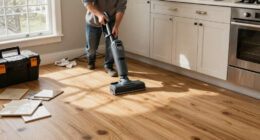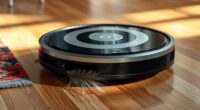
For most tile-floor homes, I’d start with the Dreame L40 Ultra Gen 2 for its premium vacuum-and-mop setup, while the Roborock Q7 L5 is a more straightforward mapping-focused option and the eufy E25 stands out for its roller mop. The main choice is whether you want hands-off dock features or a simpler machine with less equipment to maintain. Tile also makes mop design, water control, and obstacle handling matter as much as suction. I compare all 15 models by those practical differences, along with navigation and upkeep, so you can match a pick to your home. Continue reading for the full breakdown and buying advice.

Get cleaning gear delivered free with Prime
- Fast, free delivery on millions of items
- Prime Video, Amazon Music and more included
- Member-only deals all year
Complete the kit


Key Takeaways
- Dreame L40 Ultra Gen 2 is the premium all-in-one choice in this lineup; its feature-rich approach suits buyers who want more automated floor care and can accept more dock upkeep.
- Roborock Q7 L5 offers a mapping-focused alternative for shoppers who care more about organized cleaning routes than elaborate mop hardware.
- eufy E25 differs through its HydroJet roller mop, which makes mop design a key point of comparison against models with simpler mop attachments.
- Several products advertise self-emptying bases, but a dock can reduce bin emptying without eliminating routine work such as washing mop parts and refilling water.
- The product names for several generic models emphasize suction, runtime, or avoidance features; those headline specs alone do not reveal how well a robot handles tile edges, small obstacles, or dried-on marks.
| iRobot Roomba Plus 415X Robot Vacuum and Mop Combo |  | Best Overall for Tile and Mixed Floors | Suction power: 20,000 Pa | Navigation: LiDAR mapping and obstacle recognition | Cleaning modes: Vacuum-only, mop-only, vacuum and mop, vacuum then mop | VIEW ON AMAZON | See Our Full Breakdown |
| Dreame L40 Ultra Gen 2 Robot Vacuum and Mop |  | Best for Long Cleaning Runs | Suction power: 25,000 Pa | Battery capacity: 5,200 mAh | Runtime: Up to 231 minutes in Quiet Mode | VIEW ON AMAZON | See Our Full Breakdown |
| ROPVACNIC Robot Vacuum and Mop Combo, 5200 Pa |  | Best for Simple Daily Upkeep | Suction power: 5,200 Pa | Battery life: 120 minutes | Battery type: Lithium-ion | VIEW ON AMAZON | See Our Full Breakdown |
| Robot Vacuum and Mop, Smart Robotic Cleaner with App/Remote/Voice Control, Scheduled Cleaning, Slim Body & Self-Charging, Ideal for Pet Hair, Carpet and Hard Floors |  | Best for Low-Clearance Furniture | Suction power: 2,300 Pa | Listed body height: 2.87 inches in product description | Battery life: 100 minutes | VIEW ON AMAZON | See Our Full Breakdown |
| Robot Vacuum and Mop with 6500Pa Suction, Gyro Navigation, 200 Min Runtime, App/Voice Control, Pet Hair & Multi-Surface Cleaning |  | Best for Long-Runtime Value | Suction power: 6,500 Pa | Runtime: Up to 200 minutes | Battery capacity: 2,600 mAh | VIEW ON AMAZON | See Our Full Breakdown |
| Robot Vacuum and Mop Combo, Self-Emptying, Smart Mapping, 220 Min Runtime, Pet Hair & Hard Floor Cleaning |  | Best for Large Tile Floors | Recommended surfaces: Hard floors, tile, wood floors, low-pile carpets | Battery life: Up to 220 minutes | Navigation: LiDAR | VIEW ON AMAZON | See Our Full Breakdown |
| Roborock Q7 L5 Robot Vacuum and Mop Combo |  | Best for Strong Tile Suction | Suction power: 8,000 Pa | Water tank: 270 ml | Battery life: Up to 150 minutes | VIEW ON AMAZON | See Our Full Breakdown |
| MONSGA MR7 Pro Robot Vacuum and Mop with Self-Emptying Base |  | Best for Multi-Floor Homes | Maximum suction: Conflicting listings: 10,000 Pa in title and description; 8,000 Pa in product information | Water tank: 460 ml | Dust bag: 4 L | VIEW ON AMAZON | See Our Full Breakdown |
| iRobot Roomba 505X Robot Vacuum & Mop Combo |  | Best for Hands-Off Mop Care | Suction: Described as 70× stronger than Roomba 600 series | Self-emptying duration: Up to 75 days | Mop-pad care: Auto-wash, refresh, and heat-dry | VIEW ON AMAZON | See Our Full Breakdown |
| iRobot Roomba 105 Combo Robot Vacuum & Mop with AutoEmpty Dock |  | Best for Simple Docked Cleaning | Auto-empty duration: Up to 75 days | Suction: Described as 70× more power-lifting suction | Navigation: LiDAR mapping | VIEW ON AMAZON | See Our Full Breakdown |
| eufy E25 Robot Vacuum and Mop Combo with HydroJet Roller Mop |  | Best for Tile Mopping | Maximum suction: 20,000 Pa | Runtime: 125 minutes | Mop lift: 10.8 mm | VIEW ON AMAZON | See Our Full Breakdown |
| Shark AI Ultra Robot Vacuum with 60-Day Self-Emptying Base, AV2511AE |  | Best for Pet Hair on Tile | Navigation: 360° LiDAR mapping | Runtime: Listed as up to 90 minutes and 120 minutes in different details | Self-emptying capacity: Up to 60 days of dirt and debris | VIEW ON AMAZON | See Our Full Breakdown |
| Tikom G8000 Max Robot Vacuum and Mop Combo |  | Best Value for Simple Tile Care | Suction power: 5000 Pa | Dustbin capacity: 450 ml | Water tank capacity: 300 ml | VIEW ON AMAZON | See Our Full Breakdown |
| Kilgone Robot Vacuum and Mop Combo for Pet Hair & Homes |  | Best Compact Pick | Suction power: 2300 Pa | Battery life: 120 minutes | Water tank capacity: 230 ml | VIEW ON AMAZON | See Our Full Breakdown |
| Tikom L8000 Plus Robot Vacuum and Mop with Self-Emptying Base |  | Best Hands-Off Mapping | Suction power: Up to 6000 Pa | Dustbag capacity: 3 liters | Navigation: 360° LiDAR | VIEW ON AMAZON | See Our Full Breakdown |
| robot vacuums for tile floor | Suction power | Navigation |
|---|---|---|
| iRobot Roomba Plus 415X Robot | 20,000 Pa | LiDAR mapping and obstacle recognition |
| Dreame L40 Ultra Gen 2 Robot V | 25,000 Pa | — |
| ROPVACNIC Robot Vacuum and Mop | 5,200 Pa | — |
| Robot Vacuum and Mop | 2,300 Pa | — |
| Robot Vacuum and Mop with 6500 | 6,500 Pa | Gyro inertial navigation |
| Robot Vacuum and Mop Combo | — | LiDAR |
| Roborock Q7 L5 Robot Vacuum an | 8,000 Pa | LiDAR |
| MONSGA MR7 Pro Robot Vacuum an | — | — |
| iRobot Roomba 505X Robot Vacuu | — | LiDAR with obstacle avoidance |
| iRobot Roomba 105 Combo Robot | — | LiDAR mapping |
| eufy E25 Robot Vacuum and Mop | — | Laser-guided mapping; stores up to 5 floor plans |
| Shark AI Ultra Robot Vacuum wi | — | 360° LiDAR mapping |
| Tikom G8000 Max Robot Vacuum a | 5000 Pa | — |
| Kilgone Robot Vacuum and Mop C | 2300 Pa | — |
| Tikom L8000 Plus Robot Vacuum | Up to 6000 Pa | 360° LiDAR |
More Details on Our Top Picks
iRobot Roomba Plus 415X Robot Vacuum and Mop Combo
The Roomba Plus 415X earns my top spot for households that want tile vacuuming and mopping handled in one routine. Its 20,000 Pa suction, rubber brushes, and four cleaning modes give it more flexibility than the simpler ROPVACNIC 5200 Pa Combo, while DualClean pads and SmartScrub target spills and dried-on marks that a basic damp mop may leave behind. The dock empties debris, washes and heat-dries pads, and refills water, reducing daily upkeep. Its 10 mm mop lift helps protect rugs during mixed-floor runs, and LiDAR mapping with obstacle recognition supports more deliberate navigation. That convenience brings a larger maintenance footprint: the dock still needs water and pad care, and the listing gives no battery-life or robot-size details. I’d choose it for tile-first homes with some rugs; buyers seeking the longest stated runtime should compare the Dreame L40 Ultra Gen 2.
Pros:- Vacuums and mops in one run, with four selectable cleaning modes
- Dock empties debris, washes and heat-dries mop pads, and refills water
- Tangle-free rubber brushes are designed to handle pet hair
- Lifts mop pads 10 mm and uses obstacle recognition around common objects
Cons:- Dock requires water and regular mop-pad maintenance
- Battery life and robot dimensions are not specified
Best for: Tile-heavy households with pets, occasional rugs, and a preference for automated mop-pad care
Not ideal for: Buyers who need a stated runtime or compact dimensions before choosing, or who want to avoid maintaining a water-based dock
- Suction power:20,000 Pa
- Navigation:LiDAR mapping and obstacle recognition
- Cleaning modes:Vacuum-only, mop-only, vacuum and mop, vacuum then mop
- Mop lift:10 mm
- Self-emptying:Up to 90 days
- Mop pad drying:Heat drying at 113°F
- Brushes:Tangle-free rubber brushes and extending edge brushes
- Control:App and voice control
Our verdict“Choose the Roomba Plus 415X if you want an all-in-one tile cleaning routine and automated pad care, and can accommodate its dock.”
Dreame L40 Ultra Gen 2 Robot Vacuum and Mop
For larger tile layouts, I’d put the Dreame L40 Ultra Gen 2 ahead of the ROPVACNIC 5200 Pa Combo because its listed up-to-231-minute Quiet Mode runtime and 25,000 Pa suction are aimed at longer, stronger cleaning sessions. Five power levels let buyers temper suction when a quieter or less aggressive pass is enough. The extendable brush and mop are useful on tile where crumbs collect along edges and under furniture, while the dock handles emptying, mop washing, and hot-air drying. Its 10.5 mm mop lift also offers slightly more stated clearance than the Roomba Plus 415X’s 10 mm. The tradeoffs are practical: runtime and cleaning area figures are for Quiet Mode, the model supports only 2.4 GHz Wi-Fi and is specified for USA use, and auto-detergent dispensing requires a separate purchase. It suits expansive hard-floor homes better than buyers seeking the simplest setup.
Pros:- Up to 231 minutes of runtime in Quiet Mode
- 25,000 Pa suction with five selectable power levels
- Extendable brush and mop help reach corners and spaces under furniture
- Dock automates debris emptying, mop washing, and hot-air drying
Cons:- Supports 2.4 GHz Wi-Fi only and is specified for USA use
- Auto-detergent dispenser is sold separately
- The quoted runtime and cleaning area apply to Quiet Mode
Best for: Owners of larger tile or marble homes who want extended Quiet Mode cleaning and automated mop care
Not ideal for: Buyers outside the USA, homes relying on 5 GHz Wi-Fi, or anyone who expects detergent dispensing to be included
- Suction power:25,000 Pa
- Battery capacity:5,200 mAh
- Runtime:Up to 231 minutes in Quiet Mode
- Quiet Mode cleaning area:Up to 1,679 ft²
- Mop lift:10.5 mm
- Power levels:5
- Navigation and avoidance:Smart Pathfinder and 3DAdapt
- Connectivity:2.4 GHz Wi-Fi; specified for USA use
- Control:App, remote, and voice control
Our verdict“Pick the Dreame L40 Ultra Gen 2 for large tile areas and long cleaning runs if its regional and Wi-Fi limits fit your home.”
ROPVACNIC Robot Vacuum and Mop Combo, 5200 Pa
The ROPVACNIC 5200 Pa Combo is a straightforward option for tile owners who want adjustable light mopping alongside routine pickup. Its four-stage water adjustment offers more control over how much water reaches the floor, while three suction levels give a basic way to tune cleaning. That makes it more adaptable for everyday hard-floor care than the simpler 2300 Pa robot listed here, though it lacks the Roomba Plus 415X’s mop-washing dock and listed 20,000 Pa suction. App, remote, touchpad, and voice control give households several ways to start a run, and its roller-free design is intended to collect pet hair without brush tangles. The listing specifies 120 minutes of battery life and recommends hardwood and low-pile carpet, so I’d keep expectations focused on smaller or moderate tile areas rather than large homes or deep carpet cleaning. It’s a modestly equipped pick with useful water control, but no automated mop care is stated.
Pros:- Four-stage water adjustment helps tailor mopping for routine hard-floor care
- Three suction levels and multiple cleaning modes
- App, remote, touchpad, and voice control
- Roller-free design is intended to collect pet hair without brush tangles
Cons:- Listed battery life is 120 minutes
- Carpet recommendation is limited to low-pile surfaces
- No self-emptying or mop-pad washing dock is specified
Best for: Apartment dwellers or pet owners seeking adjustable damp mopping and everyday tile pickup with multiple control options
Not ideal for: Large-home buyers needing long runtimes, automated mop maintenance, or effective cleaning on more than low-pile carpet
- Suction power:5,200 Pa
- Battery life:120 minutes
- Battery type:Lithium-ion
- Suction levels:3
- Water adjustment:Four-stage
- Surface recommendation:Hardwood floors and low-pile carpets
- Filtration:Multi-layer high-efficiency filtration
- Control:App, remote, touchpad, and voice
Our verdict“Choose the ROPVACNIC for adjustable, basic tile upkeep in a smaller home if you do not need a self-maintaining dock.”
Robot Vacuum and Mop, Smart Robotic Cleaner with App/Remote/Voice Control, Scheduled Cleaning, Slim Body & Self-Charging, Ideal for Pet Hair, Carpet and Hard Floors
Low-clearance furniture is the reason to consider this robot: at a listed 2.87-inch body height, it can fit beneath some sofas and cabinets that may block taller machines such as the Dreame L40 Ultra Gen 2. That can matter on tile, where dust and pet hair gather along hidden edges. The model combines vacuuming and mopping, supports no-go zones, and offers app, remote, touch, and voice controls. Its 230 ml capacity and 100-minute battery life point toward smaller spaces and shorter routines; by comparison, the E8S listing gives 200 minutes and a 200 ml water tank. The available product data also lists an 11.8-inch cleaning path, but describes the slim body inconsistently elsewhere, so I’d verify the stated dimensions against the furniture clearance at home. With no mop-pad washing dock or detailed navigation system listed, this is a fit-focused choice rather than a hands-off floor-care system.
Pros:- Listed 2.87-inch body height can reach beneath some low furniture
- Combines vacuuming and mopping with scheduling and no-go zones
- App, remote, touch, and voice controls are supported
- Washable three-layer high-efficiency filtration is specified
Cons:- 100-minute listed battery life may limit coverage in larger homes
- No self-emptying or mop-pad washing system is specified
- Product details give conflicting body-height descriptions
Best for: Owners of smaller tile homes with low sofas or cabinets and pet hair to collect underneath
Not ideal for: Large-home buyers who need long runs, automated mop maintenance, or clearly documented mapping behavior
- Suction power:2,300 Pa
- Listed body height:2.87 inches in product description
- Battery life:100 minutes
- Cleaning path width:11.8 inches
- Capacity:230 ml
- Surface recommendation:Low-pile carpet, hard floors, wood, and tile
- Special features:No-go zones, scheduling, simultaneous vacuuming and mopping
- Filtration:Washable three-layer high-efficiency filter plus non-washable filter cotton
- Dimensions:16.18 × 13.62 × 5.2 inches
Our verdict“Consider this model for compact tile spaces where low furniture clearance matters more than long runtime or dock automation.”
Robot Vacuum and Mop with 6500Pa Suction, Gyro Navigation, 200 Min Runtime, App/Voice Control, Pet Hair & Multi-Surface Cleaning
The E8S stands out for buyers who want a long stated runtime without moving up to a more elaborate dock system. Its 200-minute runtime is substantially longer than the ROPVACNIC’s listed 120 minutes, giving it a better fit for extended cleaning sessions across connected tile rooms. The 6,500 Pa suction and zigzag, spot, and edge modes cover routine pickup and targeted passes, while gyro inertial navigation is intended to guide systematic coverage. It also vacuums and mops, though a 200 ml water tank may mean refills in larger areas, and the listing does not describe automated pad washing or debris emptying like the Roomba Plus 415X dock. App, remote, and Google Assistant controls add flexibility, but app compatibility is specified as device-dependent and Wi-Fi is limited to 2.4 GHz. I’d pick it for runtime and basic versatility, not for unattended mop maintenance or advanced obstacle handling.
Pros:- Listed runtime of up to 200 minutes
- 6,500 Pa suction with zigzag, spot, and edge cleaning modes
- Combines vacuuming and mopping for hard-floor routines
- Supports app, remote, and Google Assistant control
Cons:- 200 ml water tank may require refilling across larger areas
- Supports 2.4 GHz Wi-Fi only and app compatibility depends on device
- No automated debris emptying or mop-pad washing is specified
Best for: Owners of medium or larger tile layouts who value long runtime and basic vacuum-and-mop coverage
Not ideal for: Buyers wanting automated mop washing, a large water tank, or confirmed compatibility with their app devices and Wi-Fi setup
- Suction power:6,500 Pa
- Runtime:Up to 200 minutes
- Battery capacity:2,600 mAh
- Navigation:Gyro inertial navigation
- Cleaning modes:Zigzag, spot, and edge
- Water tank capacity:200 ml
- Dustbin capacity:300 ml
- Floor types:Hard floors, carpet, tile, and marble
- Control:App, remote, and Google Assistant voice control
Our verdict“Choose the E8S if you want long listed runtime and basic tile mopping, and are comfortable handling tank and pad care yourself.”
Robot Vacuum and Mop Combo, Self-Emptying, Smart Mapping, 220 Min Runtime, Pet Hair & Hard Floor Cleaning
For a home with broad stretches of tile, this model’s 220-minute runtime gives it a longer cleaning window than the Roborock Q7 L5’s 150 minutes or the MONSGA MR7 Pro’s 160. Its LiDAR navigation and customizable suction modes are intended to help it map rooms and handle different floor surfaces, while the self-emptying base reduces routine dustbin emptying. That combination suits owners who want fewer interruptions across a large layout. The tradeoff is that the provided details do not specify a mop tank size or a dock feature for washing mop pads, so I would not choose it for hands-off wet-floor care. It also needs Wi-Fi for app and voice controls, and its listed 7.71-pound weight is a downside if you often carry it between floors.
Pros:- 220-minute battery life offers the longest stated runtime among these five picks
- Self-emptying base is described as supporting up to 2–3 months of cleaning between maintenance
- LiDAR navigation and obstacle avoidance support mapped cleaning
- App and voice control work with Amazon Echo and Google Home
Cons:- Wi-Fi is required for app and voice control
- The 7.71-pound listed weight makes carrying it less convenient
- Product details do not state water-tank capacity or automated mop-pad care
Best for: Owners of large, mostly tile homes who want long vacuuming runs and less frequent dustbin emptying
Not ideal for: Buyers seeking automated mop-pad washing or a robot they can easily carry between floors
- Recommended surfaces:Hard floors, tile, wood floors, low-pile carpets
- Battery life:Up to 220 minutes
- Navigation:LiDAR
- Dustbin maintenance:Self-emptying base; up to 2–3 months described
- Controls:App and voice
- Compatible devices:Amazon Echo, Google Home, smartphones
- Dimensions:12.99 × 12.99 × 3.94 inches
- Weight:7.71 pounds
Our verdict“Choose it for long cleaning runs across large tile areas if extended runtime matters more than automated mop maintenance.”
Roborock Q7 L5 Robot Vacuum and Mop Combo
The Q7 L5 is a strong fit for tile owners who want a clearly specified suction figure: its 8,000 Pa suction pairs with simultaneous vacuuming and mopping, so loose grit and everyday dust can be collected while the mop handles light surface cleaning. LiDAR mapping and multiple floor maps also make it a more capable choice for homes with several levels than a basic robot with simpler navigation. Compared with the self-emptying Robot Vacuum and Mop Combo in this list, the Roborock has a shorter stated 150-minute battery life and no listed self-emptying base, so you take on more bin maintenance. The integrated water tank and dustbin can also mean pausing to separate or refill components. Its 2.4 GHz-only Wi-Fi requirement may limit setup flexibility.
Pros:- Specified 8,000 Pa suction for picking up debris from hard floors
- Vacuuming and mopping can run simultaneously
- LiDAR supports mapping and multiple floor plans
- Anti-tangle brushes help reduce hair wrap
Cons:- No self-emptying base is listed, so the dustbin needs manual attention
- The integrated water tank and dustbin may complicate refilling and emptying
- Wi-Fi support is limited to 2.4 GHz
Best for: Tile-floor households that want mapped vacuuming and mopping with a specified suction level and multiple floor plans
Not ideal for: People who want a self-emptying dock, longer runs than 150 minutes, or 5 GHz-only Wi-Fi
- Suction power:8,000 Pa
- Water tank:270 ml
- Battery life:Up to 150 minutes
- Navigation:LiDAR
- Supported surfaces:Carpet, laminate, tile, vinyl, wood, marble
- Filter:Washable
- Noise level:60 dB
- Wi-Fi:2.4 GHz only
Our verdict“Pick the Q7 L5 if mapped, simultaneous vacuuming and mopping on tile matter more than a self-emptying dock.”
MONSGA MR7 Pro Robot Vacuum and Mop with Self-Emptying Base
Among these five, the MR7 Pro is the pick for a home where tile appears on several levels: its LiDAR mapping stores up to five floor plans, and no-go zones let you keep the robot away from areas that should stay dry or clear. The 4 L self-emptying bag and 460 ml water tank offer a useful balance of reduced dustbin chores and a substantial stated mop capacity. Compared with the Roborock Q7 L5, it adds self-emptying and a larger water tank, though the Q7 L5 has a clearly stated 8,000 Pa suction figure. Here the suction data conflict: the title and description say 10,000 Pa, while product information lists 8,000 Pa. I would treat that figure cautiously. It also requires 2.4 GHz Wi-Fi.
Pros:- Stores up to five LiDAR floor plans
- 4 L self-emptying bag is described as lasting up to 90 days between changes
- 460 ml water tank is larger than the Roborock Q7 L5’s 270 ml tank
- App, buttons, remote, and voice controls provide several ways to operate it
Cons:- Suction data conflict between 10,000 Pa and 8,000 Pa listings
- Wi-Fi support is limited to 2.4 GHz
- At up to 160 minutes, its stated runtime is shorter than the 220-minute pick in this batch
Best for: Owners of multi-level homes with tile who want stored floor maps, no-go zones, and a self-emptying base
Not ideal for: Buyers who need a dependable, unambiguous suction specification or use only 5 GHz Wi-Fi
- Maximum suction:Conflicting listings: 10,000 Pa in title and description; 8,000 Pa in product information
- Water tank:460 ml
- Dust bag:4 L
- Battery capacity:3,200 mAh
- Runtime:Up to 160 minutes
- Mapping:LiDAR; stores up to five floor plans
- Coverage:Up to 2,690 sq ft
- Warranty:2 years
- Wi-Fi:2.4 GHz only
Our verdict“Choose the MR7 Pro for mapped tile cleaning across multiple floors and less frequent dustbag changes, provided the suction ambiguity is acceptable.”
iRobot Roomba 505X Robot Vacuum & Mop Combo
The 505X stands apart on tile because its dock is described as washing, refreshing, and heat-drying the mop pads, reducing the wet-pad handling that comes with simpler combo robots such as the Roborock Q7 L5. Its LiDAR navigation with obstacle avoidance and room-specific cleaning give it a better fit for homes where tile rooms need different schedules or routes. The dock is said to support up to 75 days of hands-free cleaning, but that figure does not remove all upkeep: mop pads still need regular cleaning and maintenance. The provided specifications also do not give a water-tank capacity or runtime, so buyers cannot compare those directly with the MONSGA MR7 Pro’s stated 460 ml tank and 160-minute runtime. Setup may take more effort than a simpler model.
Pros:- Dock washes, refreshes, and heat-dries the mop pads
- Up to 75 days of self-emptying dock support is described
- LiDAR navigation includes obstacle avoidance
- Supports vacuum, mop, combo, and vacuum-then-mop modes
Cons:- Mop pads still require regular cleaning and maintenance
- Setup may be complex for some users
- Runtime and water-tank capacity are not specified in the provided data
Best for: Tile-floor households that want dock-based mop-pad washing and room-specific cleaning
Not ideal for: Buyers who want simple setup or need clearly listed tank capacity and runtime before choosing
- Suction:Described as 70× stronger than Roomba 600 series
- Self-emptying duration:Up to 75 days
- Mop-pad care:Auto-wash, refresh, and heat-dry
- Navigation:LiDAR with obstacle avoidance
- Cleaning modes:Vacuum, mop, combo, or vacuum-then-mop
- Room controls:Room-specific cleaning
Our verdict“Choose the 505X if reducing mop-pad chores matters more than straightforward setup and fully stated capacity specs.”
iRobot Roomba 105 Combo Robot Vacuum & Mop with AutoEmpty Dock
The Roomba 105 Combo suits tile owners who want an AutoEmpty dock and straightforward cleaning modes without the 505X’s listed mop-pad washing and heat-drying system. Its LiDAR mapping and carpet detection help it plan routes and avoid mopping carpets, a useful safeguard in mixed-floor homes. The dock is described as supporting up to 75 days of hands-free cleaning, matching the 505X’s stated interval, while the 505X adds more detailed mop-pad care. Compared with the MONSGA MR7 Pro, the 105’s supplied data do not list a water-tank size or runtime, which makes it harder to judge its capacity for larger tile areas. Setup relies on Wi-Fi and the app, and the listing does not specify which floor types are suitable for wet mopping.
Pros:- AutoEmpty dock is described as supporting up to 75 days
- LiDAR mapping supports planned cleaning routes
- Carpet detection and avoidance help prevent mopping carpeted areas
- Offers vacuum, mop, and combo modes with an extra mop pad included
Cons:- Requires Wi-Fi setup and app use
- Mopping suitability is not specified for all floor types
- Water-tank capacity and runtime are not included in the provided data
Best for: Mixed-floor households seeking an auto-empty dock, mapped routes, and carpet avoidance while mopping
Not ideal for: Buyers who need stated water capacity and runtime, or who want the dock to wash and dry mop pads
- Auto-empty duration:Up to 75 days
- Suction:Described as 70× more power-lifting suction
- Navigation:LiDAR mapping
- Cleaning modes:Vacuum, mop, or combo
- Carpet handling:Detects and avoids carpets while mopping
- Connectivity:2.4 GHz Wi-Fi
- Included:Robot, AutoEmpty dock, extra mop pad
Our verdict“Pick the Roomba 105 Combo for mapped vacuuming and carpet-aware mopping with an auto-empty dock, if automated mop-pad washing is not a priority.”
eufy E25 Robot Vacuum and Mop Combo with HydroJet Roller Mop
For tile floors that need more than a dry pass, the HydroJet roller mop is the E25’s defining advantage: it refreshes with clean water as it cleans, while the station washes and dries the roller afterward. That makes this a stronger fit for routine grime than the Tikom G8000 Max, which vacuums and mops in one pass with a smaller, manually managed setup. The E25 also pairs its mop with 20,000 Pa suction, laser mapping for five floor plans, and an extendable edge arm, so it can handle mixed layouts with less daily input. The tradeoff is a larger, more involved dock, plus 2.4 GHz Wi-Fi and 110 V power requirements. Choose it for hands-off tile care; skip it if you only need basic upkeep.
Pros:- Roller mop refreshes with clean water during cleaning
- Station empties dust, washes and dries the mop, and refills water
- Laser mapping can save up to five floor plans
- Extendable edge arm and anti-tangle brushes support detailed upkeep
Cons:- Requires 2.4 GHz Wi-Fi
- Designed for 110 V power
- All-in-one station takes more space than a basic charging dock
Best for: Households with large tiled areas that want frequent mopping and automated roller washing
Not ideal for: Buyers outside 110 V regions or homes whose Wi-Fi setup relies only on 5 GHz
- Maximum suction:20,000 Pa
- Runtime:125 minutes
- Mop lift:10.8 mm
- Threshold climbing:21 mm
- Dust bag capacity:3 L
- Water capacity:2.5 L
- Navigation:Laser-guided mapping; stores up to 5 floor plans
- Wi-Fi:2.4 GHz only
Our verdict“Pick the E25 if automated, regularly refreshed mopping is your priority for tile and you can accommodate its dock and power requirements.”
Shark AI Ultra Robot Vacuum with 60-Day Self-Emptying Base, AV2511AE
The Shark AI Ultra earns its place for buyers who want reliable dry pickup across tile and carpet, especially when pet hair is part of the daily mess. Its self-cleaning brushroll and Matrix Clean grid pattern are aimed at collecting debris methodically, while the bagless base holds up to 60 days of dirt according to the product details. Compared with the mopping-focused eufy E25, the Shark is a simpler choice for tile owners who mainly want crumbs and fur removed without caring for a mop system. That distinction matters: the product description mentions sonic mopping, but the included items do not list a mop attachment. Runtime details also conflict between 90 and 120 minutes. I’d choose it for vacuuming convenience, not for washing tile or for a clearly documented long run time.
Pros:- Self-cleaning brushroll is designed to pick up pet hair
- Bagless base holds up to 60 days of debris
- 360° LiDAR mapping supports organized cleaning
- Recharge-and-resume can continue a cleaning session after charging
Cons:- Mop attachment is not identified in the listed included items
- Runtime is inconsistent across the product details
- No listed water tank or mop care system for tile washing
Best for: Pet owners with tiled and carpeted rooms who want a self-emptying vacuum and do not need mopping
Not ideal for: Tile owners seeking an included mop function or buyers who need a confirmed runtime
- Navigation:360° LiDAR mapping
- Runtime:Listed as up to 90 minutes and 120 minutes in different details
- Self-emptying capacity:Up to 60 days of dirt and debris
- Dust capacity:0.27 gallons
- Surfaces:Carpet and hard floors
- Controls:App and voice control
- Compatible assistants:Amazon Alexa, Google Assistant
- Voltage:120 volts
Our verdict“Choose the Shark for hands-off pet hair pickup on tile and carpet if vacuuming matters more to you than mopping.”
Tikom G8000 Max Robot Vacuum and Mop Combo
The G8000 Max keeps the setup straightforward: it vacuums and mops in one pass, has a 450 ml dustbin and 300 ml water tank, and gives buyers app, remote, voice, and onboard button controls. On tile, that combination suits frequent light cleanup without the larger wash-and-dry station used by the eufy E25. Its low 2.99-inch profile may also help it reach beneath furniture where dust collects along tile edges. The tradeoff is less automation after the run: the product data lists automatic recharging, but not self-emptying or automatic mop washing. Its advertised 150-minute runtime is specifically for quiet mode, and carpet support is limited to short- and medium-pile types. I’d favor it for smaller, mixed-floor homes that want basic mopping and flexible controls, rather than an unattended whole-home system.
Pros:- Vacuuming and mopping can run together
- 450 ml dustbin and 300 ml water tank reduce frequent refills
- Slim 2.99-inch height can fit beneath some furniture
- Offers app, remote, voice, and button controls
Cons:- 150-minute runtime applies to quiet mode
- No self-emptying or automatic mop-washing station is listed
- Carpet cleaning is limited to short- and medium-pile carpets
Best for: Budget-conscious owners of mostly hard floors who want basic vacuuming and mopping with several control options
Not ideal for: Buyers who want a self-emptying dock, automatic mop maintenance, or deep carpet cleaning
- Suction power:5000 Pa
- Dustbin capacity:450 ml
- Water tank capacity:300 ml
- Maximum runtime:Up to 150 minutes in quiet mode
- Height:2.99 inches
- Control methods:App, remote, voice, and button
- Cleaning modes:Spot, edge, zig-zag, and manual
- Floor types:Hard floors, tiles, carpets, and rugs
Our verdict“Pick the G8000 Max for accessible, basic tile vacuuming and mopping when you are comfortable handling the bin and mop yourself.”
Kilgone Robot Vacuum and Mop Combo for Pet Hair & Homes
At 11.8 inches wide and 2.91 inches high, the Kilgone is the compact option here for tile-heavy rooms with tight paths or low furniture. It adds a wet mop, scheduling, and app, remote, and voice controls, giving it more flexibility than a basic vacuum-only robot. Compared with the Tikom G8000 Max, its listed water tank is smaller at 230 ml, and its 2,300 Pa suction is much lower than the Tikom’s 5,000 Pa. That makes the Kilgone a better match for light daily dust and modest mopping than heavier debris or bigger homes. The 120-minute battery life is useful on paper, but there is no self-emptying base or listed mop-cleaning dock. I’d consider it for a compact apartment; skip it if your tile routinely collects grit, spills, or pet fur.
Pros:- Compact 11.8-inch footprint and 2.91-inch height
- Wet mop function supports light tile upkeep
- App, remote, and voice control options
- 120-minute battery life with automatic recharging
Cons:- 2300 Pa suction is below the Tikom G8000 Max’s listed 5000 Pa
- 230 ml water tank may need refilling during larger jobs
- No self-emptying base or replacement parts are specified
Best for: Apartment dwellers with mostly tile, low-clearance furniture, and light daily dust to manage
Not ideal for: Large homes or pet owners dealing with substantial fur and debris who need stronger suction or automated bin emptying
- Suction power:2300 Pa
- Battery life:120 minutes
- Water tank capacity:230 ml
- Dimensions:11.8 × 11.8 × 2.91 inches
- Weight:5.51 pounds
- Control methods:App, remote, and voice control
- Compatible devices:Amazon Echo, Google Home, smartphones
- Recommended surfaces:Hard floor, carpet, wood, tile, bamboo, concrete, engineered wood, glass, marble, vinyl
Our verdict“Choose the Kilgone for compact spaces and light tile maintenance, but look to a stronger model if pet hair or heavy debris is common.”
Tikom L8000 Plus Robot Vacuum and Mop with Self-Emptying Base
The L8000 Plus suits tile owners who want the robot to handle room planning and routine dust disposal with less intervention. Its LiDAR mapping saves up to five floor plans, while the 3 L dustbag, recharge-and-resume, and app scheduling support longer stretches between chores. Compared with the Shark AI Ultra, it adds a listed mop function and five-map storage; compared with the eufy E25, its dock does not list automatic mop washing or drying. That matters on tile, where a mop left unattended still needs care. The 6,000 Pa suction and 150-minute maximum run are useful, though the runtime is specified for gentle suction mode. Since the product recommends hard floors and mopping may require removing the holder or setting carpet no-go zones, this is best for mostly tiled homes with deliberate room boundaries.
Pros:- 3 L dustbag supports less frequent dust disposal
- LiDAR navigation stores up to five floor maps
- Automatically recharges and resumes cleaning
- App and voice controls support schedules and cleaning zones
Cons:- 150-minute maximum runtime is specified for gentle suction mode
- Mop holder must be removed or carpets set as no-go zones to protect them
- No automatic mop washing or drying is listed
Best for: Multi-floor households with mostly hard flooring that want mapped vacuuming, mopping, and automatic dust disposal
Not ideal for: Homes with many carpeted areas where you want the robot to switch seamlessly between mopping and carpet cleaning
- Suction power:Up to 6000 Pa
- Dustbag capacity:3 liters
- Navigation:360° LiDAR
- Saved floor maps:Up to 5
- Maximum runtime:150 minutes
- Water flow settings:3
- Noise level:60 dB
- Connectivity:2.4 GHz and 5 GHz Wi-Fi
Our verdict“Pick the L8000 Plus for mapped, lower-touch cleaning in a mostly tiled multi-floor home if you can manage carpet boundaries and mop care.”

How We Picked
I ranked these robot vacuums for tile floors by how clearly their features address the needs of hard-floor households: collecting everyday debris, navigating rooms consistently, and providing a useful mopping approach. I also weighed practical ownership factors such as dock automation, water and mop maintenance, control options, and whether the design appears suited to homes with pets or mixed flooring. A high suction figure can help with debris pickup, but it does not tell the whole story on tile; navigation, brush design, and mop contact affect the result too.
The ranking gives more weight to a balanced floor-care setup than to a single headline specification. Premium models such as the Dreame L40 Ultra Gen 2 lead for buyers seeking broader automation, while picks such as the Roborock Q7 L5 serve those who favor mapping and a simpler approach. Models with self-emptying docks earn credit for reducing bin chores, but the dock does not replace mop care. Where product names give limited detail, I avoid treating claims such as long runtime or strong suction as proof of superior tile cleaning.
Factors to Consider When Choosing Robot Vacuums For Tile Floors
Tile is durable, but choosing a robot for it still involves tradeoffs that product names rarely make obvious. I’d match the robot’s mop system, navigation, and maintenance demands to the layout and messes in my own home before comparing headline specs.
Decide Whether You Need Mopping Every Run
A robot mop is useful for dust and light marks, but many households do not need wet cleaning every time the vacuum runs. If you cook often, have pets, or track dirt in from outside, regular light mopping may help keep tile presentable. For sticky spills or dried residue, a robot’s pass may not replace spot cleaning. Think about whether you want vacuuming and mopping together or prefer to schedule them separately. A combined routine can save effort, though it may call for more frequent pad or roller care. Choose based on the messes you face, not the mere presence of a mop attachment.
Match the Mop Mechanism to Your Floors
Robot mops vary from a basic damp pad to more involved roller systems, and the difference affects both cleaning and upkeep. A pad is mechanically simple, while a roller can offer a different way to bring cleaning material into contact with the floor. Neither design guarantees removal of stubborn stains, so look for clear information about water handling and mop maintenance. Check whether the mop can be lifted or detached when the robot crosses rugs. Tile grout and textured finishes can collect grime that a quick pass may leave behind. Keep a manual mop handy for deep cleaning instead of expecting a robot to replace it.
Treat Navigation as a Daily Convenience Feature
Room mapping can make scheduled cleaning more predictable, especially in homes with several rooms or furniture that narrows paths. A robot that follows organized routes may cover a space more methodically than one relying on basic movement patterns. Yet maps need an accurate first run, and clutter can still interrupt cleaning. Consider whether you want room selection, no-go zones, or app controls, and check which features the model actually supports. If you have a compact, open floor plan, advanced mapping may matter less than simple setup. For a busy household, dependable route control can save repeated rescues and missed areas.
Choose Dock Automation With Maintenance in Mind
A self-emptying base can reduce how often you handle collected dust, which is useful when pet hair fills a small onboard bin quickly. It adds size, though, so measure the space around the dock and account for clearance. A vacuum-and-mop dock may also involve water tanks and mop components that need regular attention. Think through where you will refill, empty, and clean those parts before choosing a more automated setup. A simpler dock can be easier to live with if you do not mind emptying the robot yourself. Automation shifts chores; it rarely removes them all.
Look Beyond Suction and Runtime Claims
Suction and battery runtime are useful clues, but they do not predict every result on tile. Brush design, pickup path, navigation, and the robot’s ability to reach edges all affect how much debris remains. Long runtimes matter most in larger homes or when a robot must cover multiple rooms in one cycle. In a smaller space, a clear map and reliable return to the dock may be more useful than extra minutes on paper. Pet owners should also check how easy it is to remove hair from brushes and wheels. Compare the complete cleaning system rather than buying on one number.
Plan for Thresholds, Rugs, and Tile Texture
Tile homes often include rugs, raised thresholds, grout lines, or transitions between flooring types that complicate a cleaning route. Check the robot’s stated obstacle and threshold limits against the actual height changes in your rooms. If rugs sit near mop routes, confirm how the machine handles them so a damp mop does not cross onto fabric. Textured tile can hold dirt differently from smooth glazed tile and may need slower, more frequent cleaning. Measure narrow spaces under furniture too, especially if a slim body is a priority. A quick walk-through of your floor plan can prevent choosing a feature set your home cannot use.
Frequently Asked Questions
Can a robot vacuum mop replace manual mopping on tile?
It can help maintain tile between deeper cleans by picking up dust and handling light surface marks. Its performance depends on the mop design, water control, floor texture, and how much dirt has dried onto the surface. Grout and sticky spills may need targeted attention by hand. I’d treat a robot mop as a maintenance tool rather than a complete replacement for occasional manual cleaning. Buyers who want less routine effort should compare how much mop care the dock and attachment require.
Is a roller mop worth choosing over a basic damp pad?
A roller system like the one named on the eufy E25 gives you a different mopping mechanism to compare with simpler pad-based designs. Whether it is worth it depends on the messes in your home and your willingness to maintain the roller and its water system. A basic pad may be enough for dust and light marks, while a more involved mechanism may appeal to households seeking a more active mop approach. Check how the mop is cleaned and how often its parts need attention. Neither mechanism guarantees that dried-on stains or grout will be cleaned without manual help.
Should I get a self-emptying robot if I have pets?
A self-emptying base can cut down on how often you empty the robot’s dust bin, which may help when fur and tracked-in debris accumulate quickly. It does not prevent hair from winding around brushes or wheels, so check how accessible those parts are for cleaning. Some models in this roundup pair self-emptying with mapping or longer runtime, but those features do not remove the need for regular upkeep. Also consider dock size and where it will fit. For pets that shed heavily, easy brush maintenance may matter as much as the base.
Do I need smart mapping for a small tile home?
Not always. In a compact, open layout, a simpler robot may cover the available space without room-by-room controls. Mapping becomes more useful when doors, furniture, or multiple rooms make coverage harder to manage. It can also help you set areas the robot should skip, such as places with cables or pet bowls. Compare the control features you will use against the added setup and app dependence. The Roborock Q7 L5 is a mapping-oriented option here, but your floor plan should decide whether that emphasis matters.
What should I check before running a robot mop over tile and rugs?
Check whether the robot can lift or detach its mop when it reaches carpet, and confirm that its mapping or no-go controls can keep it away from rugs if needed. Measure raised edges and thresholds against the model’s stated climbing ability. Move loose cords and small objects that might block its route or catch in the brush. Textured tile and deep grout can call for more frequent passes or hand cleaning. Before setting a regular schedule, observe a run to see how the robot handles the actual boundaries in your home.
Conclusion
For a broad mix of automated vacuuming and mopping, I’d choose the Dreame L40 Ultra Gen 2 as best overall and best premium, provided its more involved setup fits your upkeep preferences. The Roborock Q7 L5 is my pick for buyers who value mapping-focused cleaning, while the eufy E25 is the standout for shoppers specifically interested in a roller mop. If you are new to robot floor care, compare the simpler combo options such as the ROPVACNIC against your need for app and dock features before adding complexity. For pet households, consider self-emptying models such as the MONSGA MR7 Pro or Tikom L8000 Plus, then check brush access and dock fit. My final choice would depend on whether your priority is mop design, mapped coverage, or fewer dust-bin chores.