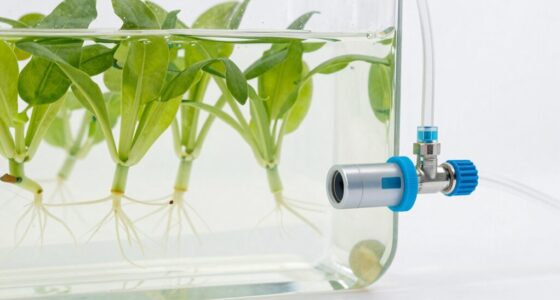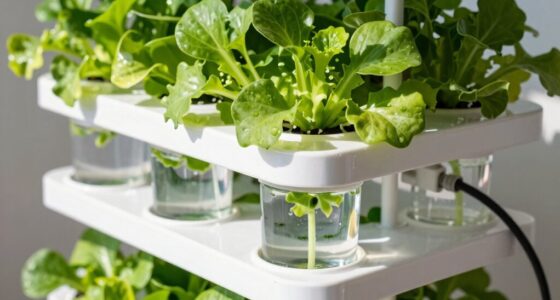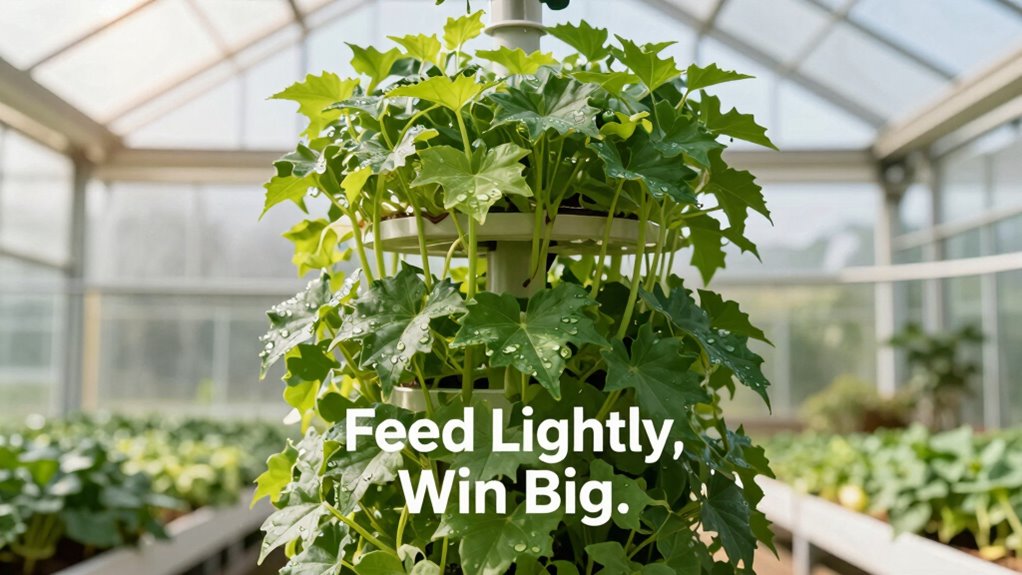

To succeed with your hydroponic tower, feed your plants lightly and consistently to prevent nutrient burn and promote healthy growth. Use organic, balanced nutrients and monitor pH and EC levels regularly to avoid deficiencies or toxicity. Avoid overfeeding and always adjust based on your plants’ signs. By sticking to a gentle nutrient schedule, you’ll save money, reduce waste, and support long-term sustainability. Keep exploring for more tips on optimizing your tower system effectively.

Get cleaning gear delivered free with Prime
- Fast, free delivery on millions of items
- Prime Video, Amazon Music and more included
- Member-only deals all year
Key Takeaways
- Use organic, slow-release nutrients to prevent overfeeding and ensure steady, healthy plant growth in hydroponic towers.
- Regularly monitor pH and EC levels to maintain optimal nutrient absorption and avoid deficiencies or toxicities.
- Apply light, consistent feedings and adjust nutrient strength based on plant response to prevent nutrient burn.
- Incorporate sustainable practices like minimizing runoff and using eco-friendly growing mediums for long-term efficiency.
- Combine proper hydration with gentle nutrient delivery to promote vigorous growth while conserving resources.
Products Worth Considering

Philips Hue Bridge Pro Starter Kit with 4 A19 E26 Color Smart Bulbs

eufy Security SoloCam S340 3K Dual-Lens Solar Security Camera

Dyson Airwrap i.d. Multi-Styler with Bluetooth Connectivity
As an affiliate, we earn on qualifying purchases.
Getting Started With Hydroponic Tower Systems
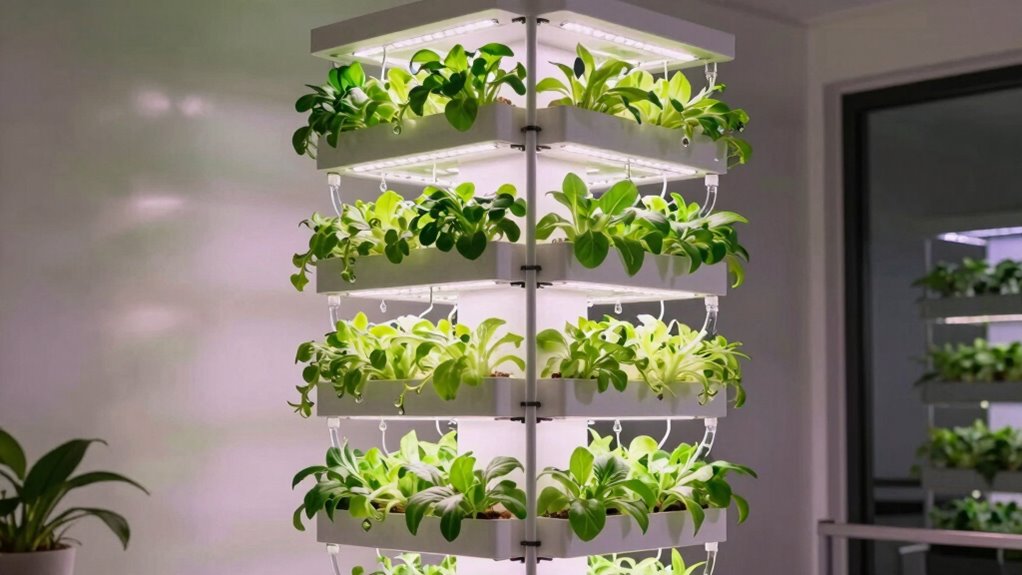
Are you ready to immerse yourself in hydroponic tower gardening? To get started, consider soil compatibility, even though hydroponics bypass traditional soil. Your system relies on nutrient-rich water, so choose plants suited for hydroponic environments. Selecting compatible plants guarantees healthy growth and minimizes issues. Pest control is also essential; since pests can quickly spread in a tower system, implement preventive measures like introducing beneficial insects or using organic repellents. Keep your system clean and monitor for pests regularly. Start small, mastering the basics before expanding. With proper plant choices, pest management, and understanding of your system’s requirements, you’ll set a solid foundation for successful hydroponic tower gardening. Additionally, segmentation of audience in your gardening approach can help tailor your methods for different plant types and growth stages. To enhance your experience, consider exploring digital content formats that can provide innovative insights into efficient gardening techniques. Understanding color accuracy is also important as it can impact the overall quality of your plants’ appearance. Remember that regular routine checkups on plant health can prevent issues and promote optimal growth. Incorporating smart automation in your monitoring can further enhance your tower gardening experience by ensuring consistent nutrient delivery and environmental control.
Why Light Feeding Is Crucial for Tower Garden Success

Light feeding helps prevent nutrient burn and keeps your plants healthy, ensuring they don’t get overwhelmed. It also promotes steady, vigorous growth by providing the right amount of nutrients at the right time. When you balance light feeding, your tower garden stays hydrated and thriving. Additionally, understanding cycling skills can enhance your overall gardening experience by improving your efficiency in managing the garden setup.
Prevents Nutrient Burn
To prevent nutrient burn in your hydroponic tower garden, it’s essential to feed plants with the right amount of nutrients, especially when they’re just starting out. Overfeeding can cause root damage and stunted growth, so start light. Using product roundups for efficient shopping can help you select the best nutrient sources tailored to your plants’ needs. Use organic amendments to gently boost nutrients without overwhelming your plants. Foliar feeding can be a safe way to supply nutrients directly to leaves, reducing the risk of buildup in the roots. Additionally, monitor your nutrient strength regularly and adjust accordingly. Early detection of Frühwarnzeichen für Brustkrebs can help ensure better outcomes in plant health as well.
| Tip | Explanation |
|---|---|
| Use organic amendments | Provides nutrients gradually, reducing burn risk |
| Apply foliar feeding | Delivers nutrients directly to leaves safely |
| Feed lightly | Prevents excess buildup and root damage |
Promotes Healthy Growth
Providing your plants with gentle, consistent nourishment is essential for healthy growth in a tower garden. Unlike soil, hydroponic systems deliver nutrients directly to the roots, making precise, light feeding critical. Overfeeding can cause nutrient burn, while underfeeding hampers development. Using organic nutrients supports robust growth without risking chemical buildup or imbalance. Organic options help your plants thrive naturally, improving overall health and flavor. Light feeding ensures your plants absorb only what they need, promoting strong stems and vibrant leaves. This balanced approach prevents stress and encourages steady, healthy development. By focusing on gentle, consistent nutrition, you set the foundation for a thriving tower garden that produces healthy, abundant plants.
Ensures Balanced Hydration
Ensures Balanced Hydration (Why Light Feeding Is Crucial for Tower Garden Success)
Why is maintaining balanced hydration so essential for your tower garden’s success? When your plants receive the right amount of water, they grow stronger and healthier, preventing issues like root rot or dehydration. Overwatering wastes water and can drown roots, while underwatering stresses plants and stunts growth. To promote water conservation, monitor moisture levels closely and adjust your watering schedule accordingly. Using organic alternatives, such as compost teas or natural wetting agents, can improve water retention and plant uptake. Light feeding helps maintain this balance, ensuring your plants get just enough moisture without excess. This approach encourages efficient water use, reduces waste, and supports vibrant growth. Additionally, incorporating HEPA filters into your home environment can contribute to healthier air, which is beneficial for both you and your plants. Using efficient irrigation systems can also enhance water distribution, ensuring your tower garden remains productive. Moreover, adopting sustainable practices can further optimize nutrient delivery and minimize environmental impact. Proper hydration is the foundation for a thriving, productive tower garden.
Choosing the Right Nutrients for Hydroponic Towers
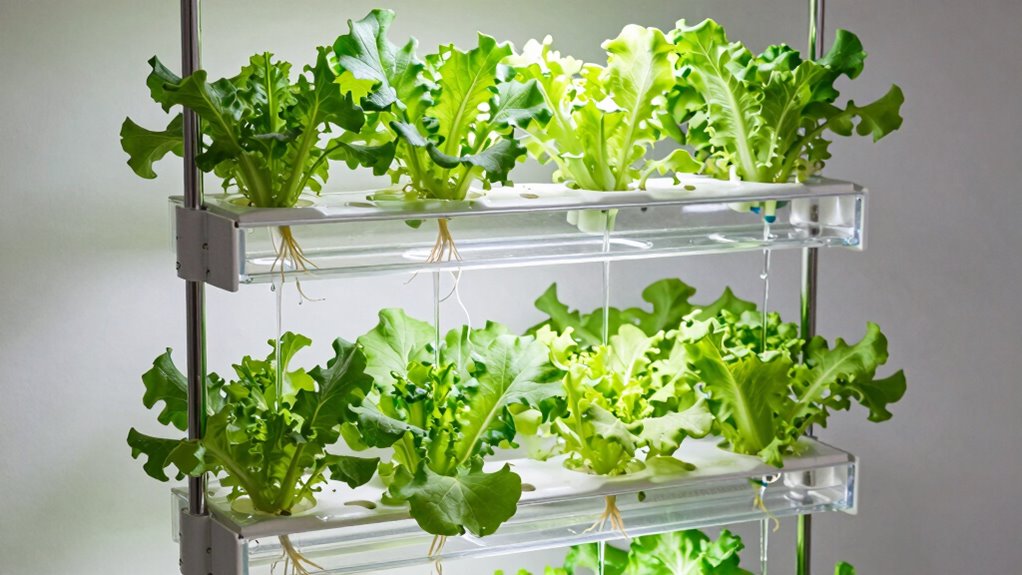
Choosing the right nutrients for your hydroponic tower is essential for healthy plant growth. You need to understand the key components your plants require and how to balance their levels precisely. When you get these elements right, your garden will thrive with vibrant, productive plants. Additionally, utilizing natural filtration systems can help create a healthier environment for your hydroponic setup. Incorporating water filtration systems can significantly improve the quality of the nutrient solution, ensuring your plants receive the best possible care. Regular monitoring of nutrient levels is crucial for achieving optimal plant health and ensuring a successful growing experience. Understanding pool water chemistry can also provide insights into maintaining a balanced nutrient solution. Proper lighting design can enhance the efficiency of nutrient absorption, further promoting plant growth.
Essential Nutrient Components
Selecting the right nutrients is essential for ensuring your hydroponic tower thrives. You need a balanced mix of macro and micronutrients to promote healthy growth. Focus on essential components like nitrogen, phosphorus, potassium, calcium, magnesium, and trace elements. These nutrients support plant development and help prevent deficiencies. Also, consider soil compatibility if you’re transitioning from soil-based systems or integrating soil-like mediums. Proper nutrient selection can aid pest management by strengthening plant defenses. Use this table to guide your choices:
| Nutrient Type | Function |
|---|---|
| Macronutrients | Build plant structure and energy |
| Micronutrients | Support enzyme functions |
| Soil Compatibility | Ensures optimal uptake and health |
Prioritize these components for a thriving, pest-resistant hydroponic tower.
Balancing Nutrient Levels
Balancing Nutrient Levels (Choosing the Right Nutrients for Hydroponic Towers)
Balancing nutrient levels is essential for ensuring your hydroponic tower produces healthy, vigorous plants. You need to monitor the root zone regularly to prevent deficiencies or toxicities. Maintaining proper pH balance is critical—ideally between 5.5 and 6.5—since it affects nutrient availability. If the pH is too high or low, plants can struggle to absorb essential nutrients, leading to poor growth. Research suggests that dreams can aid in emotional healing, which may also apply to how we care for our plants, as a well-tended garden can bring solace. Upgrading your nutrient strategy is akin to choosing the right performance parts for your car, as both require careful consideration for optimal results. Adjust nutrient concentrations carefully, avoiding overfeeding, which can cause root stress or nutrient lockout. Regularly test your solution’s pH and nutrient levels to keep everything in check. A well-balanced root zone promotes ideal nutrient uptake, resulting in stronger plants and higher yields. Staying vigilant about these factors empowers you to create a thriving hydroponic environment. Additionally, optimal humidity levels can further enhance plant growth and nutrient absorption.
How to Mix and Dilute Nutrients for Healthy Growth
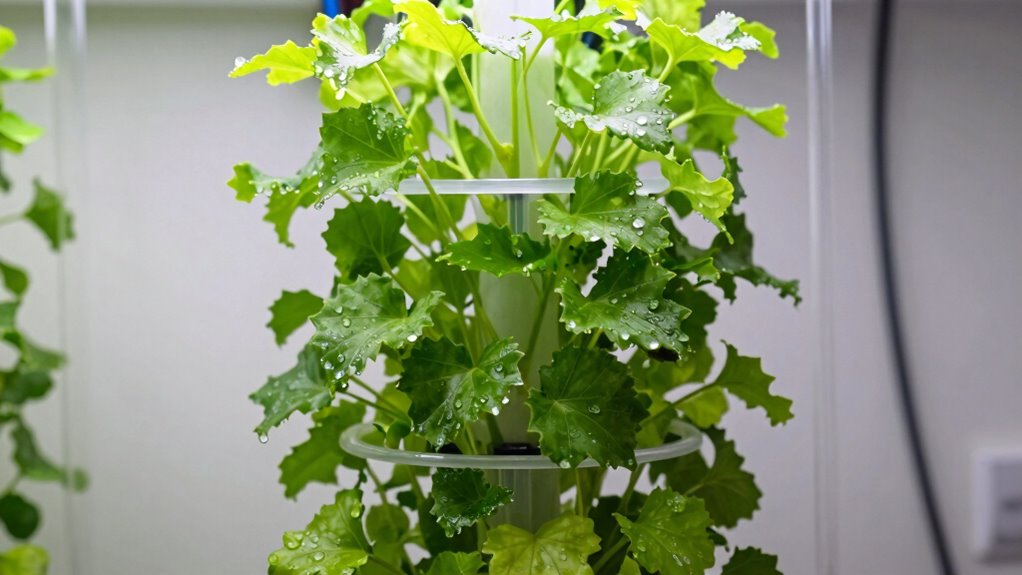
To guarantee your hydroponic plants thrive, you need to mix and dilute nutrients carefully. Proper mixing techniques are essential to maintain the right nutrient concentration. Start by measuring the required amount of concentrate and slowly add it to water, stirring constantly. This prevents clumping and ensures even distribution. Use the table below for a visual guide:
| Concentrate Amount | Water Volume |
|---|---|
| 1 teaspoon | 1 gallon |
| 2 teaspoons | 2 gallons |
| 3 teaspoons | 3 gallons |
This helps you create a consistent nutrient solution. Always double-check your measurements, and avoid rushing the mixing process to assure your plants receive balanced nourishment. Proper dilution promotes healthy growth and minimizes nutrient imbalances.
Monitoring Plant Health to Fine-Tune Nutrient Levels
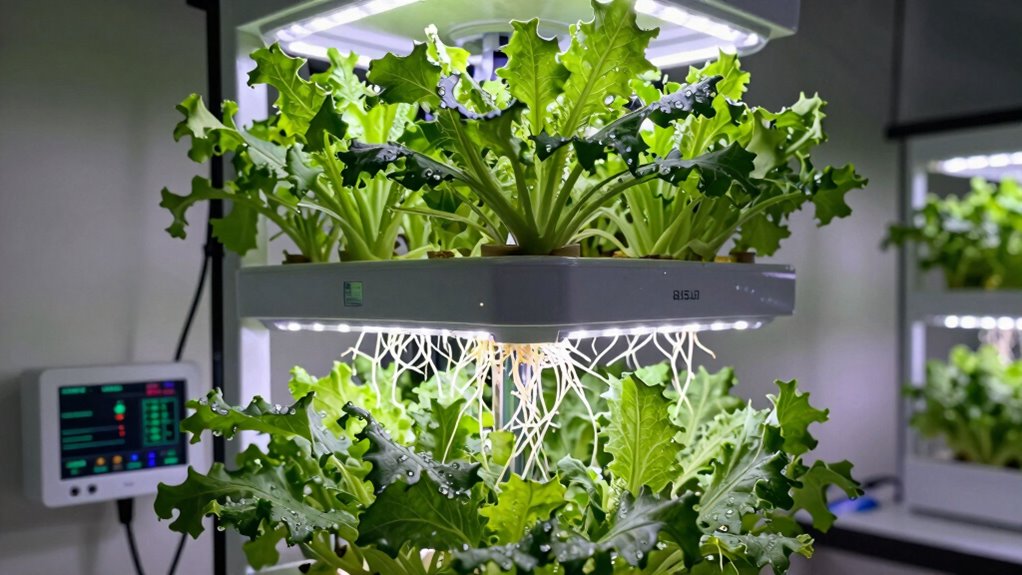
Once you’ve mixed and diluted your nutrient solution correctly, the next step is to monitor your plants closely to guarantee they’re responding well. Regularly check for signs of plant disease or pest issues, as these can indicate nutrient imbalances or stress. Look for discolored leaves, spots, or wilting, which can signal deficiencies or excesses. Use a handheld pH and EC meter to track nutrient levels, adjusting as needed to keep them ideal. Additionally, effective soundproofing techniques can help ensure your observations are clear and actionable. Prevent pest infestations by inspecting plants daily and maintaining a clean growing environment, as consistent maintenance is crucial for optimal health. Address any early signs of pest management or disease immediately to avoid impacting nutrient uptake. Consistent monitoring allows you to fine-tune nutrient levels, promoting healthy growth and reducing the risk of problems. Furthermore, providing personalized in-home care can enhance the overall environment, ensuring plants receive the attention they require. Additionally, incorporating entertainment ideas can provide a refreshing break, enhancing your overall gardening experience.
Common Mistakes to Avoid With Light Nutrient Feeding
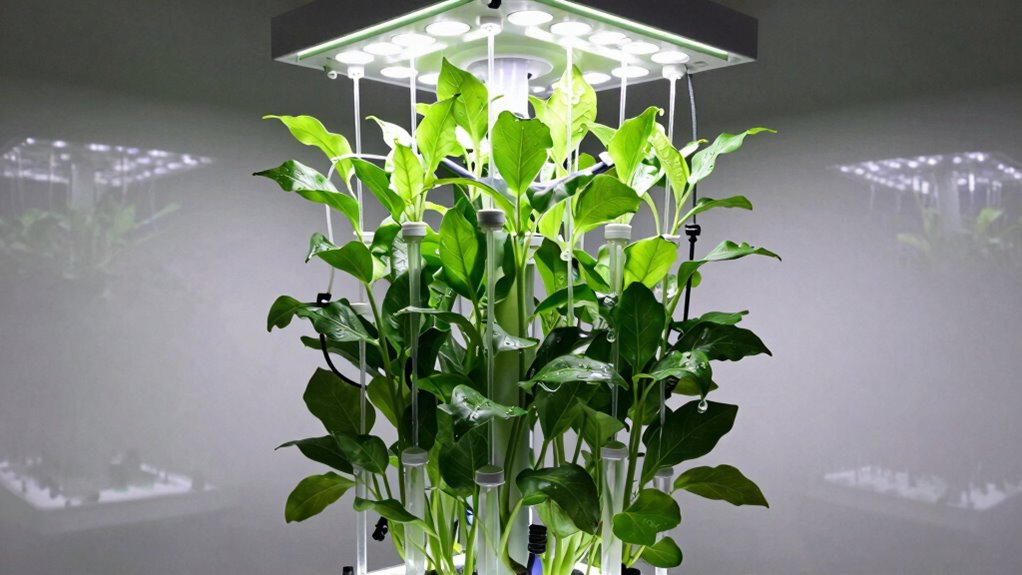
When it comes to light and nutrient feeding in hydroponic towers, many growers make simple but costly mistakes that can hinder plant development. One common error is overfeeding, which increases the dangers of nutrient imbalance. Too much fertilizer can lead to salt buildup, root burn, and stressed plants, ultimately reducing yields. It’s tempting to push nutrients for faster growth, but light feeding helps maintain balance and prevent toxicity. Always monitor your plants and adjust nutrient levels accordingly, rather than applying excess upfront. Avoid assuming more nutrients equals better growth; instead, focus on consistent, moderate feedings. Recognizing the risks of overfeeding and nutrient imbalance ensures your plants stay healthy, promoting steady growth and maximizing your hydroponic tower’s productivity. Additionally, understanding industry trends can provide insights into optimal feeding strategies tailored to specific plant needs.
How a Light Nutrient Strategy Saves Money and Supports Sustainability
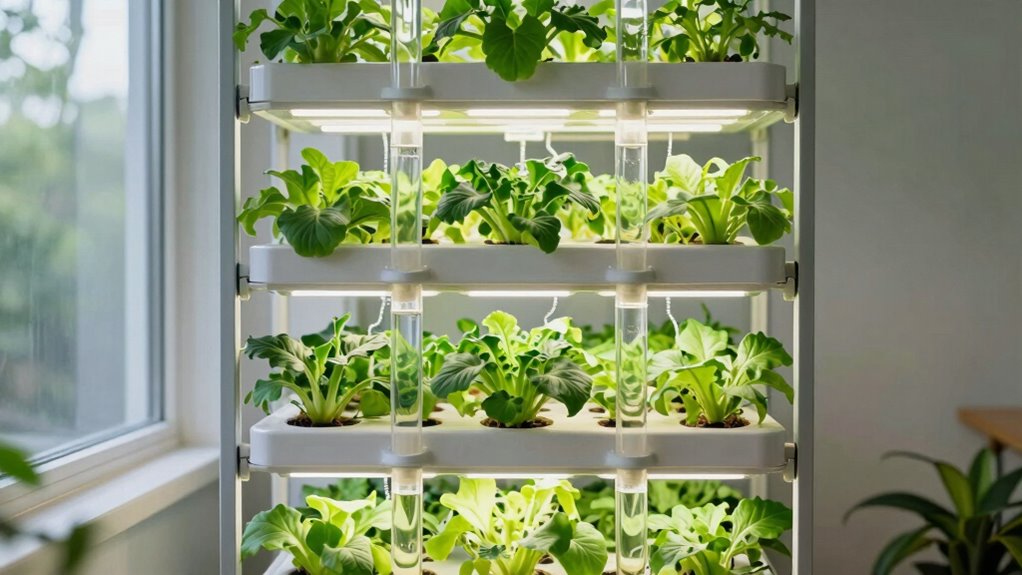
Implementing a light nutrient strategy in your hydroponic tower can considerably cut costs and promote sustainability. By using fewer nutrients, you reduce expenses while still supporting healthy plant growth. This approach aligns well with urban farming goals, where resource efficiency matters. It also minimizes waste and runoff, making your setup more eco-friendly. Plus, you can explore soil alternatives, like coconut coir or peat, which require fewer nutrients and are sustainable options. Adopting a light nutrient strategy helps you conserve water and energy, lowering your overall environmental impact. This method encourages responsible resource use, making your urban farm more resilient and cost-effective. Ultimately, feeding lightly doesn’t mean sacrificing yield; it’s about smart management for long-term sustainability and savings.
Troubleshooting Nutrient Deficiencies in Tower Gardens
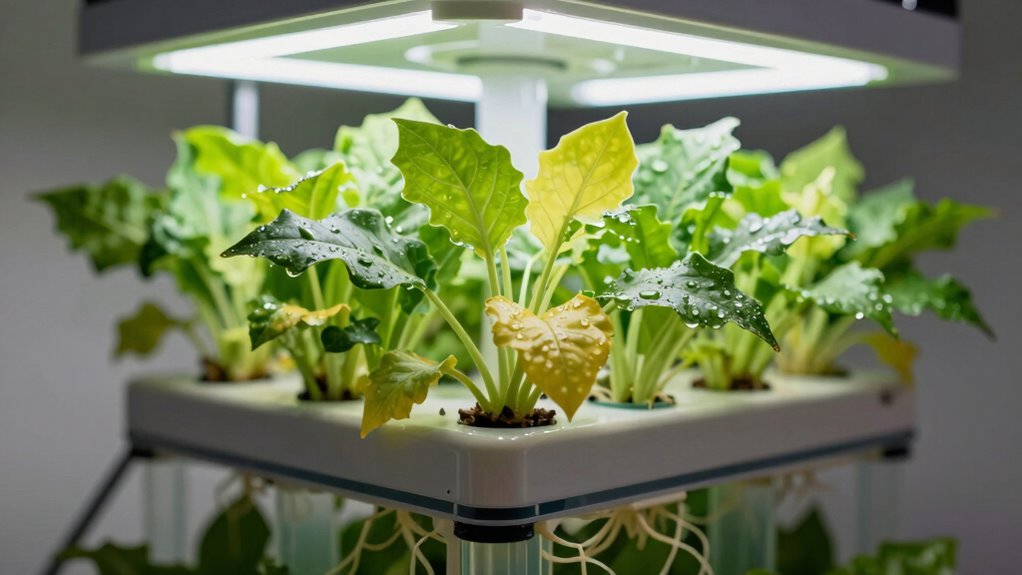
Nutrient deficiencies can quickly undermine the health and productivity of your tower garden, so it’s essential to recognize and address them promptly. In urban farming, these issues often appear as yellowing leaves, stunted growth, or poor fruit development. To troubleshoot, start by inspecting your nutrient solution’s pH and electrical conductivity, ensuring they’re within ideal ranges. Organic solutions, like compost teas or seaweed extracts, can effectively replenish missing nutrients without chemicals. Keep an eye on your plants’ specific needs—nitrogen, potassium, or calcium deficiencies each show distinct signs. Regular observation helps catch issues early. Remember, maintaining a balanced, lightly fed system supports healthy growth and prevents deficiencies, ensuring your tower garden thrives in the urban environment.
Planning Your Seasonal Nutrient Schedule for Continuous Harvests
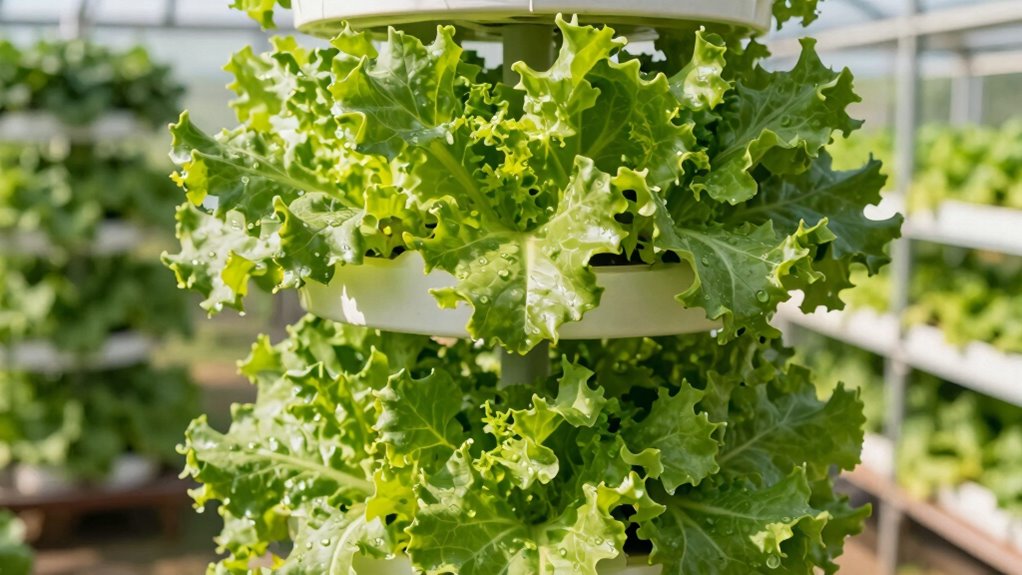
To guarantee your tower garden produces a steady, bountiful harvest throughout the year, planning a seasonal nutrient schedule is essential. You should align your nutrient feedings with seasonal planting, adjusting nutrient strength and composition as your crops change. Incorporate crop rotation to prevent nutrient depletion and reduce disease risk, switching plant types based on their nutrient needs and growth cycles. For example, rotate leafy greens with fruiting vegetables to maintain soil (or in this case, solution) health. Keep detailed records of each season’s planting and nutrient application, so you can refine your approach over time. By tailoring your nutrient schedule to seasonal changes and crop rotation, you’ll maximize growth, improve yields, and keep your hydroponic tower thriving year-round.
Frequently Asked Questions
How Often Should I Adjust Nutrient Levels During Different Growth Stages?
You should adjust nutrient levels weekly, based on your plants’ growth stage. During early stages, feed lightly to promote healthy root growth and avoid overfeeding. Regularly check pH balancing to guarantee ideal nutrient uptake, which supports root health. As plants mature, gradually increase nutrient levels. Consistent monitoring and adjustments help prevent deficiencies or nutrient burn, making sure your plants stay healthy and productive throughout their growth cycle.
Can I Use Organic Nutrients in Hydroponic Tower Systems?
Think of your hydroponic tower as a delicate dance; organic nutrients can be the perfect partner if you choose the right one. Yes, you can use organic alternatives, but they may affect nutrient absorption and water clarity. You’ll want to select organic options that dissolve well and don’t clog your system. With careful monitoring, organic nutrients can keep your plants healthy and thriving, just like a well-choreographed dance.
What Signs Indicate My Plants Are Over- or Under-Fertilized?
You’ll notice signs like yellowing leaves or stunted growth if your plants are under-fertilized, and drooping or browning leaf edges if over-fertilized. Overfeeding can harm root health and increase pest prevention issues. To keep your plants thriving, monitor their response regularly, adjust nutrient levels accordingly, and guarantee ideal root health. Proper feeding promotes healthy growth, reduces pest problems, and keeps your hydroponic tower productive.
How Does Light Intensity Influence Nutrient Requirements?
If you crank up the light intensity, you’ll see your plants want even more nutrients—like a ravenous beast needing a feast! Bright light boosts the light spectrum and markedly ramps up photosynthesis efficiency, making plants work harder. So, when light is intense, you should increase your nutrient supply accordingly, ensuring your plants get the energy they crave without burning out. Balance is key for healthy, thriving growth!
Are There Specific Nutrients Better Suited for Certain Plant Types?
Yes, certain plant types benefit from tailored feeding with plant-specific nutrients. For example, leafy greens need higher nitrogen levels, while fruiting plants like tomatoes require more phosphorus and potassium. By customizing your nutrient mix based on your plants’ needs, you optimize growth and yield. Tailored feeding guarantees your plants get the essential nutrients they require at each stage, leading to healthier, more productive crops.
Conclusion
So, next time you’re tempted to drown your tower in nutrients, remember: a gentle sip wins the race. Think of your plants as royalty demanding delicate teas, not a tidal wave. Keep it light, keep it smart, and watch your garden flourish like a well-behaved diva—glamorous, healthy, and totally in control. After all, who needs a nutrient hurricane when a gentle breeze does the trick? Your plants—and your wallet—will thank you.