A robot vacuum that empties and washes itself can cut down on routine floor care, but these models differ in how much dock maintenance they still require. My best overall pick is the ECOVACS DEEBOT T90 PRO Omni for buyers prioritizing an all-in-one vacuum-and-mop setup, while the iRobot Roomba Max 705X stands out for its AutoWash dock and the Shark PowerDetect AV2900XE for its 60-day self-emptying claim. The main tradeoffs are how much cleaning the dock handles, how often you must tend to water and dirty-water tanks, and whether you want a mop-first or vacuum-first machine. Not every self-emptying dock washes its mop, so matching the dock’s tasks to your expectations matters. Read on for the full breakdown and guidance on which option fits your home.

Get cleaning gear delivered free with Prime
- Fast, free delivery on millions of items
- Prime Video, Amazon Music and more included
- Member-only deals all year
Complete the kit


Key Takeaways
Dock capability is the main separator. The Roomba Max 705X has an AutoWash dock, while some other models emphasize auto-emptying and may leave more mop upkeep to you.
The DEEBOT T90 PRO Omni is the broad all-in-one pick for shoppers focused on an integrated vacuum-and-mop setup rather than a vacuum with a basic mopping add-on.
Shark offers two distinct routes: the AV2900XE highlights 60-day self-emptying, while the Matrix Plus AV2610WA is a separate combo option for buyers comparing Shark configurations.
iRobot’s lineup spans different levels of dock support. The 115X Combo uses an AutoEmpty dock, while the Max 705X adds an AutoWash dock, making the latter a better fit for buyers who want more mop automation.
Lower-friction ownership depends on the whole routine. A dock can reduce touchpoints, but water refills, dirty-water disposal, mop care, and home mapping still shape the amount of work left to do.
| LVKANGDA D17S MAX Robot Vacuum and Mop Combo |  | Best for Pet-Hair Maintenance | Suction power: 12,000 Pa | Navigation: dToF laser navigation | Battery life: 160 minutes | VIEW ON AMAZON | See Our Full Breakdown |
| Shark PowerDetect Robot Vacuum & Mop Combo, 60-Day Self-Empty, AV2900XE | 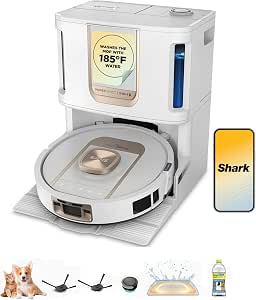 | Best for Heated Mop Care | Self-empty capacity: Up to 60 days | Mop washing: 185°F water | Mop drying: 175°F air | VIEW ON AMAZON | See Our Full Breakdown |
| iRobot Roomba 415X Robot Vacuum and Mop Combo |  | Best for Strong Suction and Pad Care | Suction power: 20,000 Pa | Self-empty capacity: Up to 90 days | Mop pad drying temperature: 113°F | VIEW ON AMAZON | See Our Full Breakdown |
| Wrydao S6 Pro Robot Vacuum and Mop with Self-Emptying Station |  | Best Value for Basic Self-Emptying | Suction power: 6,000 Pa | Dust bag capacity: 3 L | Self-empty interval: Up to 90 days | VIEW ON AMAZON | See Our Full Breakdown |
| ECOVACS DEEBOT T90 PRO Omni Robot Vacuum and Mop |  | Best Premium Roller-Mop System | Suction power: 30,000 Pa | Battery life: 200 minutes | Mop lift: 15 mm | VIEW ON AMAZON | See Our Full Breakdown |
| Shark Matrix Plus Robot Vacuum & Mop Combo (AV2610WA) |  | Best Bagless Option | Model: AV2610WA | Cleaning functions: Vacuum and mop | Self-emptying capacity: Up to 60 days | VIEW ON AMAZON | See Our Full Breakdown |
| Shark PowerDetect Robot Vacuum & Mop Combo (AV2800ZE) |  | Best for Hands-Free Mop Care | Model: AV2800ZE | Dock: NeverTouch Pro base | Self-empty capacity: Up to 60 days | VIEW ON AMAZON | See Our Full Breakdown |
| iRobot Roomba 115X Combo Robot Vacuum & Mop with AutoEmpty Dock |  | Best for Long Intervals Between Emptying | Suction power: 15,000 Pa | Cleaning area per charge: About 900 sq. ft. | Battery life: 173 minutes | VIEW ON AMAZON | See Our Full Breakdown |
| iRobot Roomba Max 705X Robot Vacuum and Mop Combo with AutoWash Dock | 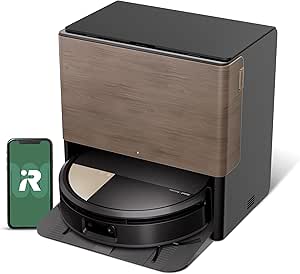 | Best Premium AutoWash System | Model: Roomba Max 705X | Type: Robot vacuum and mop combo | Dock: AutoWash Dock; empties debris, washes and dries mop, and dispenses cleaning solution | VIEW ON AMAZON | See Our Full Breakdown |
| robot vacuum that empties and washes itself | Navigation | Suction power | Battery life |
|---|---|---|---|
| LVKANGDA D17S MAX Robot Vacuum | dToF laser navigation | 12,000 Pa | 160 minutes |
| Shark PowerDetect Robot Vacuum | LiDAR mapping, as stated in product information | — | 180 minutes |
| iRobot Roomba 415X Robot Vacuu | — | 20,000 Pa | — |
| Wrydao S6 Pro Robot Vacuum and | LiDAR | 6,000 Pa | 160 minutes |
| ECOVACS DEEBOT T90 PRO Omni Ro | — | 30,000 Pa | 200 minutes |
| Shark Matrix Plus Robot Vacuum | 360° LiDAR | — | — |
| Shark PowerDetect Robot Vacuum | 360° LiDAR and 3D sensors | — | — |
| iRobot Roomba 115X Combo Robot | LiDAR | 15,000 Pa | 173 minutes |
| iRobot Roomba Max 705X Robot V | PrecisionVision AI obstacle avoidance and ClearView Pro LiDAR 3D mapping | — | — |
More Details on Our Top Picks
LVKANGDA D17S MAX Robot Vacuum and Mop Combo
The D17S MAX pairs 12,000 Pa suction with an unusual auto-hair-cutting system, making it a practical pick for homes where hair tangles create frequent brush cleanup. Its base holds debris for up to 90 days, matching the long interval offered by the iRobot Roomba 415X, though the Roomba also washes and heat-dries its mop pads. The LVKANGDA description specifies self-emptying, but not automatic mop washing or drying, so it falls short of the hands-off floor-care promise that defines this roundup. dToF laser navigation supports mapping and scheduling, while a 160-minute battery gives it a useful cleaning window. The tradeoff is clear: it prioritizes vacuum upkeep and pet-hair handling over automated mop maintenance, and full app control requires setup.
Pros:- 12,000 Pa suction is suited to pet hair and embedded dirt.
- Auto-hair-cutting system helps reduce manual brush untangling.
- Self-emptying base is listed for up to 90 days of capacity.
- dToF laser navigation supports mapping and scheduled cleaning.
Cons:- No automatic mop washing or drying is specified.
- At 11.9 pounds, it is relatively heavy to handle.
- Full feature use depends on app setup.
Best for: Pet owners who want strong suction, reduced brush tangles, and infrequent dustbin emptying, but can wash the mop themselves.
Not ideal for: Buyers seeking a truly hands-off mop routine, since the listed features do not include automatic pad washing or drying.
- Suction power:12,000 Pa
- Navigation:dToF laser navigation
- Battery life:160 minutes
- Dustbin capacity:250 ml
- Water tank capacity:300 ml
- Self-empty capacity:Up to 90 days
- Dimensions:12.99 × 12.99 × 3.94 inches
- Weight:11.9 lb
Our verdict“Choose the D17S MAX for pet-hair pickup and reduced brush maintenance, not for a robot that fully cleans its own mop.”
Shark PowerDetect Robot Vacuum & Mop Combo, 60-Day Self-Empty, AV2900XE
The AV2900XE is one of the clearest fits for a roundup about a robot that empties and washes itself: its base empties debris, washes the mop with 185°F water, and dries it with 175°F air. It also refills the robot’s water tank, reducing the chores between cleaning runs. Compared with the LVKANGDA D17S MAX, which lists a long-lasting emptying base but no automatic mop washing, Shark offers a more complete maintenance cycle. Carpet detection and mop lifting help keep wet cleaning away from rugs, while Dirt Detect and edge-focused cleaning target missed debris. The compromises are a 60-day dust capacity rather than the 90 days listed for some alternatives, and the product data gives no suction figure. Its self-cleaning convenience is stronger than its spec transparency.
Pros:- Washes the mop with 185°F water and dries it with 175°F air.
- Automatically empties debris and refills the water tank.
- Lifts the mop for vacuum-only cleaning to help keep carpets dry.
- Dirt Detect and edge-cleaning features target concentrated and perimeter debris.
Cons:- The 60-day dust capacity is shorter than the 90-day capacity listed for the LVKANGDA D17S MAX and Roomba 415X.
- No suction-power figure is supplied in the provided product data.
- The base and its automated wash-and-dry cycle require space and add system complexity.
Best for: Households that want a dock to wash and heat-dry the mop, refill water, and protect rugs during vacuuming.
Not ideal for: Buyers who prioritize a clearly stated high suction rating or the longest listed interval between dustbin emptying.
- Self-empty capacity:Up to 60 days
- Mop washing:185°F water
- Mop drying:175°F air
- Water refill:Automatic; up to 30 days stated
- Battery life:180 minutes
- Navigation:LiDAR mapping, as stated in product information
- Floor handling:Automatic floor detection and mop lift
- Controls:App control
Our verdict“Pick the AV2900XE if heated mop washing and drying matter more than a longer dustbin interval or a published suction rating.”
iRobot Roomba 415X Robot Vacuum and Mop Combo
The Roomba 415X combines a listed 20,000 Pa suction rating with a dock that empties debris, refills water, and washes and heat-dries mop pads. That makes its maintenance package more complete than the Wrydao S6 Pro, whose station empties dust but does not list mop washing. Its LiDAR mapping, obstacle recognition, and 10 mm carpet lift also help it manage mixed flooring with less manual intervention. The pad-drying temperature is 113°F, lower than the Shark AV2900XE’s stated 175°F air-drying temperature, and the provided data does not give a battery runtime or dust capacity. Tangle-free rubber brushes and SmartScrub add practical cleaning capability, but setup and app configuration may take more effort than buyers wanting a simple plug-and-go machine.
Pros:- Dock automatically empties debris and refills water.
- Washes and heat-dries mop pads after cleaning runs.
- 20,000 Pa suction and SmartScrub support vacuuming and scrubbing.
- LiDAR mapping, obstacle recognition, and 10 mm carpet lift support mixed-floor cleaning.
Cons:- Pad drying is listed at 113°F, below the Shark AV2900XE’s stated 175°F air temperature.
- Battery runtime and dust capacity are not provided in the supplied specs.
- Initial setup and app configuration may be complex for some buyers.
Best for: Buyers who want a self-emptying, self-washing dock, strong listed suction, and automated handling of rugs and obstacles.
Not ideal for: Shoppers who need a confirmed battery runtime or dust capacity before choosing, or who want the simplest setup.
- Suction power:20,000 Pa
- Self-empty capacity:Up to 90 days
- Mop pad drying temperature:113°F
- Mapping:LiDAR
- Brush type:Tangle-free rubber brushes
- Carpet lift height:10 mm
- Dock functions:Self-emptying, water refill, mop-pad washing and heat drying
Our verdict“Choose the Roomba 415X for a feature-rich self-washing dock and strong stated suction, provided its missing runtime details are not a dealbreaker.”
Wrydao S6 Pro Robot Vacuum and Mop with Self-Emptying Station
The S6 Pro suits buyers whose main goal is fewer dustbin chores rather than a fully automated mop routine. Its 3 L self-emptying bag is listed for up to 90 days, and LiDAR mapping supports room selection and no-go zones. It can vacuum, mop, or combine both, with carpet boost and adjustable water flow for straightforward control across its supported surfaces. But unlike the iRobot Roomba 415X or Shark AV2900XE, the Wrydao’s listed station does not wash or dry the mop; the pad remains a manual-care task. Its 6,000 Pa suction is also below the ratings given for the LVKANGDA D17S MAX and Roomba. A 2.4GHz Wi-Fi requirement further limits compatibility for homes configured around other bands.
Pros:- 3 L dust bag is listed for up to 90 days of use.
- LiDAR mapping supports room selection and no-go zones.
- Offers vacuum-only, mop-only, and combined cleaning modes.
- Automatic carpet boost and four suction levels allow cleaning adjustments.
Cons:- Station does not list automatic mop washing or drying.
- 6,000 Pa suction is lower than the listed ratings for the LVKANGDA D17S MAX and Roomba 415X.
- Requires 2.4GHz Wi-Fi, and mopping is intended for sealed hard floors.
Best for: Budget-conscious households with sealed hard floors that want LiDAR mapping and infrequent dustbag changes, and do not mind washing the mop manually.
Not ideal for: Buyers who expect the station to wash and dry the mop, or who have only 5GHz Wi-Fi available.
- Suction power:6,000 Pa
- Dust bag capacity:3 L
- Self-empty interval:Up to 90 days
- Battery life:160 minutes
- Navigation:LiDAR
- Water flow settings:3
- Suction levels:4
- Wi-Fi requirement:2.4GHz
Our verdict“Pick the S6 Pro for mapped cleaning and long intervals between dustbag changes, but skip it if self-washing the mop is a must.”
ECOVACS DEEBOT T90 PRO Omni Robot Vacuum and Mop
The T90 PRO Omni is the most ambitious mop system in this group: its OZMO Roller 3.0 washes the roller as it cleans, while the OMNI station handles self-emptying, hot-water washing, and hot-air drying. That real-time cleaning approach differs from the Roomba 415X, which washes mop pads at its dock after a run. For homes with large hard-floor areas, continuous roller care is designed to limit dirty-water smearing; 30,000 Pa suction and ZeroTangle 4.0 also target dust and pet hair. The tradeoffs are narrower carpet suitability—the listed wet-mopping compatibility is limited to low-pile short carpet—and 2.4GHz-only Wi-Fi. Its 15 mm mop lift helps with floor transitions, but buyers should check that their rugs and network fit the stated limits.
Pros:- OZMO Roller 3.0 washes the roller during cleaning to help limit smearing.
- OMNI station handles self-emptying, hot-water washing, and hot-air drying.
- 30,000 Pa suction and ZeroTangle 4.0 are aimed at dust and pet hair.
- TruEdge 3.0 and a 15 mm mop lift support edge cleaning and floor transitions.
Cons:- Wet-mopping suitability is limited to low-pile short carpet among carpet types.
- Wi-Fi support is limited to 2.4GHz.
- Its feature-rich roller and dock system may be more than needed in homes with little hard flooring.
Best for: Homes dominated by sealed hard flooring that want an actively washed roller, automated dock care, and strong stated suction.
Not ideal for: Homes with substantial or thick carpeting, or buyers whose home network does not support 2.4GHz Wi-Fi.
- Suction power:30,000 Pa
- Battery life:200 minutes
- Mop lift:15 mm
- Noise level:60 dB
- Water capacity:4 L
- Mop system:OZMO Roller 3.0 with self-washing
- Dock functions:Self-emptying, hot-water washing, and hot-air drying
- Wi-Fi:2.4GHz only
Our verdict“Choose the T90 PRO Omni for extensive hard floors and active roller washing, but look elsewhere if your home has varied or thicker carpet.”
Shark Matrix Plus Robot Vacuum & Mop Combo (AV2610WA)
The AV2610WA is the clearest pick here for buyers who want to avoid disposable dust bags. Its bagless base holds up to 60 days of debris, while True HEPA filtration is a useful addition for homes where fine dust and allergens matter. Matrix Clean grid passes and sonic mopping at 100 scrubs per minute give it a more methodical hard-floor routine than a basic vacuum-and-mop combo. Compared with the newer Shark PowerDetect AV2800ZE, though, this model stops short of automatically washing and drying its mop or refilling its water tank. That means less ongoing dock care than a manual setup, but it does not fully meet the hands-off wash-and-maintain promise. I’d choose it for bag-free debris handling and pet-hair features, not for minimal mop maintenance.
Pros:- Bagless base holds up to 60 days of debris, avoiding replacement dust bags.
- True HEPA filtration captures 99.97% of dust and allergens.
- Self-cleaning brushroll is designed to reduce hair wrap.
- Sonic mopping scrubs hard floors 100 times per minute.
Cons:- The dock does not automatically wash or dry the mop pads.
- Advanced features such as targeted Matrix Mop zones require app use.
- Initial setup involves fitting accessories, including filters and brushes.
Best for: Pet owners who want a bagless self-emptying dock, allergen filtration, and regular sonic mopping without relying on disposable vacuum bags.
Not ideal for: Buyers who want the dock to wash and dry the mop pad or refill its water tank automatically; the AV2800ZE automates more of that routine.
- Model:AV2610WA
- Cleaning functions:Vacuum and mop
- Self-emptying capacity:Up to 60 days
- Filtration:True HEPA; captures 99.97% of dust and allergens
- Navigation:360° LiDAR
- Mopping frequency:100 times per minute
- Warranty:1-year limited
- Included accessories:XL HEPA self-empty base, 2 reusable microfiber mopping pads, 1 filter, 1 side brush, 12 oz. starter VACMOP cleaning solution
Our verdict“Choose the AV2610WA if bag-free emptying and allergen filtration matter more than a dock that washes and dries the mop for you.”
Shark PowerDetect Robot Vacuum & Mop Combo (AV2800ZE)
For a roundup about robots that empty and wash themselves, the PowerDetect AV2800ZE makes the strongest practical case: its NeverTouch Pro base empties debris, refills the water tank, and washes and dries the mop pad. The stated capacities—up to 60 days for debris and 30 days for water—reduce routine dock visits, though they do not remove the need to replenish cleaning supplies. DirtDetect and StainDetect adjust cleaning for messes, while 3D sensors help it avoid obstacles and keep the mop off carpets. That makes it more automated than the Matrix Plus AV2610WA, whose dock does not wash the pad, and a more complete self-care setup than the Roomba 115X auto-empty dock. The tradeoff is reliance on ongoing odor-neutralizer cartridges and cleaner, plus a more elaborate system than buyers needing only light mopping may want.
Pros:- NeverTouch Pro base self-empties, refills the water tank, and washes and dries the mop pad.
- Advertised maintenance intervals reach up to 60 days for debris and 30 days for water.
- DirtDetect and StainDetect adjust cleaning for hidden dirt and stuck-on stains.
- LiDAR and 3D sensors support obstacle avoidance and carpet protection while mopping.
Cons:- Odor-neutralizer cartridges and cleaning solution add recurring supply needs.
- The dock’s automated mop care still requires periodic maintenance and supply refills.
- Its feature set may be more elaborate than needed for homes that only require light mopping.
Best for: Busy households with mixed carpet and hard floors that want the dock to handle debris, water refills, and mop washing between routine checks.
Not ideal for: Buyers who want to avoid consumable odor cartridges and cleaning solution, or who only need basic vacuuming with occasional light mopping.
- Model:AV2800ZE
- Dock:NeverTouch Pro base
- Self-empty capacity:Up to 60 days
- Water tank refill interval:Up to 30 days
- Dock maintenance:Self-empties debris, refills water, and washes and dries mop pad
- Navigation:360° LiDAR and 3D sensors
- Surface compatibility:Carpets and hard floors
- App control:SharkClean App
- Included items:Robot, NeverTouch Pro base, 2 odor-neutralizer cartridges, 3 mopping pads, 2 side brushes, 12 oz. cleaner
Our verdict“Pick the AV2800ZE if you want the most complete combination of self-emptying, water refilling, and mop washing among these Shark options.”
iRobot Roomba 115X Combo Robot Vacuum & Mop with AutoEmpty Dock
The Roomba 115X prioritizes debris capacity and straightforward controls over a dock that tends the mop. Its AutoEmpty dock stores dirt in a 2.5 L allergen-lock bag for up to three months, and LiDAR mapping helps it clean mapped rooms with less dependence on bright lighting. A 15,000 Pa suction claim and a single-pass vacuum-and-mop routine make it suited to regular floor upkeep. The limitation is central to this roundup: the dock empties debris but does not wash or dry the mop pad. Compared with the Shark PowerDetect AV2800ZE or Roomba Max 705X, it leaves much more mop care to the owner. Its light-spill mopping also is not a substitute for scrubbing set-in stains. I’d pick it for long intervals between dustbin chores, not for a truly self-washing setup.
Pros:- AutoEmpty dock stores debris in a 2.5 L bag for up to three months.
- LiDAR navigation maps rooms and supports obstacle avoidance, including in low light.
- 15,000 Pa stated suction and four power levels offer adjustable vacuuming.
- App, voice, and button controls give several ways to start cleaning.
Cons:- AutoEmpty dock does not wash or dry the mop pad.
- Mopping is suited to light spills; heavy stains may need manual cleaning.
- Setup and app control require Wi-Fi, and bags and mop pads need replacement.
Best for: Households that mainly want reliable mapped vacuuming, long intervals between emptying, and light mopping in the same run.
Not ideal for: Buyers who expect the dock to wash and dry mop pads or who need robot scrubbing for heavy, dried-on stains.
- Suction power:15,000 Pa
- Cleaning area per charge:About 900 sq. ft.
- Battery life:173 minutes
- Battery type:Lithium-ion
- Dust storage:2.5 L AutoEmpty bag
- Navigation:LiDAR
- Control methods:App, voice, and push button
- Power levels:4
- Speed settings:4
Our verdict“Choose the 115X for mapped vacuuming and infrequent bag changes, but skip it if self-washing the mop is a must.”
iRobot Roomba Max 705X Robot Vacuum and Mop Combo with AutoWash Dock
The Roomba Max 705X pairs the broadest stated dock routine in this group with a roller mop designed to reach edges and scrub tougher marks. Its AutoWash Dock empties debris, washes and dries the mop, and dispenses cleaning solution; the robot’s mop runs at 200 RPM, and the dock’s stated emptying interval reaches up to 75 days. PrecisionVision AI obstacle avoidance and ClearView Pro LiDAR 3D mapping add help around household objects, while carpet protection supports mixed-floor cleaning in one run. Compared with the Shark PowerDetect AV2800ZE, it offers a longer stated debris-emptying interval and an extending roller mop, but the Shark specifies water refills up to 30 days. The 705X listing does not provide dimensions, capacity, or runtime, so planning around its dock and coverage is harder.
Pros:- AutoWash Dock empties debris, washes and dries the mop, and dispenses cleaning solution.
- Self-cleaning extending roller mop is designed for edge coverage and tougher stains.
- 200 RPM mop speed and carpet protection support combined hard-floor and carpet cleaning.
- PrecisionVision AI and ClearView Pro LiDAR 3D mapping help the robot navigate around household items.
Cons:- The provided product data omits dock capacity, robot dimensions, and battery runtime.
- Voice-assistant features depend on compatible Alexa, Siri, or Google Assistant devices.
- The listing does not specify water-refill intervals, making routine dock upkeep harder to compare.
Best for: Buyers seeking an automated vacuum-and-mop routine with dock-based roller washing, drying, solution dispensing, and detailed obstacle navigation.
Not ideal for: Shoppers who need verified dimensions, dust or water capacity, or battery runtime before choosing, or whose home cannot support a sizeable dock.
- Model:Roomba Max 705X
- Type:Robot vacuum and mop combo
- Dock:AutoWash Dock; empties debris, washes and dries mop, and dispenses cleaning solution
- Suction:Advertised as 175× stronger than Roomba 600 series robots
- Mop speed:200 RPM
- Auto-emptying interval:Up to 75 days
- Navigation:PrecisionVision AI obstacle avoidance and ClearView Pro LiDAR 3D mapping
- Brushes:Dual rubber brushes and dual edge-sweeping brushes
- Voice assistants:Alexa, Siri, and Google Assistant
Our verdict“Choose the Max 705X if you want a dock that washes and dries an extending roller mop, and can accept gaps in the published capacity and runtime details.”

How We Picked
I ranked these nine models around the promise behind this search: reducing hands-on work for both vacuuming and mopping. I compared what each dock is described as doing, distinguishing self-emptying from mop washing rather than treating the two as interchangeable. I also weighed usability, the stated cleaning approach, maintenance implications, and how clearly each model suits a buyer type. A dock that handles more of the mop routine earns an advantage for people seeking an all-in-one setup, while a simpler dock can still make sense for homes that mainly want automated vacuuming.
The order favors models with a stronger match to full vacuum-and-mop automation, then distinguishes alternatives by their specific strengths and likely compromises. The DEEBOT T90 PRO Omni leads as the most aligned all-around choice, while the Roomba Max 705X earns attention for its AutoWash dock and the Shark AV2900XE for its stated 60-day self-emptying feature. Models with more limited dock functions or less clearly differentiated roles rank lower for this particular search, even if they may suit buyers with narrower needs. I do not treat shared brand features as proof that every model in a lineup works the same way; buyers should check the exact dock and included functions for the model they choose.
Factors to Consider When Choosing Robot Vacuum That Empties And Washes Itself
Choosing a robot vacuum that empties and washes itself is less about the word “self-cleaning” and more about which chores the dock actually takes over. I would start with the routine you want to avoid, then check what remains your responsibility after each run.
Check What “Self-Cleaning” Means
Manufacturers use dock automation to describe different jobs, so separate dustbin emptying from mop washing. A self-emptying dock transfers collected debris into a larger container; that alone does not mean it cleans a mop pad. A washing dock may handle the pad, but you can still need to refill clean water, empty dirty water, or clean dock parts. The common mistake is choosing by the broad “self-cleaning” label without checking each task. Write down which chores you want the machine to take over, then compare the exact dock functions. If mop upkeep is the task you most want to avoid, give that capability more weight than an extended dustbin interval.
Match the Mop System to Your Floors
Hard floors, rugs, and mixed rooms place different demands on a combo robot. Homes with mostly hard flooring may benefit more from a mop that is washed and maintained at the dock, while carpet-heavy layouts may get more daily value from strong vacuum routines. Check how the robot handles rugs during a mop run, including whether it can avoid them or whether you must set boundaries. A frequent mismatch is buying a combo unit for its mop feature when most rooms are carpeted and the mop will rarely be useful. Think about thresholds, narrow areas, and furniture clearance too, since those can limit where a robot cleans regardless of its dock. Choose around the floors you actually have, not the broadest feature list.
Estimate the Upkeep You Will Still Do
Automation reduces chores; it rarely removes them. Dust containers, water tanks, mop components, and dock surfaces still need attention at intervals that depend on use and home conditions. Pets, long hair, frequent cooking, and larger floor areas can increase the amount of debris or residue the system handles. Before buying, check whether consumables and replacement parts are easy to identify and whether the dock’s routine fits your available space. A common mistake is focusing on how long a dock can hold debris while overlooking the water handling and mop care. Favor the system whose remaining maintenance feels manageable, not the one with the most impressive single automation claim.
Plan for Mapping and Household Obstacles
Dock automation cannot compensate for a robot that struggles with the layout of your home. Door thresholds, loose cables, pet bowls, small toys, and dense furniture can affect cleaning coverage and the need for manual rescue. Consider whether you need room-by-room schedules, no-go areas, or cleaning zones, and check that the controls support the way you divide your space. If your home changes often, flexible mapping can matter more than a small difference in dock features. Clear the likely routes before judging a model’s convenience, because even a capable robot may need help around clutter. Buyers with a simple, open floor plan can prioritize dock functions more heavily than buyers with many obstacles.
Decide When Paying for More Automation Makes Sense
A more capable dock makes the most sense when you mop frequently and want fewer interruptions between runs. If you mostly vacuum, or only mop occasionally, a model centered on self-emptying may cover the chore that matters most without adding unused dock complexity. Compare the full ownership routine, including where the dock fits, how often you expect to handle tanks, and which maintenance steps remain manual. Avoid paying extra for functions that do not match your floor mix or cleaning schedule. Conversely, if you know you will rarely wash mop pads yourself, prioritizing a dock that handles more of that work can make the robot easier to keep in regular use. The right choice is the one whose automation fits your habits, not the one with the longest feature list.
Frequently Asked Questions
Does a self-emptying robot vacuum also wash its mop?
No. Self-emptying usually refers to transferring vacuumed debris from the robot’s bin to the dock, while mop washing is a separate function. In this lineup, the distinction is clear between the Roomba 115X Combo’s AutoEmpty dock and the Roomba Max 705X’s AutoWash dock. Check the exact model description and dock capabilities before buying, since naming across a brand’s range can be easy to mix up. If your main goal is avoiding mop-pad cleaning, choose based on washing support rather than the self-empty label.
Which model should I choose if I want the least mop maintenance?
Start with the iRobot Roomba Max 705X and ECOVACS DEEBOT T90 PRO Omni, the standout options here for buyers seeking more integrated mop care. The Max 705X specifically identifies an AutoWash dock, while the DEEBOT is positioned as an all-in-one Omni model. A washing dock still does not necessarily remove every task: you may need to handle water tanks and clean dock components. Check the included dock functions and maintenance instructions for the exact configuration before deciding.
Is a 60-day self-emptying claim the same as 60 days without maintenance?
No. The Shark PowerDetect AV2900XE’s 60-day self-emptying claim refers to its debris-handling feature, not a guarantee that the entire robot and dock need no attention for that period. Mopping can involve separate water and pad care, and actual upkeep can vary with home size, debris, and cleaning frequency. Treat the figure as a guide to one part of the routine, not a maintenance-free promise. Review the dock’s instructions to see what must be checked between runs.
Should I choose an all-in-one Omni-style model or a simpler AutoEmpty combo?
Choose an all-in-one setup if you expect to mop often and want the dock to take on more of the mop routine. A simpler AutoEmpty combo can be a better fit if vacuuming is your priority and mopping is occasional. In this group, the DEEBOT T90 PRO Omni and Roomba Max 705X stand out for buyers looking beyond debris disposal, while the Roomba 115X Combo emphasizes AutoEmpty. Consider your floor mix and the chores you dislike most, then confirm the dock’s exact tasks. More automation only helps when it covers work you would otherwise do.
What should I check before using a robot mop on a home with rugs?
Check whether the model can identify rugs and how it behaves when a mop is attached or active. Look for controls that let you set no-mop zones or otherwise keep the robot away from carpeted areas, and confirm how the product handles rugs during a scheduled mop run. Also consider rug thickness and the placement of thresholds, since navigation can affect whether the robot reaches a room or gets caught at its boundary. If your home has many rugs, prioritize reliable separation between vacuuming and mopping over dock automation alone. Check the model-specific instructions rather than assuming all combo robots manage carpets in the same way.
Conclusion
For the broadest match to a robot vacuum that empties and washes itself, I would start with the ECOVACS DEEBOT T90 PRO Omni as my best overall pick. The Shark PowerDetect AV2900XE is my best value-style choice for shoppers drawn to its stated 60-day self-emptying feature, while the iRobot Roomba Max 705X is the best premium-style option here for buyers prioritizing an AutoWash dock. Beginners who mainly want a familiar combo format and automatic debris disposal may prefer the Roomba 115X Combo, though its AutoEmpty dock is not the same as a mop-washing dock. For Shark shoppers comparing configurations, the Matrix Plus AV2610WA and PowerDetect AV2800ZE offer alternatives worth checking against the exact dock functions you need. Match the model to your main chore: choose mop automation if pad care is the pain point, or self-emptying if debris disposal is what you most want to reduce.