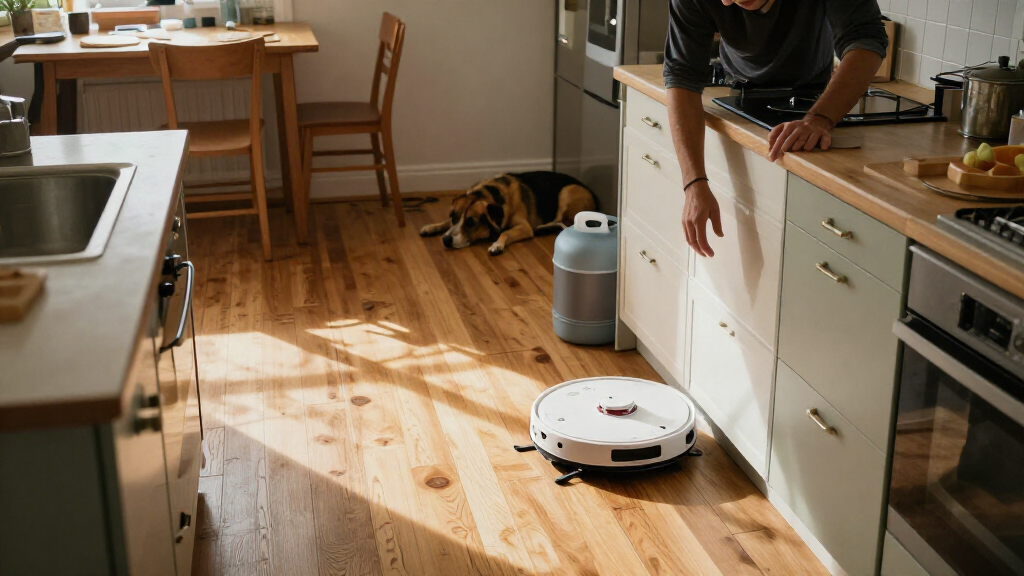
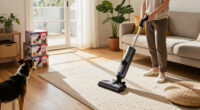
The best robot vacuum with mopping for most homes is the Roborock Qrevo Edge 3 Pro, a strong all-around choice for buyers who want vacuuming and mop care in one system. The Dreame L40 Ultra Gen 2 stands out as another feature-rich option, while the Roborock Q7 M5+ offers a simpler route to self-emptying convenience. The biggest tradeoffs are how much work the dock handles, how well each design fits your floors, and how much maintenance you are willing to do. Some models emphasize hands-off mop washing, while more straightforward options put greater focus on routine vacuuming. Read on for the full breakdown and help matching a model to your home.

Get cleaning gear delivered free with Prime
- Fast, free delivery on millions of items
- Prime Video, Amazon Music and more included
- Member-only deals all year
Complete the kit


Key Takeaways
- The top tier is defined by dock support: the Roborock Qrevo Edge 3 Pro and Dreame L40 Ultra Gen 2 are the leading choices for shoppers seeking more automated mop care, not just a robot that drags a damp pad.
- Self-emptying does not mean fully hands-off: models such as the Roborock Q7 M5+ and Q10 S5+ reduce dustbin chores, but buyers should still check what their docks do—and do not do—for mop maintenance.
- The lineup spans very different levels of complexity: Roomba 115X Combo is a simpler entry point, while premium multifunction docks add setup, upkeep, and more components to manage.
- Pet-focused labels are not interchangeable: the eufy C28 and iRobot Roomba Max 775 Pet target pet households, but buyers still need to match brush design, obstacle handling, and dock routines to their own shedding and floor mix.
- High suction claims are only one part of the decision: the LVKANGDA D17S MAX and Roborock Qrevo S Pro advertise strong suction, but mopping results, navigation, dock convenience, and support also affect day-to-day usefulness.
| Roborock Qrevo Edge 3 Pro Robot Vacuum and Mop |  | Best Overall | Suction: 36,000 Pa | Battery life: Up to 256 minutes | Mop system: Dual spinning mops; 200 RPM | VIEW LATEST PRICE | See Our Full Breakdown |
| Dreame L40 Ultra Gen 2 Robot Vacuum and Mop |  | Best for Reaching Corners | Suction power: 25,000 Pa | Battery capacity: 5,200 mAh | Battery life: Up to 231 minutes | VIEW LATEST PRICE | See Our Full Breakdown |
| eufy E25 Robot Vacuum and Mop |  | Best for Pet-Hair Mopping | Maximum suction: 20,000 Pa | Mop system: HydroJet roller mop | Runtime: 125 minutes | VIEW LATEST PRICE | See Our Full Breakdown |
| Roborock Qrevo 2 Pro Robot Vacuum and Mop |  | Best for Edge Mopping | Suction: 20,000 Pa | Battery life: Up to 253 minutes | Navigation: LiDAR | VIEW LATEST PRICE | See Our Full Breakdown |
| Shark Matrix Plus 2-in-1 Robot Vacuum and Mop, AV2610WA |  | Best Bagless Pick | Model: AV2610WA | Cleaning functions: Robot vacuum and sonic mop | Mopping rate: Up to 100 times per minute | VIEW LATEST PRICE | See Our Full Breakdown |
| Roborock Q7 M5+ Robot Vacuum and Mop with Self-Emptying Dock |  | Best for Low-Maintenance Everyday Cleaning | Maximum suction: 10,000 Pa | Navigation: PreciSense LiDAR | Dust bag capacity: 2.7 L | VIEW LATEST PRICE | See Our Full Breakdown |
| Roborock Q10 S5+ Robot Vacuum and Mop with Self-Emptying Station |  | Best for Carpet-and-Hard-Floor Homes | Suction power: 10,000 Pa | Mopping system: VibraRise 2.0 sonic vibration, up to 3,000 scrubs per minute | Mop lift: Up to 8 mm | VIEW LATEST PRICE | See Our Full Breakdown |
| DREAME D30 Ultra CE Robot Vacuum and Mop |  | Best for Maximum Suction and Dock Automation | Suction power: 25,000 Pa | Dust bag capacity: 3.2 L | Dust box capacity: 300 ml | VIEW LATEST PRICE | See Our Full Breakdown |
| Airzeen Q20 Ultra Bagless Self-Emptying Robot Vacuum and Mop |  | Best Bagless Self-Emptying Pick | Suction power: Up to 10,000 Pa | Runtime: Up to 150 minutes in ECO mode | Navigation: LiDAR; supports up to 5 maps | VIEW LATEST PRICE | See Our Full Breakdown |
| eufy C28 Robot Vacuum and Mop for Pet Hair |  | Best for Pet Hair and Self-Cleaning Mopping | Vacuum suction: 15,000 Pa | Mop system: HydroJet self-cleaning roller mop | Mop roller speed: 270 RPM | VIEW LATEST PRICE | See Our Full Breakdown |
| LVKANGDA D17S MAX Robot Vacuum with Self-Emptying and 12,000 Pa Suction |  | Best for Low-Maintenance Vacuuming | Suction power: Up to 12,000 Pa | Battery life: 160 minutes | Dust capacity: 550 ml | VIEW LATEST PRICE | See Our Full Breakdown |
| iRobot Roomba Plus 515 Robot Vacuum and Mop Combo with AutoWash Dock |  | Best for Hands-Off Mop Care | Suction power: 22,000 Pa | Dock functions: Auto-empties debris, refills water, washes mop pads at 167°F, and dries them at 113°F | Hands-free cleaning: Up to 3 months | VIEW LATEST PRICE | See Our Full Breakdown |
| iRobot Roomba Max 775 Pet Robot Vacuum and Mop Combo |  | Best for Pet Hair and Dried-On Messes | Suction power: 30,000 Pa | Mop type: PowerSpin roller mop | Mopping features: Heated spot mopping and 200 RPM scrubbing | VIEW LATEST PRICE | See Our Full Breakdown |
| iRobot Roomba 115X Combo Robot Vacuum and Mop |  | Best Simple Combo for Sealed Hard Floors | Suction power: 15,000 Pa | Coverage per charge: Up to 900 sq ft | Navigation: ClearView LiDAR | VIEW LATEST PRICE | See Our Full Breakdown |
| Roborock Qrevo S Pro Robot Vacuum and Mop with 18,500 Pa Suction |  | Best for Balanced Spinning-Mop Cleaning | Suction power: 18,500 Pa | Dust bag capacity: 2.7 L | Battery life: 180 minutes | VIEW LATEST PRICE | See Our Full Breakdown |
| robot vacuums with mopping | Navigation | Battery life | Suction power |
|---|---|---|---|
| Roborock Qrevo Edge 3 Pro Robo | — | Up to 256 minutes | — |
| Dreame L40 Ultra Gen 2 Robot V | — | Up to 231 minutes | 25,000 Pa |
| eufy E25 Robot Vacuum and Mop | Laser-guided mapping; stores up to 5 floor plans | — | — |
| Roborock Qrevo 2 Pro Robot Vac | LiDAR | Up to 253 minutes | — |
| Shark Matrix Plus 2-in-1 Robot | 360° LiDAR mapping with obstacle detection and avoidance | — | — |
| Roborock Q7 M5+ Robot Vacuum a | PreciSense LiDAR | 150 minutes | — |
| Roborock Q10 S5+ Robot Vacuum | LiDAR with multi-level mapping | 150 minutes | 10,000 Pa |
| DREAME D30 Ultra CE Robot Vacu | — | 180 minutes | 25,000 Pa |
| Airzeen Q20 Ultra Bagless Self | LiDAR; supports up to 5 maps | — | Up to 10,000 Pa |
| eufy C28 Robot Vacuum and Mop | LiDAR | 140 minutes | — |
| LVKANGDA D17S MAX Robot Vacuum | — | 160 minutes | Up to 12,000 Pa |
| iRobot Roomba Plus 515 Robot V | ClearView LiDAR mapping and obstacle recognition | — | 22,000 Pa |
| iRobot Roomba Max 775 Pet Robo | ClearView Pro LiDAR with 3D mapping | — | 30,000 Pa |
| iRobot Roomba 115X Combo Robot | ClearView LiDAR | — | 15,000 Pa |
| Roborock Qrevo S Pro Robot Vac | LiDAR | 180 minutes | 18,500 Pa |
More Details on Our Top Picks
Roborock Qrevo Edge 3 Pro Robot Vacuum and Mop
The Qrevo Edge 3 Pro is my strongest all-around pick for homes that need both serious vacuuming and frequent mopping. Its 36,000 Pa suction leads the other products in this group, while dual spinning mops apply up to 14 N of pressure for more active hard-floor cleaning than the Shark Matrix Plus 2-in-1’s sonic pad approach. The dock also takes on the most routine upkeep here: it washes mops with hot water, dries them, refills the robot, dispenses detergent, and empties dust.
That automation comes with a tradeoff: the supplied details do not state the dock’s water or dust capacity, so I can’t gauge refill frequency. Its AdaptiLift chassis and stated threshold clearance also make it a more adaptable choice for homes with raised transitions than the Dreame L40 Ultra Gen 2. Skip it if your Wi-Fi is 5 GHz only or you need confirmed dock-capacity figures before buying.
Pros:- Highest listed suction in this five-product group at 36,000 Pa.
- Dual spinning mops combine with up to 14 N of downward pressure for active hard-floor cleaning.
- Dock washes and dries mops, refills water, dispenses detergent, and empties dust.
- AdaptiLift chassis is rated for thresholds up to 1.77 inches single-layer or 3.46 inches double-layer.
Cons:- Wi-Fi connectivity is limited to 2.4 GHz.
- Dock water and dustbin capacities are not specified in the supplied product data.
Best for: Owners of mixed-floor homes with pets, raised thresholds, and a preference for a dock that handles most mop and dust maintenance.
Not ideal for: Buyers with only 5 GHz Wi-Fi or anyone who needs documented water-tank and dustbin capacities to plan maintenance.
- Suction:36,000 Pa
- Battery life:Up to 256 minutes
- Mop system:Dual spinning mops; 200 RPM
- Mop pressure:Up to 14 N
- Threshold clearance:Up to 1.77 in single-layer; 3.46 in double-layer
- Low-clearance access:3.13 in
- Dock care:212°F mop washing; 131°F drying; water refill, detergent dispensing, and dust emptying
- Dust emptying interval:Up to 65 days
- Connectivity:2.4 GHz Wi-Fi
Our verdict“Choose the Qrevo Edge 3 Pro if you want the most powerful listed vacuuming and extensive mop care in one dock, and can work with 2.4 GHz Wi-Fi.”
Dreame L40 Ultra Gen 2 Robot Vacuum and Mop
The Dreame L40 Ultra Gen 2 suits homes where crumbs gather along edges and under furniture. Its extendable side brush and mop are the standout distinction: they let it reach beyond the robot’s main footprint, while the Roborock Qrevo 2 Pro instead emphasizes mopping close to walls with a stated 1.85 mm edge-cleaning distance. Five suction levels give owners a way to tailor cleaning, and the dock empties dust, washes the mop, and dries it with hot air.
With 25,000 Pa of stated suction, it sits below the Qrevo Edge 3 Pro’s 36,000 Pa, but still offers a substantial listed figure alongside a 231-minute Quiet Mode runtime. The 0.41-inch mop lift can help with low-pile carpet, though it is not a substitute for a dedicated carpet-mopping boundary. Wi-Fi is 2.4 GHz only and specified for US use; automatic detergent dispensing requires a separately sold accessory.
Pros:- Extendable side brush and mop help reach corners and areas under furniture.
- Five suction levels allow cleaning intensity to be adjusted.
- Dock handles dust emptying, mop washing, and hot-air drying.
- Quiet Mode runtime is listed at up to 231 minutes.
Cons:- Auto-detergent dispensing requires an optional accessory sold separately.
- Connectivity is limited to 2.4 GHz Wi-Fi and specified for USA use.
- Its 25,000 Pa suction is below the Qrevo Edge 3 Pro’s listed 36,000 Pa.
Best for: People with furniture edges and corners that collect debris, mixed flooring, and a desire to adjust suction by room or task.
Not ideal for: Buyers who want automatic detergent dispensing included, need 5 GHz Wi-Fi, or live outside the stated US-use region.
- Suction power:25,000 Pa
- Battery capacity:5,200 mAh
- Battery life:Up to 231 minutes
- Quiet Mode coverage:Up to 1,679 sq ft
- Suction levels:5
- Mop lift:0.41 in (10.5 mm)
- Dock features:Auto-emptying, mop washing, and hot-air drying
- Controls:App, remote, and voice
- Connectivity:2.4 GHz Wi-Fi; USA use only
Our verdict“Pick the Dreame L40 Ultra Gen 2 if corner and under-furniture reach matter more to you than the Qrevo Edge 3 Pro’s higher listed suction.”
eufy E25 Robot Vacuum and Mop
The eufy E25 takes a different route from the spinning-pad systems in the Roborock Qrevo Edge 3 Pro: its HydroJet roller mop is refreshed with clean water during cleaning. That makes it a distinctive fit for pet homes where both hair pickup and regular hard-floor mopping matter. Anti-tangle brushes are designed to reduce hair wrap, and the all-in-one station handles dust emptying, mop washing and drying, and water refills.
Its 20,000 Pa suction is lower than the Dreame L40 Ultra Gen 2’s 25,000 Pa, and the 125-minute runtime is shorter than either Roborock in this group. On the other hand, laser-guided mapping can store up to five floor plans, useful for multi-level homes. The 10.8 mm mop lift and stated short-carpet suitability make it a less flexible pick for plush or varied carpeting than the Qrevo Edge 3 Pro.
Pros:- HydroJet roller mop is refreshed with clean water during cleaning.
- Anti-tangle brushes are designed to handle pet hair.
- Station empties dust, washes and dries the mop, and refills water.
- Laser-guided mapping stores up to five floor plans.
Cons:- Listed runtime is 125 minutes, shorter than the Roborock Qrevo Edge 3 Pro and Dreame L40 Ultra Gen 2.
- Mop lift is 10.8 mm, and carpet suitability is listed as short carpet.
- Connects only to 2.4 GHz Wi-Fi and uses 110 V power.
Best for: Pet owners with mostly hard floors who want a mop refreshed during cleaning and a station that handles routine pad and dust care.
Not ideal for: Households with long cleaning runs, extensive plush carpet, or a need for Wi-Fi beyond 2.4 GHz.
- Maximum suction:20,000 Pa
- Mop system:HydroJet roller mop
- Runtime:125 minutes
- Dust bag capacity:3 L
- Water capacity:2.5 L
- Mop lift:10.8 mm
- Threshold climbing:21 mm
- Navigation:Laser-guided mapping; stores up to 5 floor plans
- Connectivity:2.4 GHz Wi-Fi only
Our verdict“Choose the eufy E25 for pet hair and a clean-water roller-mop routine on mostly hard floors, not for long runs across carpet-heavy homes.”
Roborock Qrevo 2 Pro Robot Vacuum and Mop
The Roborock Qrevo 2 Pro is a strong match for homes where dust lines along walls are a persistent annoyance. Its stated 1.85 mm edge-cleaning distance gives it a specific mopping advantage over the eufy E25, whose appeal centers more on a roller refreshed with clean water during cleaning. Automatic carpet detection, liftable mop pads, and 20,000 Pa suction make the Qrevo 2 Pro a more balanced fit for mixed flooring than a hard-floor-focused mop setup.
The dock empties dust, refills water, and washes and dries the mops, while LiDAR supports scheduled, room-specific cleaning. Compared with the Qrevo Edge 3 Pro, it gives up suction power, warmer mop washing, and the stated ability to cross unusually tall thresholds. Its 15 mm mop lift is also limited, so buyers with thicker rugs should plan around carpet zones rather than assume the pads will clear every pile.
Pros:- Mops as close as 1.85 mm along walls.
- Automatic carpet detection and liftable mop pads support mixed-floor cleaning.
- Multifunction dock empties dust, refills water, and washes and dries mops.
- LiDAR navigation supports scheduled and customized cleaning.
Cons:- Mop lift is limited to 15 mm, which may not clear thicker rugs.
- Suction is lower than the Roborock Qrevo Edge 3 Pro’s listed 36,000 Pa.
- Wi-Fi support is limited to 2.4 GHz.
Best for: Mixed-floor households that prioritize close-to-wall mopping, automatic carpet detection, and a dock that reduces daily mop upkeep.
Not ideal for: Homes with tall thresholds or thick rugs, or buyers who want the highest suction and warmest mop wash in this lineup.
- Suction:20,000 Pa
- Battery life:Up to 253 minutes
- Navigation:LiDAR
- Mop lift:Up to 15 mm
- Edge cleaning distance:As close as 1.85 mm along walls
- Dock mop washing:149°F
- Mop drying:113°F warm air
- Noise level:54 dB
- Connectivity:2.4 GHz Wi-Fi
Our verdict“Choose the Qrevo 2 Pro if wall-edge mopping and carpet-aware routines matter more than the Qrevo Edge 3 Pro’s extra suction and threshold clearance.”
Shark Matrix Plus 2-in-1 Robot Vacuum and Mop, AV2610WA
The Shark Matrix Plus 2-in-1 is the lineup’s clearest choice for buyers who prefer a bagless self-empty base and HEPA filtration over a dock that washes reusable mop pads. Its base holds up to 60 days of debris, and 360° LiDAR mapping with room, zone, and no-go controls gives owners a structured way to manage cleaning. Sonic mopping scrubs up to 100 times per minute, a different approach from the Roborock Qrevo 2 Pro’s edge-reaching mop pads.
The tradeoff is less mop automation: the supplied details do not list automatic mop washing, drying, or water refilling, features included with the Roborock and Dreame docks. The reusable microfiber pads also require owner care. Because the mop is for hard floors, this is best for homes that want vacuuming across carpets and hard floors but mopping only on hard surfaces. The base needs room to sit and operate.
Pros:- Bagless self-empty base holds up to 60 days of dirt and debris.
- HEPA filtration is rated to capture 99.97% of dust and allergens down to 0.3 microns.
- Sonic mop scrubs up to 100 times per minute on hard floors.
- LiDAR mapping supports room and zone targeting, scheduling, and no-go areas.
Cons:- Mop is intended for hard floors and does not mop carpets.
- Product details do not list automatic mop washing, drying, or water refilling.
- Base and robot require dedicated storage and operating space.
Best for: Buyers who want a bagless debris base, HEPA filtration, and app-based room or zone control, with mop use limited to hard floors.
Not ideal for: People seeking a dock that automatically washes and dries mop pads, or homes without space for a self-empty base.
- Model:AV2610WA
- Cleaning functions:Robot vacuum and sonic mop
- Mopping rate:Up to 100 times per minute
- Self-empty base capacity:Up to 60 days of dirt and debris
- Filtration:HEPA; captures 99.97% of dust and allergens down to 0.3 microns
- Navigation:360° LiDAR mapping with obstacle detection and avoidance
- Brushroll:Self-cleaning, designed to prevent hair wrap
- App controls:Scheduling, room and zone targeting, and no-go areas
- Included mop pads:2 reusable microfiber pads
Our verdict“Pick the Shark Matrix Plus if a bagless base and HEPA filtration matter more than the automatic mop washing and drying offered by the Roborock Qrevo 2 Pro.”
Roborock Q7 M5+ Robot Vacuum and Mop with Self-Emptying Dock
The Roborock Q7 M5+ pairs 10,000 Pa suction with LiDAR room mapping and a dock designed to hold weeks of collected dust, making it a practical choice for routine vacuuming with occasional mopping. Its three water-flow settings let you tailor damp cleaning to different hard floors, while the dual anti-tangle brushes are aimed at reducing hair buildup. Compared with the Q10 S5+, it has simpler mopping: the Q10 adds sonic scrubbing, obstacle avoidance, and a mop that lifts over carpet. The Q7 M5+ makes more sense if those extras are less important than mapped cleaning and a large dust bag. Its main compromises are the lack of listed carpet-aware mop lifting and 2.4 GHz-only Wi-Fi; the listing also gives no warranty duration.
Pros:- LiDAR mapping supports structured cleaning routes across multiple rooms.
- 2.7 L dust bag is listed for up to 7–9 weeks between emptying.
- Three water-flow settings allow adjustment for different hard floors.
- Dual anti-tangle brushes are designed to reduce hair wrap.
Cons:- No mop-lifting feature is specified for carpeted areas.
- Wi-Fi connectivity is limited to 2.4 GHz.
- The product listing does not specify a warranty duration.
Best for: Households that want mapped, scheduled vacuuming, a large self-emptying dust bag, and adjustable light mopping without paying for sonic mop features.
Not ideal for: Homes with many carpet-to-hard-floor transitions or buyers who want active obstacle avoidance and carpet-aware mop lifting.
- Maximum suction:10,000 Pa
- Navigation:PreciSense LiDAR
- Dust bag capacity:2.7 L
- Listed self-emptying interval:Up to 7–9 weeks
- Battery life:150 minutes
- Water-flow settings:3
- Noise level:65 dB
- Wi-Fi:2.4 GHz only
Our verdict“Choose the Q7 M5+ for mapped vacuuming and low-touch dust disposal, but pick the Q10 S5+ if carpet-aware sonic mopping matters more.”
Roborock Q10 S5+ Robot Vacuum and Mop with Self-Emptying Station
The Roborock Q10 S5+ is a stronger fit than the Q7 M5+ for mixed flooring because it combines sonic vibrating mopping with carpet detection and an 8 mm mop lift. That lift helps reduce damp contact with low carpet during a cleaning run, while LiDAR mapping and ReactiveTech structured-light obstacle avoidance add useful automation. Its 10,000 Pa suction and 2.7 L self-emptying bag are close to the Q7’s, but the Q10 adds more active floor handling rather than simply adjustable water flow. The limit is the modest 8 mm clearance, which may not suit thicker rugs, and the mop system is not a substitute for a dedicated deep scrubber. It also requires 2.4 GHz Wi-Fi, and the dust bag will need eventual replacement.
Pros:- Sonic mop system is specified for up to 3,000 scrubs per minute.
- Carpet detection and an 8 mm mop lift help limit wet contact with carpets.
- LiDAR mapping supports multi-level maps and scheduled room cleaning.
- ReactiveTech structured-light obstacle avoidance adds detection beyond basic mapping.
Cons:- The 8 mm mop lift may not clear thicker carpet or rugs.
- The station uses replacement dust bags rather than a reusable bagless cup.
- Connectivity is limited to 2.4 GHz Wi-Fi.
Best for: Homes with a mix of hard floors and low-pile carpet where users want mapped cleaning, obstacle detection, and automatic mop lifting.
Not ideal for: Households with thick rugs, frequent tall thresholds, or a preference for a bag-free dust collection system.
- Suction power:10,000 Pa
- Mopping system:VibraRise 2.0 sonic vibration, up to 3,000 scrubs per minute
- Mop lift:Up to 8 mm
- Dust bag capacity:2.7 L
- Battery life:150 minutes
- Navigation:LiDAR with multi-level mapping
- Obstacle avoidance:ReactiveTech structured light
- Wi-Fi:2.4 GHz
Our verdict“Pick the Q10 S5+ over the Q7 M5+ if your floors alternate between hard surfaces and low carpet and you want more capable mopping automation.”
DREAME D30 Ultra CE Robot Vacuum and Mop
The DREAME D30 Ultra CE stands apart from the Roborock Q10 S5+ with a much higher stated 25,000 Pa suction and a dock that washes and hot-air dries the mop pads as well as empties dust. That combination suits buyers seeking stronger vacuuming and less hands-on mop care, while laser mapping, obstacle detection, and app scheduling support room-by-room routines. The 3.2 L dust bag is larger than the 2.7 L bags on both Roborock models here. Its mops lift up to 0.41 inches, and the robot is specified to cross thresholds up to 0.79 inches, though neither figure guarantees performance on every rug or doorway. The tradeoffs are 2.4 GHz-only Wi-Fi and USA-only use; the provided data also does not describe obstacle avoidance in detail.
Pros:- 25,000 Pa stated suction is higher than the 10,000 Pa listed for the Roborock Q10 S5+.
- Dock washes and hot-air dries mop pads while also emptying dust.
- 3.2 L dust bag offers greater stated capacity than the Roborock models in this batch.
- Mop lift and specified threshold clearance support some mixed-floor layouts.
Cons:- Wi-Fi compatibility is limited to 2.4 GHz.
- Product data specifies use in the USA only.
- Obstacle detection is listed, but the supplied data gives limited detail on its capabilities.
Best for: Buyers in the USA who want a high-suction robot with a dock that washes and dries mop pads and handles dust disposal.
Not ideal for: People outside the USA, homes using only 5 GHz Wi-Fi, or buyers who need clearly specified advanced obstacle avoidance.
- Suction power:25,000 Pa
- Dust bag capacity:3.2 L
- Dust box capacity:300 ml
- Battery life:180 minutes
- Mop lift:Up to 0.41 in
- Threshold clearance:Up to 0.79 in
- Suction levels:5
- Wi-Fi:2.4 GHz only
Our verdict“Choose the D30 Ultra CE if strong stated suction and dock-based mop washing and drying outweigh its regional and Wi-Fi limits.”
Airzeen Q20 Ultra Bagless Self-Emptying Robot Vacuum and Mop
The Airzeen Q20 Ultra is the distinctive choice here for buyers who want self-emptying without ongoing dust-bag replacements: its dock uses a reusable bagless dust cup. LiDAR mapping supports up to five maps, a useful advantage for multi-level homes, and recharge-and-resume cleaning can help it cover larger areas within its stated 150-minute ECO-mode runtime. Its suction is listed up to 10,000 Pa, matching the Roborock Q7 M5+ and Q10 S5+ on paper, but its mopping setup is less hands-off: the mop holder should be removed before carpet cleaning. Unlike the Q10 S5+, the supplied details do not specify sonic scrubbing or automatic mop lifting. The 2.4 GHz requirement and sponge filter are also worth weighing if your network or maintenance preferences differ.
Pros:- Reusable bagless self-emptying dust cup avoids replacement dust bags.
- LiDAR mapping supports up to five saved maps and customizable no-go zones.
- Recharge-and-resume operation can continue cleaning after the robot returns to its dock.
- Combines vacuuming, sweeping, and mopping with adjustable suction.
Cons:- Mop holder should be removed before carpet cleaning.
- App and voice control require 2.4 GHz Wi-Fi.
- Sponge filtration is specified, but the supplied data does not describe a washable filter.
Best for: Multi-level households that want reusable bagless dust collection, several saved maps, and routine vacuuming with hard-floor mopping.
Not ideal for: Homes with frequent carpet transitions where manually removing the mop holder would be inconvenient, or buyers seeking automatic mop lifting.
- Suction power:Up to 10,000 Pa
- Runtime:Up to 150 minutes in ECO mode
- Navigation:LiDAR; supports up to 5 maps
- Dust collection:Reusable bagless self-emptying dust cup
- Cleaning functions:Vacuum, sweep, mop, and self-empty
- Cleaning path width:12.6 inches
- Filter type:Sponge
- Wi-Fi:2.4 GHz only
Our verdict“Choose the Q20 Ultra if reusable bagless emptying and multi-floor maps matter more than automatic carpet-aware mop handling.”
eufy C28 Robot Vacuum and Mop for Pet Hair
The eufy C28 is the most mop-focused option in this batch: its HydroJet roller continuously self-cleans, and its all-in-one station washes and dries the mop, empties dust, and collects wastewater. That gives it a different advantage from the DREAME D30 Ultra CE, whose supplied details also include dock-based mop washing and drying but emphasize much higher suction. The C28 instead pairs 15,000 Pa suction with a DuoSpiral brush designed to reduce tangles from long hair, making it a considered pick for pet households. LiDAR navigation and a 10.8 mm mop lift add practical automation, though obstacle avoidance is specified only for objects at least 3 × 3 × 3 cm. Its recommended carpet coverage is limited to short wool carpet, and its 140-minute battery life is shorter than several alternatives here.
Pros:- HydroJet roller mop is designed to clean itself during mopping.
- Omni Station empties dust, washes and dries the mop, and collects wastewater.
- DuoSpiral brush is designed to reduce tangles from hair up to 30 cm long.
- 10.8 mm mop lift helps limit contact with short carpets.
Cons:- Obstacle avoidance is specified only for objects at least 3 × 3 × 3 cm, so smaller items may go undetected.
- Recommended carpet surface is limited to short wool carpet.
- The stated 140-minute battery life is shorter than the 150-minute Roborock and Airzeen figures in this batch.
Best for: Pet owners with mostly hard flooring who want a self-cleaning roller mop, reduced hair tangles, and a station that handles dirty water.
Not ideal for: Homes with thick or varied carpeting, lots of small floor clutter, or a need for the longest runtime in this group.
- Vacuum suction:15,000 Pa
- Mop system:HydroJet self-cleaning roller mop
- Mop roller speed:270 RPM
- Mop lift:10.8 mm
- Battery life:140 minutes
- Dust bag capacity:3 L
- Navigation:LiDAR
- Noise level:54.89 dB
Our verdict“Choose the C28 for pet hair and frequent hard-floor mopping if its short-carpet limits and object-detection threshold fit your home.”
LVKANGDA D17S MAX Robot Vacuum with Self-Emptying and 12,000 Pa Suction
The LVKANGDA D17S MAX makes the most sense for buyers who want a robot to handle routine vacuuming and empty its own dustbin, rather than a full-service mopping station. Its 12,000 Pa suction, automatic carpet boost, and anti-hair-wrap brush focus on debris and pet hair across hard floors and low- to medium-pile carpet. The self-emptying system is advertised for up to 90 days, reducing how often you need to empty the robot itself.
Compared with the iRobot Roomba 115X Combo, this model prioritizes dust capacity and reduced emptying over a washable mop pad and LiDAR room mapping. That distinction matters: the supplied details do not describe a mopping system, so I would not choose it for scrubbing floors. Its listed surface range is also limited, and the foam filter may be a drawback for buyers seeking a different filtration type.
Pros:- Up to 12,000 Pa suction with automatic boost on carpets over 10 mm.
- Self-emptying system advertised for up to 90 days.
- Anti-hair-wrap brush is suited to households with shedding pets.
- Four suction levels let buyers adjust cleaning intensity.
Cons:- The provided product details do not specify a mopping function.
- Listed surface support is limited to hardwood, tile, and low- to medium-pile carpet.
- Uses a foam filter.
Best for: Pet owners in homes with hard floors and low- to medium-pile carpets who want strong routine vacuuming and less frequent dustbin emptying.
Not ideal for: Buyers who specifically need a robot that mops, homes with high-pile carpet, or shoppers seeking documented room mapping and advanced filtration.
- Suction power:Up to 12,000 Pa
- Battery life:160 minutes
- Dust capacity:550 ml
- Cleaning path width:6.3 inches
- Dimensions:12.99 x 12.99 x 3.94 inches
- Weight:11.9 pounds
- Supported surfaces:Hardwood, tile, low-pile carpet, and medium-pile carpet
- Special features:Self-emptying, anti-hair wrap, and automatic carpet suction boost
Our verdict“Choose the D17S MAX for strong, self-emptying vacuuming across common floor types, but skip it if mopping is a requirement.”
iRobot Roomba Plus 515 Robot Vacuum and Mop Combo with AutoWash Dock
The Roomba Plus 515 earns its place for buyers who want the dock to handle more than dust. Its AutoWash Dock empties debris, refills water, and washes and dries the mop pads, cutting down on the chores that often come with a vacuum-and-mop robot. LiDAR mapping and obstacle recognition help it work around everyday clutter, while carpet detection lifts the pads before it crosses rugs.
Compared with the Roomba 115X Combo, the 515 is the more self-sufficient mopping setup; the 115X relies on a washable microfiber pad and a standard charging dock. The tradeoff is a larger, more involved dock that needs room and access to water. Its 10 mm mop lift helps protect rugs, but this remains a hard-floor mopper, and rug protection depends on the robot detecting the carpet correctly.
Pros:- Dock empties debris, refills water, and washes and dries mop pads.
- LiDAR mapping and obstacle recognition support room navigation around household clutter.
- Tangle-resistant brushes are designed to manage pet hair.
- Automatically lifts mop pads before crossing detected rugs.
Cons:- The multifunction dock needs space and access to water.
- Mopping is designed for hard floors, not as a carpet-cleaning feature.
- Rug protection depends on successful carpet detection and the 10 mm pad lift.
Best for: Households with substantial hard-floor areas that want automated pad washing, water refilling, and debris emptying, especially homes with everyday clutter.
Not ideal for: Buyers with little space for a multifunction dock, homes dominated by rugs, or anyone who wants to avoid relying on carpet detection for rug protection.
- Suction power:22,000 Pa
- Dock functions:Auto-empties debris, refills water, washes mop pads at 167°F, and dries them at 113°F
- Hands-free cleaning:Up to 3 months
- Mop pad lift:10 mm
- Navigation:ClearView LiDAR mapping and obstacle recognition
- Cleaning modes:Vacuum, mop, combo clean, or vacuum then mop
- Suction levels:4
- Carpet handling:Detects carpets and lifts mop pads before crossing rugs
Our verdict“Pick the Roomba Plus 515 if you want dock-managed mop care for hard floors and have room for its water-connected routine.”
iRobot Roomba Max 775 Pet Robot Vacuum and Mop Combo
The Roomba Max 775 Pet is the most specialized pick here for homes where pet hair and stubborn floor messes arrive together. It pairs 30,000 Pa suction and dual tangle-resistant rubber brushes with a PowerSpin roller mop that scrubs at 200 RPM and adds heated spot mopping. That combination targets a broader mix of debris and dried spills than the Roomba 115X Combo, whose washable microfiber pad is aimed at everyday buildup.
Its self-cleaning roller, retracting mop cover, and dock washing and drying reduce routine pad handling, while LiDAR and AI obstacle avoidance help guide cleaning around objects. The tradeoff is complexity: the roller, cover, and multifunction dock take space and add parts to maintain. Buyers also rely on sensor, software, and app setup for the mapping and automated cleaning features to work as intended.
Pros:- 30,000 Pa suction and dual rubber brushes are designed for pet hair and debris.
- Heated spot mopping and 200 RPM scrubbing target dried-on messes.
- Self-cleaning roller and retracting cover help manage mop care and carpet exposure.
- LiDAR mapping and AI obstacle avoidance support guided cleaning around household objects.
Cons:- Roller, mop cover, and multifunction dock add space requirements and maintenance.
- Automated mapping and obstacle avoidance depend on sensors, software, and app setup.
- Its more involved mopping system may be unnecessary for buyers who only need light floor wiping.
Best for: Pet households with hard floors and carpets that need strong hair pickup plus more active cleaning of dried spills.
Not ideal for: Small homes without space for a multifunction dock, or buyers who prefer a simpler robot with fewer parts and setup dependencies.
- Suction power:30,000 Pa
- Mop type:PowerSpin roller mop
- Mopping features:Heated spot mopping and 200 RPM scrubbing
- Brushes:Dual tangle-resistant rubber brushes
- Navigation:ClearView Pro LiDAR with 3D mapping
- Obstacle avoidance:PrecisionVision AI
- Dock functions:Debris emptying, mop washing at 167°F, mop drying at 122°F, and solution dispensing
- Voice control:Alexa, Siri, and Google Assistant
Our verdict“Choose the Max 775 Pet for a pet-heavy home where dried spills need more than the lighter-duty mopping offered by the Roomba 115X.”
iRobot Roomba 115X Combo Robot Vacuum and Mop
The Roomba 115X Combo is the straightforward choice for routine vacuuming and light mopping on sealed hard floors. It vacuums and mops in one pass, uses a washable microfiber pad, and maps rooms with LiDAR so it can clean in rows, including in low light. No Mop Zones provide a way to keep it off rugs, while its charging dock lets a paused job resume after recharging.
Compared with the Roomba Plus 515, the 115X has a simpler pad-and-dock arrangement rather than automated pad washing and water refilling. That means less dock complexity, but more hands-on pad care. Its mop is intended for smudges and everyday buildup, not dried-on messes like those targeted by the Roomba Max 775 Pet. Setup also requires 2.4 GHz Wi-Fi, and brushes and filters need periodic replacement.
Pros:- Vacuums and mops in one pass for routine floor upkeep.
- LiDAR maps rooms and supports row-by-row cleaning, including in low light.
- Washable microfiber pad and adjustable app settings support repeat cleaning.
- No Mop Zones help keep the robot away from rugs.
Cons:- Mopping is intended for light smudges and everyday buildup on sealed hard floors.
- Setup requires 2.4 GHz Wi-Fi.
- Filters and brushes need replacement every 3–6 months.
Best for: Apartment dwellers and small households with mostly sealed hard floors who want mapped, scheduled vacuuming and light mopping without a multifunction dock.
Not ideal for: Homes needing strong scrubbing for dried spills, buyers who want automated mop washing, or households without 2.4 GHz Wi-Fi for setup.
- Suction power:15,000 Pa
- Coverage per charge:Up to 900 sq ft
- Navigation:ClearView LiDAR
- Mopping pad:Washable microfiber
- Cleaning passes:1–2
- Suction levels:4
- Mopping solution levels:3
- Wi-Fi requirement:2.4 GHz for setup
Our verdict“Pick the Roomba 115X for uncomplicated mapped cleaning and light mopping, but choose the Max 775 Pet if dried-on messes are a regular problem.”
Roborock Qrevo S Pro Robot Vacuum and Mop with 18,500 Pa Suction
The Roborock Qrevo S Pro balances vacuuming, spinning-mop care, and customization without leaning as heavily into the high-suction pet focus of the Roomba Max 775 Pet. Its 18,500 Pa suction pairs with dual liftable spinning mops, and the dock empties dust, washes the mops at 167°F, and dries them with warm air. A 2.7 L dust bag and 180-minute battery life suit buyers who want longer cleaning runs between routine interventions.
LiDAR, obstacle avoidance, multi-floor mapping, and carpet settings make this a flexible option across carpet, marble, wood, and tile. The 10 mm mop lift helps when moving over rugs, though buyers should check whether that clearance suits their own carpet setup. The dock still needs space, and the 2.4 GHz-only Wi-Fi requirement may complicate setup. Listed noise figures also differ between the description and product information.
Pros:- Dual liftable spinning mops handle routine floor stains alongside vacuuming.
- Dock empties dust, washes mops at 167°F, and dries them with warm air.
- LiDAR, obstacle avoidance, and multi-floor mapping support customized room cleaning.
- 180-minute battery life and a 2.7 L dust bag support longer intervals between routine attention.
Cons:- Wi-Fi is limited to 2.4 GHz.
- Published noise figures conflict: 55 dB in the description and 60 dB in product information.
- The multifunction dock requires dedicated floor space.
Best for: Multi-floor households seeking spinning-mop cleaning, automated mop washing, and room-specific app controls across mixed hard floors and carpet.
Not ideal for: Homes that rely on 5 GHz Wi-Fi only, buyers with no room for a cleaning dock, or shoppers who need a single consistent published noise figure.
- Suction power:18,500 Pa
- Dust bag capacity:2.7 L
- Battery life:180 minutes
- Mop self-cleaning temperature:167°F
- Mop drying:113°F warm air
- Mop lift:10 mm
- Navigation:LiDAR
- Wi-Fi:2.4 GHz only
Our verdict“Choose the Qrevo S Pro for a balanced, dock-managed spinning-mop system, provided your network supports 2.4 GHz Wi-Fi.”
How We Picked
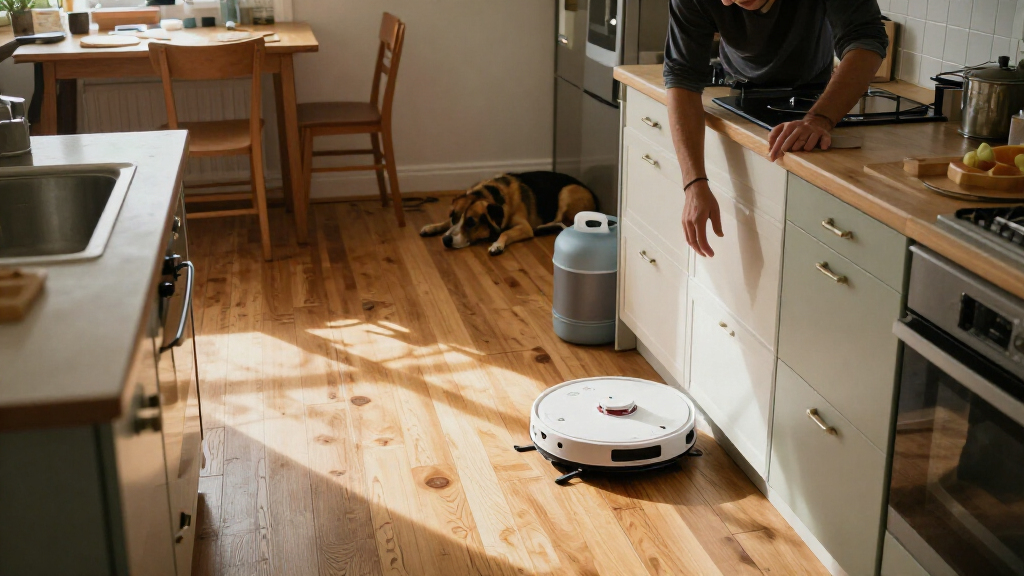
I ranked these 15 models by how well their vacuuming and mopping systems work together for common household needs. The main criteria were the mop approach, dock functions, dust and water handling, ease of setup, maintenance demands, suitability for mixed flooring and pet hair, and the usefulness of the feature set beyond headline suction claims. I also considered whether a model’s design makes sense for its intended buyer, from someone seeking basic combo cleaning to someone willing to manage a more elaborate dock.
The order favors balanced ownership over one eye-catching specification. The Roborock Qrevo Edge 3 Pro leads because it represents a strong all-around feature set; the Dreame L40 Ultra Gen 2 follows as a capable alternative for buyers prioritizing automation. More focused or simpler models rank lower for broad appeal, not because they cannot suit particular homes, but because they make clearer compromises in automation, versatility, or the amount of independent information available. I avoid treating suction figures or product labels as proof of real-world cleaning quality, and recommend checking current model details and included accessories before buying.
Factors to Consider When Choosing Best Robot Vacuums With Mopping
Robot vacuums with mopping vary as much in the work they leave for you as in how they clean. I would start with your floors and maintenance tolerance, then compare navigation, dock functions, and the amount of control you want. These choices often matter more than a single advertised specification.
Match the Mop System to Your Floors
A mopping attachment can mean anything from a damp cloth to rotating mop pads with a dock that washes them. For sealed hard floors and light daily dust, a simpler pad may be enough; sticky spills and frequent footprints call for a more involved mop system. Think about how much open hard flooring the robot can cover before it needs attention. Homes with lots of rugs need a plan for preventing damp pads from crossing carpet, whether through carpet detection, mop lifting, or room restrictions. Avoid assuming that every combo robot can scrub dried messes like a manual mop. Choose based on routine upkeep, not the most ambitious cleaning claim.
Count the Chores the Dock Actually Removes
Dock labels can obscure important differences. A self-emptying dock handles collected debris, but it may not wash or dry mop pads, refill water, or manage dirty water. A more automated dock can save regular effort, yet it also takes up more space and adds tanks or components that need cleaning. Before buying, list the jobs you want to avoid and verify that the exact model’s dock performs them. Consider whether you have a nearby outlet, an accessible place for the dock, and room to remove tanks. A dock is useful only when its routine fits your home.
Plan Around Rugs, Thresholds, and Room Layout
Floor plans can expose weaknesses that product specifications do not show. Thick rugs, dark flooring, loose cables, narrow furniture gaps, and raised thresholds all affect where a robot can travel and how much supervision it needs. Marking no-go zones can protect rugs and fragile areas, but frequent manual map edits may undercut the convenience you wanted. If your rooms change often, prioritize flexible mapping and easy controls. For a compact or cluttered home, a smaller robot may matter more than extra suction. Check the robot’s clearance and dock footprint against your actual furniture and storage space.
Treat Pet Hair as a Whole-System Problem
Pet hair can collect in brushes, wheels, filters, and dock pathways, so a pet-focused name alone does not tell you how much upkeep to expect. Look for accessible brush parts and a bin or dock suited to your shedding levels. Long hair may wrap around rollers even when the robot has strong suction. For homes with litter or food crumbs, navigation and edge coverage matter alongside hair pickup. A mop can help with paw marks, but it cannot replace prompt cleanup of wet or solid messes. Match the machine to your pet’s habits, not just its coat type.
Choose a Maintenance Level You Will Keep Up With
Automated cleaning shifts some chores rather than eliminating them. You may still need to empty or wash tanks, clean sensors, remove tangled hair, replace filters, and keep mop components fresh. A robot that needs regular attention can become less useful if its routine feels burdensome. Before paying for more automation, consider whether you prefer a simpler machine you can service quickly or a larger dock that handles more tasks between visits. Check how easy it is to access consumables and clean the parts that collect grime. The best fit is the one whose upkeep you will actually maintain.
Prioritize Reliable Functions Over Headline Numbers
Suction figures can help compare claims, but they do not capture navigation, brush contact, airflow design, or how well a robot handles transitions between surfaces. Likewise, a long feature list does not guarantee that the functions you need are present on the exact version being sold. Check mapping controls, scheduling, app compatibility, replacement-part availability, and warranty terms before deciding. If the robot will run while you are away, obstacle handling and dependable room coverage may matter more than a larger suction number. Compare complete ownership needs rather than one specification. This is especially useful when comparing models with very different docks and feature sets.
Frequently Asked Questions
Do I need a dock that washes and dries the mop pads?
Not every home needs one. A wash-and-dry dock can reduce hands-on mop care if the robot runs often across large hard-floor areas, but it adds space requirements and more parts to maintain. For occasional mopping or a smaller floor area, a simpler system may be easier to live with. Check whether the dock washes, dries, refills, and handles dirty water rather than relying on a broad automation label. Your cleaning schedule and willingness to manage the dock should guide the choice.
Can a robot vacuum and mop clean a home with both carpet and hard floors?
Yes, but the robot needs a reliable way to handle rugs while its mop is attached. Depending on the model, that may mean lifting the mop, avoiding carpeted zones, or letting you set no-mop areas in the map. Deep-pile rugs and abrupt floor transitions deserve extra attention because they can challenge both navigation and clearance. If most of your home is carpet, prioritize vacuuming and treat mopping as a secondary task. Confirm how the exact model behaves on rugs before relying on unattended runs.
Is a self-emptying robot also low maintenance?
Self-emptying mainly reduces how often you handle the robot’s collected dust and debris. It does not automatically mean the mop is cleaned, the water tanks are managed, or hair is cleared from brushes. Some docks handle several of those jobs, while others focus on the dustbin alone. Check the maintenance steps listed for the robot and dock as separate parts of the system. This distinction can prevent disappointment if your goal is to minimize all routine chores.
Should I choose a pet-specific model or a higher-suction model?
Start with the mess you need to manage most often. For shedding, brush accessibility, bin capacity, and how easily hair can be removed may matter more than a suction figure by itself. For tracked-in dust or crumbs on hard floors, navigation and the robot’s ability to cover the area consistently also count. Pet-oriented features can be helpful, but they do not guarantee that a model will suit every coat type or home layout. Compare the full cleaning system and upkeep requirements before choosing.
What should I verify before buying a specific model or bundle?
Check the exact model name and included dock, since products in the same family can differ in automation and accessories. Confirm whether mop pads, dust bags, filters, and cleaning supplies are included or need separate purchase. Review the supported app functions and any mapping or no-mop controls you expect to use. Measure the dock area and check that a suitable power outlet is nearby. Also verify warranty coverage, replacement-part availability, and the manufacturer’s instructions for your floor types.
Conclusion
For most households seeking one balanced machine, I recommend the Roborock Qrevo Edge 3 Pro as best overall; the Dreame L40 Ultra Gen 2 is a strong alternative for buyers drawn to an automation-focused setup. For best value, compare the Roborock Q7 M5+ and Q10 S5+ around the self-emptying features you will actually use rather than paying for a dock routine you do not need. The Roomba 115X Combo is the best beginner pick for shoppers who prefer a more straightforward combo approach, while the eufy C28 and Roomba Max 775 Pet merit a closer look for pet households. For a premium, feature-rich choice, start with the Dreame L40 Ultra Gen 2 and compare its dock needs with the Roborock Qrevo models. If strong advertised suction is your priority, assess the Qrevo S Pro and LVKANGDA D17S MAX alongside navigation, mop care, support, and upkeep before choosing.