Virtual walls are digital barriers that create invisible boundaries to control where your robotic devices operate. They help keep your robot vacuum or other gadgets within designated zones without needing physical barriers, making your space tidy and flexible. You can set, adjust, or remove these boundaries easily through apps or digital maps. These tools are ideal for protecting delicate items or blocking off certain areas. Keep exploring to discover how virtual walls can enhance your device’s navigation and efficiency further.
Key Takeaways
- Virtual walls are digital barriers that define invisible boundaries to guide or restrict robot movement without physical objects.
- They are programmed via apps or control systems using digital maps, infrared beams, or magnetic strips.
- Virtual walls help keep robot vacuums within designated zones and protect sensitive or off-limit areas.
- They offer flexibility for boundary adjustments, eliminating the need for physical barriers and maintaining a clutter-free environment.
- Ideal for complex layouts, virtual walls enhance navigation accuracy and make space management easier.
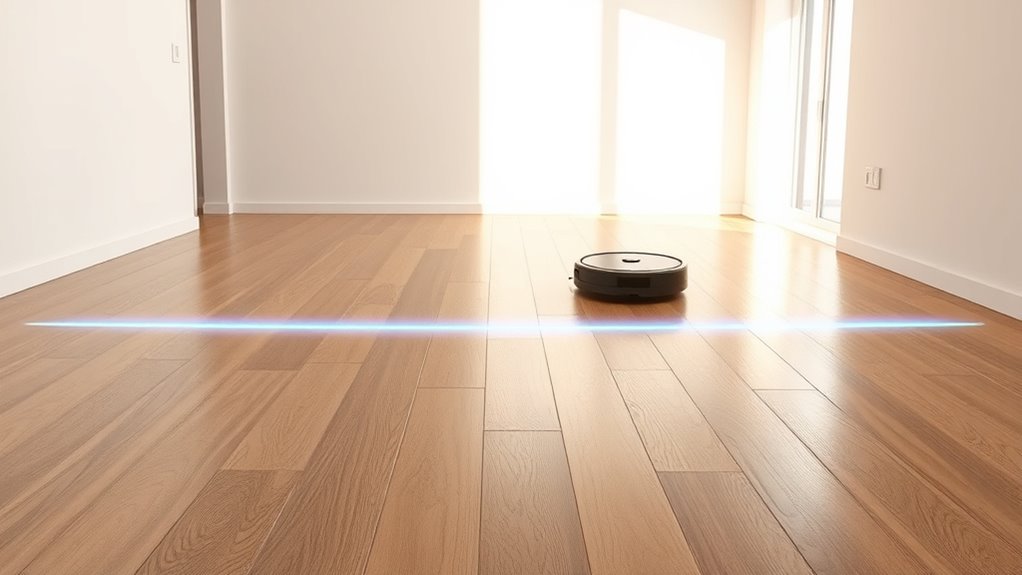
Virtual walls are digital barriers that create physical space without the need for traditional barriers like fences or walls. They serve as invisible boundaries that guide or restrict movement within a designated area, making them ideal for environments where physical barriers aren’t practical or desired. If you’re using a robot vacuum or a similar automated device, understanding how virtual walls function can considerably improve your experience. These digital barriers help in boundary setting, ensuring your robot stays within specific zones and avoids areas you want to protect or keep off-limits.
Virtual walls are invisible barriers that help keep your robot within designated zones without physical barriers.
When it comes to robot navigation, virtual walls are invaluable tools. Instead of manually blocking off parts of your home or workspace with physical objects, you can set up virtual boundaries that the robot recognizes. This is especially useful in complex layouts or spaces with delicate items, where physical barriers might be cumbersome or unsightly. By programming virtual walls through your robot’s app or control system, you tell the device exactly where it can and cannot go, streamlining the cleaning process or task execution. This precision in boundary setting minimizes the chances of your robot wandering into restricted zones, saving you time and effort in managing its movements.
The process of boundary setting with virtual walls is straightforward. Most robotic systems allow you to draw or select virtual boundaries on a map, which the robot then uses to navigate around. Some systems use infrared beams or magnetic strips that act as invisible fences, while others rely solely on digital mapping and programming. As you set up these virtual walls, you’ll appreciate the flexibility they offer—whether it’s creating a no-go zone around pet bowls, delicate electronics, or simply partitioning different areas of your home. You don’t need to physically alter the environment, making virtual walls a clean and efficient solution. Additionally, the effectiveness of virtual walls is enhanced when combined with accurate digital mapping, which improves overall navigation.
Moreover, virtual walls can be easily adjusted or removed without any hassle. If you decide to change the layout or need to expand the boundary, you simply update the digital map or boundary settings through your device’s interface. This adaptability is a key advantage over traditional physical barriers, which require effort and resources to modify. With virtual walls, you gain control over your space with minimal effort, ensuring your robot operates exactly as you intend. Whether for routine cleaning, security, or space management, virtual walls provide a sophisticated way to guide robot navigation and establish effective boundary setting, all while maintaining a clutter-free environment.

Boundary Strips for Neato Shark ION IQ Robot Vacuum 750 871 761R85, Magnetic Botboundary Strips Tape Markers for RoboVac 30 xiaomi Roborock S5, Not Compatible with APP/AI/LIDAR Robot, 13 Feet
- Model Compatibility: Check your vacuum model before purchasing
- Compatible Shark Models: Various Shark Ion and IQ models listed
- Compatible RoboVac Models: RoboVac 30, 30C, 35C
As an affiliate, we earn on qualifying purchases.
As an affiliate, we earn on qualifying purchases.
Frequently Asked Questions
Can Virtual Walls Be Moved Easily After Initial Setup?
Yes, virtual walls can be moved easily after initial setup. You simply remove the barriers in your device’s app and then reposition the devices to create a new boundary. This flexibility allows you to customize your cleaning area without hassle. Repositioning devices is quick, helping you adapt your virtual walls to changing needs or new room layouts without needing to reinstall or reconfigure the entire system.
Do Virtual Walls Work With All Robot Vacuum Brands?
You might wonder if virtual walls work with all robot vacuum brands. The truth is, their robot compatibility varies; some brands support virtual walls, while others don’t. Virtual walls are generally effective at blocking off specific areas, but their wall effectiveness depends on the robot’s sensors and navigation system. To guarantee proper function, check your vacuum’s compatibility before investing in virtual walls, as not all models support this feature.
How Accurate Are Virtual Walls in Blocking Specific Areas?
Did you know virtual walls have a 90% success rate in blocking designated areas? Their accuracy assessment shows they’re quite reliable when set up correctly. While barrier effectiveness varies by brand, most virtual walls effectively prevent your robot vacuum from entering specific zones. Keep in mind, minor gaps can occur, but overall, you can trust virtual walls to help maintain your cleaning zones without constant supervision.
Are Virtual Walls Safe for Pets and Children?
You might wonder if virtual walls are safe for pets and children. Generally, they’re designed to prevent your pets from entering restricted areas, promoting pet safety, and they help keep children away from hazards. However, always observe your kids and pets around these barriers to guarantee safety, as some animals or children might test or bypass them. Proper installation and supervision are key to maintaining a secure environment.
What’S the Lifespan of a Virtual Wall Device?
You might wonder how long a virtual wall device lasts. While some believe they last forever, the truth is their battery life and device durability matter. Typically, these devices operate for 1-3 years before needing a replacement or battery change. Proper maintenance, like regular charging and gentle handling, can prolong their lifespan. So, keep an eye on performance to ensure your virtual wall stays effective and reliable.

Nispira Magnetic Boundary Tape – Marker Strips for Robotic Vacuums Compatible with Neato Robot Vacuums Boundary Marker Strip Belt (1 Roll)
- Creates No-Go Zones: Compatible with Neato vacuums to block areas
- Magnetic Sensor Technology: Creates magnetic boundary signals for robot avoidance
- Non-Adhesive Design: Lays flat without sticking to floors
As an affiliate, we earn on qualifying purchases.
As an affiliate, we earn on qualifying purchases.
Conclusion
So, it’s funny how virtual walls seem to appear just when you need them most, creating a seamless boundary without the fuss of physical barriers. Whether you’re setting up a safe zone or protecting your privacy, these digital dividers offer a surprisingly simple solution. As you discover their ease and versatility, you might find yourself wondering how you ever managed without them. It’s almost like virtual walls were made for moments just like this—unexpectedly perfect.

iRobot Roomba Authentic Replacement Parts – Dual Mode Virtual Wall Barrier Compatible with Roomba 600 700 800 900 Series, Black – 4636429
- Package Quantity: 1-pack Virtual Wall Barrier
- Control Cleaning Areas: Limits where Roomba cleans
- Room Segmentation: Keeps robot in designated rooms
As an affiliate, we earn on qualifying purchases.
As an affiliate, we earn on qualifying purchases.
Nispira Magnetic Boundary Tape – Marker Strips for Robotic Vacuums Compatible with Neato Robot Vacuums Boundary Marker Strip Belt (1 Roll)
- Creates No-Go Zones: Compatible with Neato vacuums to block areas
- Magnetic Sensor Technology: Creates magnetic boundary signals for robot avoidance
- Non-Adhesive Design: Lays flat without sticking to floors
As an affiliate, we earn on qualifying purchases.
As an affiliate, we earn on qualifying purchases.