
To keep your robot’s floor plan current, guarantee its sensors are properly calibrated so it captures environment details accurately. Advanced obstacle recognition helps detect changes like moved furniture or new obstacles in real-time. Regular updates and system checks allow the robot to adapt to environment changes, reroute if necessary, and prevent navigation errors. Staying on top of calibration and obstacle detection keeps your robot’s maps reliable and effective—continue further to discover how to optimize this process.
Key Takeaways
- Regular sensor calibration ensures accurate environmental data for precise map updates.
- Advanced obstacle recognition detects changes and new objects, enabling real-time map modifications.
- Continuous environment monitoring allows the robot to adapt its floor plan to current conditions.
- Automated map updating systems reroute and alert users to obstacles, maintaining navigation reliability.
- Combining calibration and obstacle detection enhances map fidelity and supports confident, dynamic navigation.
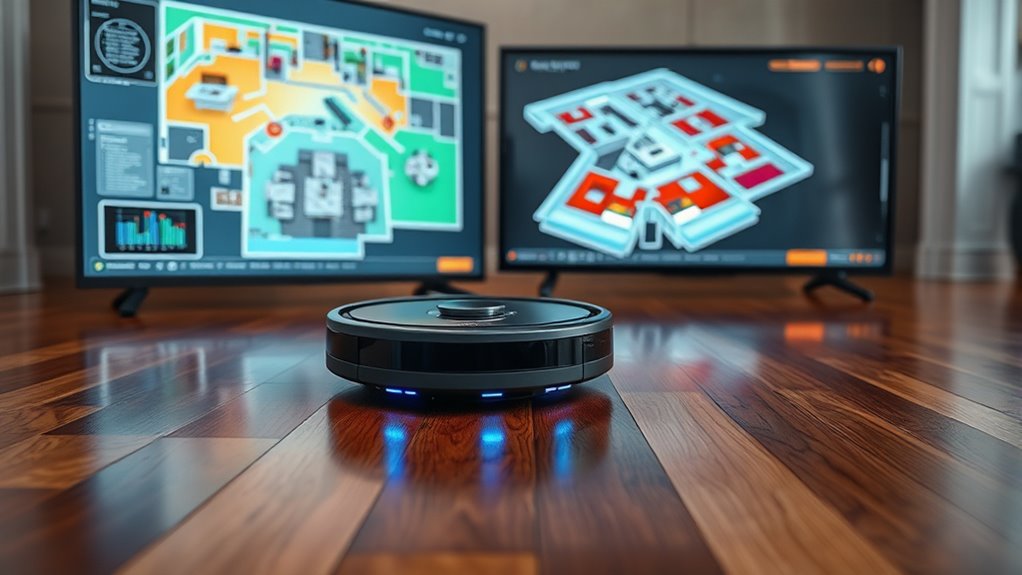
Have you noticed how mapping technology is evolving faster than ever? It’s remarkable how quickly your robotic devices can now update their floor plans to adapt to changes in their environment. This rapid progress hinges on improvements in sensor calibration and obstacle recognition, both of which are critical for maintaining accurate and reliable maps. When your robot’s sensors are properly calibrated, they can gather precise data about the surroundings, ensuring that every wall, doorway, and piece of furniture is correctly represented. Proper sensor calibration isn’t a one-time task; it’s an ongoing process that allows your robot to adjust to variations in lighting, surface textures, and sensor drift, keeping the mapping data sharp and trustworthy. Additionally, advancements in user-friendly interfaces make it easier to manage and interpret mapping data effectively.
Sensor calibration is an ongoing process vital for accurate, reliable robot mapping.
Obstacle recognition plays a crucial role in updating floor plans in real time. As your robot moves around, it constantly detects new objects or changes in existing ones. Whether a chair has been moved or a new obstacle has appeared, advanced obstacle recognition algorithms help the robot identify these alterations quickly. This capability lets the robot modify its map on the fly, ensuring that the navigation plan remains current and accurate. Without effective obstacle recognition, your robot might ignore new hazards, leading to potential collisions or navigation errors. By integrating sophisticated sensors and AI-driven recognition systems, your robot can differentiate between static features and dynamic obstacles, updating its map accordingly.
These updates aren’t just about avoiding collisions; they’re about maintaining a dependable representation of the environment. When your robot recognizes changes, it can reroute around obstacles or alert you to modifications in the space. For example, if a new piece of furniture blocks a previously clear pathway, the robot’s map updates to reflect that, preventing future navigation issues. This continuous process ensures your robot adapts to the environment’s dynamic nature, providing smoother operation and fewer interruptions. It’s essential that the mapping system can handle these updates seamlessly, avoiding gaps or inaccuracies that could impair performance.
The combination of precise sensor calibration and robust obstacle recognition creates a feedback loop that keeps your robot’s floor plan current. As sensors become more accurate, obstacle detection improves, which in turn enhances the map’s fidelity. This synergy allows your robot to operate more intelligently, efficiently, and safely. Regularly reviewing and maintaining sensor calibration, along with ensuring your obstacle recognition systems are up to date, can markedly improve your robot’s mapping capabilities. In a world where environments change rapidly, these advancements ensure your robot stays well-informed and ready to navigate with confidence.
Frequently Asked Questions
How Often Should I Update My Robot’s Map?
You should update your robot’s map whenever you notice a decline in map accuracy or after software upgrades. Regular updates guarantee your robot navigates efficiently, especially if furniture or obstacles change. Keep an eye out for prompts from your robot or app notifications, and don’t wait too long—updating frequently helps maintain ideal performance and safety, making sure your robot’s floor plan stays current and reliable.
Can Map Updates Improve Cleaning Efficiency?
Map updates can considerably boost your robot’s cleaning efficiency by enhancing navigation accuracy and obstacle recognition. When your robot’s map is current, it navigates smoothly, avoids obstacles, and covers every corner thoroughly. Updating frequently ensures your robot adapts to layout changes, preventing missed spots and repeated trips. So, keep your map fresh, and watch your robot clean with confidence, consistency, and a keen sense of its surroundings.
What Are the Signs My Map Needs Updating?
If your robot struggles with map accuracy or misses obstacles, it’s a sign your map needs updating. You might notice missed spots or frequent collisions, which indicate outdated data. Poor obstacle detection can also cause navigation issues. Regularly reviewing your robot’s map and updating it ensures better obstacle detection, smoother navigation, and more efficient cleaning. Keep an eye on these signs to maintain ideal performance and prevent unnecessary errors.
Is There a Risk of Losing Data During Updates?
The risk of losing data during updates is minimal, but it’s like walking a tightrope without a safety net—you should stay cautious. Update risks can sometimes cause data loss if done improperly, especially during power interruptions or interrupted connections. To protect yourself, always back up your map and firmware before updating. This way, you minimize data loss and guarantee your robot’s map stays accurate without risking vital information.
Do Updates Require Internet Connectivity?
No, updates don’t always require internet connectivity, but having a stable connection facilitates cloud storage and guarantees firmware compatibility. When your robot connects online, it can download the latest maps and firmware updates, keeping everything current. Without internet, you might need to transfer updates via USB or other methods. Regular online updates help improve performance and prevent compatibility issues, ensuring your robot functions smoothly.
Conclusion
Think of your robot’s map as a compass guiding its journey. As your home changes, updating the map guarantees it always knows where to go, like a lighthouse guiding a ship through shifting tides. Keeping the floor plan current is your way of illuminating the path forward, preventing your robot from getting lost in the shadows of outdated information. With fresh updates, you’re steering your smart home toward seamless, worry-free navigation—bright and clear, every step of the way.