Camera-based vision systems offer high precision, fast processing, and automation capabilities that greatly improve quality control, defect detection, and object recognition. They reduce manual effort and enable real-time decision-making, boosting efficiency in various industries. While these systems can be costly upfront and may require regular calibration, their benefits often outweigh the disadvantages. To discover how these advanced solutions can transform your operations, there’s more to explore beyond the basics.
Listen free for 30 days with Audible
Thousands of audiobooks and originals — cancel anytime.
As an affiliate, we earn on qualifying purchases.
Key Takeaways
- Camera-based vision systems enable real-time, automated inspection and defect detection, increasing efficiency and reducing human error.
- They provide precise measurements and object recognition when properly calibrated, ensuring high accuracy in industrial processes.
- Integration of advanced image processing algorithms enhances defect detection, sorting, and quality control capabilities.
- Regular calibration maintains measurement accuracy and compensates for environmental changes, ensuring consistent system performance.
- These systems support automation in robotics and manufacturing, improving productivity and enabling complex decision-making.
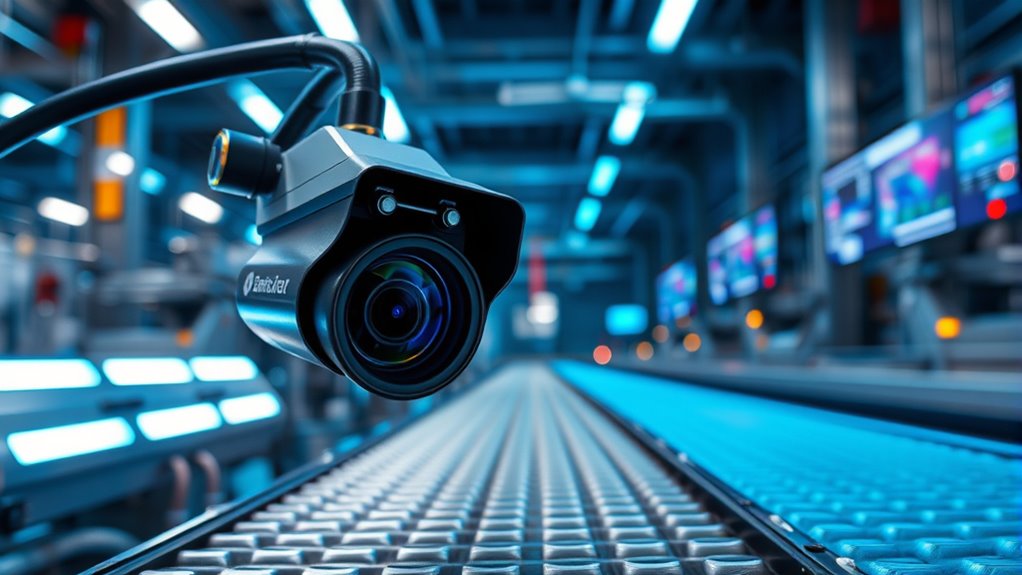
Camera-based vision systems have become essential tools in automation, robotics, and quality control. They enable machines to interpret visual information, making processes more efficient and accurate. At the core of these systems lies image processing, which involves analyzing captured images to identify objects, detect defects, or measure dimensions. Effective image processing allows you to extract valuable data from images quickly, facilitating real-time decision-making and reducing reliance on human inspection. To achieve reliable results, system calibration is critical. Calibration aligns the camera’s imaging system with real-world coordinates, ensuring measurements are precise and consistent. Without proper calibration, images can be distorted or misaligned, leading to errors in analysis and decision-making. When setting up a camera-based vision system, you need to pay close attention to calibration procedures, including adjusting lens parameters, aligning the camera with reference markers, and verifying measurement accuracy regularly. These steps help maintain the integrity of the data your system collects, especially when dealing with high-precision tasks like quality assurance or robotic guidance. Additionally, understanding the importance of camera calibration is crucial for maintaining long-term accuracy and performance.
You’ll find that the quality of image processing greatly impacts the overall performance of your vision system. Advanced algorithms can enhance image clarity, filter out noise, and improve object detection even in challenging environments. For example, lighting variations, reflections, or dirt can interfere with image quality, but robust image processing techniques help mitigate these issues. Integrating proper system calibration ensures that the images you analyze correspond accurately to the physical world, which is essential for applications like inspection, sorting, or assembly line automation. Regular calibration also helps adapt to changes over time, such as camera drift or environmental conditions, maintaining system accuracy.
In practice, setting up a camera-based vision system involves a combination of selecting the right camera hardware and implementing effective calibration and processing protocols. You’ll typically begin by capturing reference images under controlled conditions, then fine-tune the system to account for lens distortion or perspective errors. Once calibrated, you can implement image processing algorithms tailored to your specific application, whether it’s detecting defects, reading barcodes, or guiding robotic arms. The synergy between thorough calibration and sophisticated image processing ensures your system operates reliably and efficiently. Ultimately, this combination allows you to automate tasks with greater precision, reduce errors, and improve overall productivity. By understanding the importance of these fundamental components, you can optimize your camera-based vision systems for a wide range of industrial and technological applications.
As an affiliate, we earn on qualifying purchases.
Frequently Asked Questions
How Do Camera-Based Vision Systems Compare to Human Vision?
You’ll find that camera-based vision systems often surpass human vision in sensor accuracy and processing speed. They can detect tiny details and changes much faster, making them ideal for tasks like quality control or autonomous driving. While humans excel at adapting and interpreting complex scenes, these systems provide consistent, rapid data analysis. This combination of high sensor accuracy and quick processing makes camera-based systems a powerful tool, often complementing human abilities.
What Are the Limitations of Camera-Based Vision Technology?
Camera-based vision systems face limitations like sensor calibration issues, which can affect accuracy, and privacy concerns that hinder widespread adoption. You might find that poor calibration leads to misinterpretations, while privacy worries cause restrictions on data use. These challenges make it harder for the technology to fully match human vision’s adaptability. Overcoming calibration problems and addressing privacy is vital for improving reliability and acceptance in real-world applications.
How Secure Are Camera-Based Vision Systems Against Hacking?
Camera-based vision systems can be vulnerable to hacking due to cybersecurity vulnerabilities in their networks. You should ensure strong encryption methods are in place to protect data transmission and storage. Regularly update firmware and use secure passwords to reduce risks. While no system is completely invulnerable, implementing these security measures greatly enhances protection against cyber threats targeting your camera-based vision system.
Can These Systems Operate Effectively in Extreme Weather Conditions?
Think of your camera-based vision system as a sturdy ship steering stormy seas. It can operate in extreme weather, but its weather resilience depends on proper sensor calibration and rugged design. Harsh conditions like rain, fog, or snow may challenge its accuracy, so regular calibration and weatherproofing are essential. With the right setup, your system stays reliable, even when Mother Nature throws her worst at it.
What Is the Typical Lifespan of a Camera-Based Vision System?
You can anticipate a camera-based vision system to last around 5 to 10 years with proper maintenance. Regular sensor calibration ensures accurate image resolution and performance over time. Environmental factors, like extreme weather, might influence lifespan, but routine checks and calibration help prolong it. Investing in quality components and proper installation also contribute to a longer, reliable service life for your system.
machine vision camera for quality control
As an affiliate, we earn on qualifying purchases.
As an affiliate, we earn on qualifying purchases.
Conclusion
While camera-based vision systems offer impressive accuracy and automation, some worry about cost and complexity. But remember, the long-term benefits—like increased efficiency and reduced errors—often outweigh the initial investment. With ongoing advancements, these systems are becoming more affordable and user-friendly. So, don’t let the setup scare you; embracing this technology can truly transform your operations and keep you ahead in the game. Give it a try—you might be surprised at how simple it can be!
camera calibration tools for vision systems
As an affiliate, we earn on qualifying purchases.
As an affiliate, we earn on qualifying purchases.
image processing software for automation
As an affiliate, we earn on qualifying purchases.
As an affiliate, we earn on qualifying purchases.
Flea & tick season Picks
flea and tick prevention
As an affiliate, we earn on qualifying purchases.