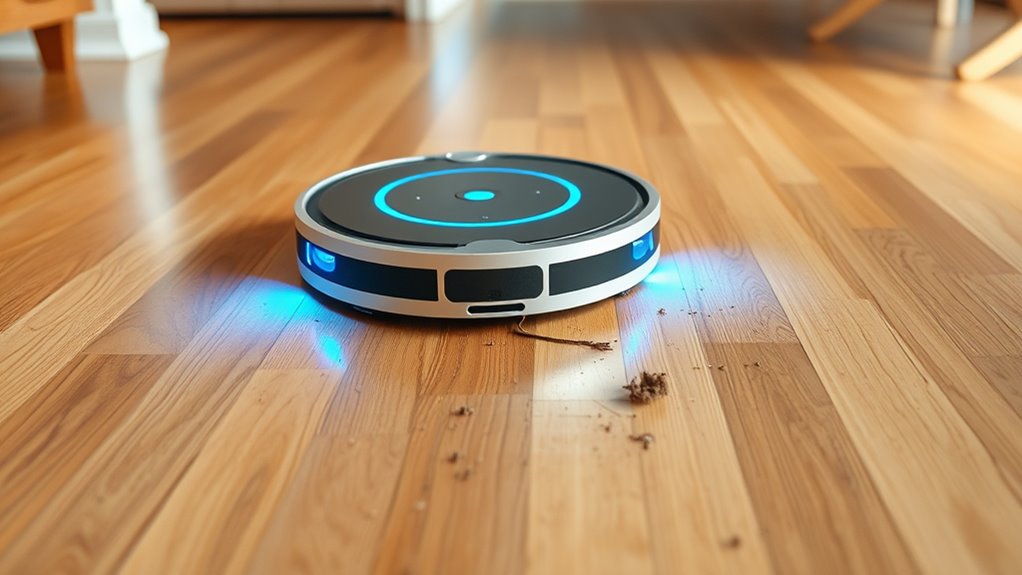

Using artificial intelligence, your vacuum can precisely detect dirt patches by combining sensors, cameras, and machine learning algorithms. It maps out your space in real-time, identifies dirtier areas, and focuses cleaning on those spots for better results. The device learns from previous sessions to improve accuracy and adapt to environmental changes. This smart approach makes cleaning more efficient and thorough. Keep exploring to discover how AI truly transforms your cleaning experience.
Key Takeaways
- AI-powered vacuums use sensors and cameras to identify dirt patches in real-time.
- Machine learning algorithms analyze environment data to recognize high-dirt zones over multiple sessions.
- AI enables dynamic map updates, helping vacuums focus on dirtier areas and avoid redundant cleaning.
- Advanced sensors detect debris density and differentiate debris types for targeted cleaning.
- Integration of AI improves efficiency by concentrating on dirt patches, conserving battery, and enhancing cleaning effectiveness.

Detecting dirt patches quickly and accurately can be challenging, but artificial intelligence (AI) is transforming the process. When it comes to cleaning, the key lies in how effectively your device can identify where dirt accumulates. Modern vacuum cleaners equipped with AI leverage advanced robot navigation systems and machine learning algorithms to do just that. These technologies work together to give your vacuum the ability to sense, map, and respond to dirt patches with remarkable precision.
Robot navigation plays a vital role in this process. Instead of blindly sweeping the floor, AI-powered vacuums use sensors and cameras to create real-time maps of your living space. This mapping allows the device to understand where it has cleaned and where dirt is more likely to be found. By continuously updating this map during the cleaning cycle, the robot can avoid redundant paths and focus its efforts on dirtier areas. This navigation isn’t static; it adapts as the environment changes, such as furniture being moved or new obstacles appearing. This dynamic approach ensures that the vacuum spends more time on spots that need it most, increasing cleaning efficiency.
AI-powered vacuums use real-time maps to adapt dynamically, focusing on dirtier spots for more efficient cleaning.
At the heart of this technology are machine learning algorithms. These algorithms enable your vacuum to learn from its environment and previous cleaning sessions. For example, if a certain corner tends to gather more dirt, the AI recognizes this pattern over time and prioritizes that area during future cleanings. Machine learning also helps the device distinguish between different types of debris, optimizing suction power accordingly. As the vacuum operates, it gathers data on dirt density, floor type, and obstacles, continually refining its understanding of your home. This learning process leads to smarter navigation, better dirt detection, and more effective cleaning over time.
The combination of robot navigation and machine learning algorithms results in a highly responsive vacuum that can detect dirt patches with minimal human intervention. Instead of random or scheduled cleaning, your device intelligently adapts to your environment, focusing on dirtier zones and ensuring thorough cleaning. This targeted approach not only saves time but also conserves battery life, since the vacuum doesn’t waste energy on already-cleaned areas. As the AI system gathers more data, it becomes better at predicting where dirt will accumulate, further enhancing its performance. Additionally, cultural beliefs and perceptions about cleanliness can influence how users interact with these smart devices, promoting more consistent maintenance and cleaning habits.
Frequently Asked Questions
How Accurate Is AI in Detecting Different Types of Dirt?
AI can be quite accurate in detecting different types of dirt, especially when you guarantee proper sensor calibration and thorough algorithm training. As you improve sensor calibration, the system better recognizes dirt variations. Continually updating the algorithm with diverse dirt samples helps it adapt and improve detection accuracy. So, with good calibration and training, you can rely on AI to accurately identify various dirt types, making your cleaning more efficient.
Can AI Differentiate Between Dirt and Household Debris?
Like Sherlock Holmes with a magnifying glass, AI can distinguish dirt from household debris through robotic mapping and sensor calibration. It analyzes surface textures and material differences, enabling precise identification. While not perfect, advanced AI systems learn from patterns, making it increasingly adept at differentiating between the two. So, yes, your smart vacuum can effectively tell dirt apart from everyday clutter, cleaning more efficiently and thoroughly.
What Are the Privacy Concerns With AI Camera Systems?
You should be aware that AI camera systems can raise privacy concerns like privacy invasion and data security risks. When cameras constantly monitor your home, there’s a chance sensitive information could be unintentionally captured or misused. To protect yourself, verify the system has strong data security measures, like encryption, and understand how your data is stored and shared. Being informed helps you enjoy AI benefits without compromising your privacy.
How Does AI Handle Changing Lighting Conditions?
AI handles changing lighting conditions by using sensor calibration and algorithm adaptability. You’ll find that sensor calibration adjusts the system’s sensitivity to different light levels, ensuring consistent performance. Meanwhile, the AI’s algorithms adapt in real-time, analyzing data to compensate for shadows, glare, or low light. This combination allows the system to accurately detect dirt patches regardless of lighting changes, maintaining efficiency and precision in various environments.
Is AI Detection Effective on Various Flooring Surfaces?
Like a chameleon adapts seamlessly, AI detection works effectively on various flooring surfaces, ensuring your cleaning schedules and maintenance routines stay on point. It recognizes dirt patches whether on tile, hardwood, carpet, or laminate, adjusting to surface differences with precision. This adaptability means you can rely on AI to maintain a spotless home, regardless of flooring type, making your cleaning efforts smarter and more efficient every time.
Conclusion
By leveraging AI to detect dirt patches, you’re making cleaning smarter and more efficient. Studies show that AI-powered vacuum cleaners can increase cleaning coverage by up to 30%, ensuring no spot is missed. With this technology, you save time and effort while maintaining a spotless home. Embrace AI today, and enjoy a cleaner space with less hassle—it’s the smart choice for modern cleaning.