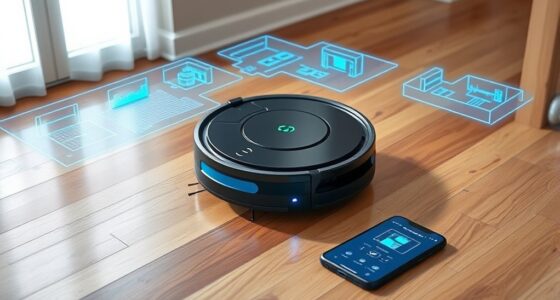
When comparing bagged and bagless auto-empty stations, you’ll find that bagged models are easier to maintain since they simply require replacing the bag, which helps reduce mess and noise during filter upkeep. Bagless units save you money over time but demand regular emptying and filter cleaning, which can be noisier and more hands-on. To understand which suits your needs best, explore more details about ease of use, noise levels, and long-term maintenance.
Listen free for 30 days with Audible
Thousands of audiobooks and originals — cancel anytime.
As an affiliate, we earn on qualifying purchases.
Key Takeaways
- Bagged stations offer easier, less messy filter and bag replacement, while bagless units require regular dustbin emptying and filter cleaning.
- Bagged models operate quieter during emptying due to enclosed chambers, whereas bagless stations tend to be noisier.
- Proper filter maintenance in both types ensures optimal performance, with bagged stations simplifying long-term upkeep.
- Bagless stations provide more control over cleaning and filter management but demand more regular maintenance.
- Overall, bagged stations are more convenient for low-touch maintenance, while bagless units are preferred for control and visibility.
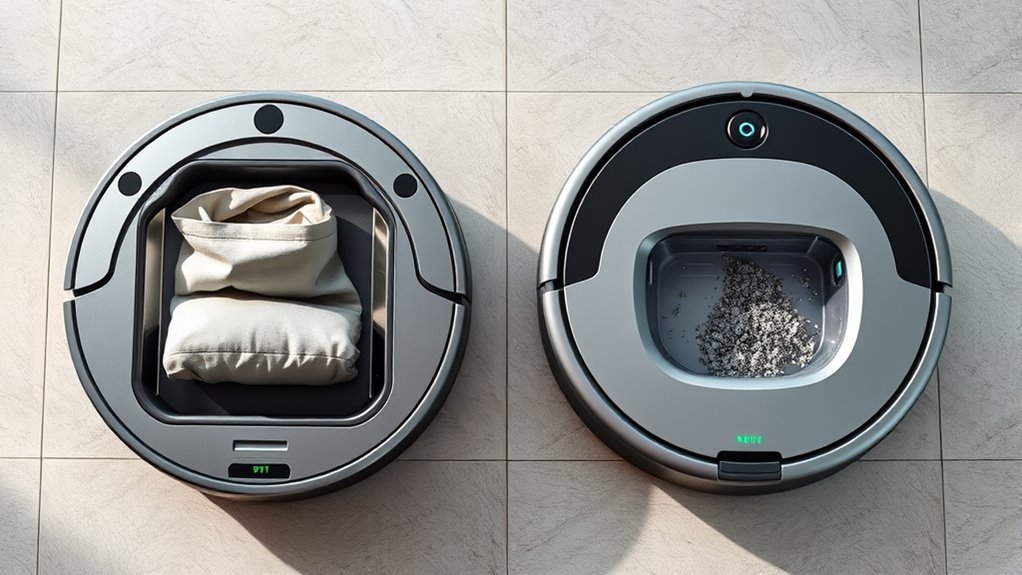
When choosing between bagged and bagless auto-empty stations for your robot vacuum, understanding their differences is essential. Each type impacts your maintenance routine and overall convenience, so knowing what to expect can help you make an informed decision. One key aspect to contemplate is filter maintenance. Bagged stations typically come with replaceable bags that trap dust and allergens, making it easier to manage filter upkeep. When the bag fills, you simply replace it, ensuring your vacuum maintains peak performance without much hassle. Bagless stations, on the other hand, require you to periodically empty a dustbin and clean or replace filters. If you prefer a low-touch process, bagged stations might be more convenient, since replacing a bag is straightforward and less messy. Conversely, if you’re comfortable with regular maintenance and want to save on ongoing costs, a bagless station gives you more control over filter and bin cleaning.
Another important factor is noise levels. Bagged auto-empty stations tend to operate more quietly during the emptying process because they often have enclosed chambers that contain the noise. The bag acts as a sound barrier, which can be a significant advantage if your home is sensitive to noise or if you want to keep vacuum operations discreet. Bagless stations, however, often produce more noise during bin emptying since the dust is expelled directly into the station’s chamber without a bag’s sound-dampening effect. If noise is a concern, you’ll want to compare specific models’ noise ratings, as some bagless units feature quieter motors or soundproofing features. Additionally, understanding the filter maintenance process can help you plan for long-term care and ensure optimal performance.
Frequently Asked Questions
How Long Do Bagged and Bagless Stations Typically Last?
You can expect bagged stations to last around 3 to 5 years, depending on filter lifespan and usage. Bagless stations typically need replacement or filter changes every 6 to 12 months. Replacement costs are usually higher for bagged systems due to the need for new bags, but they tend to last longer. Bagless stations save on ongoing costs but may require more frequent maintenance.
Are There Compatibility Issues With Different Vacuum Brands?
Like fitting a key into a lock, brand compatibility can be tricky with auto-empty stations. You might face issues with accessory integration if you mix brands, as some stations only work seamlessly with their own vacuums. Always check if your vacuum brand aligns with the station’s specifications to avoid compatibility problems. Staying consistent with the same brand guarantees smooth operation and hassle-free maintenance.
What Maintenance Is Required for Each Station Type?
You need to regularly perform filter replacement and dustbin cleaning for both station types. For bagged stations, change the bags when full and clean filters as recommended. Bagless stations require you to empty the dustbin frequently and clean the filters to maintain suction. Both stations benefit from checking for clogs and following manufacturer instructions to guarantee maximum performance and longevity. Regular maintenance keeps your vacuum running smoothly.
How Do Noise Levels Compare Between Bagged and Bagless Stations?
Did you know that bagless stations tend to produce 20% more noise than bagged ones? You’ll notice that sound insulation and noise reduction are better in bagged stations, making them quieter during operation. Bagged units generally keep sound levels lower, creating a more peaceful environment. If noise is a concern, opting for a bagged station offers superior sound insulation, reducing disturbances and ensuring a quieter cleaning experience.
Can These Stations Handle Pet Hair Effectively?
You’ll find that bagged stations excel at pet hair removal and allergen containment, trapping hair and dander effectively. Bagless stations often struggle with pet hair, dispersing it back into the air, which can worsen allergies. If pet hair is a concern, go for a bagged auto-empty station to guarantee thorough removal and better containment, making your home cleaner and healthier for everyone.
Conclusion
Now, picture yourself pulling into a quiet driveway, your auto-empty station silently working behind the scenes. Whether you prefer the tidy convenience of bagged systems or the hassle-free ease of bagless stations, each offers a different rhythm to your cleaning routine. Think of it as choosing between a sleek, sealed box or a clear, open container. Whichever you pick, you’re creating a smarter, simpler home—letting technology handle the mess while you enjoy the clean.
Flea & tick season Picks
flea and tick prevention
As an affiliate, we earn on qualifying purchases.