TL;DR

Get cleaning gear delivered free with Prime
- Fast, free delivery on millions of items
- Prime Video, Amazon Music and more included
- Member-only deals all year
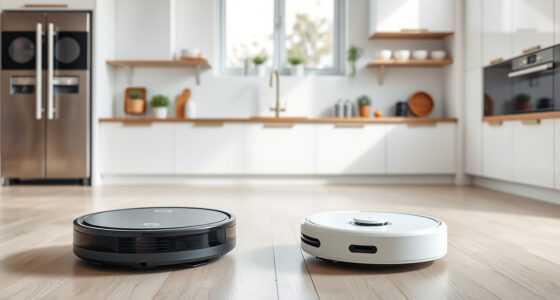
Robotic vacuum cleaners are safe for hardwood floors when they use soft rubber brush rolls, systematic navigation, and adjustable mopping with a sealed floor. The biggest scratch risk isn’t the vacuum itself — it’s trapped grit in worn wheels and dirty brushes. According to flooring experts, models with dual rubber brushes (like iRobot’s) and LiDAR navigation clean wood floors effectively without damaging the finish.
Your hardwood floor cost you somewhere between $6 and $12 per square foot installed. So the idea of sending an autonomous machine with spinning brushes across it every day? Reasonable to hesitate.
Here’s the good news: modern robotic vacuum cleaners are genuinely safe for wood floors — if you pick the right features and spend five minutes a week on maintenance. The wrong model, or a neglected one, can leave faint scuff lines you’ll notice every afternoon when the sun hits the floor at an angle.
In this guide, you’ll learn why hardwood needs special attention, the exact features that protect your finish, how mopping works on sealed wood, and which models deliver the best results for real budgets.
Scratches on hardwood come mainly from trapped grit in dirty brush rolls and wheels — clean both weekly to prevent damage regardless of your robot’s price.
Choose rubber brush rolls over bristle brushes; they’re gentler on finishes and resist hair tangles.
Never use a robot mop on unsealed or waxed hardwood — test with a teaspoon of water to check your finish first.
Mid-range models ($400–$700) now include LiDAR, mop-lifting, and adjustable water flow — features that were premium-only three years ago.
Run your robot every 1–2 days on hardwood; frequent light cleaning stops grit from being ground into the finish.
Why Hardwood Floors Are Durable but Vulnerable to the Wrong Vacuum
Hardwood is durable — it survives decades of foot traffic, kids, and pets. But its finish is a thin armor, and that’s where the trouble starts. A single grain of sand trapped under a vacuum wheel acts like grit on sandpaper, scoring micro-scratches into the polyurethane every time the machine rolls past.
Three things damage wood floors with robot vacuums: stiff bristle brushes that dig into softer finishes, worn or debris-caked wheels that drag grit across the grain, and excess moisture from mopping functions soaking into seams or unsealed boards.
Picture this scenario: you run your robot daily for two months without cleaning the brush roll. Fine dust and pet hair wrap around the bearings. The wheels collect a paste of dust and grit. Now every pass polishes scratches into the floor — invisible under artificial light, glaring in afternoon sun.
The vacuum rarely scratches floors. The dirt trapped in the vacuum does.
5 Features That Separate Floor-Safe Robots From Scratch Risks
Five features determine whether a robotic vacuum cleaner cleans your hardwood gently or grinds it down: brush type, navigation, mopping control, filtration, and collision handling. Here’s what each one does, why it matters, and what tradeoffs you’re accepting with each choice.
- Soft rubber brush rolls. Pure bristle brushes tangle with hair and can scratch softer finishes. Dual rubber rollers — like iRobot’s design on the Roomba j7 and j9 — flex over debris instead of flicking it, and they’re far gentler on wood. The tradeoff: rubber rollers excel on hard floors but agitate deep-pile carpet slightly less effectively than bristles, so homes that are mostly carpet may want a hybrid brush. For hardwood-dominant homes, rubber is the clear win.
- LiDAR or camera navigation. Systematic mapping means the robot follows clean rows instead of randomly bumping walls and baseboards. Less contact, fewer scuffs — but there’s a subtler benefit: a robot that maps efficiently covers the same square footage in fewer passes, which means fewer total wheel-rolls across your finish. Every pass you eliminate is grit that never gets a chance to grind in. Camera-based systems add object recognition but can struggle in the dark; LiDAR works in any lighting but costs a bit more.
- Adjustable mopping with water flow control. This is the feature that decides whether mopping is a benefit or a liability. Wood expands when it absorbs moisture, and seams between boards are the entry points. Low, regulated flow keeps the pad damp enough to lift dust films without letting water sit in seams. The implication: a robot without flow control forces an all-or-nothing choice — skip mopping entirely or risk over-wetting. Bonus: mop-lifting technology that raises the pad when crossing carpet, which saves you from wet carpet edges and pad-dragging scratches.
- High-efficiency or HEPA filtration. Hard floors let fine dust recirculate into the air instead of settling into carpet fibers. Without good filtration, your robot becomes a dust distributor — it picks particles up off the floor and exhales them back into the room, where they resettle within hours. That matters doubly on hardwood because resettling dust is exactly the grit that future vacuum passes then drag across your finish. Good filtration breaks that cycle.
- Soft bumpers and anti-collision sensors. AI obstacle avoidance (like Roomba’s PrecisionVision or Roborock’s ReactiveAI) lets the robot slow down before touching furniture rather than ramming chair legs at full speed. The implication isn’t just furniture protection — repeated hard bumps vibrate the chassis, which gradually loosens wheel tolerances and makes wheel contact with the floor less consistent, accelerating uneven wear on both the robot and your floor.
Notice what all five have in common: none of them are about suction power. Marketing emphasizes airways and Pascal ratings, but on hard floors, suction is nearly a commodity — even budget robots lift surface debris easily. What separates floor-safe machines is how gently and predictably they move and how little debris they leave behind or redistribute.
For instance, the Roborock S8 checks nearly every box: sonic-vibrating mop pad, auto-lift mop, LiDAR mapping, and dual rubber brushes. The Roomba j9 Combo adds AI pet-waste avoidance — a lifesaver if you own a dog with an occasional accident.
Robot Vacuum Comparison: What You Get at Each Price Point
Robot vacuums for hardwood fall into three tiers: budget models under $300 that vacuum well but mop poorly, mid-range machines around $400–$700 with real mopping and LiDAR, and premium docks at $1,000+ that empty themselves and wash their own mop pads. Here’s how the tiers stack up for wood floors specifically.
| Price Tier | Example Models | Hardwood Vacuuming | Mopping on Wood | Best For |
|---|---|---|---|---|
| Budget (<$300) | Eufy, Shark, Roborock Q-series | Good — strong suction, basic navigation | Weak — drag-along pads, no flow control | Vacuum-only cleaning, small homes |
| Mid-range ($400–$700) | Roborock S8, Roomba j7, Ecovacs T-series | Excellent — systematic maps, rubber brushes | Good — adjustable flow, mop-lifting | Mixed hardwood and carpet homes |
| Premium ($1,000+) | Roborock S8 MaxV Ultra, Roomba j9 Combo, Narwal, Dreame | Excellent plus AI obstacle avoidance | Excellent — sonic pads, self-washing docks | Hands-off cleaning, pet owners |
What you’re actually paying for as you climb tiers matters more than the sticker price. Moving from budget to mid-range mostly buys floor protection: rubber brushes, systematic navigation, and mop-lifting are all features that directly reduce scratch and moisture risk. Moving from mid-range to premium mostly buys convenience: self-emptying docks, self-washing mop pads, and AI obstacle avoidance reduce your workload but don’t clean the floor fundamentally better. In other words, the first upgrade protects your investment; the second protects your time.
The sweet spot for most hardwood owners is mid-range — that’s where every floor-safety feature becomes standard. According to recent market trends, features that were premium-only a few years ago — LiDAR navigation, app maps, mopping — now appear on models under $300, which means you no longer need to spend four figures for floor-safe cleaning. The one genuine exception worth paying premium for: pet owners with dark floors and cluttered homes, where AI obstacle avoidance prevents the tipped water bowls and dragged cords that cause the worst floor incidents.
Can a Robot Mop Hardwood Safely? The Sealed-Floor Rule
Robot mops are safe on hardwood only if the floor is sealed — meaning polyurethane, aluminum oxide, or similar factory or site-applied finish. Sealed wood repels the small amount of water a robot pad applies. Unsealed or waxed wood drinks it in, causing warping, cupping, and blackened seams that cost thousands to repair.
Test your floor first: drop a teaspoon of water on a hidden spot. If it beads up after a minute, your floor is sealed and mop-capable. If it soaks in or darkens the wood, stick to dry vacuuming.
Even on sealed floors, follow three rules:
- Use minimum water flow settings — damp, not wet. The pad should feel like a wrung-out sponge.
- Skip vinegar and harsh cleaners; use the manufacturer’s wood-safe solution or plain water.
- Remove or lift mop pads when the robot crosses onto carpet — most mid-range models do this automatically now.
Example: an engineered oak floor with a factory UV-cured finish handles a Roborock’s sonic mop beautifully — it polishes sealed wood like a microfiber cloth on a counter. The same robot on an old waxed pine floor would be a slow-motion disaster.
Dark Floors and Sensor Glitches: What Still Trips Up Robots
Dark hardwood floors can confuse older cliff sensors, which read dark surfaces as a stair edge and cause the robot to refuse to cross. Newer models — roughly anything from 2021 onward with updated infrared sensors or LiDAR — handle dark wood and dark tile without issue.
If you own a dark walnut or espresso-stained floor and an older robot, you’ve probably watched it stop dead at the dining room threshold like a horse refusing a jump. That’s the cliff sensor doing its job too enthusiastically.
Workarounds if you’re not ready to upgrade:
- Tape small pieces of white paper or foam over cliff sensors (only if your home has no actual stairs or drops).
- Use the app to create a manual map that merges rooms into one zone.
- Check for firmware updates — several brands patched dark-floor detection via software.
Also worth knowing: pet water bowls, charging cables, and tasseled rugs remain the top three items that snag robots. Use virtual no-go zones in the app around bowls and fragile areas. It takes thirty seconds to set and saves you mopping up a tipped water bowl.
A 6-Step Weekly Routine That Keeps Your Floors and Robot Healthy
A ten-minute weekly routine prevents nearly all robot-vacuum floor damage. Follow these steps in order and your hardwood stays scratch-free for years.
- Empty the dustbin. Fine dust fills bins fast on hard floors — a full bin reduces suction and spills debris back out.
- Pull hair and string from the brush roll. Wrapped debris hardens into an abrasive collar that contacts the floor.
- Wipe the wheels with a damp cloth. This is the single biggest scratch-prevention step. Check for embedded grit in the rubber treads.
- Inspect the sensor windows and wipe them clean — dirty sensors cause navigation errors and wall bumps.
- Wash and fully dry mop pads. Never reinstall a damp pad; mildew in the pad transfers to your floor.
- Run the robot every 1–2 days on hardwood. Frequent, light cleaning beats weekly deep cleaning because grit never accumulates long enough to grind in.
Real-world math: a mid-range robot covering 800 square feet of hardwood daily removes dust before foot traffic can press it into the finish. That’s why owners who run robots daily report floors that need refinishing far less often — the finish simply takes less abuse.
Do Robot Vacuums Replace a Real Vacuum on Hardwood?
Robot vacuums handle 80–90% of routine hardwood maintenance, but they don’t fully replace occasional deep cleaning. They struggle with corners, baseboard edges, and stairs — no robot climbs steps yet.
A realistic split looks like this: the robot runs daily for dust, crumbs, and pet hair. You bring out a stick vacuum or dust mop every two weeks for edges and corners, and a proper mop monthly. The robot does the boring daily work; you do the detail passes.
For pet hair specifically on hardwood, rubber-brush models excel — rubber creates static that grabs hair instead of flicking it across a smooth floor the way bristle brushes do. Roomba’s dual rubber rollers and Shark’s self-cleaning brushroll are the standout designs here.
Think of a robot vacuum as a dishwasher, not a personal chef: it handles the daily grind brilliantly, but you still cook sometimes.
Frequently Asked Questions
Will a robot vacuum scratch my hardwood floors?
Quality models won’t scratch sealed hardwood under normal conditions. The real risk is trapped debris: grit stuck in wheels, hair wrapped around brush rolls, and worn rubber parts. Wipe the wheels and clear the brush roll weekly, and replace parts when they show wear. Rubber brush rolls are gentler than bristle brushes on softer finishes.
Can robot vacuums mop hardwood floors safely?
Yes, but only on sealed hardwood. Test by dropping a teaspoon of water in a hidden spot — if it beads, your finish can handle light mopping with minimum water flow. If it soaks in, use vacuum-only mode. Unsealed or waxed wood should never be mopped by a robot.
Do robot vacuums work on dark hardwood floors?
Newer models (roughly 2021 and later) handle dark floors fine. Older cliff sensors sometimes misread dark surfaces as stairs and refuse to cross. Firmware updates fix this on some brands; otherwise, look for a robot with LiDAR navigation, which doesn’t rely on the same infrared detection.
What’s the best robot vacuum for pet hair on hardwood?
Models with rubber brush rolls work best — rubber builds static that grabs hair instead of flicking it across smooth floors. The Roomba j7/j9 series and Shark’s self-cleaning brushroll designs are strong picks. Add AI obstacle avoidance if you have a pet prone to accidents, since machines like the Roomba j9 detect and steer around pet waste.
How often should I run a robot vacuum on hardwood floors?
Every 1–2 days is ideal. Hard floors accumulate fine dust quickly, and daily removal prevents foot traffic from grinding grit into the finish. Empty the dustbin after every run or two — fine dust fills bins much faster on hard floors than on carpet.
Conclusion
If you take one thing from this: the maintenance matters more than the machine. A $250 robot with clean wheels and a clean brush roll will protect your hardwood better than a $1,200 robot caked with two months of grit. Buy rubber brushes, seal-check before mopping, and give it ten minutes of attention every week.
Your floor took a beating to get that lived-in warmth — the honey tones, the grain that catches evening light. A good robot vacuum keeps it that way, one quiet daily pass at a time.
Halloween Picks
halloween
As an affiliate, we earn on qualifying purchases.