TL;DR
An Ideal Home cleaning editor says she uses a £6.99 carpet scraper weekly alongside her £1,300 Dreame robot vacuum to remove pet hair and debris from carpets. She says robot vacuums can leave dirt embedded in carpet fibres, while frequent scraping or use on delicate loop-pile and wool carpets may cause damage.
An Ideal Home cleaning editor says she uses a £6.99 carpet scraper once a week alongside her £1,300 Dreame robot vacuum, arguing that the inexpensive hand tool lifts pet hair and debris her robot can leave in carpet fibres. The account is a personal cleaning recommendation, not a controlled comparison of the tools or a product test establishing results for every home.

Get cleaning gear delivered free with Prime
- Fast, free delivery on millions of items
- Prime Video, Amazon Music and more included
- Member-only deals all year
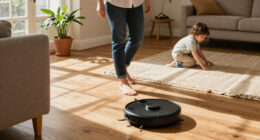
The editor, who identifies herself as Ideal Home’s cleaning editor and a certified vacuum expert, says she is not replacing her robot vacuum. She reports that the Dreame X60 Pro Ultra Complete remains a useful appliance in her home, including for cleaning hard floors and dusting skirting boards. Her point is that automated cleaning does not remove the need for a separate approach to carpets.
In her account, robot vacuums tend to collect surface-level dirt, debris and hair from carpets. Higher-pile or thicker carpet can be harder for them to clean deeply, she says, while some higher-spec models may do better on low-pile carpet. She adds that robot vacuums generally cannot clean carpeted stairs, where the scraper’s compact size and small teeth can reach areas that are difficult to access with larger equipment.
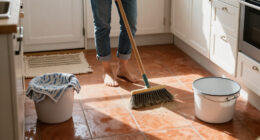
The editor says she scrapes carpets and stairs, removes the collected clumps of hair by hand, then follows with a conventional vacuum to pick up remaining debris. She also uses the tool on rugs and her dog’s bed. She describes seeing a substantial amount of material collected, but the source provides no measured cleaning results, independent test data or comparison with other methods.
A £7 carpet scraper for the jobs a robot may miss
An Ideal Home editor says she uses a carpet scraper weekly alongside her £1,300 Dreame robot vacuum to lift pet hair and debris. Her routine is personal experience, not a controlled product comparison.
What the scraper adds
The editor says the hand tool helps with carpet areas and items her robot may not fully clean.
Hair and debris
She says scraping lifts material left in carpet fibres.
Stairs, rugs and bedding
She also uses it on carpeted stairs, rugs and her dog’s bed.
Her cleaning sequence
The scraper complements her robot rather than replacing it.
Regular cleaning maintains floors and helps collect surface debris.
She gathers loosened hair and removes clumps by hand.
A conventional vacuum picks up remaining debris.
Use depends on carpet
The source gives no controlled results or evidence that the method suits every home.
- Pet hair on carpets and rugs
- Carpeted stairs that robots cannot clean
- Readers willing to do some cleaning by hand
- Frequent scraping may affect carpet fibres
- Loop-pile and wool carpets may be vulnerable
- Check carpet care guidance before trying it
A Low-Cost Extra for Carpet Care
The recommendation highlights a practical limitation for people who rely on robot vacuums: a device that regularly maintains floors may still leave some material in carpet, particularly in areas that are hard to reach or have deeper fibres. A £6.99 scraper is much less expensive than another powered appliance, and the editor’s routine offers one way to address pet hair on stairs, rugs and bedding without assuming that a robot can do every part of the job.
However, the story does not establish that carpet scraping is necessary for every household, or that it is more effective than a suitable vacuum attachment. Its value will depend on the carpet, the amount of hair and debris, and the user’s willingness to do the work by hand. The editor herself recommends using the tool cautiously: a low purchase price does not remove the risk of wearing or altering carpet fibres.
Products Worth Considering

Levoit Core 300S-P Smart WiFi Air Purifier

Dyson V9 Motorbar Cordless Vacuum

Philips Hue Play Floor Lamp, RGBWWIC LED, 53 Inch, Black
As an affiliate, we earn on qualifying purchases.
Robot Cleaning Has Limits
The editor says she has tested dozens of robot vacuums and other floorcare appliances, including models that cost hundreds or more than £1,000. She describes the Dreame X60 Pro Ultra Complete as a five-star product in her review, while making clear that its price and performance do not mean it replaces all other cleaning methods. The article also mentions other robot models and conventional vacuums, but supplies no head-to-head test results for them.
Her suggested routine is a three-part approach: regular robot vacuuming, weekly carpet scraping, and a conventional vacuum pass afterward. The source says scraping more frequently may affect carpet appearance and feel, particularly on loop-pile and wool carpets. That warning is the editor’s practical advice; the article does not give specific manufacturer guidance or testing on individual carpet types.
“I’m still choosing to use a £6.99 carpet scraper to deep-clean the carpets in my home.”
— Ideal Home cleaning editor
Results Depend on the Carpet
The source does not specify the scraper’s exact dimensions, materials, durability or performance under controlled conditions. It also does not quantify how much debris the tool collects, compare it with vacuum attachments, or establish whether scraping improves allergy symptoms, odours or carpet life. Those effects are mentioned as possible concerns associated with dirt in carpets, not as outcomes measured in the editor’s home.
It is also unclear how the method performs across different carpet constructions and household conditions. The editor cautions against using it too often and on vulnerable loop-pile or wool carpets, but the article does not give a manufacturer-approved schedule or a test of fibre damage. Readers should treat the method as one person’s experience, particularly if their carpet is delicate or has care instructions that advise against scraping.
How to Use the Method Safely
The editor says she plans to keep scraping once a week between robot-vacuum sessions, then vacuum the carpet to collect remaining debris. Her article does not announce a new product launch or a formal follow-up test. The next step for readers considering the tool is to check their carpet’s care guidance and use caution, especially on wool or loop-pile surfaces, rather than assuming the same routine suits every floor.
Further evidence would be needed to establish how much material the scraper removes compared with a conventional vacuum and whether regular use causes measurable wear. Until such testing is provided, the confirmed development is the editor’s reported personal routine and her warning that the scraper should not be used indiscriminately.
Key Questions
What does the Ideal Home editor use the carpet scraper for?
She says she uses the £6.99 tool on carpets, stairs, rugs and her dog’s bed to lift hair and debris, then vacuums afterward.
Does the editor say she has stopped using her robot vacuum?
No. She says the Dreame robot vacuum remains part of her routine and that the scraper is an extra tool for carpets.
How often does she scrape her carpets?
She says she uses the scraper once a week. That is her personal routine, not a schedule established for all carpet types.
Can scraping damage carpet?
The editor warns that frequent scraping or use on more vulnerable loop-pile and wool carpets may damage fibres or affect the carpet’s look and feel.
Is the scraper proven to clean better than a vacuum?
No comparative test data is provided. The article reports the editor’s experience, but does not establish that the scraper outperforms a vacuum or is needed in every home.
Source: idealhome.co.uk