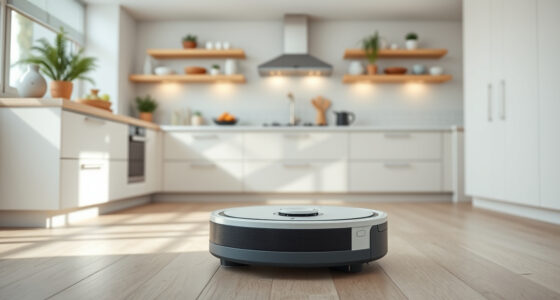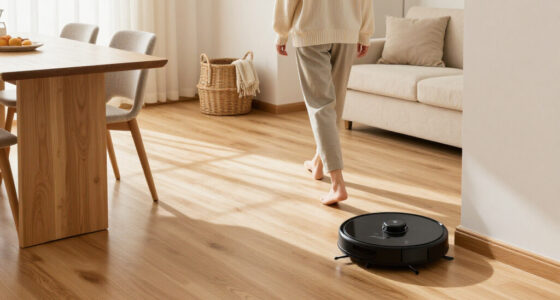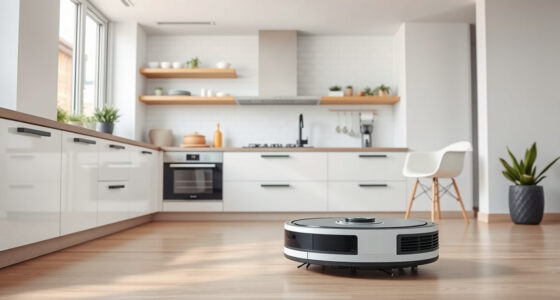
Modern robot vacuums no longer take random paths. Instead, they create detailed maps of your home using advanced sensors like laser, infrared, and cameras. They plan systematic routes with smart algorithms that adjust in real time to obstacles and changes. This technology guarantees thorough coverage without unnecessary repetition, making cleaning much more efficient. To discover how these innovations work and how to optimize your robot’s performance, keep exploring these smart cleaning techniques.

Get cleaning gear delivered free with Prime
- Fast, free delivery on millions of items
- Prime Video, Amazon Music and more included
- Member-only deals all year
Key Takeaways
- Modern robots use advanced mapping and navigation technology for precise, systematic cleaning routes instead of random paths.
- Sensors detect obstacles and environmental changes in real-time, enabling dynamic route adjustments and thorough coverage.
- AI and machine learning optimize cleaning strategies by learning home layouts and high-traffic areas over time.
- Digital maps and memory allow robots to avoid retracing steps, focus on dirtier zones, and efficiently cover entire spaces.
- Regular updates and advanced features like virtual barriers enhance cleaning accuracy and adapt to home modifications.
Products Worth Considering

Shark IQ Robot Self-Empty XL Robot Vacuum with Home Mapping, Self-Cleaning Brushroll, and Wi-Fi, Black

Roborock Qrevo S Pro Robot Vacuum and Mop

Roborock Q7 M5+ Robot Vacuum and Mop with Self-Emptying Dock
As an affiliate, we earn on qualifying purchases.
Stop the “Random Paths” Myth: How Modern Robots Actually Clean

Many people believe that robot vacuums move randomly and clean haphazardly, but that’s a myth. Modern robots use advanced technology to guarantee efficient cleaning, thanks to high mapping accuracy. This precision allows them to create detailed maps of your home, so every area gets attention without unnecessary repetition. Obstacle detection plays a vital role, too; sensors identify furniture, walls, and even small objects, preventing collisions and missed spots. These features work together to optimize your vacuum’s path, making cleaning more systematic and thorough. Advances in navigation technology ensure that modern robot vacuums are capable of systematic and efficient cleaning. So, the idea of random movement is outdated—today’s robot vacuums are smarter, more precise, and better at keeping your home spotless. Additionally, sensor accuracy enhances their ability to adapt to changing environments and avoid obstacles dynamically, utilizing real-time mapping to adjust their route on the fly. Furthermore, machine learning algorithms enable these devices to improve their cleaning patterns over time based on environmental data. These innovations demonstrate how advanced robotics are transforming home cleaning into a more reliable and effective process.
How Do Robot Vacuums Map and Navigate Your Home
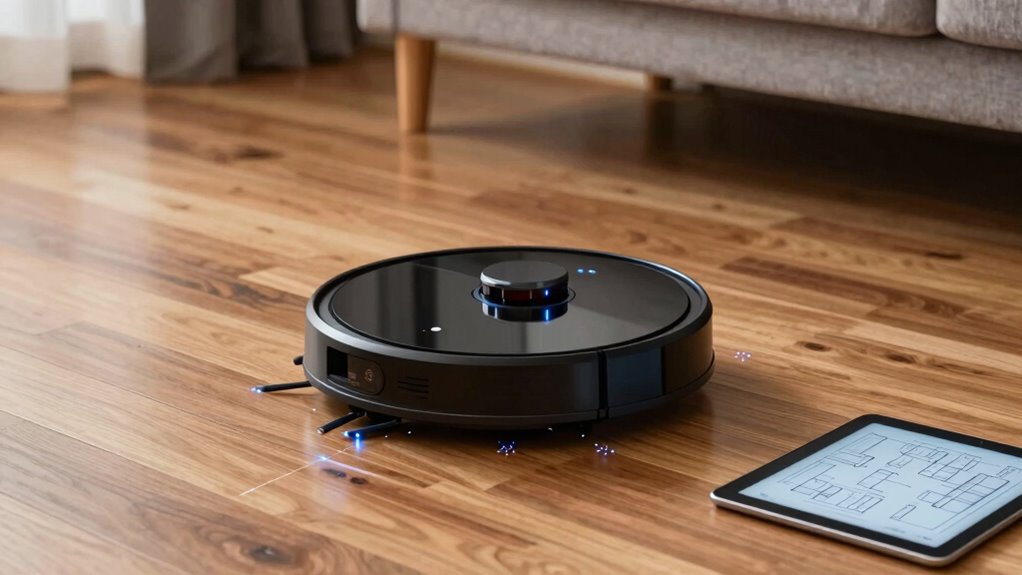
Robot vacuums use a combination of sensors and mapping technology to navigate your home efficiently. Unlike the cleaning myths of random path, modern robots don’t just wander aimlessly. Instead, they create detailed maps of your space, allowing for systematic cleaning. This mapping enables them to cover every area thoroughly without unnecessary repeats. Some models use laser sensors or cameras to build precise floor plans, while others rely on infrared or ultrasonic sensors to detect obstacles and walls. By understanding your home’s layout, they optimize their route, saving time and battery life. Additionally, they incorporate environmental awareness to adapt to changing conditions within your home. This smarter navigation debunks the idea that robot vacuums move randomly or haphazardly. Instead, they follow strategic paths, ensuring your home gets a consistent, efficient clean every time.
Which Sensors Do Robot Vacuums Use to Detect Obstacles?
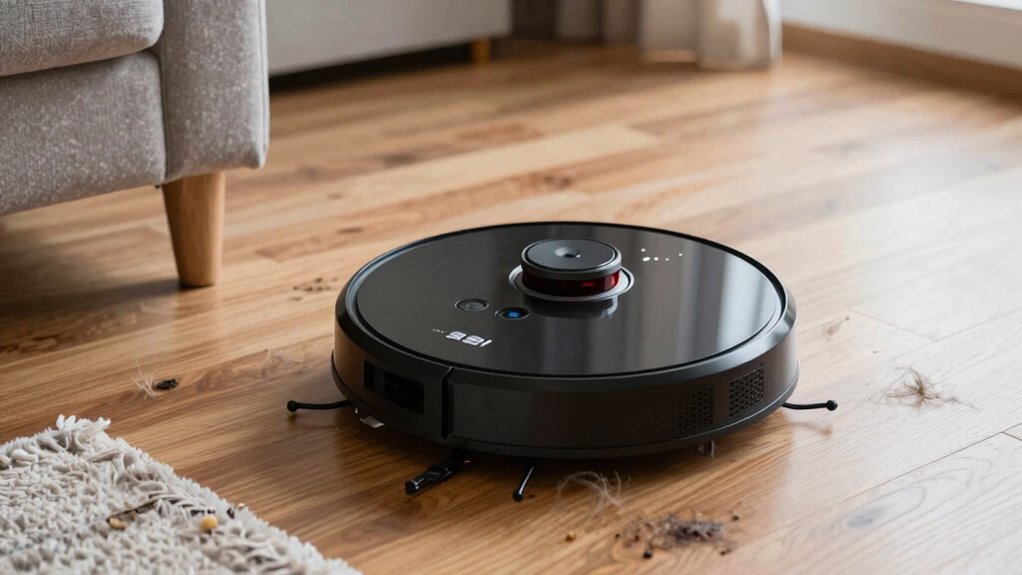
Have you ever wondered how robot vacuums avoid bumping into furniture or falling down stairs? They rely on various sensor types for obstacle detection. These sensors help the vacuum recognize objects and navigate safely around your home. Common sensor types include infrared sensors, which detect nearby objects; cliff sensors, preventing falls from stairs; bump sensors that trigger when contact is made; ultrasonic sensors that measure distance; and optical sensors that identify changes in surface textures. Together, these sensors create a thorough obstacle detection system, allowing your robot to adjust its path smoothly. This technology ensures efficient cleaning without random wandering, making your robot’s movements precise and purposeful. Modern sensors make robot vacuums smarter and safer, giving you peace of mind.
How Do Algorithms Plan Your Robot’s Cleaning Path?

Your robot uses smart mapping techniques to understand your space and create an efficient cleaning plan. It then applies dynamic path optimization to adjust its route in real-time, avoiding missed spots and obstacles. This combination guarantees your home gets thoroughly cleaned without wasting time or energy.
Smart Mapping Techniques
While it might seem like robot vacuum cleaners just wander randomly, they actually use smart mapping techniques to plan efficient cleaning paths. These techniques improve mapping accuracy by combining data from various sensors, ensuring the robot understands your space precisely. Sensor integration allows the robot to detect walls, furniture, and obstacles in real-time, making adjustments as needed. Smart mapping helps avoid missed spots and redundant cleaning, saving time and battery life. The algorithms create a digital map of your home, guiding the robot systematically through each area. This approach results in thorough, efficient cleaning without guesswork.
- Combining multiple sensors for better accuracy
- Creating detailed digital maps
- Detecting obstacles on the fly
- Adjusting routes based on real-time data
- Reducing missed spots
Dynamic Path Optimization
Building on smart mapping, dynamic path optimization guarantees your robot vacuum cleans efficiently by continuously adjusting its route based on real-time data. The algorithm efficiency improves as the robot detects obstacles and adapts instantly, preventing missed spots or unnecessary overlaps. This process also helps optimize recovery and HRV, ensuring the robot maintains high performance throughout the cleaning session. Additionally, sensor technology allows the robot to respond swiftly to changes in its environment, further enhancing cleaning accuracy. Instead of following a pre-set pattern, your robot analyzes the environment constantly, avoiding furniture, walls, and other obstacles with precise obstacle detection. This real-time adjustment ensures a thorough clean while minimizing battery use and cleaning time. By intelligently rerouting around obstacles and recalculating its path on the fly, the robot maintains ideal coverage. Dynamic path optimization transforms your cleaning experience from random wandering to a smart, efficient process that saves you time and guarantees a more effective clean every session.
How Does Real-Time Mapping Make Cleaning More Efficient?

Real-time mapping guarantees your robot covers areas precisely, avoiding missed spots or unnecessary overlaps. This technology reduces cleaning time by steering efficiently and adjusting on the fly. With adaptive strategies, your robot can handle obstacles better and optimize its path as it works. Incorporating waterpark safety features ensures your robot operates effectively around people and equipment. Additionally, navigation accuracy allows for better coverage in complex environments, making cleaning even more reliable. Implementing safety protocols aligned with solar system safety standards further enhances operational reliability and protection. Regular maintenance and understanding of home safety tips can also extend the lifespan of your cleaning device. Moreover, integrating energy-saving tips can help reduce overall power consumption while maintaining optimal performance.
Precise Area Coverage
Real-time mapping transforms cleaning by ensuring your device covers every inch of a space without wasting time on already cleaned areas. This precision is key to effective cleaning, especially with robotic aesthetics in mind, where sleek design and efficiency matter. It also enhances your vacuum branding by showcasing advanced tech. With real-time mapping, your robot navigates systematically, avoiding missed spots and reducing repetitive passes. You’ll notice a more thorough clean, saving you time and effort. Plus, it’s easier to customize cleaning zones, target trouble areas, and monitor progress via app. This technology guarantees consistent coverage, making your robot more reliable and effective. Ultimately, real-time mapping elevates your cleaning experience by combining smart navigation with meticulous area coverage.
Reduced Cleaning Time
By mapping your space accurately, your robot vacuum can plan the most efficient route, reducing unnecessary movements and repetitions. This precision speeds up cleaning, saving you time. Real-time mapping allows the robot to detect dirtier areas using dirt detection sensors, so it can focus more effort there, ensuring thorough cleaning without wasting time on already clean spots. Additionally, efficient routing conserves battery life, enabling longer cleaning sessions before needing a recharge. This means fewer interruptions and quicker coverage of your entire space. With smarter navigation, your robot avoids random, aimless wandering, completing tasks faster and more effectively. Understanding battery capacity and how it impacts runtime helps you choose a robot that can handle larger spaces without frequent recharging. Moreover, navigation algorithms further optimize movement, enhancing overall cleaning efficiency. Implementing mapping technology is essential for achieving these benefits. Overall, real-time mapping streamlines the cleaning process, making it less time-consuming and ensuring your home gets cleaned more efficiently.
Adaptive Navigation Strategies
When your robot vacuum employs adaptive navigation strategies, it can respond dynamically to changes in your home’s layout and dirt levels. It uses sensor calibration to accurately interpret its surroundings and obstacle detection to avoid furniture or walls. This allows for smarter cleaning paths, reducing missed spots and unnecessary repeats. With real-time mapping, your robot can identify high-traffic areas and focus more cleaning effort there. It also adapts if you rearrange furniture or add new items, updating its map instantly. This proactive approach ensures efficient coverage without wasting time retracing steps. Overall, adaptive navigation makes your robot more responsive, thorough, and efficient, giving you cleaner floors with less effort. It’s a significant upgrade over basic, random-path models.
Can Your Robot Remember Your Floor Plan?

Ever wondered if your robot can truly remember your floor plan? Modern robots use advanced mapping technology to create detailed floor plans of your home. This allows them to navigate efficiently and avoid unnecessary repetition. This mapping technology enables these devices to adapt to changes in your environment, ensuring consistent cleaning performance. Additionally, some models incorporate machine learning algorithms, which help improve their navigation over time based on previous cleaning sessions. With obstacle detection sensors, they can recognize furniture, walls, and other objects in real-time, updating their maps as needed. This combination guarantees your robot doesn’t just wander randomly but follows a planned route based on stored data. By remembering your floor plan, it can clean specific areas thoroughly and return to charging stations without confusion. This efficient navigation minimizes missed spots and saves time. Moreover, environmental adaptation helps these robots adjust to new obstacles or layout changes, maintaining optimal cleaning. Additionally, mapping technology allows for better integration with smart home systems, providing more control and customization. So, yes—your robot does more than just wander; it remembers your floor plan to clean smarter, faster, and more effectively.
How Does AI Help Robots Clean Better?
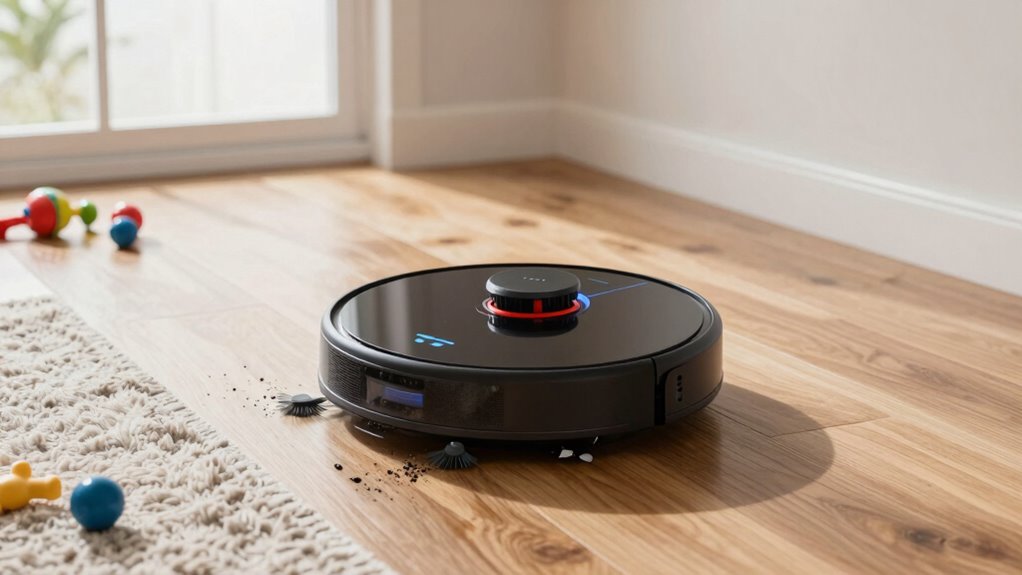
AI substantially enhances a robot’s ability to clean efficiently and thoroughly. Instead of relying on manual cleaning or random paths, AI-powered robots adapt to your home’s layout, optimizing their routes. They analyze floor plans, detect high-traffic areas, and adjust cleaning schedules accordingly. This means fewer missed spots and less need for manual intervention. AI also helps robots avoid obstacles, navigate tight spaces, and return to charging stations seamlessly. With real-time data, your robot can prioritize dirtier zones or clean on specific schedules, saving you time and effort. Additionally, adaptive algorithms enable robots to learn from past cleaning sessions, improving their performance over time. This results in a smarter, more effective cleaning process that keeps your home spotless without your constant input. Moreover, regional flavors influence the design of cleaning patterns, making AI adaptable to different home layouts and surface types. Continuous learning allows these systems to refine their cleaning strategies further, ensuring optimal performance in evolving household environments. Furthermore, advancements in sensor technology enable more precise detection of dirt and obstacles, enhancing overall cleaning efficiency. Data integration also allows robots to coordinate with other smart home devices, creating a comprehensive cleaning ecosystem.
How Do Different Robot Models Vary in Their Navigation Strategies?

Different robot models employ a variety of navigation strategies to clean your home effectively. Some use advanced sensors to improve sensor accuracy, allowing them to map rooms precisely. Others rely on obstacle detection technologies to identify furniture, walls, and objects, preventing collisions. For example, iRobot’s iAdapt system combines multiple sensors to create a detailed map of your space, while simpler models use bump sensors to detect obstacles. Higher-end robots often incorporate laser or camera-based navigation for more accurate path planning. In contrast, basic models may follow more random patterns, but even these use obstacle detection to avoid getting stuck. Overall, the variation in sensor accuracy and obstacle detection methods impacts how efficiently each robot navigates and cleans your home. Additionally, electric power generation technologies are sometimes integrated into robots to extend their operational time or provide auxiliary functions, enhancing their overall effectiveness.
What Are Common Myths About Robotic Cleaning?

Many people assume that robotic vacuum cleaners always follow random paths or move aimlessly around your home. This myth can lead to underestimating their efficiency. In reality, modern robots use advanced navigation, making cleaning more targeted and thorough. Some common myths include believing that:
- They can’t handle pet hair or a robot pet easily
- They aren’t effective for dust allergies
- They only clean in straight lines or random patterns
- They need constant supervision
- They can’t navigate around furniture or obstacles
In truth, many models map your space and adapt their routes. If you have a robot pet or dust allergies, you’ll find these devices are better suited than you think, especially with features like HEPA filters and smart routing. Advanced navigation systems allow robots to efficiently cover your entire space without missing spots.
How Can You Improve Your Robot Vacuum’s Cleaning Performance?

To get the most out of your robot vacuum, you should regularly maintain and optimize its settings. Start by creating a consistent cleaning schedule that fits your household’s routine, especially if you have a robot pet, to ensure pet hair and debris are frequently addressed. Keep the brushes and filters clean, as clogged components reduce efficiency. Adjust the suction power if needed—higher power can improve cleaning on carpets but may drain the battery faster. Use virtual barriers or mapping features to focus cleaning on high-traffic areas or where your robot pet spends most time. Regular updates and resetting the device can also enhance performance. These small steps help your robot vacuum clean more thoroughly and adapt to your home’s unique needs.
Frequently Asked Questions
Do Robot Vacuums Clean Under Furniture Effectively?
Yes, robot vacuums clean under furniture effectively. Thanks to advanced navigation mapping and obstacle detection, they identify tight spaces and low-clearance areas efficiently. These features allow your robot to maneuver around furniture and reach under beds, sofas, and cabinets. As a result, you get a thorough clean without missing hidden dirt or dust, making modern robot vacuums a reliable solution for maintaining a spotless home.
How Long Does a Robot Vacuum Typically Operate Before Recharging?
A robot vacuum typically operates for about 60 to 120 minutes before needing a recharge, depending on its battery life. When the battery gets low, it automatically returns to its dock for a recharge, which usually takes around 3 to 4 hours. During this time, it recharges its battery so it can resume cleaning or complete its scheduled tasks. This smart recharge process helps keep your floors consistently clean.
Can Robot Vacuums Identify and Avoid Pet Waste?
You might think your robot vacuum ignores pet waste, but with waste avoidance technology, it can identify and steer clear. Think of it like a smart guard dog, alert and cautious. Pet waste detection sensors help your robot avoid accidents, saving you cleanup time. Modern robots use advanced sensors to detect waste, ensuring they clean efficiently without damaging your floors or spreading messes, making your life easier and cleaner.
Are Robot Vacuums Suitable for All Carpet Types?
Robot vacuums are suitable for most carpet types thanks to advanced navigation algorithms and manual control options. These features help you customize cleaning patterns, ensuring thorough coverage on low-pile or thick carpets. While some models may struggle with very high-pile or shag carpets, generally, modern robots adapt well and provide efficient cleaning. You can manually control certain functions to optimize performance on specific carpet types, making them versatile for your home.
How Quiet Are Modern Robot Vacuums During Cleaning?
Imagine a robot vacuum in the style of a 1960s spaceship—today’s models are surprisingly quiet. Modern robots operate with low noise levels, often under 60 decibels, comparable to a whisper or background music. Thanks to sound insulation technology, they clean without disturbing your peace or sleep. You can run them during work hours or at night, confident that their noise won’t disrupt your environment or daily routines.
Conclusion
So, next time you see your robot vacuum zigzagging, remember it’s no longer a wandering minstrel of the cleaning world. Modern robots use advanced mapping, sensors, and AI to clean efficiently—think of them as the smart, high-tech equivalents of a Swiss Army knife. Say goodbye to the myth of random paths, and embrace the future of effortless cleaning. Your floors will thank you, just like a knight thanking his trusty steed after a victorious joust.