
To set no-mop zones for delicate rugs, start by clearly marking high-risk areas like where antique or silk rugs are placed. Use furniture, rugs, or physical barriers to keep these zones dry. Add visual cues or signs to remind everyone not to mop those sections. Regularly monitor these areas and educate household members about the importance of avoiding excessive moisture. Keep exploring for more tips on protecting your sensitive rugs effectively.
Key Takeaways
- Designate high-traffic or delicate rug areas as no-mop zones with physical barriers or furniture.
- Use visual cues like rugs or signs to clearly mark no-mop zones and prevent accidental spills.
- Keep antique or natural fiber rugs in protected zones, avoiding mopping to prevent damage.
- Implement regular spot cleaning in no-mop zones to maintain cleanliness without over-wetting.
- Educate household members about no-mop zones to ensure consistent protection of delicate rugs.
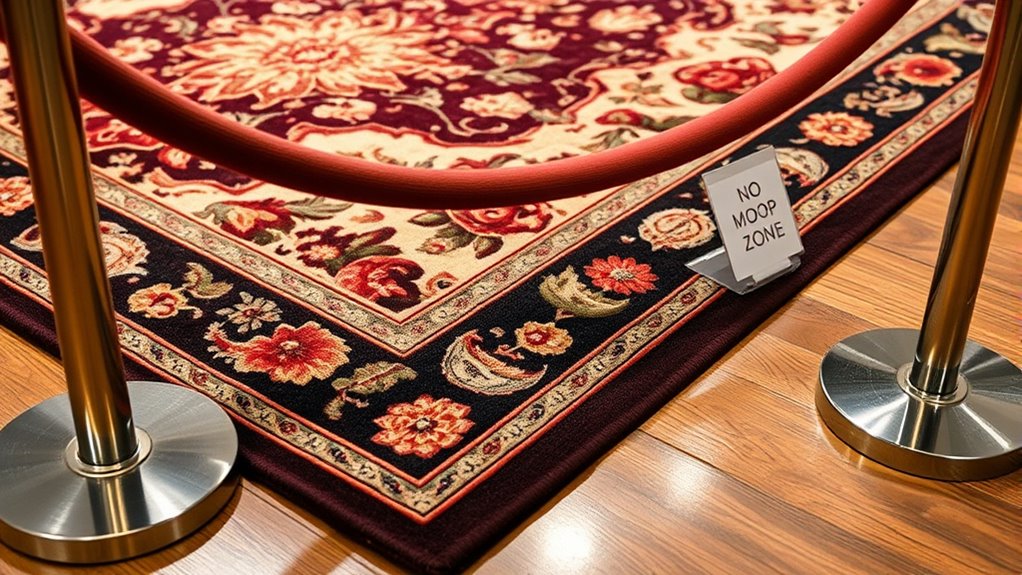
Have you ever wondered if some areas of your home should stay mop-free to protect your rugs? If you have delicate or valuable rugs, establishing no-mop zones is essential to prevent damage and preserve their beauty. When considering rug stain removal, it’s vital to recognize that not all rugs respond well to water and cleaning solutions. Different rug materials have unique sensitivities; for instance, wool, silk, or antique rugs require gentle handling. Using a mop or excessive moisture can cause fibers to warp, colors to bleed, or even lead to mold growth underneath. So, before deciding where to mop, you should evaluate your rugs’ material considerations carefully.
Firstly, identify which rugs are delicate. Natural fiber rugs like silk or wool often need special care, and exposing them to water can compromise their structure. For these, it’s best to avoid mopping altogether and stick to spot cleaning or professional rug stain removal methods. Synthetic rugs, such as nylon or polyester, tend to be more resilient, but even then, excessive moisture can cause issues like shrinking or color fading. Recognizing these material considerations helps you determine where mopping is appropriate and where it’s best to skip it.
Next, think about the high-traffic areas versus the more fragile zones. Entryways or kitchens might benefit from regular mopping, but if you have a delicate Persian or antique rug in a living room or bedroom, you should set clear boundaries. Creating no-mop zones around these rugs helps prevent accidental spills or over-wetting that could damage them. Use physical barriers, like furniture or rugs, to designate these areas visually and practically.
When it comes to rug stain removal, avoid using harsh chemicals or excessive water on sensitive rugs. Instead, opt for gentle cleaning solutions specifically formulated for delicate fibers. Always test any cleaning method in a small, inconspicuous area first to see how your rug material reacts. This cautious approach ensures you won’t inadvertently cause colors to run or fibers to loosen. Furthermore, for stubborn stains, professional cleaning might be the safest route, especially for antique or high-value rugs. Being aware of fiber sensitivities can help you choose the correct cleaning method and extend the life of your rugs.
Frequently Asked Questions
Can No-Mop Zones Be Changed Easily Over Time?
Yes, you can change no-mop zones easily over time. Simply update the zone boundaries by adjusting the designated areas for delicate rugs, ensuring they reflect your current needs. When updating no mop areas, remove or add sections as needed, making sure to communicate these changes clearly. This flexibility allows you to protect delicate rugs effectively while maintaining control over your cleaning zones.
Are There Specific Rug Materials That Should Never Be in No-Mop Zones?
Yes, certain rug materials with delicate fibers or chemical sensitivities should never be placed in no-mop zones. You should avoid putting fine silk, wool, or antique rugs in these areas, as mopping can harm their fibers or cause color bleeding. For delicate rugs, always opt for gentle cleaning methods and consult with a professional if you’re unsure. Protecting sensitive materials ensures your rugs stay beautiful and intact over time.
How Do I Mark or Identify No-Mop Zones Clearly?
Did you know that 78% of cleaning errors happen because of unclear zone markings? To avoid damaging delicate rugs, you should use color-coded tags or removable labels to mark no-mop zones clearly. Place them at eye level or near entrances, so everyone notices. These labels are easy to remove when needed, ensuring your rugs stay safe while maintaining a tidy, organized space.
Is It Safe to Vacuum Rugs Within No-Mop Zones?
Yes, it’s safe to vacuum rugs within no-mop zones, but you should exercise caution to guarantee vacuum safety and prevent rug damage. Use a vacuum with adjustable height settings and avoid aggressive brushes or high suction levels. Always test a small, inconspicuous area first. By being gentle and mindful, you protect your delicate rugs from damage while keeping the area clean without crossing into no-mop zones.
Do No-Mop Zones Affect the Overall Cleaning Schedule?
Did you know 80% of homeowners find managing their cleaning schedule challenging? No-mop zones can streamline rug maintenance by preventing damage to delicate rugs, but they might slightly extend your overall cleaning schedule. By focusing on specific areas, you ensure thorough cleaning while protecting fragile rugs. Just plan your routine accordingly, so no-mop zones don’t cause delays, and your home stays spotless without risking harm.
Conclusion
Now that you know how to set no-mop zones for your delicate rugs, imagine the possibilities. What areas will you protect next? Will you discover new ways to preserve their beauty while still keeping your space spotless? The secret lies in your choices—each zone a safeguard. So, are you ready to take control and keep your rugs pristine? The power is in your hands—your next move could transform your entire cleaning routine.