Understanding noise ratings in decibels (dB) helps you measure how loud sounds and appliances are. Since decibels are logarithmic, small increases mean much louder noise, so a device at 70 dB is roughly twice as loud as one at 60 dB. Context matters because environment and sound quality influence how disruptive noise feels. To make smarter choices and reduce noise pollution, learn how these ratings work and what they really mean.
Key Takeaways
- Decibels (dB) are a logarithmic scale measuring sound intensity, where small increases indicate significantly louder sounds.
- A 10 dB increase roughly doubles perceived loudness, making 70 dB about twice as loud as 60 dB.
- Context affects noise perception; higher decibels may be less disruptive outdoors or in noisy environments.
- High-pitched sounds tend to be more annoying than lower-pitched sounds at the same decibel level.
- Manufacturers often provide decibel ratings to help compare and choose quieter products.
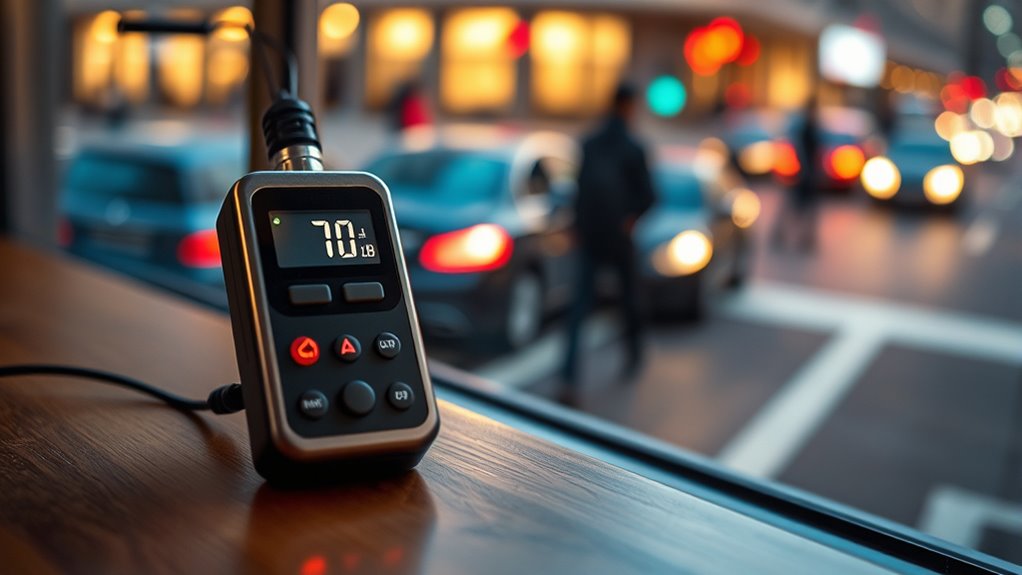
Understanding noise ratings is essential when choosing appliances, vehicles, or equipment, as they tell you how loud a product is during operation. These ratings are based on sound measurement, which quantifies the intensity of noise produced in decibels (dB). Knowing how to interpret these numbers helps you make informed decisions and avoid contributing to noise pollution, especially in environments where quiet is valued or required.
Understanding noise ratings helps you choose quieter appliances and reduce noise pollution in your environment.
Decibels are a logarithmic unit, meaning that a small increase in dB represents a significant jump in loudness. For example, a device rated at 70 dB is roughly twice as loud as one at 60 dB. This scale helps you understand the relative loudness of different products without relying solely on subjective impressions. When you see a product’s noise rating, you’re getting an objective measure of how loud it will be during use, helping you gauge its impact on your surroundings and your comfort.
Noise pollution is a growing concern worldwide because excessive noise can affect health and well-being. It can cause stress, disturb sleep, and even lead to hearing loss over time. That’s why understanding sound measurement is critical—not just for your comfort, but also for reducing the broader impact of noise pollution on communities. When choosing a washing machine, lawn mower, or car, paying attention to their noise ratings allows you to select quieter options, helping to minimize noise pollution in your neighborhood or home.
Keep in mind that decibel levels aren’t the only factor; the context of noise matters too. A loud appliance in a quiet room may be more disruptive than a slightly louder device used outdoors or in a noisy environment. Also, consider how the sound is produced—high-pitched noises tend to be more annoying than deep, low-frequency sounds at the same decibel level. Manufacturers often provide information about sound measurement, which can help you understand the nature of the noise and how it might affect your environment. Additionally, understanding sound measurement allows you to compare products more accurately and choose options that are less disruptive.
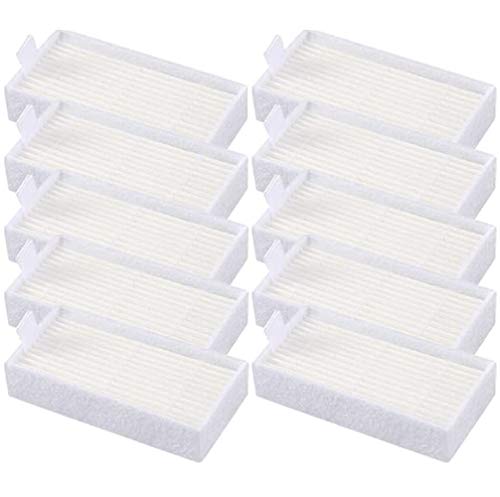
10pcs HEPA Filters Replacement for ILIFE V3s V3s pro V5 V5s V5s Pro V5s Pro 2 V5s Plus Noisz S5 Robotic Vacuum Cleaner ILIFE V3s pro Filters ILIFE Robot Vacuum Filter
- Compatible with Various ILIFE Models: Fits V3, V3s, V5, V5s, Pro versions
- High-Quality Filter Material: Made of efficient, durable filter material
- 100% Compatible with Original Filters: Ensures perfect fit and performance
As an affiliate, we earn on qualifying purchases.
Frequently Asked Questions
How Do Noise Ratings Impact Daily Life Choices?
Your noise perception influences daily life choices by guiding you toward quieter environments for comfort and safety. Higher noise levels can threaten hearing safety, so you might choose ear protection or avoid loud places. Understanding noise ratings helps you recognize safe versus harmful sounds, enabling you to make informed decisions that defend your hearing. By paying attention to noise levels, you ensure better overall well-being and avoid long-term hearing damage.
Are Higher Decibel Levels Always More Harmful?
Imagine a roaring river; the louder it flows, the more it wears down the banks. Higher decibel levels can be more harmful because they surpass decibel thresholds, risking your hearing health. But it’s not always a direct threat—some noises at high levels might not be harmful if you’re exposed briefly. So, you should consider both the decibel level and duration to gauge whether a sound is truly harmful noise.
How Do Noise Ratings Vary Across Different Environments?
You’ll notice noise ratings differ across environments, influenced by factors like sound masking in offices or noise ordinances in neighborhoods. In quiet areas, decibel levels stay low, promoting relaxation, while busy zones like factories or concerts reach higher levels, sometimes exceeding safe limits. Understanding these variations helps you manage exposure and comply with local noise ordinances, ensuring you protect your hearing and maintain a comfortable atmosphere.
Can Noise Ratings Help Reduce Noise Pollution?
Yes, noise ratings can help reduce noise pollution by guiding you to follow noise level standards and choose appropriate soundproofing techniques. When you understand the decibel levels, you can identify areas needing soundproofing and implement measures like insulation or barriers. This proactive approach minimizes noise disruption, improves your environment, and promotes healthier living spaces. Using noise ratings effectively makes noise pollution control more targeted and efficient.
What Factors Influence the Accuracy of Noise Measurements?
You should know that factors influencing the accuracy of noise measurements include calibration techniques and measurement standards. Proper calibration guarantees your equipment provides precise readings, so regular calibration is essential. Adhering to measurement standards guarantees consistency and reliability across different devices and environments. Additionally, environmental conditions like background noise and distance from the source can affect results. By focusing on calibration and standards, you can improve the accuracy of your noise assessments.

Filter Replacement for iRobot Roomba e, i and j Series i7 i7+/plus i3 i3+ E5 E6 E7 i4 i6 i6+ i8 i8+ Robot Vacuum Cleaners parts, 9 Pack High Efficiency 4639161 Filters
- Compatible with Roomba E, I, J Series: Fits various Roomba models including i7, i3, i6, i8, and J series
- High Efficiency Filtration: Filters 99.9% of dust, pet hair, and particles
- Effective Particle Capture: Captures particles as small as 0.3 microns
As an affiliate, we earn on qualifying purchases.
Conclusion
Don’t let noise ratings confuse you. Understanding decibels helps you choose the right environment for work or relaxation, and it’s easier than you think. Some might worry that noise levels are only important in loud settings, but even moderate sounds can impact your focus and health. By knowing what different decibel levels mean, you can protect your hearing and create a quieter, more comfortable space wherever you are. Take control—your ears will thank you.

roborock Q7 M5+ Robot Vacuum and Mop, Up to 7-9 Weeks Self-Empty, 10000Pa
- Long-lasting Self-Emptying: Up to 7-9 weeks with 2.7L dust bag
- Powerful Suction: 10000Pa for deep cleaning
- Anti-Tangle System: Dual design resists pet hair wrap
As an affiliate, we earn on qualifying purchases.

iRobot Roomba 415X Robot Vacuum & Mop Combo, 2.3X Suction, 90 Days Self-Emptying, Multifunction Dock Self-Cleaning & Hot Dry, Smart Obstacle Avoidance, Lifting Spinning Mops, Ideal for Pet Hair
- Powerful Suction: 20,000Pa for deep cleaning
- Combined Vacuum & Mop: Vacuum and mop in one run
- Self-Emptying Dock: 90 days of maintenance-free operation
As an affiliate, we earn on qualifying purchases.