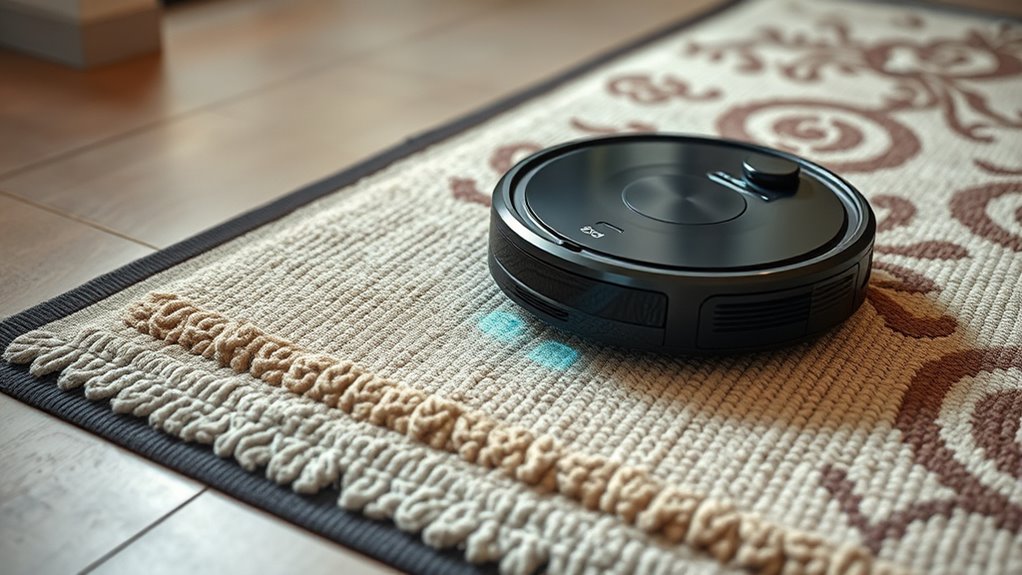
To prevent your robot from moving rugs or mats, make certain they lie flat and aren’t wrinkled or curled. Use textured, rubber-backed rugs for better grip and consider adding double-sided tape or rug grippers underneath. Increasing the rug’s weight with small weights or weighted covers can also help. Keep the surface clean and stable, and consider using boundary markers to restrict the robot’s access to slippery or unstable areas. Learn more tips to keep your rugs secure during cleaning.
Key Takeaways
- Use textured, rubber-backed rugs or apply rug grippers to increase traction and prevent slipping.
- Secure rugs with double-sided tape or heavy objects to anchor them in place.
- Place rugs flat, avoiding wrinkles or curled edges that can catch the robot’s wheels.
- Regularly clean robot wheels and underside to ensure optimal grip and movement.
- Set virtual boundaries or restrict robot access to areas with loose or slippery rugs.
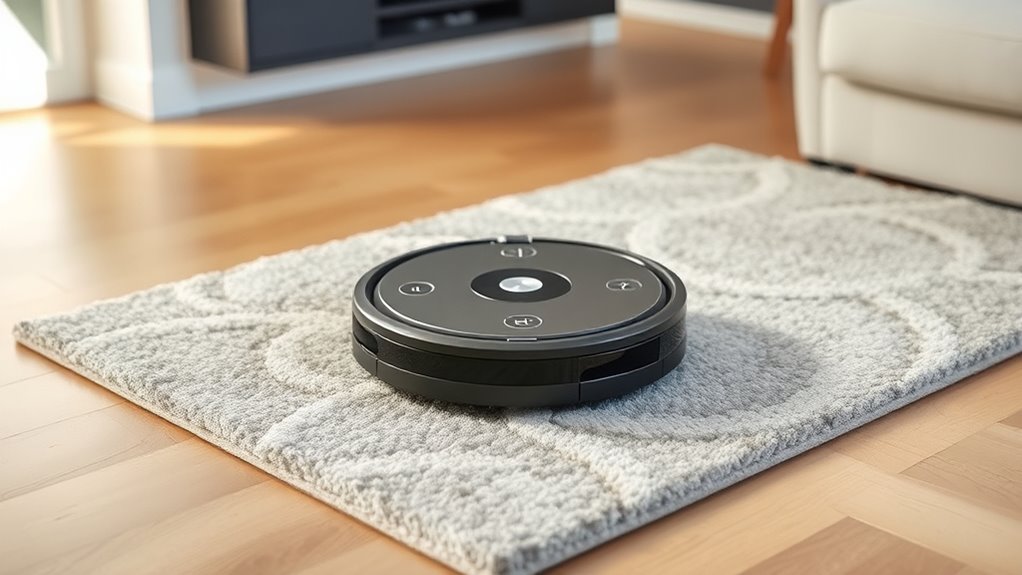
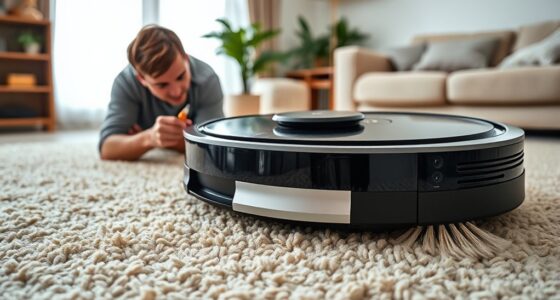
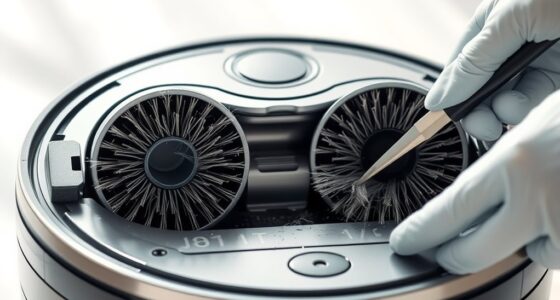
If your robot vacuum keeps pushing or displacing rugs and mats, it’s frustrating but fixable. The key lies in understanding how your robot’s weight and rug grip techniques influence its behavior. Heavier robots tend to stay put better, as their weight provides more stability on various surfaces. If your vacuum feels light, it might lack the downward pressure needed to keep rugs in place during cleaning. Consider choosing a robot with a higher weight or adding weight to your current model—such as attaching small weights or using weighted covers—to improve traction and reduce slipping. Additionally, the design of the robot’s wheels and brushes can impact its ability to grip surfaces effectively. Rug grip techniques are essential in preventing movement. Start by selecting rugs with a textured or rubber-backed surface, which naturally offers better grip. Smooth or slick rugs are more prone to slipping under the vacuum’s wheels. You can also use double-sided tape or rug grippers on the underside of your mats to anchor them securely to the floor. These simple solutions create friction between the rug and the floor, making it less likely for the robot to push or slide the rug around. When positioning your rugs, ensure they lie flat without wrinkles or curled edges, as uneven surfaces can cause the vacuum to catch and shift the edges. Regularly cleaning the wheels and underside of your robot ensures that dirt or debris doesn’t interfere with proper movement, which can contribute to slipping or pushing. Proper maintenance keeps the robot operating smoothly and minimizes unintended displacement of rugs. If your robot’s design permits, setting boundaries or using virtual walls can prevent it from venturing onto areas with loose or slippery rugs. For stubborn rugs, consider placing furniture or heavy objects around the edges to hold them in place. Combining these tactics—using heavier robots, enhancing rug grip techniques, and maintaining your device—will greatly reduce the chances of mats and rugs shifting during cleaning. With a little effort, you can enjoy a tidy home without the hassle of constantly readjusting rugs or worrying about your robot’s movements. Moreover, understanding the importance of robotics integration can help you select devices that are better suited for your home environment and reduce such issues altogether.
Frequently Asked Questions
Can Robot Vacuums Damage Delicate Rugs or Mats?
Robot vacuum damage to delicate rugs or mats depends on proper robot vacuum maintenance and rug placement strategies. You should regularly check your vacuum’s brushes and sensors to prevent undue wear. Additionally, using rug placement strategies like setting boundary markers or adjusting cleaning modes helps protect fragile surfaces. With these steps, you can avoid damage and make certain your robot vacuum cleanings are safe for your delicate rugs or mats.
Are There Specific Rug Materials That Prevent Robot Movement?
You might wonder if certain rug materials prevent robot movement. Rugs with strong grip and high material resistance, like rubber-backed or textured fibers, help keep your robot vacuum in place. These materials create better traction, reducing slipping and shifting during cleaning. To enhance stability, look for rugs with a good grip or add non-slip pads underneath. This way, your robot can clean effectively without moving or causing damage.
How Do I Reset My Robot Vacuum After It Moves a Rug?
Think of resetting your robot vacuum as giving it a fresh start, like clearing a foggy window. To do this, you’ll want to perform a robot vacuum calibration, ensuring its sensors and navigation are accurate. First, turn off the device, then restart it, allowing it to recalibrate. Focus on rug edge detection settings, so it recognizes and avoids moving rugs in the future. This process helps your robot keep its footing without moving your mats.
Do Robot Vacuums Have Sensors to Detect Rugs and Prevent Movement?
You might wonder if robot vacuums have sensors to detect rugs and prevent movement. While some models feature rug detection technology, sensor limitations mean they don’t always work perfectly. These sensors can identify thicker rugs and adjust their cleaning or avoid moving them, but their effectiveness varies. So, it’s good to check your vacuum’s specifications, as not all robot vacuums have reliable rug detection technology to prevent movement.
Can Placing Furniture Help Keep Rugs in Place From Robot Vacuums?
While furniture placement can subtly guide your robot vacuum, it’s not foolproof for keeping rugs in place. Proper rug edging plays a vital role in preventing movement, and strategic furniture positioning helps create barriers that discourage shifting. By thoughtfully arranging your furniture, you add a gentle boundary that complements your rug’s stability, making it less likely to be disturbed during cleaning. Combining these tactics gives you a more secure, tidy space.
Conclusion
Remember, your rugs and mats are the foundation of your space, just like trust is for relationships. When you take simple steps to keep robots from moving them, you’re building a steady ground for peace of mind. Think of your efforts as planting a sturdy tree—firm roots ensure stability. By safeguarding your rugs, you’re nurturing a safe, harmonious environment where technology and comfort coexist, grounded in your careful care.