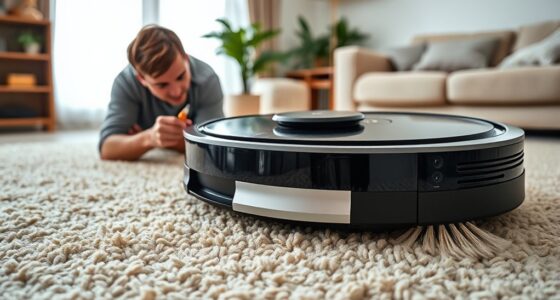
To store your robot vacuum properly between uses, choose a designated, dry spot for charging and storage. Use a compatible charging station to keep it powered and make certain it is aligned correctly. Store it in a clean, dry container or cover it with a breathable material to prevent dust buildup. Regularly clean the charging contacts and sensors before storing. Following these tips will help keep your vacuum ready and in top condition—learn more to optimize your storage method.
Key Takeaways
- Place the robot vacuum on its designated charging station, ensuring proper alignment for full recharging.
- Store the device in a clean, dry container to protect against dust and dirt buildup.
- Keep the charging station in a dry, accessible area away from moisture and extreme temperatures.
- Regularly clean sensors and contacts before storage to maintain optimal performance.
- Inspect and clean the storage area periodically to prevent dust accumulation and environmental damage.

Storing your robot vacuum properly guarantees it stays in good condition and works effectively when you need it. One of the most important steps is to ensure it has a designated spot for charging and storage. A compatible charging station is essential because it keeps your device powered and ready for use without the hassle of manual recharging. When you’re finished cleaning, place your robot vacuum on its charging station, ensuring it’s properly aligned so it can recharge fully. This not only prolongs the battery life but also prevents you from forgetting to charge it later. If your model doesn’t come with a built-in charging station, consider purchasing one that’s compatible with your vacuum to streamline the storage process. Proper placement of the charging station in a dry, accessible area keeps your robot ready for quick cleaning sessions and reduces wear on the battery caused by incomplete charging cycles.
In addition to a charging station, using storage containers can significantly protect your robot vacuum from dust, dirt, and accidental damage. Store your vacuum in a clean, dry container that fits its size, preventing it from collecting dust or getting scratched when not in use. Many manufacturers offer dedicated storage containers designed specifically for robot vacuums, which feature secure lids and compartments for accessories like brushes or filters. If such containers aren’t available, a simple plastic bin or a covered storage box works just as well, as long as it provides enough space and keeps the vacuum protected. When choosing a storage container, make sure it’s ventilated enough to prevent moisture buildup, which could damage internal components. Keep the container in a cool, dry place, away from direct sunlight and extreme temperatures, which could weaken the plastic or affect the battery. Additionally, regularly inspecting and cleaning your storage area can prevent dust accumulation that might affect the vacuum’s sensors and performance.
It’s also a good idea to clear the area around your storage setup regularly. Dust and debris can accumulate in the storage container or around the charging station, so wipe down the surfaces and ensure the robot vacuum’s sensors and charging contacts are clean before storing. This simple routine prevents dirt from interfering with the vacuum’s performance and prolongs its lifespan. Remember to check the manufacturer’s instructions for any specific storage guidelines or recommendations—they often include valuable tips on maintaining your device between uses. By taking the time to properly store your robot vacuum in a dedicated charging station and a protective container, you’re investing in its longevity and ensuring it’s always ready to pick up where it left off. Proper storage can also help prevent damage from environmental factors, extending the overall lifespan of your device.
Frequently Asked Questions
Can I Store My Robot Vacuum Outside?
You shouldn’t store your robot vacuum outside, as outdoor storage exposes it to weather and moisture that can damage its electronics. If you must, consider outdoor storage in a sheltered, dry area, but always remove the battery first to prevent corrosion or leaks. Proper indoor storage keeps your vacuum safe, dry, and in good working condition, extending its lifespan and ensuring peak performance whenever you need it.
Should I Remove the Robot’s Batteries Before Storage?
Yes, you should remove the robot’s batteries before storage for safety. Battery removal helps prevent potential leaks, corrosion, or fire hazards, especially if you’re storing the vacuum for an extended period. It also protects your device’s electronics. Always follow the manufacturer’s instructions for battery removal and storage safety. This simple step ensures your robot vacuum stays in good condition and reduces risks while it’s not in use.
How Often Should I Clean the Charging Contacts?
You should clean the charging contacts monthly to prevent battery corrosion and guarantee ideal contact. Regular contact maintenance involves gently wiping the contacts with a soft, dry cloth or a cotton swab dipped in a bit of rubbing alcohol. This routine keeps the contacts free of dust and debris, improving charging efficiency and extending your robot vacuum’s lifespan. Consistent care now saves you trouble later.
Is It Necessary to Store the Vacuum on Its Charging Dock?
Think of your robot vacuum like a sleeping cat—resting in its cozy spot. Storing it on the charging dock isn’t always necessary but helps with battery maintenance, keeping the device ready for action. If you won’t use it for a while, choose a dry, cool storage location away from dust. This keeps your vacuum in top shape, prolonging its lifespan and ensuring quick, efficient cleaning whenever you need it.
Can Temperature Affect My Robot Vacuum’s Storage?
Temperature can definitely affect your robot vacuum’s storage. If it’s too hot or cold, it may become temperature sensitive, causing battery issues or damage to internal components. To guarantee proper storage, keep your vacuum in a climate-controlled environment, avoiding extreme temperatures. This helps maintain its functionality and lifespan, preventing unnecessary wear and tear. Proper storage in moderate conditions keeps your vacuum ready for use whenever you need it.
Conclusion
By storing your robot vacuum properly, you protect its power, preserve its performance, and prolong its life. Think of it as giving your device a peaceful rest, a safe haven, a clean slate for the next time. When you follow the right steps, you guarantee it’s ready to clean, ready to serve, and ready to impress. Keep it stored well, and watch your robot vacuum stay efficient, reliable, and always enthusiastic to help around your home.