When animal accidents happen, act quickly to prevent stains and odors from setting in. Blot the mess with paper towels, avoiding rubbing, and use a pet-safe enzymatic cleaner to break down the proteins. Ventilate the area to speed drying. Proper cleaning and prompt action discourage pets from returning to the same spot. With the right techniques, you’ll keep your home fresh—continue to explore how to manage accidents effectively.
Key Takeaways
- Act quickly to blot and absorb liquids, preventing stains and odors from setting in.
- Use enzymatic cleaners designed for pet accidents to effectively break down organic messes.
- Ensure thorough cleaning and proper ventilation to eliminate lingering smells and moisture.
- Reinforce pet training with consistent routines and positive reinforcement, avoiding punishment.
- Completely dry the area and use odor eliminators to prevent pets from returning to the same spot.
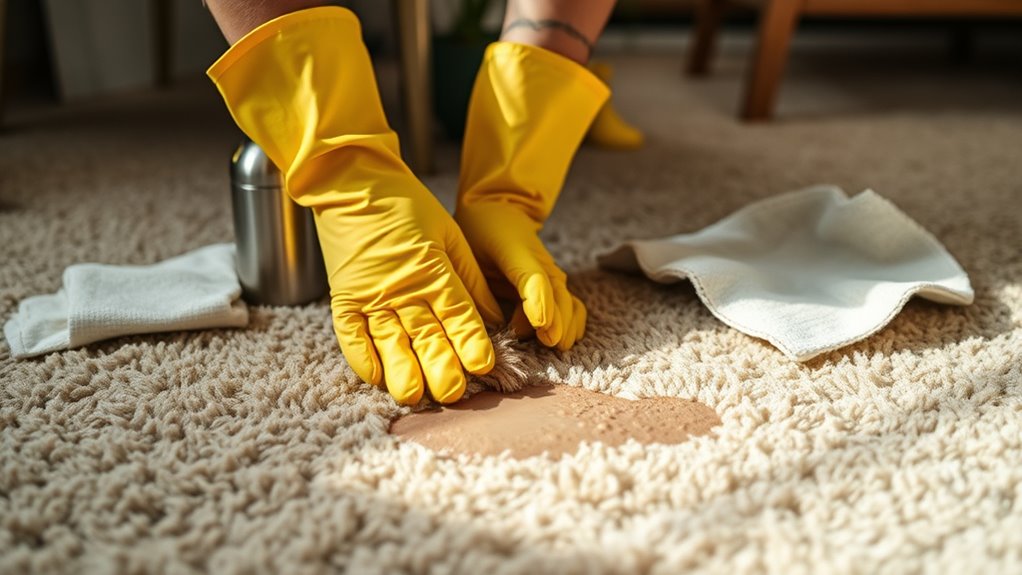
Animal accidents can happen unexpectedly, and knowing how to respond quickly is essential for everyone involved. When your pet has an accident, your immediate goal should be to clean the area thoroughly to prevent stains and odors from setting in. Proper cleaning not only keeps your home fresh but also plays a key role in effective pet training. Consistently removing accidents and unpleasant smells helps your pet understand where they should and shouldn’t go, reinforcing good habits. This process involves more than just wiping up the mess; it requires a strategic approach to odor removal that discourages repeat offenses.
Start by acting swiftly. The longer the stain stays, the harder it becomes to clean and the more likely it is to leave behind odors that attract your pet back to the same spot. Blot the area with paper towels or a clean cloth to absorb as much liquid as possible. Avoid rubbing, as this can push the mess deeper into the fibers of your carpet or upholstery. Once you’ve absorbed the excess liquid, apply a pet-safe enzymatic cleaner designed specifically for pet accidents. These cleaners are essential for odor removal because they break down the proteins in urine, feces, or vomit that cause lingering smells. Using the right product ensures that your home stays fresh and discourages your pet from returning to the same spot.
Act quickly: blot, avoid rubbing, then use a pet-safe enzymatic cleaner to eliminate odors and prevent repeat accidents.
Incorporate pet training techniques that emphasize positive reinforcement to prevent future accidents. If your pet is still learning appropriate bathroom habits, consistency and patience are key. Take your pet outside frequently and reward them when they go in the right place. If an accident occurs indoors, clean it thoroughly and avoid punishment, which can cause anxiety and worsen the problem. Instead, focus on redirecting your pet and reinforcing good habits. Over time, a combination of prompt cleaning and consistent pet training will help your pet understand boundaries better.
Odor removal is especially important because animals have a keen sense of smell. If a previous accident’s scent remains, it can attract your pet back to the same spot, creating a cycle that’s difficult to break. Use a deodorizer compatible with your cleaning products and ensure the area dries completely. Ventilate the room to speed up the process and prevent any moisture from lingering. The goal is to eliminate all traces of odor so your pet won’t be tempted to revisit the accident site. Additionally, understanding contrast ratio can help you choose the right cleaning environment by ensuring proper lighting and visibility during cleanup.
Frequently Asked Questions
How Can I Prevent Future Animal Accidents in My Home?
To prevent future animal accidents, you should implement pet proofing tips like using furniture protection covers and securing trash cans. Keep tempting items out of reach and establish consistent routines to reduce anxiety. Provide plenty of toys and designated potty spots to encourage good habits. Regular training and positive reinforcement help your pet understand boundaries. These steps create a safer environment, minimizing accidents and ensuring a cleaner, happier home for both of you.
Are There Eco-Friendly Cleaning Options for Pet Messes?
Yes, you can use eco-friendly cleaning options for pet messes. Biodegradable sprays are a great choice because they break down naturally and are safe for your pets and the environment. Natural enzyme cleaners are especially effective at removing stains and odors by breaking down organic matter. These options help keep your home clean without harmful chemicals, ensuring a healthier space for both you and your furry friends.
How Long Should I Wait Before Reusing Cleaned Furniture?
A stitch in time saves nine, so don’t rush reusing furniture after pet stain removal. Wait at least 24 hours to guarantee proper furniture sanitization and that all odors are gone. This allows any cleaning agents to dry thoroughly and prevents lingering smells or germs. Patience is key—rushing could mean reintroducing bacteria or stains. Always double-check that the furniture smells fresh and feels dry before using it again.
What Are Signs of Pet-Related Mold or Bacteria Growth?
You should watch for signs like a persistent musty odor, discoloration, or visible mold on surfaces, which indicate mold growth. Bacteria detection involves noticing ongoing stains, slimy textures, or unusual smells after cleaning. To confirm, consider a mold inspection or bacterial testing. If you notice these signs, address the problem promptly with proper cleaning and ventilation, and seek professional help if needed to prevent health risks.
How Do I Train Pets to Avoid Accidents in Certain Areas?
A stitch in time saves nine, so start training early. To help your pet avoid accidents in certain areas, use consistent training techniques like positive reinforcement—praising good behavior and providing treats. Pet behavior improves with patience, so be patient and persistent. Use boundaries like baby gates or repellents to deter access, and redirect your pet to designated spots. Over time, these techniques help your pet learn where to go.
Conclusion
Remember, accidents happen like sudden storms, but with the right cleaning storm gear, you can turn chaos into calm. Think of your space as a canvas, and your cleaning efforts as the brush strokes that restore its beauty. Stay patient, act swiftly, and don’t let pet mishaps dampen your day. With a little effort, you’ll have your home shining brighter than a rainbow after the rain, ready for the next adventure with your furry friend.