
Wi-Fi dropouts can make your robot unreliable by causing delays, errors, and safety issues. These disruptions often happen due to interference, obstacles, or weak signals, especially in cluttered environments. To fix this, make certain your antennas are properly positioned, update firmware, and optimize your Wi-Fi setup by reducing interference and using extenders or mesh networks. To keep your robot performing well, understanding these fixes and when to upgrade can be vital—keep going for detailed solutions.
Key Takeaways
- Wi-Fi dropouts disrupt real-time communication, causing robots to freeze or stop unexpectedly.
- Proper antenna placement and signal boosters improve Wi-Fi stability for robotic systems.
- Regular firmware updates and network optimization reduce interference and connection drops.
- Using wired connections or mesh networks enhances consistent connectivity in challenging environments.
- Monitoring signal strength and addressing interference sources prevent robot performance issues due to Wi-Fi instability.
Why Wi-Fi Dropouts Sabotage Your Robot’s Performance

Wi-Fi dropouts directly disrupt a robot’s ability to communicate with its control system, leading to delays and errors in its operations. When the Wi-Fi signal weakens or drops out, your robot’s mobility suffers because it can’t receive real-time instructions. Signal interference from other wireless devices, thick walls, or electrical equipment can cause these disruptions, making the robot freeze or stop unexpectedly. As a result, the robot might misjudge its environment or miss critical tasks, reducing efficiency. Continuous connectivity is essential for smooth operation, especially in dynamic or complex environments. Without stable Wi-Fi, your robot can’t perform reliably, leading to costly downtime and compromised safety. Ensuring strong, interference-free connections keeps your robot moving seamlessly and performing at its best. Vetted Additionally, implementing robust network infrastructure can significantly reduce the occurrence of dropouts and enhance overall robot performance. Regularly monitoring your network’s signal strength and addressing potential sources of interference can further improve connectivity stability, preventing communication failures that could halt your robot’s operation unexpectedly. Maintaining optimal network conditions is crucial, as interference sources like electronic devices and structural barriers can seriously impact connectivity.
What Causes Wi-Fi Dropouts in Robots and How to Spot Them

Dropouts often happen when obstacles or interference disrupt the signal between your robot and the Wi-Fi router. Poor antenna design can worsen this, as inefficient antennas struggle to maintain a stable connection, especially in cluttered environments. Outdated or incompatible robot firmware may also cause dropouts by failing to manage network changes properly or optimize signal strength. You might notice your robot pausing or losing connection unexpectedly, indicating interference or hardware issues. Thick walls, metal objects, and other electronic devices can introduce interference, leading to unstable Wi-Fi signals. To spot these problems, observe your robot’s connectivity patterns and check if firmware updates are available. Improving antenna placement and upgrading firmware can markedly reduce dropouts and keep your robot connected reliably. Additionally, understanding your robot’s antenna design can help identify potential hardware limitations affecting connection stability. Recognizing signal interference sources in your environment can also aid in troubleshooting connection problems more effectively. Being aware of environmental factors, such as device placement and room layout, can further help maintain a steady connection. For example, using external antennas or repositioning your router can make a significant difference in reducing interference.
How Can You Detect When Your Robot Is Losing Wi-Fi

When your robot starts acting unexpectedly or pausing in the middle of its tasks, it’s a sign that it might be losing its Wi-Fi connection. To detect this, check the signal strength regularly—low or fluctuating signals often indicate instability. Many robots or their apps display signal strength indicators; monitor these to spot issues early. Additionally, review connection logs if available. These logs record connection drops or interruptions, helping you identify patterns or specific times when the Wi-Fi weakens. Consistent dips in signal strength or repeated disconnections in logs reveal your robot is struggling to stay connected. Recognizing these signs allows you to troubleshoot proactively before the robot’s performance suffers or it loses connection entirely. Using a reliable world clock can help you coordinate troubleshooting times across different time zones, especially if your robot is operated remotely. Regularly updating your Wi-Fi router firmware can also improve connection stability and reduce dropouts. Maintaining optimal Wi-Fi signal strength around your device can greatly improve overall stability and performance. Additionally, adjusting the placement of your router or adding range extenders can enhance Wi-Fi coverage and minimize dropouts.
Hardware Fixes That Help Keep Your Robot Connected
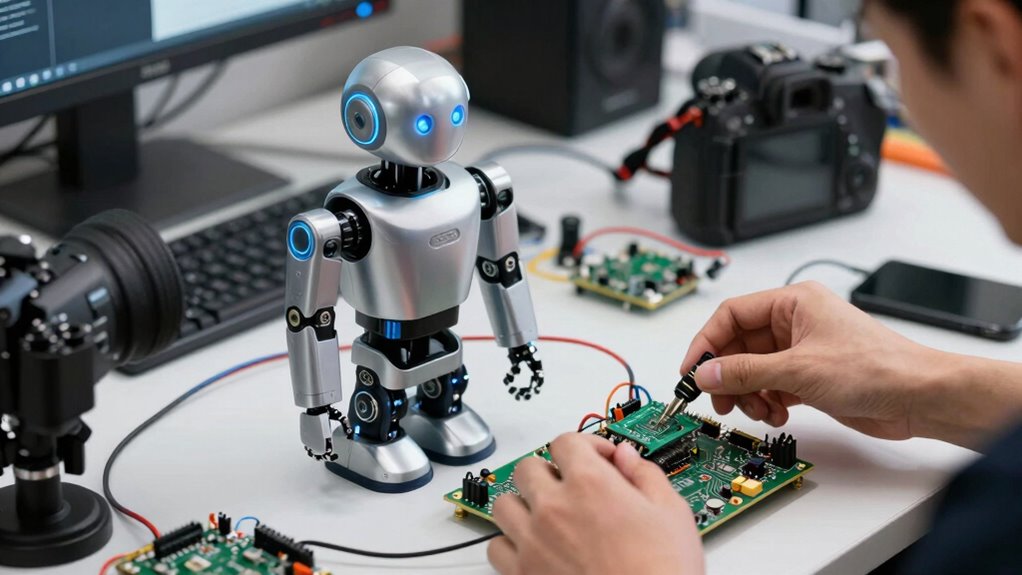
To improve your robot’s connection stability, start with hardware upgrades that strengthen the signal. Proper antenna placement is vital; position antennas vertically and high above obstacles to maximize coverage. Avoid placing antennas near metal objects or electronic interference, which can weaken signals. Additionally, consider using signal boosters or Wi-Fi extenders designed for outdoor or mobile use. These devices amplify the Wi-Fi signal, reducing dropouts and ensuring a more reliable connection. Secure antennas firmly to prevent movement that could disrupt signal quality. Upgrading to a high-gain antenna can also make a significant difference, especially in challenging environments. Understanding home soundproofing techniques can help reduce external interference that might impact your device’s performance. Recognizing the importance of wireless network security can help prevent external disruptions that compromise your connection. Additionally, ensuring proper firmware updates are applied can optimize your device’s network handling and stability. Regularly checking for hardware compatibility issues can prevent potential connectivity problems before they occur. By optimizing antenna placement and incorporating signal boosters, you give your robot a stronger, more consistent Wi-Fi connection, minimizing interruptions during operation.
Software Tips for Reliable Wi-Fi Connections in Robots

To keep your robot connected, focus on prioritizing network stability through reliable software practices. You can also optimize Wi-Fi settings to reduce interference and improve signal strength. These adjustments help guarantee your robot stays online and performs better during critical tasks. Additionally, implementing proper signal optimization techniques can further enhance Wi-Fi performance and minimize dropouts. Ensuring your network uses encryption protocols can also improve security and reduce the risk of interference from malicious sources.
Prioritize Network Stability
Ensuring a stable Wi-Fi connection is essential for robot reliability, and optimizing your network settings can make a significant difference. To prioritize network stability, start by reducing network interference. Keep your router away from devices like microwaves or cordless phones that can disrupt signals. Check your signal strength regularly; strong signals ensure consistent communication. Use a dedicated Wi-Fi channel to minimize interference from nearby networks. Position your router centrally to maximize coverage and avoid physical obstructions. Consider using a wired connection or a Wi-Fi extender if your robot struggles with weak signals. Regularly update your router’s firmware to optimize performance and security. Additionally, understanding the importance of AI ethics can help you implement secure and trustworthy network practices. Monitoring network traffic can also help identify and eliminate potential sources of interference before they impact your robot’s operation. Managing network security effectively ensures your device connections remain stable and protected. Being aware of interference sources allows you to proactively address issues that could compromise your network’s stability. Implementing signal boosting techniques can further enhance your network’s reliability, especially in challenging environments. By controlling interference sources and maintaining strong signal strength, you create a more reliable network foundation for your robot’s operations.
Optimize Wi-Fi Settings
Optimizing your Wi-Fi settings through software adjustments can substantially improve your robot’s connectivity and performance. Start by switching to a mesh network if possible, as it offers seamless coverage and reduces dead zones. Ensure your robot connects to the strongest access point, avoiding interference from other networks. Adjust your router’s channel settings to minimize congestion; often, channels 1, 6, or 11 work best. Consider installing signal boosters or range extenders to enhance coverage in weak spots. Keep firmware updated to benefit from bug fixes and performance improvements. Disable unnecessary devices or background apps that may drain bandwidth. These tweaks help create a more stable connection, reducing dropouts and allowing your robot to operate smoothly and reliably. Incorporating body-based healing techniques can also help reduce stress that might impact your device’s environment, leading to more consistent Wi-Fi performance.
How to Optimize Your Robot’s Wi-Fi Environment for Better Connectivity

A strong Wi-Fi environment is essential for your robot’s reliable operation, especially when dropouts can cause frustrating delays or malfunctions. To enhance your Wi-Fi for robot cleaning and smart home integration, start by placing your router in a central, open location away from walls and metal objects. Reduce interference from other devices like microwaves or cordless phones by switching to less crowded channels. Consider upgrading your router to a dual-band or mesh system to improve coverage throughout your home. Keep firmware updated to guarantee optimal performance. Minimize obstacles around the robot’s path and avoid thick carpets or clutter that can block signals. These steps help create a stable Wi-Fi environment, ensuring your robot stays connected and performs efficiently.
When Should You Upgrade Your Wi-Fi Network or Robot Hardware

If your robot frequently loses connection or your Wi-Fi slows down during use, it’s probably time to upgrade your network or hardware. Poor connectivity can disrupt smart home integration, making your devices less responsive or unresponsive altogether. Keep your robot’s firmware updated; manufacturers often release updates that improve stability and fix bugs. If you notice consistent issues despite updates, consider upgrading your Wi-Fi router to a more powerful model supporting the latest standards, like Wi-Fi 6. Upgrading hardware ensures better signal strength and speeds, reducing dropouts. Regularly assess your network’s performance during busy times; if problems persist, it’s a clear sign you need newer hardware. Staying current helps maintain smooth robot operation and seamless smart home integration.
Frequently Asked Questions
Can Wi-Fi Boosters Improve Robot Connectivity Effectively?
Yes, Wi-Fi boosters can improve your robot’s connectivity effectively. By enhancing signal strength, they support better smart home integration and guarantee your robots stay connected for seamless operation. This also boosts wireless security, reducing dropouts that can compromise data and control. With a reliable connection, your robots perform more efficiently, and your smart home system remains secure and responsive. Installing a booster is a simple way to upgrade your network’s performance.
Are Certain Robot Brands More Resistant to Wi-Fi Disruptions?
A stitch in time saves nine, and choosing reliable robot brands can prevent Wi-Fi headaches. Certain brands are more resistant to disruptions thanks to better hardware and consistent firmware updates. Prioritize robot brand reliability and always keep firmware up-to-date; these steps guarantee smoother connectivity. While some brands handle Wi-Fi drops better, no system is perfect, so investing in quality and maintenance pays off in the long run.
How Does Wi-Fi Interference Differ From Hardware Failure?
Wireless interference causes Wi-Fi disruptions by blocking or weakening signals, leading to connection drops or slow speeds, while hardware malfunction involves physical issues within the robot’s components, like motors or circuits. You’ll notice interference causes network problems without affecting internal hardware, whereas hardware failure results in the robot not functioning properly even with a solid Wi-Fi connection. Addressing wireless interference involves optimizing your network, but fixing hardware issues requires repairs or replacements.
Is Ethernet Connection a Viable Alternative for Robots?
Think of Ethernet as the sturdy backbone of your robot’s communication. It’s a reliable alternative, offering wired stability that minimizes interruptions. With Ethernet, you gain network redundancy, ensuring your robot stays connected even if one link fails. This consistent connection keeps your robot functioning smoothly, avoiding the pitfalls of Wi-Fi interference. So, yes, Ethernet is a solid choice for maintaining dependable, uninterrupted communication in your robotic systems.
What Are the Long-Term Impacts of Frequent Wi-Fi Dropouts on Robot Lifespan?
Frequent Wi-Fi dropouts can shorten your robot’s lifespan by accelerating battery degradation due to repeated reboot cycles and increased power use. You might also notice reduced sensor accuracy, as unstable connections cause data lag or loss. Over time, these issues strain components, leading to more frequent repairs or replacements. To extend your robot’s life, guarantee a stable network, consider wired connections, and regularly maintain your device’s hardware.
Conclusion
Think of your robot’s Wi-Fi as its lifeline—when it drops, everything stalls like a car sputtering to a halt. By understanding the causes and applying simple fixes, you can keep that connection strong and steady. Imagine your robot dancing smoothly across the floor, each step perfectly timed, thanks to a reliable Wi-Fi network. With a little care, you’ll turn those frustrating dropouts into a thing of the past, letting your robot perform at its best.