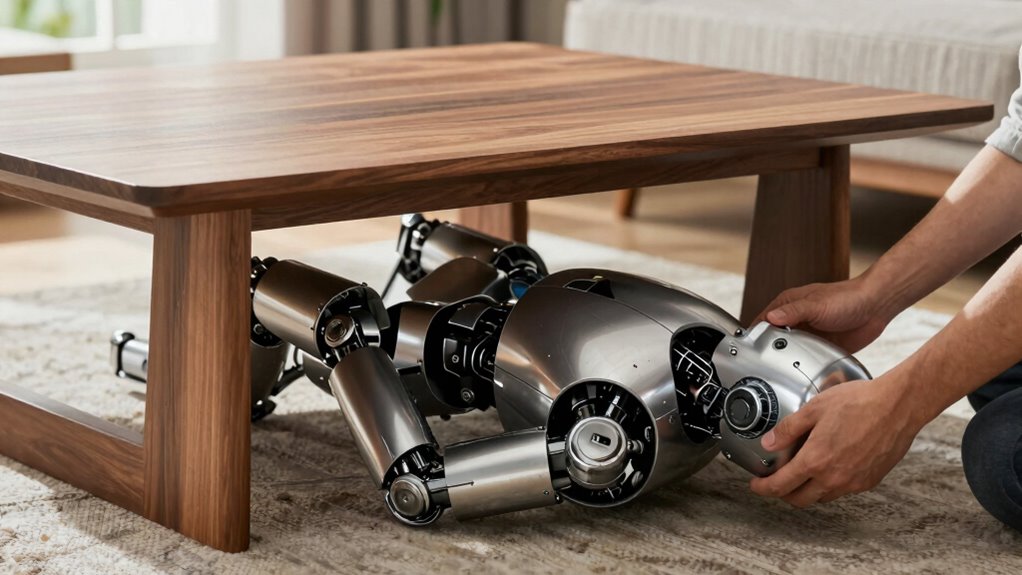

If your robot vacuum keeps getting stuck under furniture, start by clearing clutter and making sure the area is obstacle-free. Reposition low-hanging items and adjust furniture for better clearance. Use barriers or virtual walls to guide it away from tricky spots. Regularly clean sensors and recalibrate as needed to improve obstacle detection. Following these tips will help your vacuum navigate smoothly—continue exploring for more effective solutions.
Key Takeaways
- Reposition or lift furniture and rugs to create clear, low-resistance pathways for the robot vacuum.
- Adjust or remove obstacles and clutter around furniture to prevent entrapment.
- Use virtual boundaries or barriers via the app to restrict the robot from entering tight spaces.
- Recalibrate sensors and update maps to improve obstacle detection and navigation accuracy.
- Regularly clean sensors, wheels, and brushes to ensure proper movement and obstacle recognition.
Why Does My Robot Vacuum Get Stuck and How Can I Fix It?

Robot vacuums often get stuck under furniture because of their sensors’ limitations and the design of your home. Sensor malfunctions can cause your device to misjudge obstacles or fail to detect low-clearance areas, leading to frequent entrapments. Hardware issues, like faulty sensors or damaged wheels, also contribute to the problem. If your vacuum’s sensors aren’t working properly, it might not recognize furniture or open spaces, causing it to become lodged. Additionally, certain furniture shapes or cluttered spaces can confuse the hardware, making navigation difficult. To fix this, you should regularly clean the sensors and check for hardware damage. Ensuring your vacuum’s sensors are functioning correctly helps improve navigation and reduces the chances of getting stuck under furniture. Proper car protection and accessories can also help protect your furniture from damage caused by such devices, maintaining a clear and obstacle-free environment. Being aware of sensor limitations allows you to better troubleshoot and optimize your robot vacuum’s performance. Regularly updating your device’s firmware can also help address software glitches that might affect navigation.
Quick Fixes: How to Unstick Your Robot Vacuum Right Now
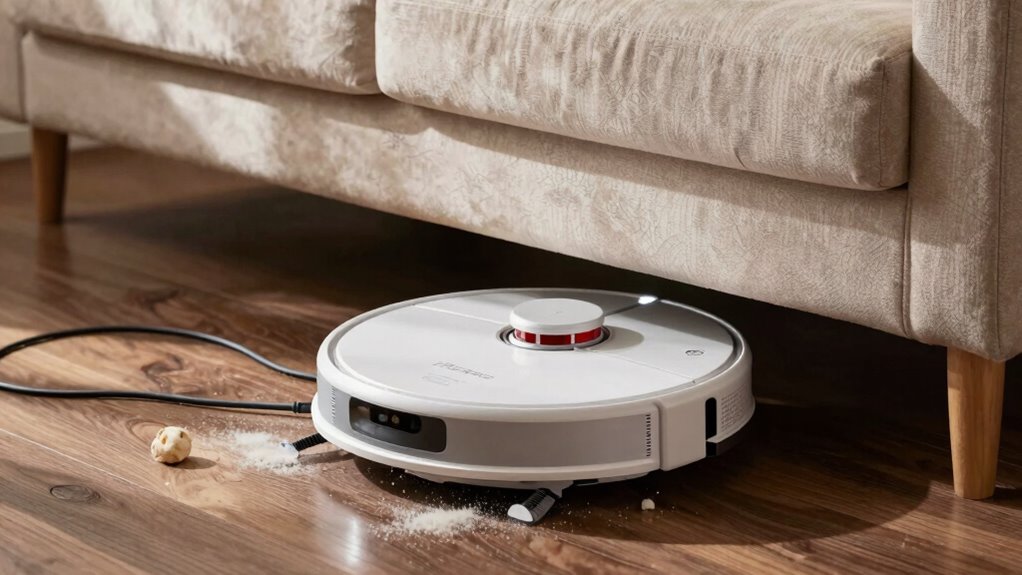
If your vacuum gets stuck under furniture, quick action can get it moving again without much hassle. First, check for debris or tangled brushes that may be be hindering movement. Clearing out obstacles allows your robot to resume cleaning smoothly. Regular robot maintenance, like cleaning sensors and wheels, helps prevent future issues. Adjust your cleaning schedules to avoid busy times when furniture might be shifted or cluttered. Here are quick fixes to try immediately:
Quickly fix a stuck vacuum by clearing debris, repositioning furniture, and performing regular maintenance.
- Remove tangled hair or strings from brushes
- Lift or reposition low-hanging furniture or rugs
- Manually nudge the robot free, then restart it
- Clear nearby clutter that could block sensors
- Check for dust buildup on wheels and sensors
- Proper maintenance can significantly improve your robot’s performance and reduce getting stuck. Additionally, understanding how to manage household clutter can minimize obstacles that cause your robot to get stuck in the first place. Regularly inspecting and cleaning robot components can also extend its lifespan and ensure smoother operation. Incorporating landscaping strategies around your furniture can create clear pathways and prevent obstructions for your robot vacuum. Being aware of regional flavors and integrating them into your home environment can also help create a more organized and inviting space. These simple steps save time and keep your robot running efficiently without blocking your entire space.
Check and Optimize Your Robot’s Navigation Settings
Take a moment to review your robot’s obstacle sensors and make sure they’re clean and properly positioned. Next, refine your navigation maps to better reflect your home’s layout and avoid tricky spots. These adjustments can help prevent your robot from getting stuck under furniture again. Incorporating interactive murals or digital frames into your space can also serve as visual cues to assist your robot’s navigation. Additionally, optimizing your home layout by rearranging furniture or creating clear pathways can significantly improve your robot’s movement efficiency. Ensuring your robot is configured with an appropriate navigation protocol can further enhance its ability to detect obstacles accurately. To support optimal performance, consider upgrading your robot’s navigation sensors with higher-quality components, similar to how performance parts like flywheels and engine upgrades enhance vehicle efficiency.
Adjust Obstacle Sensors
Obstacle sensors are essential for your robot’s ability to navigate smoothly, but they can sometimes need fine-tuning to prevent issues like getting stuck under furniture. Proper sensor calibration enhances obstacle detection accuracy, reducing false alarms or missed objects. To optimize your robot’s sensors, start by checking their placement and making sure they’re clean and unobstructed. Adjust the sensitivity settings if possible to better distinguish between furniture and open space. Regularly update the firmware to improve obstacle detection algorithms. Test the sensors in different environments to ensure consistent performance. Finally, consider repositioning or recalibrating sensors if your robot still struggles with navigation. Sensor placement plays a crucial role in overall obstacle detection effectiveness.
- Clean sensor lenses regularly
- Adjust sensitivity settings in the app
- Reposition sensors for better coverage
- Run calibration routines as recommended
- Test obstacle detection frequently
Additionally, performing these steps periodically helps maintain sensor accuracy over time.
Ensuring your sensor calibration is accurate can significantly improve your robot’s ability to navigate complex environments. Regularly inspecting and maintaining sensor performance helps prevent navigation issues.
Incorporating proper maintenance routines can also extend the lifespan of your sensors and ensure reliable operation.
Refine Navigation Maps
Refining your robot’s navigation maps is essential for smooth and efficient cleaning. Start by reviewing its visual mapping to identify areas where the map may be inaccurate or incomplete. Use your robot’s app to update or rebuild the map if necessary, ensuring it accurately reflects your space. Sensor calibration is also critical; properly calibrated sensors improve obstacle detection and prevent the robot from missing or misjudging furniture. Run calibration routines as recommended by your manufacturer to enhance navigation precision. Regularly checking and optimizing these settings helps your robot avoid getting stuck under furniture and improves overall performance. Additionally, understanding navigation map accuracy can help you troubleshoot and improve your robot’s performance. With clear, accurate maps and well-calibrated sensors, your robot will navigate more confidently and clean more effectively. Periodically inspecting the Sensor calibration can prevent misjudgments caused by environmental changes or dust buildup. Keeping the navigation system updated ensures your robot adapts to any layout changes or updates in software, further reducing the chances of getting stuck. Being aware of environmental factors that can affect sensor performance is also beneficial for maintaining optimal navigation. Moreover, monitoring software updates can help ensure your robot benefits from the latest improvements in navigation algorithms.
Clear Clutter and Rearrange Furniture for Better Movement
Clearing clutter and rearranging furniture can make a significant difference in preventing your robot from getting stuck. When you optimize furniture arrangement, you create smoother pathways for your robot to navigate. Clutter removal is essential—remove loose cords, small objects, and unnecessary items that could obstruct movement. Adjust furniture placement to avoid tight corners or narrow passages that trap your robot. Consider raising or lowering furniture legs if possible, to create more clearance. Keep frequently traveled areas open and free of obstacles. Regularly inspecting and repositioning furniture ensures your robot can move efficiently without delays. Maintaining clear pathways is crucial for smooth robot operation. Additionally, understanding environmental layout can help you identify potential problem areas before they cause issues. Conducting periodic home assessments can reveal new obstacles as your living space changes. A tidy, well-thought-out environment not only prevents stuck incidents but also promotes a more effective cleaning routine, especially when combined with proper furniture arrangement techniques. Incorporating measurement tools can help you accurately gauge space and optimize your living area for robot navigation.
Use Virtual Walls and Barriers to Keep Your Robot on Track
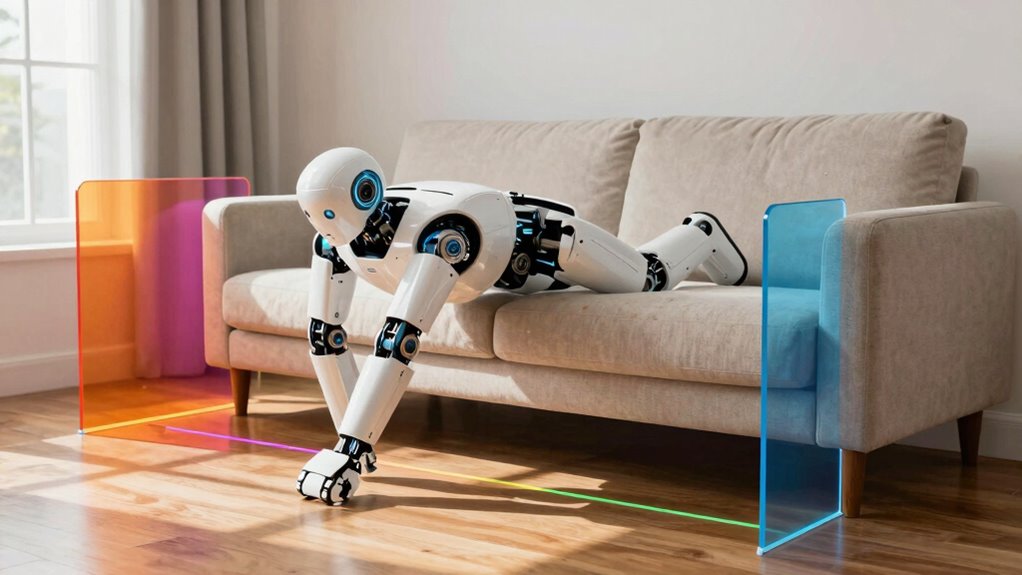
Using virtual walls and barriers provides an effective way to guide your robot and prevent it from entering areas where it might get stuck. Virtual walls act as invisible fences, directing your robot along safe paths and away from tricky spots. Setting up barriers is simple: activate the virtual wall feature on your robot’s app and place the virtual boundary where needed. This helps keep your robot within designated zones, avoiding furniture and clutter that could cause entrapment. Additionally, living a faith-filled life encourages patience and diligence as you set up and adjust these barriers to ensure your robot’s safety.
Troubleshooting: When Your Robot Keeps Getting Stuck and What to Do
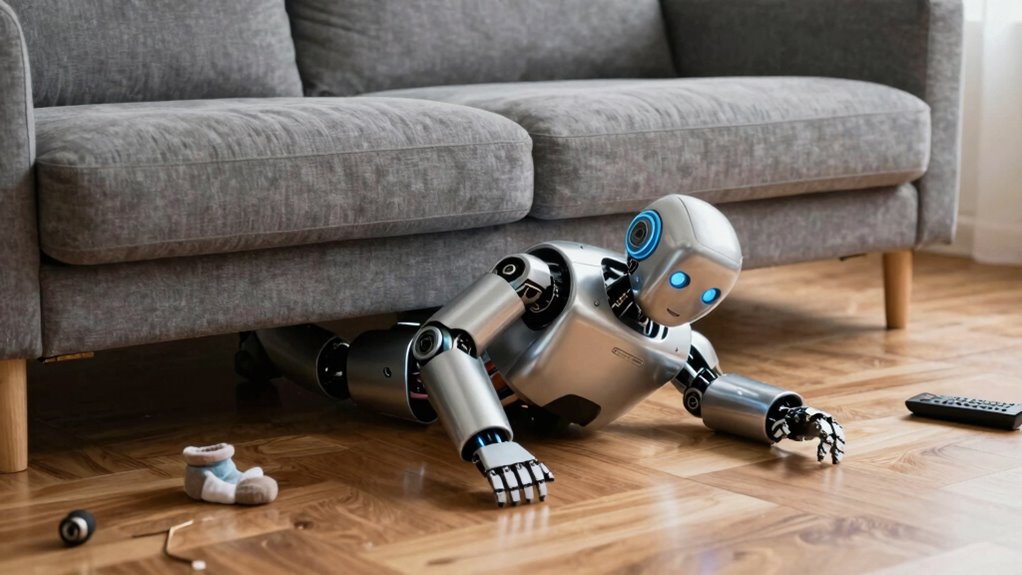
If your robot keeps getting stuck, start by identifying common obstructions like cords or small objects. Next, adjust your robot’s settings or virtual barriers to help it navigate better. Regular cleaning of the robot and its sensors can also prevent future issues.
Identify Common Obstructions
Many common obstructions underneath furniture can cause your robot to get stuck repeatedly. Identifying these obstacles helps prevent recurring issues. Check for:
- Loose area rugs that bunch up or curl at edges
- Pet bowls left in pathways
- Small objects like toys or cords
- Furniture legs or uneven flooring
- Clutter or loose debris on the floor
These items often catch your robot’s sensors or trap its wheels. For example, a rug edge might curl, making it hard to navigate, or pet bowls might be placed awkwardly in its path. Clearing these common obstructions keeps your robot moving smoothly. Regularly inspect these areas, especially around furniture, to spot potential problems early before they cause repeated getting stuck.
Adjust Robot Settings
Adjusting your robot’s settings can often resolve issues with it getting stuck under furniture. Focus on navigation optimization to improve how your robot navigates tight spaces. Many robots allow you to modify the sensitivity of sensors or set virtual boundaries, helping it recognize obstacles more accurately. Check the app or control panel for options like low-clearance mode or adjustable height settings, which can prevent the robot from attempting to enter areas where it’s likely to get stuck. Updating the firmware or recalibrating the sensors can also enhance navigation. These adjustments help your robot better interpret its environment, reducing the chances of it getting trapped under furniture. Properly optimizing your robot’s settings ensures smoother cleaning sessions and minimizes the need for manual intervention.
Maintain Regular Cleaning
Regularly cleaning your robot and its sensors is essential for preventing it from getting stuck. Dust prevention keeps sensors clear, ensuring smooth navigation and reducing the risk of obstructions. Maintaining good air quality around your robot also helps prevent dust buildup that can interfere with its movement. To keep things running smoothly, consider these steps:
- Empty the dustbin frequently to avoid clogging
- Wipe sensors and wheels with a soft cloth
- Remove hair, fibers, and debris from brushes and wheels
- Keep the area free of clutter and loose cords
- Vacuum or dust nearby surfaces regularly
Frequently Asked Questions
Can I Prevent My Robot From Getting Stuck in the First Place?
Yes, you can prevent your robot from getting stuck by enabling obstacle detection and improving floor planning. Make sure sensors are clean and functioning properly, and map out your space to identify tight spots or hazards. Regularly update your robot’s navigation software and remove clutter that could cause entrapment. These steps help your robot navigate smoothly, reducing chances of getting stuck under furniture or in tricky areas.
What Safety Precautions Should I Take During Maintenance?
During maintenance, you should prioritize fire safety by unplugging the robot and avoiding exposed wires. Always wear insulated gloves to prevent electrical hazards, and verify the area is dry to avoid shocks. Keep a fire extinguisher nearby, and work in well-ventilated spaces. Regularly check for damaged cords or components, and never attempt repairs with wet hands. These precautions protect you and ensure safe, effective maintenance.
How Often Should I Update My Robot’s Software?
Think of your robot’s software updates as fuel for its journey. You should update the software regularly, ideally every one to three months, to keep it running smoothly and securely. Frequent update intervals guarantee your robot stays ahead of bugs and new features, much like a well-tuned engine. Don’t wait too long—stale software can cause mishaps, so keep those updates flowing to maintain peak performance.
Are There Specific Carpets or Rugs That Cause More Issues?
Certain carpet types and rug fibers can cause more issues for your robot vacuum. Thick shag carpets and high-pile rugs tend to trap the robot more often, making navigation difficult. Natural fibers like wool can also be more challenging than synthetic options like nylon or polyester. To avoid problems, choose low-pile carpets and smooth rugs, and regularly clear debris from your robot’s sensors and brushes.
How Do I Reset My Robot to Fix Navigation Problems?
You can troubleshoot navigation issues by performing a navigation reset on your robot. To do this, turn off the robot, locate the reset button or follow the manufacturer’s instructions for a soft reset. This process clears the current navigation data, helping your robot relearn its environment. After resetting, restart the device and run a navigation reset if needed to guarantee smooth movement around furniture and obstacles.
Conclusion
If your robot keeps getting stuck, don’t give up—think of it as a tiny hero trapped in a maze. With a few quick tweaks like clearing clutter and adjusting navigation settings, you can turn your robot into a tireless explorer. Remember, a little effort now prevents it from becoming a permanent fixture under your furniture. Keep at it, and soon your vacuum will glide smoothly, conquering every corner like a champion in a clean house Olympics.