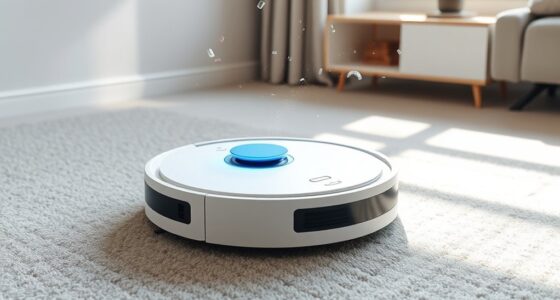

Robot vacuums can be pet-safe for small animals if they come with reliable sensors, quiet operation, and sturdy build quality. These features help prevent accidents, such as bumping into your pets or falling down stairs, and reduce stress during cleaning. Proper maintenance of sensors and brushes also boosts safety. To find the best options and learn how to choose a pet-friendly vacuum, there’s more to discover below.

Get cleaning gear delivered free with Prime
- Fast, free delivery on millions of items
- Prime Video, Amazon Music and more included
- Member-only deals all year
Key Takeaways
- Robot vacuums with reliable sensors prevent collisions and falls, reducing injury risk to small pets.
- Quiet operation minimizes stress and anxiety for small animals during cleaning sessions.
- Durable build quality ensures consistent pet hair pickup and prevents malfunctions around pets.
- Regular maintenance of sensors, brushes, and filters maintains safety features and optimal performance.
- Choosing models with proven safety features helps protect small animals from accidents or harm.
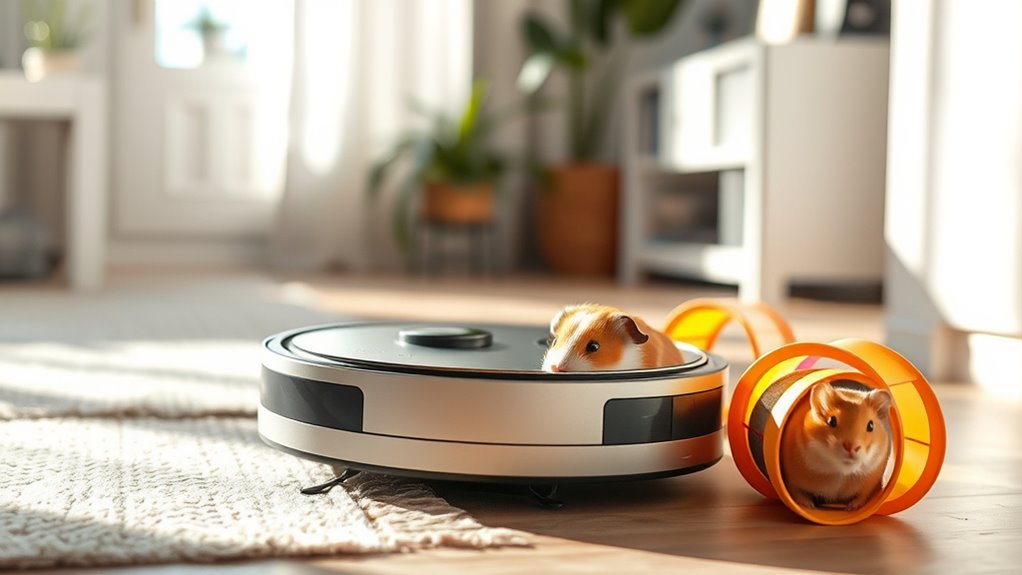
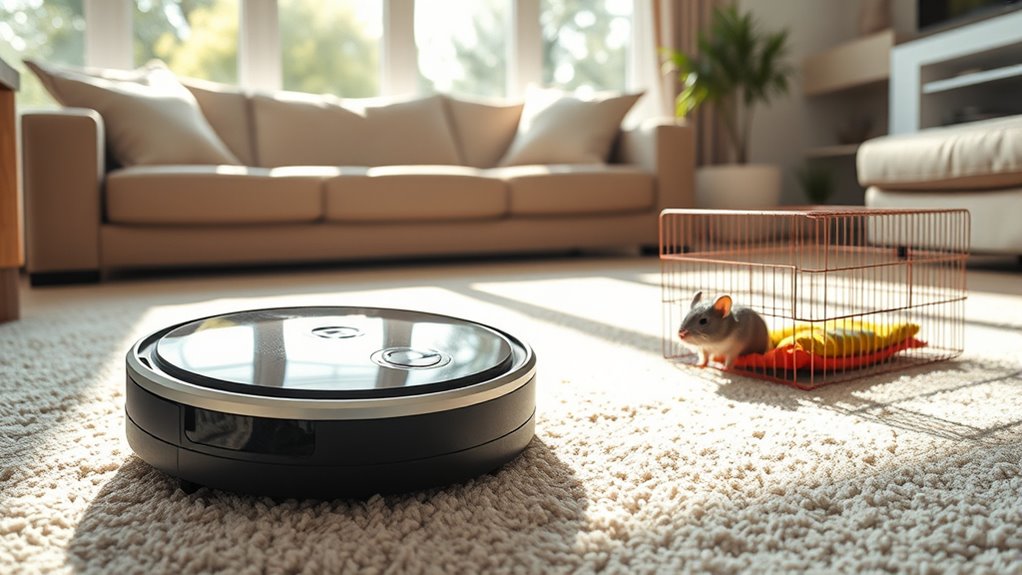
If you have small animals like hamsters, guinea pigs, or rabbits, finding a vacuum that’s safe for them is essential. Small pets are naturally curious and often roam freely, making them vulnerable if a vacuum isn’t designed with their safety in mind. When considering a robot vacuum, you want one that offers good robot vacuum durability, guaranteeing it can handle regular use without breaking down or causing harm. A durable design means fewer worries about sudden malfunctions, especially if your pets tend to knock things over or nibble on cords. Equally important is pet hair pickup efficiency, because pet fur can quickly accumulate and clog your vacuum, reducing its performance and increasing cleaning time. A robot that excels at pet hair pickup efficiency will clean more thoroughly and reduce the chances of loose fur circulating in your home, which is essential for small animals with sensitive respiratory systems.
One of the biggest concerns with robot vacuums around small pets is the potential for accidents or injuries. Many models come with sensors to prevent collisions and falls, but you should always verify that these sensors are reliable. A well-made robot vacuum with high-quality sensors minimizes the risk of bumping into your pets or falling down stairs, which is a critical safety feature. Additionally, choosing a vacuum with a quiet operation can help keep your small animals calm and less stressed during cleaning. Loud noises can startle tiny pets and cause anxiety, so opt for models known for their quiet performance. Regular maintenance of the vacuum’s sensors and brushes contributes significantly to robot vacuum safety, ensuring consistent protection for your pets.
Durability plays a key role in guaranteeing your robot vacuum maintains its pet hair pickup efficiency over time. Cheaper models might struggle with thick or matted fur, leading to ineffective cleaning and more frequent maintenance. Investing in a higher-quality vacuum with sturdy brushes and robust filters ensures consistent performance, which is fundamental for homes with small animals that shed frequently. Also, consider the vacuum’s ability to navigate around furniture and tight corners; a durable, well-designed unit will adapt better to your home’s layout, reaching all those tricky spots where pet hair and debris tend to hide.
Ultimately, finding a robot vacuum that balances durability, pet hair pickup efficiency, and safety features makes daily cleaning less stressful. With the right choice, you can keep your small animals’ environment clean and safe without worrying about accidents or compromised performance. Regular maintenance and choosing models known for their longevity will help you get the most out of your investment, ensuring your home remains fur-free and your pets stay secure and comfortable.
pet-safe robot vacuum with sensors
As an affiliate, we earn on qualifying purchases.
As an affiliate, we earn on qualifying purchases.
Frequently Asked Questions
Can Robot Vacuums Detect and Avoid Small Pets Automatically?
You might wonder if robot vacuums can detect and avoid small pets automatically. Many models now feature pet allergy mitigation and smart sensors for robot vacuum customization, helping them recognize and steer clear of pets. While not foolproof, these advanced features increase the chances of avoiding small animals, keeping both your pet safe and your home cleaner. Always check your vacuum’s capabilities to guarantee it suits your pet’s needs.
Are There Specific Features That Make Robot Vacuums Safer for Small Animals?
You should look for robot vacuums with pet-safe features, like gentle brushes and quiet operation, to protect small animals. Animal detection sensors are vital—they alert the vacuum to stop or change direction when pets are nearby, preventing accidents. These features guarantee your pets stay safe while the vacuum cleans efficiently. Choosing a model with advanced detection and gentle cleaning modes makes a big difference for small animals’ safety.
How Often Should I Clean or Maintain My Robot Vacuum to Ensure Pet Safety?
To keep your robot vacuum safe for small animals, you should follow cleaning frequency guidelines and schedule routine maintenance regularly. Check brushes, filters, and sensors weekly to prevent debris buildup that could harm pets. Empty the dustbin after each use, and inspect for tangled hair or objects. Regular upkeep minimizes risks, guarantees efficient operation, and keeps your pets safe from potential hazards caused by neglected maintenance.
Do Robot Vacuums Emit Noise Harmful to Small Pets During Operation?
Imagine a whisper in a quiet room; that’s what you want your robot vacuum’s noise levels to be. While most vacuums emit sounds that are unlikely to harm your small pets physically, loud noises can trigger pet anxiety. To keep your furry friends comfortable, choose a model with low noise levels, and observe their reactions during cleaning. A calm environment benefits both your pets and your cleaning routine.
Are There Particular Brands Known for Pet-Safe Robot Vacuum Models?
If you’re looking for a pet-safe robot vacuum, focus on brands with strong reputations and pet-specific features. Brands like iRobot, Shark, and Eufy often include quieter motors and gentle brushes to minimize pet stress. You should check for models with adjustable suction and noise levels, ensuring your small animals feel safe during cleaning. Prioritizing brand reputation helps you find a reliable, pet-friendly option that keeps your home tidy without upsetting your pets.
quiet robot vacuum for small pets
As an affiliate, we earn on qualifying purchases.
As an affiliate, we earn on qualifying purchases.
Conclusion
So, next time you’re worried about your tiny furball or feathered friend, remember that robot vacuums are designed with pet safety in mind. Ironically, the device meant to keep your home spotless might actually be the safest playmate for your small animals—unless they decide to chase it around! Just keep an eye, and you’ll find that these little cleaning machines can be surprisingly pet-friendly, proving that sometimes, technology really does have your pets’ best interests at heart.
As an affiliate, we earn on qualifying purchases.
robot vacuum with fall prevention sensors
As an affiliate, we earn on qualifying purchases.
As an affiliate, we earn on qualifying purchases.
Halloween Picks
halloween
As an affiliate, we earn on qualifying purchases.