
To avoid overheating, use strategic natural ventilation like opening windows for cross-breeze and employing fans to boost airflow. Keep exhaust fans running in kitchens and bathrooms to remove excess heat and humidity. Regularly maintain your ventilation system by cleaning filters, inspecting ductwork, and replacing filters to guarantee ideal airflow and air quality. Upgrading to modern, smart ventilation systems can further prevent hot spots and keep your home cooler. Explore more tips to keep your space comfortable and energy-efficient.
Key Takeaways
- Open windows strategically for cross-ventilation to replace warm indoor air with cooler outside air.
- Use fans alongside natural ventilation to enhance airflow and reduce indoor heat buildup.
- Regularly clean and maintain vents and filters to ensure optimal airflow and prevent hot spots.
- Upgrade to modern ventilation systems with smart controls for automatic airflow management and overheating prevention.
- Keep exhaust fans in kitchens and bathrooms operational to remove excess heat and humidity effectively.

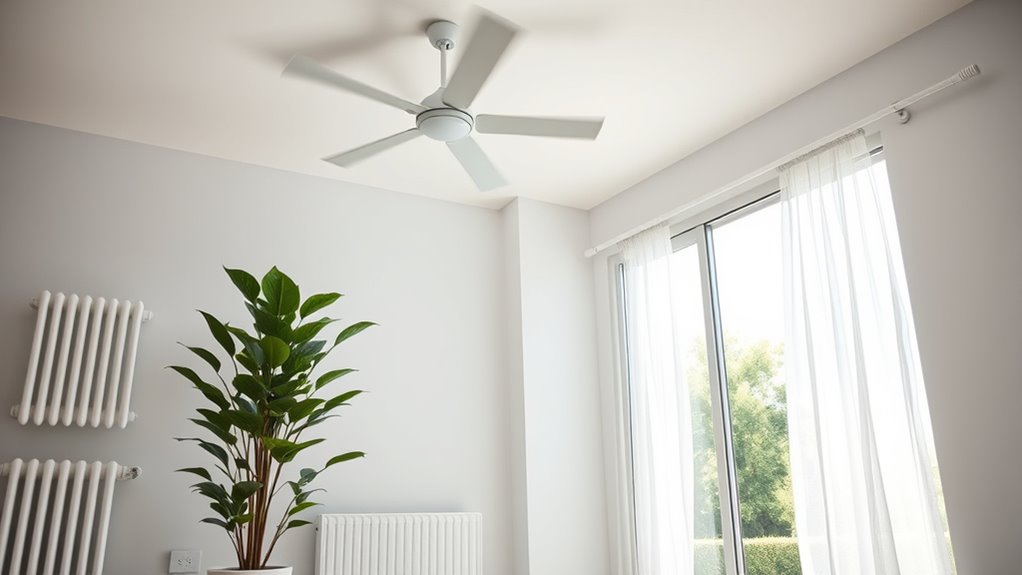
Are you making the most of your home’s ventilation? If you’re concerned about overheating, it’s crucial to focus on effective airflow optimization. Proper airflow ensures that hot air doesn’t get trapped inside your living spaces, making your home more comfortable during warmer months. To achieve this, you need to pay attention to how air moves through your home. Open windows strategically to create cross-ventilation, allowing cooler outside air to replace warm indoor air. Using fans in combination with natural ventilation can boost airflow, especially in rooms that tend to heat up quickly. Additionally, consider placing exhaust fans in kitchens and bathrooms to remove excess heat and humidity, which can contribute to overheating. By improving airflow, you’re helping your home breathe better, reducing the need for air conditioning and lowering energy costs.
Equally important is regular ventilation system maintenance. Over time, dust, debris, and even mold can build up in your vents and filters, restricting airflow and diminishing your system’s efficiency. Neglecting maintenance can lead to uneven heating and cooling, causing certain areas of your home to overheat while others remain cooler. To prevent this, schedule routine inspections and cleanings of your ventilation system. Replacing filters every few months ensures that air flows freely and maintains good indoor air quality. Check for blockages or leaks in ductwork, which can hinder airflow and cause hot spots. A well-maintained ventilation system not only keeps the air circulating properly but also extends the lifespan of your equipment. Regular maintenance also helps prevent issues like improper airflow, which can lead to overheating and higher energy bills. Remember, a clean and efficient system works better at dissipating heat, helping you avoid overheating issues.
In addition to manual maintenance, consider upgrading your ventilation system if it’s outdated or underperforming. Modern systems often come with features that optimize airflow automatically, adjusting to your home’s needs throughout the day. These systems can incorporate smart controls to enhance ventilation during peak heat times, reducing the strain on your cooling systems and keeping temperatures in check. Properly maintaining and upgrading your ventilation system is a proactive step toward avoiding overheating and creating a more comfortable indoor environment. By focusing on airflow optimization and regular system upkeep, you take control of your home’s climate, making hot days much more manageable. Ultimately, good ventilation isn’t just about comfort; it’s about protecting your home’s structure and your health, so don’t overlook these critical steps.

VIVOSUN Smart Grow Tent Kit 2.7 × 2.7ft WiFi-Integrated Automatic Complete Grow System with Full Spectrum LED Grow Light 150W, Efficient Ventilation System with GrowHub E42A+ Controller
Smart Grow Tent Kit: A complete system that includes everything you need for smart, efficient everyday indoor growing;…
As an affiliate, we earn on qualifying purchases.
As an affiliate, we earn on qualifying purchases.
Frequently Asked Questions
How Often Should Ventilation Systems Be Inspected?
You should schedule an inspection of your ventilation system at least once a year. Following a maintenance schedule, regular inspection frequency guarantees your system operates efficiently and prevents overheating. If you notice reduced airflow, strange noises, or increased energy bills, it’s a good idea to examine it sooner. Consistent inspections help catch issues early, extend system life, and maintain proper ventilation, especially during peak usage periods.
Can Indoor Plants Improve Ventilation?
Indoor greenery can improve ventilation by boosting air quality and adding fresh oxygen to your space. When you include plants, they naturally filter pollutants and increase humidity, making the air feel fresher and healthier. Keep in mind, though, that plants alone won’t fully ventilate a room, but they do complement proper ventilation practices. So, adding indoor greenery is a great way to enhance overall air quality and create a more comfortable environment.
What Are Signs of Poor Ventilation?
Think of poor ventilation as a clogged artery in your home’s health. You might notice stuffy air, persistent odors, or humidity that won’t go away—all signs of compromised air quality. Windows won’t open easily, or you feel a constant dampness. These clues show ventilation isn’t working effectively, leaving indoor air stagnant and unhealthy. Addressing these signs improves air quality and restores proper airflow, making your space feel fresh and comfortable again.
How Do Weather Conditions Affect Ventilation?
Weather conditions considerably impact ventilation, affecting your ability to maintain proper airflow and humidity control. On hot, humid days, you might need to enhance airflow optimization by opening windows or using fans to prevent overheating and mold growth. Cold weather can limit ventilation, so you should balance insulation with adequate airflow. Rain and wind can disrupt natural ventilation, prompting you to rely more on mechanical systems to keep indoor air fresh and humidity levels stable.
Are There Eco-Friendly Ventilation Options Available?
You can choose eco-friendly ventilation options like green ventilation systems or solar exhaust fans. For instance, a recent case study showed a school retrofitting with solar exhaust fans reduced energy use by 30% while improving airflow. These solutions harness renewable energy, minimize environmental impact, and cut costs. By installing solar exhaust fans or integrating green ventilation, you actively contribute to sustainability and make certain of better indoor air quality without harming the planet.

Amico 8 inch Kitchen Exhaust Fan with Remote, 686 CFM High Airflow Extractor Fan, Energy Efficient 29W EC Motor Ventilation Fan for Garage, Attic & Greenhouse, 9-Speed, Timer, Low Noise 50dB,FCC,Black
【Massive 686 CFM Exhaust Power】Powered by a high-speed 2873 RPM motor, this kitchen exhaust fan rapidly expels intense…
As an affiliate, we earn on qualifying purchases.
As an affiliate, we earn on qualifying purchases.
Conclusion
By implementing these ventilation tips, you can keep your space cool and comfortable. Some believe that natural airflow alone can prevent overheating, but studies show that active ventilation methods, like fans and vents, considerably improve air circulation. Trusting in simple strategies isn’t enough—combining them with proper ventilation ensures a cooler environment. So, don’t just rely on theory; put these tips into action to truly beat the heat and enjoy a breezier, more comfortable space.

Amico 10" Shutter Exhaust Fan with Remote, 9-Speed Energy Efficient & Quiet 13W DC Motor 1000 CFM Wall Mount Ventilation Fan for Garage,Greenhouse,Attic & Chicken Coop,Plug & Play,8-Hour Timer,FCC
【Pays for Itself via 13W DC Motor】 Cut your utility bills by 76% compared to outdated AC models….
As an affiliate, we earn on qualifying purchases.
As an affiliate, we earn on qualifying purchases.

Replacement Filter Cartridge for FNATR Ventilation System – 5-Stage Filtration with Activated Carbon, G4, F9, and Dual H13 HEPA Filters, Pack of 2
Compatibility: Specifically designed for the FNATR Ventilation System (V1).
As an affiliate, we earn on qualifying purchases.
As an affiliate, we earn on qualifying purchases.