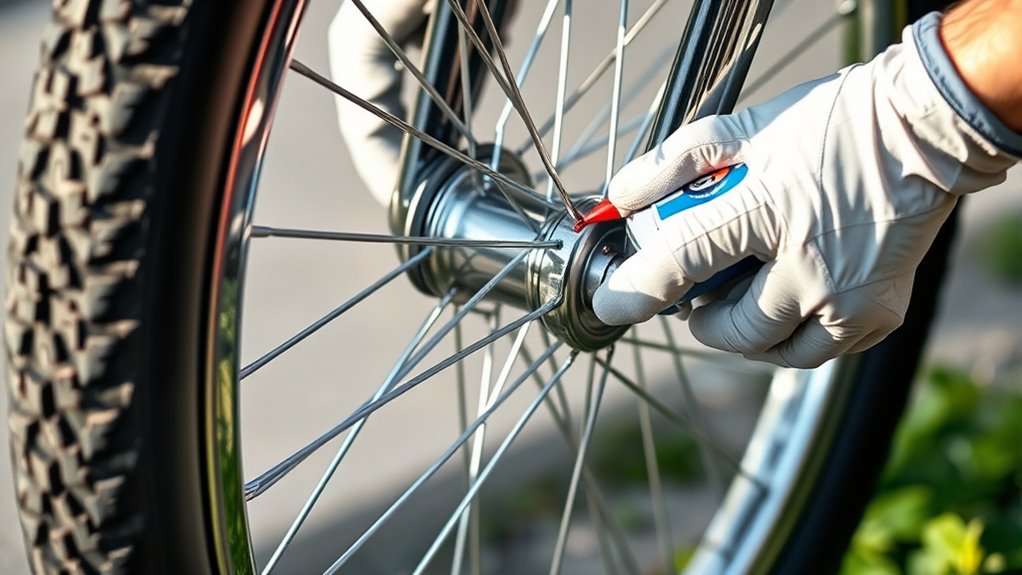

To keep your wheels running smoothly, regularly clean off dirt, grime, and debris using a soft brush and suitable cleaning solutions. Make sure to dry all parts thoroughly to prevent rust. Proper lubrication is key—apply a high-quality grease carefully to reduce friction and wear on the bearings, spinning the wheel afterward to distribute the lubricant evenly. Consistent maintenance like this helps extend your wheels’ lifespan and prevents costly repairs; you’ll find more tips if you continue.
Key Takeaways
- Use a soft brush or cloth to remove dirt and grime before applying cleaning solutions.
- Choose appropriate cleaning agents that effectively break down grease without damaging wheel components.
- Dry all wheel parts thoroughly after cleaning to prevent rust and corrosion.
- Apply high-quality lubricant evenly to wheel bearings using a grease gun or small applicator.
- Regularly inspect wheels for damage and reapply lubrication to ensure smooth, efficient operation.
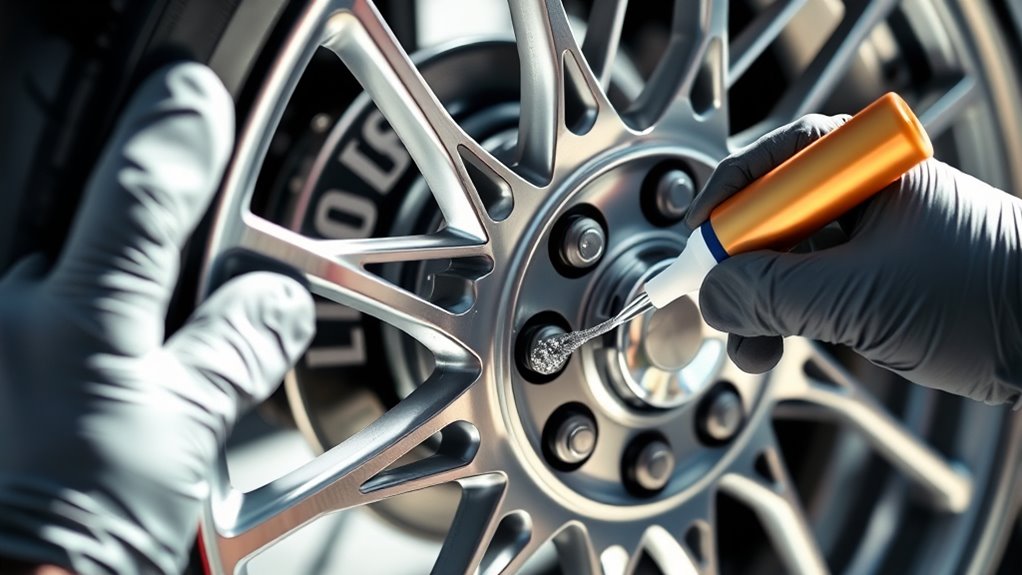
Have you ever wondered why your wheels don’t roll as smoothly as they should? The answer often lies in proper wheel maintenance and how well you keep everything lubricated. Over time, dirt, grime, and debris can accumulate around the wheel bearings, making them less efficient and causing rough or uneven movement. Regular cleaning combined with effective lubrication techniques can dramatically improve wheel performance, extend their lifespan, and prevent costly repairs down the line.
Proper wheel maintenance and lubrication are key to smooth, efficient movement and longer lifespan.
To start, you need to understand that cleaning your wheels isn’t just about removing visible dirt. It’s about thoroughly clearing out the grime that can hide in hard-to-reach spots, especially around bearings and axles. Use a soft brush or cloth to wipe away loose dirt, then apply a suitable cleaning solution that breaks down grease and grime. Be gentle, but thorough. Once you’ve cleaned the surface, make sure to dry everything completely. Moisture left behind can lead to rust or corrosion, which only complicates wheel maintenance further. Proper cleaning is essential for maintaining the integrity of wheel components and preventing corrosion.
When it comes to lubrication techniques, this step is essential for ensuring your wheels spin freely. Proper lubrication reduces friction and prevents wear on moving parts. You’ll want to apply a high-quality lubricant specifically designed for wheel bearings. Before doing so, check the manufacturer’s instructions—some bearings require specific types of grease or oil. Apply the lubricant carefully using a grease gun or a small applicator, making sure it reaches the inner parts of the bearing without overdoing it. Too much grease can attract dirt, which defeats the purpose of your cleaning efforts, so use just enough to coat the moving parts evenly.
As you lubricate, keep an eye out for signs of damage or wear, like cracks or excessive play in the wheel. If you notice any issues, it’s best to address them immediately rather than risking further damage. Also, when you’re finished, spin the wheel a few times to ensure the lubricant distributes evenly and the movement feels smooth. Regularly repeating this process—cleaning first, then applying fresh lubrication—helps maintain superior wheel function and prevents unnecessary strain on other components.
Frequently Asked Questions
How Often Should Wheels Be Cleaned for Optimal Performance?
You should clean your wheels at least once a month to maintain ideal performance. Regular cleaning helps prevent dirt buildup that can affect wheel alignment and tire pressure. After cleaning, check your tire pressure and inspect for any uneven wear or damage. Keeping your wheels clean and well-maintained ensures smooth handling, extends tire life, and improves overall safety on the road. Don’t forget to recheck your wheel alignment periodically for the best results.
What Types of Lubricants Are Best for Different Wheel Materials?
You should choose lubricants based on your wheel material to guarantee ideal performance. For metal wheels, use lightweight oils that provide good lubrication without attracting dirt. Plastic wheels benefit from silicone-based lubricants, which reduce friction without damaging the material. Always check lubricant compatibility with your wheel material to prevent damage or wear. Applying the right lubricant helps maintain smooth operation and extends your wheels’ lifespan effectively.
Can Improper Cleaning Damage Wheel Bearings?
Think of your wheel bearings as the heart of your car’s movement. If you neglect proper cleaning, it’s like ignoring a routine check-up — wheel corrosion and brake dust buildup can seep in, causing damage. Improper cleaning can strip away protective layers, accelerate wear, and ultimately damage your wheel bearings. Stay vigilant, clean thoroughly, and use the right lubricants to keep your bearings healthy, preventing costly repairs down the road.
Are There Eco-Friendly Cleaning Options for Wheels?
Yes, you can choose eco-friendly cleaners for your wheels. Look for products labeled as eco-friendly cleaners, which are designed to be gentle on the environment while effectively removing dirt and grime. Additionally, consider biodegradable lubricants for any lubrication needs, as they break down naturally without harming ecosystems. These options help you maintain your wheels responsibly, reducing your environmental impact without sacrificing cleaning power or performance.
How Do Temperature Variations Affect Wheel Lubrication?
Temperature variations can substantially impact wheel lubrication by affecting temperature stability and lubricant viscosity. When temperatures rise, lubricants thin out, reducing their effectiveness and increasing wear. Conversely, cold temperatures cause lubricants to thicken, hindering smooth movement. To prevent issues, choose lubricants designed for a wide temperature range and guarantee proper application, maintaining consistent temperature stability for ideal wheel performance and longevity.
Conclusion
Keep your wheels clean and well-lubricated to prolong their performance and prevent problems. Consistent care creates a cycle of smooth sailing, sparking satisfaction and safety every time you step on the pedal. Don’t delay, dedicate time, and make maintenance a priority. Your wheels will thank you with unwavering reliability and unrivaled ride quality. Remember, proper preservation promotes powerful performance—protect your wheels today for a smoother, safer tomorrow.