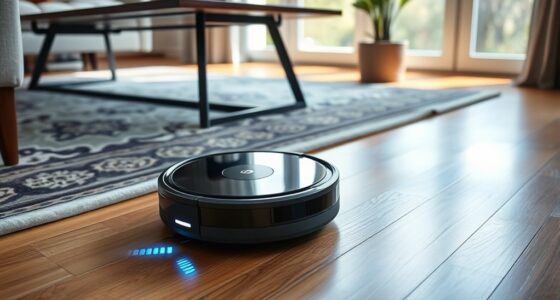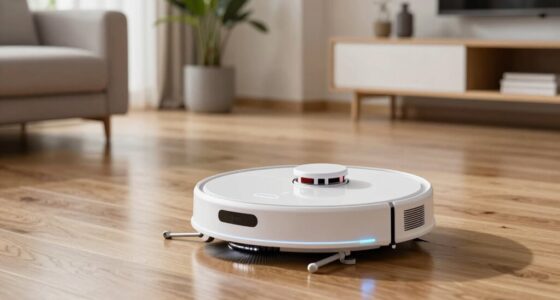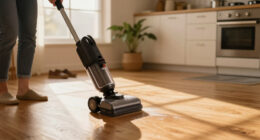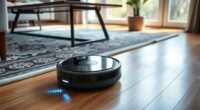
Robot vacuums with interactive mapping apps let you see a live floor plan of your home, draw no-go zones, target specific rooms, and watch cleaning happen in real time — and the gap between a good mapping app and a frustrating one is bigger than most buyers expect. The Roborock Qrevo 2 Pro takes the top spot for its polished, feature-rich app experience paired with strong hardware, while the iRobot Roomba 415X suits buyers who want raw suction power and an AI obstacle system without learning a complicated interface, and the ILIFE A30s is a standout budget-friendly pick for hard floors and basic home mapping. The main tradeoffs in this category come down to map precision (LiDAR vs. camera-based), whether the app supports room customization or just shows a cleaning path, and how much you’re willing to pay for a self-emptying dock that keeps the whole system hands-off. Some cheaper models advertise app control but deliver clunky maps and unreliable zone drawing — a difference you only notice after unboxing. I’ve compared all 14 models on mapping depth, app usability, and total cost of ownership so you can pick the right one for your home. Keep reading for the full breakdown.

Get cleaning gear delivered free with Prime
- Fast, free delivery on millions of items
- Prime Video, Amazon Music and more included
- Member-only deals all year
Complete the kit


Key Takeaways
- LiDAR navigation was the single biggest differentiator in this roundup — models like the Roborock Qrevo 2 Pro and Roborock 10,000Pa built multi-floor maps quickly and supported reliable no-go zones, while camera-based or gyro-only models lost their place more often.
- Several budget models with nearly identical specs (6000Pa suction, self-emptying, LiDAR) performed very differently at the app level — the interactive map experience, not the suction number, is where the real quality gap shows up.
- iRobot‘s Roomba 415X and 505X trade some mapping granularity for AI obstacle avoidance, which matters more for pet owners than for buyers with mostly open floor plans.
- Self-emptying dock capacity varied widely, from roughly 60 days to 120 days of hands-off operation — buyers with pets or multiple cleaning runs per week should treat dock capacity as a core spec, not a bonus.
- The Lefant M2 Plus and ILIFE A30s proved that usable interactive mapping is available at entry-level prices, but both make concessions in mopping capability that mop-focused buyers shouldn’t ignore.
| Roborock Qrevo 2 Pro Robot Vacuum and Mop |  | Best Overall | Suction Power: 20,000 Pa | Function: Vacuum and mop combo | Noise Level: 54 dB | VIEW ON AMAZON | See Our Full Breakdown |
| Robot Vacuum and Mop, Upgraded Bagless with Self-Emptying, 6000Pa, LiDAR, App/Alexa |  | Best Value | Suction Power: 6000 Pa | Runtime: 150 minutes | Navigation: LiDAR | VIEW ON AMAZON | See Our Full Breakdown |
| H6 Pro Robot Vacuum and Mop with Self-Emptying Station |  | Best for Multi-Level Homes | Suction Power: 6000 Pa | Navigation: 360° LiDAR with multi-level mapping | Cleaning Functions: Sweeping, vacuuming, and mopping | VIEW ON AMAZON | See Our Full Breakdown |
| iRobot Roomba 415X Robot Vacuum & Mop Combo |  | Best Premium Pet Pick | Suction Power: 20,000 Pa | Self-Emptying Duration: 90 days | Self-Cleaning & Drying: Yes, at 113°F | VIEW ON AMAZON | See Our Full Breakdown |
| Lefant M2 Plus Robot Vacuum and Mop Combo, Black |  | Best Connectivity | Suction Power: 6000 Pa | Self-Emptying: Up to 75 days (2×2.5 L bags) | Dustbin Capacity: 250 ml | VIEW ON AMAZON | See Our Full Breakdown |
| Bagotte Robot Vacuum and Mop Combo, 6000Pa Suction, LiDAR Navigation |  | Best Budget Mapping Pick | Suction Power: 6000Pa | Navigation: LiDAR with smart mapping | Battery Life: 120 minutes | VIEW ON AMAZON | See Our Full Breakdown |
| Robot Vacuum and Mop with 120-Day Self-Emptying Station, 6000Pa Suction |  | Best for Multi-Story Homes | Suction Power: 6000Pa | Self-Emptying Capacity: Up to 120 days (4L dust bag) | Navigation: 360° LiDAR mapping | VIEW ON AMAZON | See Our Full Breakdown |
| iRobot Roomba 505X Robot Vacuum & Mop Combo |  | Best Premium Technology Pick | Suction Power: 70x stronger than Roomba 600 series | Self-Emptying Duration: 75 days | Mop System: Lifting spinning mop pads with heat drying | VIEW ON AMAZON | See Our Full Breakdown |
| Robot Vacuum and Mop with Self-Emptying Station, 6000Pa Suction, LiDAR Navigation |  | Best Warranty and Support Pick | Suction Power: 6000Pa | Self-Emptying Capacity: Up to 90 days | Navigation: 360° LiDAR with smart mapping | VIEW ON AMAZON | See Our Full Breakdown |
| Robot Vacuum and Mop, 3-in-1 Robotic Cleaner with 5000Pa Suction |  | Best for Under-Furniture Cleaning | Suction Power: 5000Pa | Max Runtime: 150 minutes | Battery: 2600mAh lithium ion | VIEW ON AMAZON | See Our Full Breakdown |
| Shark AI Ultra Robot Vacuum with 60-Day Self-Emptying Base, Black (AV2511AE) |  | Best for Low-Maintenance Mapping | Model: AV2511AE | Navigation: 360° LiDAR | Runtime: Up to 90 minutes | VIEW ON AMAZON | See Our Full Breakdown |
| Lefant M330 Pro Robot Vacuum and Mop, Grey |  | Best for Tight Spaces and Multiple Floors | Navigation: dToF with multi-floor mapping | Navigation range: Up to 15 m | Height: 95 mm | VIEW ON AMAZON | See Our Full Breakdown |
| Roborock Robot Vacuum and Mop with LiDAR, 10,000 Pa Suction, and Self-Empty Dock |  | Best for Long Cleaning Sessions | Suction power: 10,000 Pa | Navigation: PreciSense LiDAR | Dock dust bag capacity: 2.7 L | VIEW ON AMAZON | See Our Full Breakdown |
| ILIFE A30s Robot Vacuum with 10,000Pa Suction, LiDAR Navigation, Home Mapping, No-Go Zones, 150 Minutes Runtime, App, Voice, and Remote Control for Hard Floors, Carpets, and Pet Hair |  | Best for Hands-On App Control | Navigation: LiDAR with home mapping and no-go zones | Suction power: 10,000 Pa | Battery life: 150 minutes | VIEW ON AMAZON | See Our Full Breakdown |
| robot vacuums with interactive mapping app | Navigation | Suction Power |
|---|---|---|
| Roborock Qrevo 2 Pro Robot Vac | Reactive tech obstacle avoidance, quick mapping, 3D map display | 20,000 Pa |
| Robot Vacuum and Mop | LiDAR | 6000 Pa |
| H6 Pro Robot Vacuum and Mop wi | 360° LiDAR with multi-level mapping | 6000 Pa |
| iRobot Roomba 415X Robot Vacuu | LiDAR mapping and obstacle avoidance | 20,000 Pa |
| Lefant M2 Plus Robot Vacuum an | 360° LiDAR with multi-floor mapping | 6000 Pa |
| Bagotte Robot Vacuum and Mop C | LiDAR with smart mapping | 6000Pa |
| Robot Vacuum and Mop with 120- | 360° LiDAR mapping | 6000Pa |
| iRobot Roomba 505X Robot Vacuu | LiDAR with AI obstacle avoidance | 70x stronger than Roomba 600 series |
| Robot Vacuum and Mop with Self | 360° LiDAR with smart mapping | 6000Pa |
| Robot Vacuum and Mop | LiDAR with smart mapping | 5000Pa |
| Shark AI Ultra Robot Vacuum wi | 360° LiDAR | — |
| Lefant M330 Pro Robot Vacuum a | dToF with multi-floor mapping | — |
| Roborock Robot Vacuum and Mop | PreciSense LiDAR | 10,000 Pa |
| ILIFE A30s Robot Vacuum with 1 | LiDAR with home mapping and no-go zones | 10,000 Pa |
More Details on Our Top Picks
Roborock Qrevo 2 Pro Robot Vacuum and Mop
This option stands out for the most complete dock automation in the lineup: it self-empties dust, refills water, washes mops at 149°F, and dries them with 113°F warm air. Compared with the iRobot Roomba 415X, which also offers self-cleaning and drying, the Qrevo 2 Pro adds automatic water refill, meaning mopping runs don’t stop when the onboard tank runs dry. The 3D map display and reactive obstacle avoidance make the app experience feel genuinely interactive rather than a static floor plan, which matters for anyone who likes fine-tuning zones room by room. Tradeoffs exist: the 15 mm mop lift is generous but still short on thick high-pile carpet, and 2.4 GHz-only WiFi can be a hassle on modern mesh networks. For tech-focused buyers, this is the model whose app most rewards tinkering.
Pros:- 20,000 Pa suction with automatic carpet boost
- Dual zero-tangle brush system designed for pet hair
- Full dock automation: self-empty, water refill, mop wash at 149°F, and warm-air drying
- Quiet 54 dB operation and interactive 3D map display
Cons:- Only supports 2.4 GHz WiFi networks
- 15 mm mop lift is insufficient for high-pile carpets
Best for: Tech enthusiasts and pet owners who want the most hands-off maintenance and a deeply customizable mapping app
Not ideal for: Homes with mostly high-pile carpet — the 15 mm mop lift can’t clear deep pile, and 2.4 GHz-only WiFi frustrates dual-band router setups
- Suction Power:20,000 Pa
- Function:Vacuum and mop combo
- Noise Level:54 dB
- Mop Lift Height:15 mm
- Mop Self-Cleaning Temperature:149°F
- Mop Drying Temperature:113°F
- Navigation:Reactive tech obstacle avoidance, quick mapping, 3D map display
- WiFi:2.4 GHz only
Our verdict“If you want the most technologically complete mapping and docking ecosystem and can live with 2.4 GHz WiFi, this is the pick to beat.”
Robot Vacuum and Mop, Upgraded Bagless with Self-Emptying, 6000Pa, LiDAR, App/Alexa
For buyers who want the core smart-mapping experience without paying for premium dock features, this model makes the most sense. The LiDAR navigation with smart mapping across 5 saved maps covers the interactive-app basics — zone cleaning, route planning, app and voice control — at a mid-tier feature set. Compared with the H6 Pro, which matches its 6000 Pa suction and 150-minute runtime, this one’s bagless self-emptying design spares you ongoing dust bag purchases, a real cost difference over years of ownership. The tradeoff is rougher edges: there’s no heated mop washing like the Roborock Qrevo 2 Pro, and mopping requires attention around carpets since it lacks automatic mop-lift logic, so you’ll set no-mop zones manually in the app. It’s a sensible middle ground, not a luxury machine.
Pros:- Bagless self-emptying design avoids recurring dust bag costs
- LiDAR smart mapping with support for 5 saved floor maps
- 6000 Pa suction handles carpets and pet hair
- App, Alexa, and Google Assistant control included
Cons:- Mopping can wet carpets without careful no-go zone setup
- Requires 2.4 GHz WiFi for app and voice features
- No heated mop washing or drying at the dock
Best for: Budget-conscious buyers who want LiDAR mapping, self-emptying, and multi-map support without premium dock features
Not ideal for: Homes with carpet mixed into mopping routes — no automatic mop lift means the pads can wet rugs if zones aren’t configured carefully
- Suction Power:6000 Pa
- Runtime:150 minutes
- Navigation:LiDAR
- Mapping:Smart mapping, supports 5 maps
- Control:App, Alexa, Google Assistant
- Self-Emptying:Yes (bagless)
- Cleaning Modes:Vacuum, mop, sweep, self-empty
Our verdict“A practical pick for anyone who wants dependable mapping and self-emptying basics while skipping the expensive extras.”
H6 Pro Robot Vacuum and Mop with Self-Emptying Station
Where this model earns its place is multi-level mapping: the 360° LiDAR system stores separate floor plans and lets you select rooms or levels from the app, which the bagless upgraded model matches on paper but with less clarity around multi-floor room selection. The 3 L dust station is larger than the Lefant M2 Plus’s dual 2.5 L bags by usable volume in one unit, and the recharge-and-resume behavior means a big house gets finished in one scheduled session rather than two partial cleans. Add a two-year warranty, longer than most rivals here, and it reads as the safer long-term purchase. The honest catch: the 90-day hands-free claim depends heavily on pet hair volume and floor type, and the 250 ml onboard bin means the robot is only truly low-maintenance when docked regularly.
Pros:- LiDAR mapping with multi-level maps and room-level selection
- 3 L self-emptying station advertised for up to 90 days of hands-free cleaning
- Automatic recharge and resume for large homes
- Two-year warranty included
Cons:- 90-day hands-free claim depends on usage and dust station capacity
- Floor-type-specific cleaning performance isn’t documented
- Small 250 ml onboard dustbin
Best for: Owners of two-story homes who need stored floor plans for each level and want longer warranty coverage
Not ideal for: Shed-heavy pet households expecting a full 90 days of hands-off use — the 3 L station will realistically need emptying sooner
- Suction Power:6000 Pa
- Navigation:360° LiDAR with multi-level mapping
- Cleaning Functions:Sweeping, vacuuming, and mopping
- Dust Station Capacity:3 L
- Dustbin Capacity:250 ml
- Water Tank Capacity:310 ml
- Runtime:Up to 150 minutes
- Controls:App, Alexa, Google Assistant
- Warranty:2 years
Our verdict“The strongest choice for multi-story households that want per-level maps and resume-after-charge reliability.”
iRobot Roomba 415X Robot Vacuum & Mop Combo
Roomba’s ecosystem is the draw here: the app and voice integration are among the most polished in the category, and LiDAR mapping with obstacle avoidance keeps the interactive experience smooth. Its tangle-free rubber brushes are the standout for pet households — a different engineering approach than the Roborock Qrevo 2 Pro’s dual zero-tangle system, and one long favored by shed-heavy homes. The dock self-empties for up to 90 days and self-cleans and dries mop pads at 113°F. Two honest cautions: the 10 mm mop pad lift is the lowest in this lineup, so even medium-pile rugs can catch damp pads, and the slimmer body that fits under furniture comes with a setup process some owners find fiddly. You’re paying a premium for brand maturity and pet-specific engineering.
Pros:- 20,000 Pa suction with vacuum-and-mop in a single pass
- Tangle-free rubber brushes designed for pet hair
- Self-emptying up to 90 days plus self-cleaning and drying at 113°F
- Polished app and voice control with LiDAR obstacle avoidance
Cons:- 10 mm mop pad lift is too low for medium and high-pile rugs
- Higher price point for the feature set
- Complex initial setup compared with simpler rivals
Best for: Pet owners who prioritize mature app software and tangle-resistant brushes over raw dock automation
Not ideal for: Budget buyers and homes with plush rugs — the higher price and 10 mm mop lift make it a poor fit for both
- Suction Power:20,000 Pa
- Self-Emptying Duration:90 days
- Self-Cleaning & Drying:Yes, at 113°F
- Design:Slimmer, fits under furniture
- Pet Hair Handling:Tangle-free rubber brushes
- Mop Pad Lift:10 mm over rugs
- Connectivity:App and voice control
- Navigation:LiDAR mapping and obstacle avoidance
Our verdict“Worth the premium for pet-heavy homes that value refined software and anti-tangle brushes more than maximum dock automation.”
Lefant M2 Plus Robot Vacuum and Mop Combo, Black
This model solves a problem almost every other pick here ignores: while the Roborock Qrevo 2 Pro and the bagless self-emptying model are stuck on 2.4 GHz WiFi, the M2 Plus supports dual-band 2.4G/5G, plus Alexa, its app, and even iWatch control — the widest control surface in the batch. The 190° PSD detection that spots objects at 1.6 inches is a genuinely useful tech touch for cluttered floors with pet bowls or cables. Its dual 2.5 L bags push self-emptying to roughly 75 days, short of the H6 Pro’s 90-day claim but with redundant bag capacity. The big compromise: with the mop holder attached, the robot avoids carpets entirely, so mixed-floor homes effectively choose between mopping and carpet coverage per run.
Pros:- Dual-band 2.4G/5G WiFi plus Alexa, app, and iWatch control
- 190° PSD obstacle detection spotting objects at 1.6 inches
- Dual 2.5 L bags deliver up to 75 days of self-emptying
- LiDAR multi-floor mapping with no-go zones and HEPA filtration
Cons:- Avoids carpets entirely when the mop holder is attached
- Small 250 ml onboard dustbin relies heavily on the self-empty station
- Shorter runtime than some rivals at 140 minutes
Best for: Smart-home owners on 5 GHz networks, or anyone who wants iWatch control and agile obstacle detection on cluttered floors
Not ideal for: Homes mixing carpet and hard floors — the mop holder forces the robot to skip carpets completely, splitting your cleaning into two sessions
- Suction Power:6000 Pa
- Self-Emptying:Up to 75 days (2×2.5 L bags)
- Dustbin Capacity:250 ml
- Water Tank Capacity:300 ml
- Runtime:140 minutes
- Navigation:360° LiDAR with multi-floor mapping
- Detection:190° PSD, detects objects at 1.6 inches
- Connectivity:2.4G/5G WiFi, Alexa, App, iWatch
- Filter Type:HEPA
Our verdict“The best-connected pick for modern dual-band networks and wearable control, provided your home is mostly hard flooring.”
Bagotte Robot Vacuum and Mop Combo, 6000Pa Suction, LiDAR Navigation
This Bagotte stands out for packing LiDAR mapping and app interactivity into a value-oriented package — something the pricier Roomba 505X charges a real premium for. The companion app lets you draw no-go zones, target specific rooms, and control everything by voice through Alexa or Google Home, which is the whole point of this category. Compared with the 3-in-1 slim model (B0GVJPPSHY), its 6000Pa suction gives it noticeably more pull on carpet and pet hair. The tradeoff is convenience: with no self-emptying dock, you’re emptying the bin yourself, and at 8.2 pounds it’s one of the heavier machines here if you ever need to carry it upstairs. Setup can also feel fiddly for anyone new to mapping robots.
Pros:- Strong 6000Pa suction rivals models costing far more
- LiDAR smart mapping with app-drawn no-go zones
- 4-in-1 sweeping, vacuuming, mopping and mapping in one device
- Works with Alexa, Google Home and smartphone app
Cons:- No self-emptying station means manual bin emptying
- At 8.2 pounds it’s heavier than most rivals
- Setup and mapping process can confuse first-time users
Best for: Budget-conscious buyers who want full interactive mapping features without paying for a self-emptying dock
Not ideal for: Owners of very large multi-floor homes — 120 minutes of runtime may not cover everything in one pass, and there’s no auto-empty station
- Suction Power:6000Pa
- Navigation:LiDAR with smart mapping
- Battery Life:120 minutes
- Cleaning Functions:4-in-1: sweep, vacuum, mop, map
- Controls:App, voice, remote, push button
- Compatible Devices:Amazon Echo, Google Home, smartphones
- Dimensions:12.28″L x 12.28″W x 3.68″H
Our verdict“This pick makes the most sense for buyers who want app-driven mapping technology on a budget and don’t mind emptying the bin themselves.”
Robot Vacuum and Mop with 120-Day Self-Emptying Station, 6000Pa Suction
What separates this model from nearly everything else in the lineup is support for up to four saved floor maps — a genuine rarity, and a game-changer if you live in a multi-story house. The 4L self-emptying bag rated for 120 days also outlasts the Roomba 505X’s 75-day dock and the 90-day station on B0HHHGDM26, meaning the longest stretch of truly hands-free operation in this batch. Its dual anti-tangle brush design is aimed squarely at pet households, where the Bagotte can struggle with hair wrap. The annoyance: to run vacuum-only mode you must physically remove the mopping cloth, whereas higher-end docks handle mop attachment automatically. It’s a small daily friction that adds up.
Pros:- 120-day self-emptying capacity leads this lineup
- Saves up to 4 floor maps for multi-story homes
- Dual anti-tangle design excels with pet hair
- Automatic carpet boost adjusts suction on rugs
Cons:- Mop pad must be removed manually for vacuum-only cleaning
- As a newer model, long-term reliability data is limited
Best for: Pet owners in two-to-four story homes who want minimal maintenance between cleanings
Not ideal for: Buyers who switch between vacuum-only and mop modes frequently — manually removing the mop cloth gets tedious fast
- Suction Power:6000Pa
- Self-Emptying Capacity:Up to 120 days (4L dust bag)
- Navigation:360° LiDAR mapping
- Floor Maps:Up to 4 saved maps
- Voice Control:Amazon Alexa, Google Assistant
- Special Features:No-go zones, virtual walls, carpet boost, anti-tangle brushes
Our verdict“The strongest choice here for technology-focused buyers with multi-floor homes and shedding pets who want months of hands-free cleaning.”
iRobot Roomba 505X Robot Vacuum & Mop Combo
If AI obstacle avoidance is your priority — the difference between a robot that glides around a phone charging cable and one that eats it — the Roomba 505X is the most technologically sophisticated option in this batch. Its lifting spinning mop pads with heat drying also put it a class above the flat cloth mops on the Bagotte and the 120-day self-emptying model, scrubbing rather than dragging. The iRobot Home app is among the most polished mapping ecosystems, supporting room-specific routines and Siri shortcuts that many rivals omit. You pay for it: this is positioned well above the budget picks here, and its 75-day dock capacity actually trails the 120-day station on B0H7BHDLP3. The learning curve is real too — feature depth takes time to master.
Pros:- AI obstacle avoidance avoids cords, pet bowls and clutter
- Spinning mop pads lift and heat-dry — far better than passive cloth mops
- Mature app with room-by-room customization and Siri support
- 75-day self-emptying dock cuts maintenance
Cons:- Premium positioning makes it one of the most expensive picks in this roundup
- Feature depth creates a steeper learning curve
- Heavy and awkward to lift for stair-carrying
Best for: Tech enthusiasts willing to pay more for AI obstacle avoidance, heated mop drying and the mature iRobot app ecosystem
Not ideal for: Value-first buyers — cheaper picks here match its suction and mapping basics at a fraction of the complexity and cost
- Suction Power:70x stronger than Roomba 600 series
- Self-Emptying Duration:75 days
- Mop System:Lifting spinning mop pads with heat drying
- Navigation:LiDAR with AI obstacle avoidance
- App Compatibility:iRobot Home App, Alexa, Siri, Google Assistant
Our verdict“The pick for buyers who want the most advanced obstacle-sensing and mopping technology here and accept the premium price that comes with it.”
Robot Vacuum and Mop with Self-Emptying Station, 6000Pa Suction, LiDAR Navigation
This model’s quiet advantage is the 2-year warranty plus lifetime technical support — a level of backing that neither the Bagotte nor the 120-day self-emptying rival matches, and genuinely valuable when an app-driven robot misbehaves a year in. On the mapping side it delivers the full package: 360° LiDAR, room-by-room cleaning, and custom no-go zones via the app. Its 90-day self-emptying station sits between the Roomba 505X’s 75 days and the 120 days offered by B0H7BHDLP3. The catch is structural: the onboard dustbin holds just 250 ml, small even by robot standards, so the machine is effectively dependent on its dock — if the station fails or you want to use it standalone upstairs, capacity becomes a problem.
Pros:- 2-year warranty with lifetime technical support leads this lineup
- 90-day self-emptying station for low-maintenance cleaning
- LiDAR smart mapping with custom no-go zones
- 6000Pa suction handles pet hair on carpets and hard floors
Cons:- Very small 250 ml onboard dustbin makes the dock essentially mandatory
- Sponge filter needs frequent cleaning to maintain suction
Best for: Buyers who prioritize long-term support and warranty coverage alongside solid mapping technology
Not ideal for: Anyone planning to use the robot without its dock — the tiny 250 ml bin fills quickly on its own
- Suction Power:6000Pa
- Self-Emptying Capacity:Up to 90 days
- Navigation:360° LiDAR with smart mapping
- Battery Life:120 minutes (14.4V lithium ion)
- Dustbin Capacity:250 ml
- Controls:App, Alexa voice, WiFi
- Warranty:2-year warranty, lifetime technical support
Our verdict“A sensible choice for buyers who value manufacturer support and a 90-day dock, provided the dock stays plugged in where the robot works.”
Robot Vacuum and Mop, 3-in-1 Robotic Cleaner with 5000Pa Suction
At just 3.27 inches tall, this is the slimmest robot in the batch, and that alone changes what it can clean — the space under beds, sofas and coffee tables that taller units like the 3.68-inch Bagotte simply bump against. It also carries the longest runtime here at 150 minutes and supports up to five saved maps, beating even the four-map ceiling on the 120-day self-emptying model. The compromises are clear when you compare specs: 5000Pa suction trails the 6000Pa tier shared by three other picks here, so deep carpet cleaning is weaker. And its 2.4GHz-only Wi-Fi means owners of modern mesh routers broadcasting solely on 5GHz will hit connection headaches during setup.
Pros:- Slim 3.27-inch profile reaches under most furniture
- 150-minute runtime is the longest in this lineup
- Supports up to 5 saved floor maps
- App, Alexa and Google Assistant control with scheduled cleaning
Cons:- 5000Pa suction lags the 6000Pa competitors on deep carpet
- 2.4GHz-only Wi-Fi complicates setup on modern routers
- Mop pad must be removed to avoid wetting carpets
Best for: Apartment dwellers and low-furniture homes where under-sofa and under-bed cleaning matters more than raw carpet power
Not ideal for: Thick-carpet households and 5GHz-only router owners — suction and Wi-Fi limitations will both bite
- Suction Power:5000Pa
- Max Runtime:150 minutes
- Battery:2600mAh lithium ion
- Height:3.27 inches
- Navigation:LiDAR with smart mapping
- Supported Maps:Up to 5
- Controls:App, Alexa, Google Assistant
- Wi-Fi:2.4GHz only
Our verdict“The right pick if a slim profile and long battery matter more to your layout than maximum suction power.”
Shark AI Ultra Robot Vacuum with 60-Day Self-Emptying Base, Black (AV2511AE)
The Shark AI Ultra pairs 360° LiDAR mapping with a precision grid cleaning pattern, giving app users a clearer sense of planned room coverage than a basic route-following robot. Its standout convenience is the bagless base rated for up to 60 days of debris, which cuts down on routine disposal. Compared with the Lefant M330 Pro, Shark skips the mop and carpet-detection routines, but adds a longer stated interval between emptying the robot. Recharge-and-resume helps it finish larger jobs after its battery runs low. The tradeoff is that the supplied information does not specify map editing features such as no-go zones, and conflicting mopping claims make this best treated as a vacuum-only option.
Pros:- 360° LiDAR navigation supports mapped cleaning routes
- Bagless self-empty base is rated for up to 60 days of debris
- Recharge-and-resume supports longer cleaning sessions
- SharkClean app and Alexa or Google Assistant control
Cons:- Mopping capability is unclear in the product information
- No stated details about map editing or no-go zones
Best for: Pet households with mixed flooring that want app-guided room cleaning and less frequent debris disposal.
Not ideal for: Buyers who need mopping or confirmed app features such as editable maps and no-go zones.
- Model:AV2511AE
- Navigation:360° LiDAR
- Runtime:Up to 90 minutes
- Self-emptying capacity:Up to 60 days of dirt and debris
- Controls:SharkClean app, Amazon Alexa, Google Assistant
- Color:Black
Our verdict“Choose the Shark AI Ultra if mapped vacuuming and a long stated interval between emptying matter more than mopping or specified map customization.”
Lefant M330 Pro Robot Vacuum and Mop, Grey
The Lefant M330 Pro makes interactive mapping useful for households that clean more than one level: its dToF navigation maps multiple floors and plans routes, while a 95 mm body can reach beneath some low furniture. App scheduling and no-go zones give owners practical control over where and when it cleans. Unlike the Shark AI Ultra, this Lefant also vacuums and mops, with carpet detection intended to keep rugs dry during mopping and increase suction while vacuuming. Its anti-tangle design is aimed at pet hair, though the supplied details do not quantify pickup performance. The 200 ml water tank needs attention after mopping to avoid leaks or floor stains, and its Wi-Fi specification is limited to 2.4 GHz.
Pros:- Multi-floor mapping with route planning
- Slim 95 mm body and obstacle detection suit tight spaces
- Carpet detection adapts behavior between mopping and vacuuming
- App scheduling, no-go zones, and voice control
Cons:- Water tank should be emptied after mopping to prevent leaks and floor stains
- Wi-Fi support is specified for 2.4 GHz only
Best for: Multi-level homes with low-clearance furniture, rugs, and owners who want mapped vacuuming plus light mopping.
Not ideal for: Households using only 5 GHz Wi-Fi or buyers who want a self-emptying dock and less hands-on mop care.
- Navigation:dToF with multi-floor mapping
- Navigation range:Up to 15 m
- Height:95 mm
- Water tank capacity:200 ml
- Dustbin capacity:450 ml
- Connectivity:2.4 GHz Wi-Fi
- Voice assistants:Google Assistant and Alexa
- Warranty:1 year
Our verdict“Pick the Lefant M330 Pro for multi-floor app mapping and a slim vacuum-mop design, provided you can manage the water tank and use 2.4 GHz Wi-Fi.”
Roborock Robot Vacuum and Mop with LiDAR, 10,000 Pa Suction, and Self-Empty Dock
This Roborock combines PreciSense LiDAR mapping with a 150-minute battery life, making it a strong fit for users who want app-guided coverage across larger areas. Its 10,000 Pa suction and anti-tangle brushes target mixed floors and pet hair, while the self-empty dock holds a 2.7 L dust bag stated to last up to 7–9 weeks. That gives it a longer listed emptying interval than the Shark AI Ultra, whose base is rated for up to 60 days, though both reduce frequent bin handling. Three water-flow settings add control over mopping, but no mopping performance details are supplied. The app and voice controls are useful for routine adjustments; buyers should note the 2.4 GHz Wi-Fi limit and the lack of specified map-editing functions.
Pros:- PreciSense LiDAR supports room mapping and route planning
- 150-minute battery life for extended cleaning sessions
- 10,000 Pa suction and anti-tangle brushes for mixed flooring and pet hair
- 2.7 L self-empty dock with a stated 7–9 week interval
Cons:- Mopping performance is not described beyond three water-flow settings
- Wi-Fi connectivity is limited to 2.4 GHz
- No specific map editing or no-go zone features are listed
Best for: Owners of larger homes who want mapped vacuuming, long battery life, and a dock that reduces debris handling.
Not ideal for: Buyers who need documented no-go zone controls, detailed mopping capabilities, or 5 GHz Wi-Fi support.
- Suction power:10,000 Pa
- Navigation:PreciSense LiDAR
- Dock dust bag capacity:2.7 L
- Self-emptying interval:Up to 7–9 weeks
- Battery life:150 minutes
- Cleaning path width:12.8 inches
- Water flow settings:3
- Noise level:65 dB
- Connectivity:2.4 GHz Wi-Fi
Our verdict“Choose this Roborock for long mapped cleaning runs and a large self-empty dock, while treating its mopping and map-editing capabilities as unspecified.”
The ILIFE A30s puts home mapping and no-go zones at the center of its appeal, letting app users direct cleaning around rooms or areas they want the robot to avoid. It also offers app, voice, and remote control, so a household can choose between map-based adjustments and straightforward commands. With 10,000 Pa suction and a 150-minute battery life, its listed cleaning hardware is competitive with the Roborock vacuum-mop, but this ILIFE is a vacuum-only model. That makes it the simpler fit for buyers who do not need water-flow controls or mop maintenance. The supplied information does not mention obstacle detection, and 2.4 GHz Wi-Fi may limit compatibility with some home networks.
Pros:- LiDAR home mapping and no-go zones support targeted cleaning
- 10,000 Pa suction for hard floors and carpets
- 150-minute battery life
- App, voice, and remote control options
Cons:- Vacuum-only design has no mopping function
- Requires 2.4 GHz Wi-Fi according to the product information
- Obstacle detection features are not specified
Best for: Technology-minded pet owners who want to edit cleaning areas in an app and also have voice or remote control.
Not ideal for: Buyers who want mopping, specified obstacle avoidance, or a robot that supports 5 GHz Wi-Fi.
- Navigation:LiDAR with home mapping and no-go zones
- Suction power:10,000 Pa
- Battery life:150 minutes
- Capacity:450 ml
- Dimensions:12.99 × 12.99 × 3.74 inches
- Weight:6 pounds
- Controls:App, voice, and remote
- Compatible devices:Amazon Echo, Google Home, smartphones
- Surfaces:Hard floors and carpet
Our verdict“Choose the ILIFE A30s if editable maps and flexible controls matter more than having a mop or documented obstacle detection.”

How We Picked
I evaluated each model through one specific lens: how well the interactive mapping app works as the control center for the whole machine. That meant checking whether maps are generated with LiDAR or a less precise method, whether you can draw no-go zones and virtual walls that the robot actually respects, whether the app supports multi-floor mapping and room naming, and whether scheduling and targeted room cleaning feel intuitive or buried in menus. A robot with 20,000Pa of suction but a map that drifts across your living room is less useful day-to-day than a modest vacuum you can direct with confidence.
Beyond mapping, I weighed navigation reliability, suction performance on carpet versus hard floors, mopping functionality, self-emptying dock capacity, obstacle avoidance for pet households, and ongoing costs like replacement bags and brushes. Models ranked higher when their hardware strengths matched their software strengths — a powerful dock paired with a weak app, or vice versa, lost points for the mismatch. Value was judged on total ownership experience rather than list features, which is why some spec-heavy budget models sit lower than you might expect.
Factors to Consider When Choosing Robot Vacuums With Interactive Mapping Apps
Interactive mapping is the feature that separates modern robot vacuums from the dumb bump-and-turn models of a few years ago — but not all mapping systems are equally interactive, and the differences aren’t obvious from a product page. These are the factors I’d weigh before choosing.Mapping Technology: LiDAR vs. Camera vs. Gyro
LiDAR uses a laser tower to measure distances thousands of times per second, producing accurate floor plans that stay consistent between runs. Camera-based systems can work well but depend on lighting conditions and often struggle in dark hallways or at night. Gyro-only navigation, still found on some budget models, estimates position by dead reckoning, which means maps drift and no-go zones become unreliable. A common mistake is buying on suction specs alone — a 6000Pa vacuum with gyro navigation will clean less predictably than a 3000Pa vacuum with true LiDAR. If precise room targeting and dependable virtual walls matter to you, treat LiDAR as non-negotiable. Every top performer in this comparison used it for a reason.
App Depth: What ‘Interactive’ Actually Means
Every product here claims app control, but the depth varies enormously. At the basic end, you get start/stop, scheduling, and suction adjustment. In the middle tier, you get a generated map with room division and basic no-go strips. At the top end — where Roborock’s app lives — you get editable room boundaries, multi-floor maps, 3D home reconstruction on some models, cleaning-order customization, per-room suction and water-flow settings, and live position tracking. Before buying, check the app’s recent update history in your phone’s app store; a poorly maintained app is the most common complaint in this category, and it’s the one problem firmware on the robot can’t fix. Match the app tier to how you actually plan to use the robot. If you just want daily scheduled runs of the whole floor, paying extra for advanced map editing is wasted money.
Self-Emptying Docks and the Real Cost of Hands-Off Cleaning
A self-emptying dock dramatically reduces maintenance, but the details matter more than the feature checkbox. Dock dustbag capacity ranges from around 30 days to 120 days of typical use, and capacity shrinks fast in pet households or homes with carpet that sheds fibers. Check whether the dock uses proprietary bags and what they cost — a cheap robot with expensive consumables can cost more over three years than a premium model. Some docks also handle mop-pad washing, which adds convenience but increases the dock’s size and water-maintenance demands. If you have allergies, look for fully sealed bag systems rather than open-bin docks that puff dust when emptying. Buyers who mop frequently should decide up front whether they want a wash-and-dry dock, because retrofitting that capability later isn’t possible.
Suction Power in Context
Suction is measured in pascals (Pa), and this lineup spans roughly 5000Pa to 20,000Pa. The honest truth: on hard floors, anything above about 4000Pa picks up most debris, and the differences are barely noticeable. Carpet — especially medium-pile — is where higher suction genuinely matters, because fibers trap dust that weak vacuums leave behind. If your home is mostly hard flooring, don’t pay a premium for headline suction numbers; put that budget toward better mapping or a bigger dock. If you have carpeted bedrooms and shedding pets, higher Pa ratings and automatic carpet boost become worth real money. Also check whether the robot lifts or removes its mop pad on carpet — a mopping model that drags a damp pad across carpet causes more problems than it solves.
Obstacle Avoidance for Pet and Family Homes
Even the best map can’t save a robot from a sock, a charging cable, or a pet accident — and a robot that smears the latter across your floor is the stuff of legend, in the worst way. AI-powered obstacle avoidance (camera plus object recognition, as on the Roomba 505X) costs more but dramatically reduces interventions. Standard LiDAR systems handle walls and furniture well but see low objects poorly. If your floors regularly collect clutter, obstacle avoidance may deserve more weight than mapping finesse. Conversely, if your home is tidy and mostly open, you can safely skip the AI premium. One hybrid approach: choose a strong LiDAR mapper and use no-go zones to block off chronically messy areas like kids’ rooms or a pet’s corner.
Ecosystem Lock-In and Voice Assistant Support
Mapping apps connect to Alexa, Google Home, and sometimes Matter or Siri shortcuts, but support quality varies. Some brands only expose basic start/stop commands to voice assistants, while others let you send the robot to a specific room by voice. Proprietary ecosystems like iRobot’s integrate well with their own ecosystem of products but can feel closed compared to brands with broader smart-home support. Also consider account requirements and privacy: camera-equipped robots upload imagery for object detection, and some brands have had data-handling controversies. If smart-home integration is central to how you plan to use the robot, verify the specific voice commands supported before buying rather than trusting the ‘works with Alexa’ badge — it’s the most overused claim in this category.
Frequently Asked Questions
Can I use these robot vacuums without the app or Wi-Fi?
Most models here require initial app setup to unlock their full feature set, and a few won’t generate their interactive maps without a Wi-Fi connection. However, many include a physical remote or on-device buttons for basic start/stop and spot cleaning — the ILIFE A30s is notable for shipping with a remote, making it friendlier for households with less tech-comfortable members. The tradeoff is that without the app you lose no-go zones, room-specific cleaning, scheduling, and suction adjustments, which is most of the reason to buy a mapping robot in the first place. If your Wi-Fi is unreliable, prioritize brands known for stable reconnection, because a robot that drops offline mid-cycle can’t finish its mapped route. Buyers who truly want app-free operation should probably consider simpler robots entirely rather than paying for mapping features they won’t use.
How accurate are no-go zones and virtual walls in practice?
On LiDAR-equipped models like the Roborock picks, no-go zones are generally dependable to within a few inches, because the robot localizes itself against a precise laser-generated map. On gyro or camera-based systems, expect drift — the robot may respect a zone on Monday and clip its edge on Tuesday as its position estimate wanders. Draw zones with a small buffer around the area you’re protecting rather than tracing the exact boundary, which compensates for minor localization error. Pet bowls, loose cables, and stairs are the classic use cases, and all of them justify the buffer approach. If a no-go zone failing would be genuinely costly in your home — a fragile rug edge, a pet’s water bowl on wood — choose a LiDAR model and test the boundary several times before trusting it.
Are the budget 6000Pa models with self-emptying docks actually a good deal?
On paper, several of these models match premium specs — 6000Pa suction, LiDAR, self-emptying — at a fraction of the price, and for many buyers they are genuinely good value. The differences show up in the details: app polish, dock bag availability years from now, replacement-part supply, and how well the mapping holds up over months of use rather than days. Some generic-brand models use rebranded hardware with apps that receive few updates, which is a real risk when your whole experience depends on software. My suggestion is to check whether the brand has been selling robots for at least a couple of years and whether the app has a recent update history. If it does, a budget pick like the 120-day self-emptying model offers tremendous hands-off value. If support looks thin, spending more on an established brand is reasonable insurance.
Do robot vacuums with mapping handle multiple floors?
Most LiDAR models in this roundup support multiple saved floor plans, but you have to carry the robot between floors yourself — none of them climb stairs. The typical workflow is placing the dock on each floor or relocating the robot and prompting it to recognize which saved map it’s on. Cheaper models sometimes store only one map, which forces a full remap every time you move floors, an annoyance that takes ten to fifteen minutes each time. Multi-floor support is worth confirming in the specs if you live in a two-story home, because it’s one of the features most often missing from entry-level mapping robots. Also verify that room labels and no-go zones save independently per floor — some apps let you create zones but only on the primary map, which defeats the purpose.
Is it worth paying more for AI obstacle avoidance along with mapping?
It depends almost entirely on your household. AI obstacle avoidance, found on models like the Roomba 415X and 505X, uses cameras to recognize and steer around cables, socks, pet waste, and other floor clutter. In a home with kids, pets, or generally busy floors, this can be the difference between a robot you trust and one you have to pre-clean for every run. In a tidy, mostly open home, the AI premium buys you little, and you’d be better served putting that budget toward better mopping or a larger dock. One thing worth knowing: camera-based obstacle systems depend on light, so dim hallways can reduce their effectiveness unless the robot includes an illuminating light. The best-equipped homes pair AI avoidance with no-go zones, using both to cover each system’s blind spots.
Conclusion
The right choice here comes down to what you want from the mapping experience itself. For the best overall balance of precise interactive mapping, capable hardware, and a mature app, the Roborock Qrevo 2 Pro earns the top spot, with the Roborock 10,000Pa self-empty model as a strong alternative if you want to trim the budget without leaving Roborock’s excellent app. For best value, the 120-day self-emptying LiDAR model and the ILIFE A30s deliver genuine interactive mapping and no-go zones at entry-level prices — ideal for hard-floor homes that don’t need serious mopping. For best premium, the Roomba 415X pairs extreme suction with AI obstacle avoidance, suiting tech-forward households that want the machine to handle mess and clutter intelligently. For beginners, the Shark AI Ultra and Roomba 505X offer forgiving, guided setups that don’t demand hours of app tweaking. For pet owners specifically, the Roomba pair’s obstacle avoidance and the Qrevo 2 Pro’s carpet performance lead the pack. Whatever you choose, prioritize the app you’ll actually enjoy using — in this category, the software is half the vacuum.
Halloween Picks
halloween
As an affiliate, we earn on qualifying purchases.