TL;DR
Nabu Casa has launched the $69 Home Assistant Connect Aux-2, a compact device that adds connections such as Bluetooth, serial control and audio output to a Home Assistant setup. In a hands-on test reported by The Verge, Bluetooth sensors were easy to connect, and audio playback worked after configuring an amplifier and Music Assistant; serial control and multi-protocol speaker grouping were not tested successfully.
Nabu Casa, the commercial arm of the Open Home Foundation, has launched the Home Assistant Connect Aux-2, a $69 device that adds connections including Bluetooth, serial control and audio output to a Home Assistant system. In a hands-on report for The Verge, a reviewer found setup straightforward and used the box to connect Bluetooth temperature sensors and play music through previously unused in-wall speakers.

Get cleaning gear delivered free with Prime
- Fast, free delivery on millions of items
- Prime Video, Amazon Music and more included
- Member-only deals all year
The Aux-2 is about the size of a deck of cards. Its connections include 2.4GHz Wi-Fi, Bluetooth, Ethernet, USB-A and USB-C, an audio jack supporting digital or analog output, a Grove port for peripherals such as sensors and buttons, and two RS-232 serial ports. It can also host a Nabu Casa Zigbee or Z-Wave antenna over USB, which could help when a Home Assistant hub is poorly located for wireless coverage.
The Verge’s reviewer connected the Aux-2 to a computer over USB-C to install firmware and enter Wi-Fi details, then finished setup in Home Assistant. After installing ESPHome, the interface detected the device and guided the reviewer through enabling features. The Bluetooth proxy took a few clicks to activate; Govee Bluetooth hygrometers then appeared in Home Assistant and, according to the report, kept their connection through three walls and a refrigerator.
For audio, the reviewer connected an amplifier to the Aux-2 and configured Music Assistant, software that runs on Home Assistant hardware and can route audio from supported services to a range of speaker systems. The setup took less than half an hour, excluding the time spent connecting the speakers to the amplifier. The reviewer was able to play music through the in-wall speakers. However, the report did not establish that every listed service or output works without additional configuration.
Bringing More Devices Into Home Assistant
The Aux-2 addresses a practical barrier for people whose homes mix older equipment with newer smart devices: equipment that lacks a convenient network connection can be difficult to bring into one automation system. Its Bluetooth proxy can extend Home Assistant’s reach to nearby sensors, while USB support for radio antennas may offer a way to reposition Zigbee or Z-Wave connectivity without moving the main hub.
Audio and serial connections could also make existing equipment more useful. The hands-on report demonstrated music playback through an amplifier and older in-wall speakers, but described serial control of TVs, receivers and solar inverters as a potential use rather than a tested result. For buyers, the device’s value will depend on which features they need and whether their equipment works with the relevant Home Assistant integrations.
The product also fits Home Assistant’s effort to make its open-source platform easier to use. In the reported test, the setup wizard reduced the work needed to add Bluetooth sensors, though audio still required separate hardware and software configuration.
Products Worth Considering

Roborock RockNeo Q110H Wire-Free Robot Lawn Mower
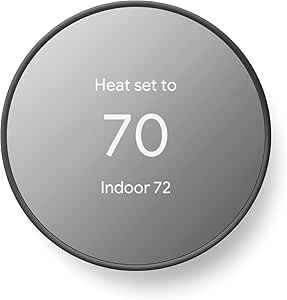
Google Nest Smart Thermostat, Charcoal

Levoit EverestAir-P Smart Air Purifier for Large Rooms
As an affiliate, we earn on qualifying purchases.
How the Aux-2 Fits Home Assistant
The Aux-2 is based on ESPHome, an open platform used to build and manage devices based on ESP boards. Its features rely on existing Home Assistant and ESPHome integrations rather than a single proprietary smart-home system. The device is sold by Nabu Casa, the commercial side of the Open Home Foundation, which runs Home Assistant.
The report notes that the serial integration was developed earlier in 2026. Music Assistant and SendSpin, which support the audio feature, are still in active development. SendSpin is an Open Home Foundation whole-home audio standard intended to allow compatible speakers using different protocols to be grouped under some conditions. The reviewer had not managed to get that grouping working during the test.
The reviewer’s use case combined a garage refrigerator and freezer monitored by temperature sensors with unused in-wall speakers. Earlier Aqara sensors had frequently lost connection in that setup, and the reviewer wanted Bluetooth hygrometers connected to Home Assistant. The Aux-2’s proxy feature addressed that specific need; the report’s results are a hands-on account, not evidence that the same range or reliability will apply in every home.
“Setting up the Aux-2 was much easier than I expected.”
— The Verge reviewer
Features Still Awaiting a Test
The hands-on report did not test the Aux-2’s RS-232 serial control, so it does not confirm how well the device controls particular TVs, receivers or solar inverters, or which models are supported. Compatibility will depend on the equipment and available integrations.
SendSpin speaker grouping also remained unresolved. The reviewer could not determine whether the problem came from their setup or from the standard’s development status. The report likewise did not show the Aux-2 appearing directly as an AirPlay or Spotify Connect target; the reviewer said that might require further setup. These observations should not be read as confirmed product limitations.
The test covered a particular home, set of sensors and audio arrangement. The supplied material does not provide independent performance measurements, long-term reliability results, or a broader compatibility list. It also does not specify how all features behave across different Home Assistant installations.
Compatibility and Audio Setup Ahead
The next practical step for prospective users is to check whether their equipment is supported by Home Assistant’s existing integrations and whether they need additional hardware, such as an amplifier or a Zigbee or Z-Wave antenna. The Aux-2 is available for $69, according to the launch report.
Further testing would help establish how serial control works with specific devices and whether SendSpin can group speakers across protocols as development continues. The Verge reviewer also said they would like to see the Aux-2 work as an AirPlay or Spotify Connect target, but did not confirm that capability. For now, the reported results support the Bluetooth proxy and Music Assistant audio use cases; other functions remain unverified in the hands-on account.
Key Questions
What is the Home Assistant Connect Aux-2?
It is a $69 multi-connection device from Nabu Casa for Home Assistant. It includes Bluetooth, Wi-Fi, Ethernet, USB, audio output, a Grove port and two RS-232 serial ports.
What did the hands-on test confirm?
The Verge reviewer set up the device through ESPHome, connected Govee Bluetooth hygrometers to Home Assistant through its Bluetooth proxy, and played music through in-wall speakers using an amplifier and Music Assistant.
Was serial control tested?
No. The reviewer identified serial control as a possible way to connect equipment such as TVs, receivers and solar inverters, but said they had not yet tested it.
Can it group different speakers together?
The Aux-2’s audio features use Music Assistant and SendSpin, but the reviewer did not get cross-protocol speaker grouping working. SendSpin is still in development, and the reason the test failed was unclear.
Does the Aux-2 work as an AirPlay or Spotify Connect target?
The report did not confirm either capability. The reviewer said they would like to see the device appear as an AirPlay or Spotify Connect target and thought additional setup might be needed.
Source: theverge.com