
TL;DR

Get cleaning gear delivered free with Prime
- Fast, free delivery on millions of items
- Prime Video, Amazon Music and more included
- Member-only deals all year
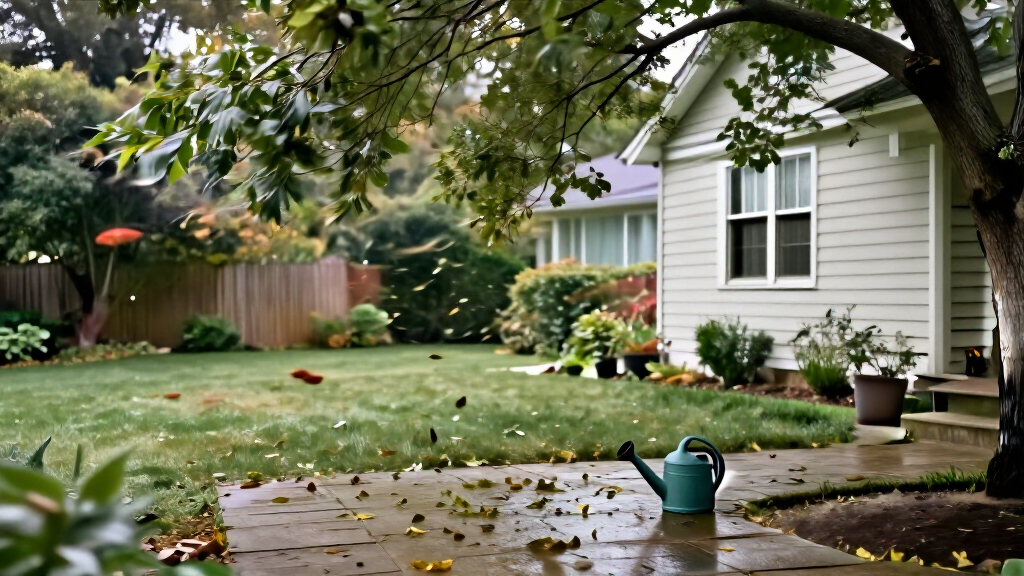
A Family Handyman report explains that fall storms can put extra stress on trees when deciduous canopies are still full and the ground is saturated. The risk varies with the tree’s condition, and a newly leaning tree, lifted soil or hanging branches may warrant assessment by a qualified professional.
A Family Handyman report explains why fall storms can damage trees that still carry their leaves: a leafy canopy gives wind more surface to push against, while rain-soaked soil may hold roots less securely. The combination can contribute to broken branches, leaning or uprooting, though the risk depends on the tree and its condition.
Tree professionals sometimes describe a dense canopy’s effect as a “windsail effect.” Leaves and branches expose more surface to gusts, increasing pressure on the tree. The report cites research on red maples published in the International Society of Arboriculture’s journal, which found that crown structure affects the wind load a tree experiences. Trees can respond to gusts as leaves turn or cluster and branches bend, but those movements do not remove the stress.
The report also points to an eight-year study of street trees in Rochester, New York, which found that most recorded branch failures occurred while trees were in leaf. That finding concerns the trees and conditions in the study; it does not establish that every leafy tree will fail in a storm. The article says pruning needs vary by species and condition and advises leaving major pruning decisions to a qualified arborist.
Rain can add a separate concern. The U.S. Forest Service says saturated soil and shallow roots can make trees more vulnerable to windthrow, or being uprooted. Penn State Extension says trees may lean or uproot when wet ground cannot hold the root system securely. Raised or lifted soil around a tree’s roots can indicate movement, according to the report.
When Wind and Saturated Soil Combine
The risk described is a combination of factors, rather than leaves alone. A full canopy can catch gusts as rain weakens the soil’s hold around roots. In those conditions, damage may include broken limbs, a new lean or a tree coming out of the ground. Such failures can threaten people, homes, vehicles and nearby utility lines.
Tree condition also matters. The report identifies decay, root damage, weak branches and earlier storm damage as factors that can affect how well a tree withstands high winds. The source material does not give a numerical estimate of how much leaves or wet soil raise the odds of failure, so homeowners should treat the explanation as a description of contributing risks, not a prediction for a particular tree.
After a storm, people should keep away from trees with new leaning, lifted soil, cracked limbs or branches hanging overhead. Penn State Extension recommends professional assessment when damage could threaten people or property. A qualified arborist can evaluate the tree and advise on appropriate steps.
As an affiliate, we earn on qualifying purchases.
The Fall Canopy and Tree Research
Deciduous trees shed their leaves seasonally, but strong winds and heavy rain can arrive before that process is complete. The report says this timing can leave a full canopy exposed to fall gusts, while earlier or ongoing rainfall may saturate the ground. The result is a possible overlap between greater wind exposure and reduced root support.
The article cites several sources for this account: International Society of Arboriculture research on red maple wind loading and Rochester street-tree branch failures; U.S. Forest Service information on windthrow; and Penn State Extension guidance on leaning trees. It also refers to an Instagram video from arborist education account @fruitstitute, which compares a thick canopy to a sail catching wind. That analogy illustrates the canopy effect; the report’s research citations provide the separate evidence it describes.
Wind damage can occur at any time of year, according to Family Handyman. The fall risk discussed here depends on timing and local conditions, including whether leaves remain, how wet the soil is and whether a tree has existing weaknesses.
“Saturated soil and shallow roots can make trees more vulnerable to being uprooted by wind.”
— U.S. Forest Service, as summarized in the Family Handyman report
As an affiliate, we earn on qualifying purchases.
What Determines Risk for Each Tree
The report does not provide a forecast for a particular storm or a method for calculating an individual tree’s risk. It also gives no numerical comparison for how much a leafy canopy or saturated soil changes the likelihood of failure. The Rochester findings concern the street trees studied there, and the source material does not establish that the results apply equally to every species or setting.
Whether a tree is vulnerable depends on factors that may require an on-site assessment, including species, root depth, soil conditions, decay, branch strength and prior damage. The report does not identify any specific trees currently at risk or cite a newly issued storm warning.
As an affiliate, we earn on qualifying purchases.
What Homeowners Should Watch
During and after a windy, rainy storm, watch for new leaning, soil lifted around the roots, cracked limbs or hanging branches. Keep people clear of damaged trees, particularly when they could fall toward a home or other occupied area. If the tree may threaten people or property, Penn State Extension recommends getting a professional assessment.
Pruning decisions should be based on the tree’s species and condition. Family Handyman cautions against assuming that heavy thinning before a storm is appropriate and points to qualified arborists for major pruning decisions. The source material does not describe a specific upcoming inspection or agency action; the next step for a damaged or concerning tree is an assessment suited to its condition and location.
As an affiliate, we earn on qualifying purchases.
Key Questions
Why can trees with leaves face more wind stress?
Leaves and branches give gusts more surface to push against. Family Handyman describes this as a “windsail effect.”
Does wet soil make a tree more likely to fall?
Saturated soil may hold roots less securely, according to the U.S. Forest Service and Penn State Extension guidance cited by the report. Risk varies with root depth, soil and tree condition.
What signs of storm damage should I look for?
Watch for a new lean, lifted soil around the roots, cracked limbs or branches hanging overhead. Keep clear of trees showing these signs.
Should I prune a tree heavily before a windstorm?
The report does not recommend heavy thinning as a general precaution. Pruning needs vary by species and condition; consult a qualified arborist about major work.
When should a damaged tree get professional attention?
Penn State Extension recommends professional assessment when damage could threaten people or property. A qualified arborist can inspect the tree and advise on next steps.
Source: rss
Fall Picks
fall essentials
As an affiliate, we earn on qualifying purchases.