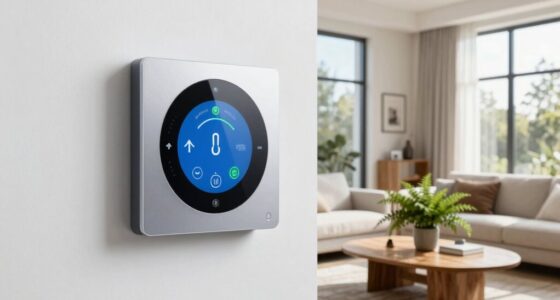

If I were choosing a robotic lawn mower with edge trimming mode, I would put the ECOVACS Goat A2000 LiDAR PRO first because its built-in TruEdge trimmer addresses borders more directly than a standard offset cutting deck. The Litheli FYELD 500 is my value pick for buyers who want an explicit 2-in-1 mowing and trimming design, while the MOVA LiDAX Ultra 1000 stands out for complex, multi-zone properties. The main tradeoff is whether to pay for a dedicated trimming mechanism or accept a zero-edge cutting system that may still leave grass beside walls and other raised obstacles. Navigation also matters: RTK favors open sky, while LiDAR and vision can suit properties with trees or buildings that interfere with satellite reception. Continue reading for the full ranking logic and guidance on matching each design to a particular yard.
Listen free for 30 days with Audible
Thousands of audiobooks and originals — cancel anytime.
Start your free trialAs an affiliate, we earn on qualifying purchases.
Complete the kit


Key Takeaways
- The ECOVACS Goat A2000 leads this roundup because it is the only listed model that explicitly pairs advanced autonomous mowing with a built-in TruEdge edge trimmer.
- The Litheli FYELD 500 offers the clearest value proposition: its 2-in-1 mowing and edge-trimming design targets the core job without centering the purchase on a large navigation feature set.
- Zero-edge cutting is not automatically the same as active trimming. The MOVA LiDAX Ultra 1000 and ECOVACS O1000 models can cut close to suitable boundaries, but rigid walls may still expose the limits of deck placement.
- Navigation technology separates the middle of the ranking. RTK models such as the ANTHBOT M9, YARDCARE N1600 PRO, and Sunseeker X3 Plus make more sense in open yards, while LiDAR-led options reduce dependence on satellite visibility.
- Claimed lawn capacity did not decide the order by itself. The lineup ranges from the FYELD 500 to the half-acre Goat A2000, yet I gave more weight to edge execution, boundary behavior, and setup fit than to maximum area.
| ECOVACS GOAT A2000 LiDAR PRO |  | Best Overall | Coverage Area: Up to 1/2 acre | Navigation: Dual-LiDAR system | Edge Trimming: Built-in TruEdge trimmer | VIEW ON AMAZON | See Our Full Breakdown |
| ECOVACS GOAT O1000 RTK |  | Best for Tight Passages | Boundary Setup: Wire-free perimeter recognition | Navigation: LELS navigation with U-shaped pattern | Edge Cutting: Zero-Edge and TruEdge consistent edge mowing | VIEW ON AMAZON | See Our Full Breakdown |
| MOVA LiDAX Ultra 1000 |  | Best for Complex Multi-Zone Lawns | Model Number: LiDAX Ultra 1000 | Mapping: AI auto-mapping with 360° LiDAR | Cutting Height: 1.2-3.9 inches | VIEW ON AMAZON | See Our Full Breakdown |
| ANTHBOT M9 |  | Best Obstacle Recognition | Mowing Area: Up to 0.3 acres | Navigation: RTK positioning with dual AI vision | Max Slope: 45% | VIEW ON AMAZON | See Our Full Breakdown |
| YARDCARE N1600 PRO |  | Best for Short-Cut Lawns | Model Number: N1600Pro-003-m | Coverage Area: 0.4 acres | Navigation: RTK and AI vision | VIEW ON AMAZON | See Our Full Breakdown |
| ECOVACS GOAT O1000 LiDAR PRO Robot Lawn Mower |  | Best for Tight Spaces | Navigation: LiDAR | Obstacle detection: AI vision and 3D ToF LiDAR | Minimum obstacle size: 5 cm | VIEW ON AMAZON | See Our Full Breakdown |
| Litheli Robot Lawnmower FYELD 500 |  | Best for Basic 2-in-1 Care | Brand: Litheli | Product line: FYELD 500 | Model number: U20RL00-AA120-UN-US-003 | VIEW ON AMAZON | See Our Full Breakdown |
| Sunseeker X3 Plus Robot Lawn Mower |  | Best for Sloped Multi-Zone Yards | Coverage: 0.3 acres / 13,000 sq. ft. | Navigation: RTK + VSLAM | Slope handling: Up to 17° / 30% | VIEW ON AMAZON | See Our Full Breakdown |
| robotic lawn mower with edge trimming mode | Navigation | Cutting Height |
|---|---|---|
| ECOVACS GOAT A2000 LiDAR PRO | Dual-LiDAR system | — |
| ECOVACS GOAT O1000 RTK | LELS navigation with U-shaped pattern | — |
| MOVA LiDAX Ultra 1000 | — | 1.2-3.9 inches |
| ANTHBOT M9 | RTK positioning with dual AI vision | 1.2-2.7 inches |
| YARDCARE N1600 PRO | RTK and AI vision | 0.8-2.4 inches |
| ECOVACS GOAT O1000 LiDAR PRO R | LiDAR | — |
| Litheli Robot Lawnmower FYELD | — | — |
| Sunseeker X3 Plus Robot Lawn M | RTK + VSLAM | 1.6–3.2 inches |
More Details on Our Top Picks
ECOVACS GOAT A2000 LiDAR PRO
I rank the ECOVACS GOAT A2000 LiDAR PRO first because its built-in TruEdge trimmer directly addresses the main reason to buy from this roundup: reducing manual border cleanup. Compared with the GOAT O1000 RTK, it covers a larger half-acre lawn and pairs dual-LiDAR mapping with a stronger 32V platform for dense grass. Its dual-blade disc also favors faster, broader cutting over the narrower access advantage of the O1000. The 50-minute charging time limits long interruptions between mowing sessions. There are tradeoffs: full control depends on the app, setup may challenge buyers new to mapping systems, and half an acre remains the ceiling. Still, I see its combination of dedicated trimming hardware and larger coverage as the strongest match for buyers who prioritize finished edges.
Pros:- Built-in TruEdge trimmer targets borders more directly than standard edge-following systems
- Dual-LiDAR creates maps without buried perimeter wire
- 32V power platform is suited to dense grass
- 50-minute charging reduces downtime between mowing sessions
Cons:- Setup and map configuration may feel complicated to first-time robot-mower owners
- Coverage stops at half an acre
- A smartphone app is needed for full zone and schedule control
Best for: Owners of lawns up to half an acre who want a built-in trimmer to reduce follow-up work along defined borders
Not ideal for: Buyers with lawns larger than half an acre or anyone who wants full operation without relying on a smartphone app
- Coverage Area:Up to 1/2 acre
- Navigation:Dual-LiDAR system
- Edge Trimming:Built-in TruEdge trimmer
- Cutting System:Dual-blade disc
- Power Platform:32V
- Battery:3.0Ah
- Charging Time:50 minutes
- Control:Smart app with custom zones
Our verdict“I recommend this as the lead trimmer pick for half-acre lawns where cleaner borders matter more than maximum simplicity.”
ECOVACS GOAT O1000 RTK
The ECOVACS GOAT O1000 RTK earns its place through maneuverability: its slim body can enter passages as narrow as 2.3 feet while Zero-Edge and TruEdge mowing target grass beside accessible boundaries. I place it behind the GOAT A2000 LiDAR PRO because the A2000 has a clearly identified built-in trimmer and a stated half-acre capacity. The O1000 is the more appealing choice for divided gardens, narrow side yards, and irregular spaces where a wider mower may never reach the border. LELS navigation uses a U-shaped pattern for orderly coverage, while AIVI 3D detection helps it work around animals and garden objects. Buyers pay for that flexibility, however, and app familiarity is required. Its 24-degree climbing limit also rules out slopes beyond the stated rating.
Pros:- Zero-Edge and TruEdge modes reduce uncut strips beside reachable borders
- Slim body fits passages as narrow as 2.3 feet
- Wire-free AI mapping avoids buried perimeter cable
- IPX6 rating supports straightforward exterior cleaning
Cons:- No physical built-in trimmer is identified in the supplied product data
- Full customization depends on smartphone and app familiarity
- Cannot handle inclines beyond its 24-degree rating
Best for: Owners of segmented urban gardens with narrow side passages who want close edge mowing without perimeter wire
Not ideal for: People with slopes steeper than 24 degrees or buyers seeking a clearly documented physical trimming attachment
- Boundary Setup:Wire-free perimeter recognition
- Navigation:LELS navigation with U-shaped pattern
- Edge Cutting:Zero-Edge and TruEdge consistent edge mowing
- Obstacle Avoidance:AIVI 3D obstacle detection
- Mower Width:1.31 ft
- Minimum Passage Width:2.3 ft
- Climbing Ability:45% (24°) incline
- Waterproof Rating:IPX6
- App Control:Customizable zones and settings
Our verdict“I favor the O1000 RTK for narrow, divided lawns where access and close edge mowing matter more than a dedicated trimmer.”
MOVA LiDAX Ultra 1000
I chose the MOVA LiDAX Ultra 1000 for properties that need unusually detailed zoning. Its support for up to 150 managed zones goes far beyond what most buyers will use, but it can make sense for lawns split by paths, beds, and recreation areas. Compared with the ANTHBOT M9, the MOVA has a stated Zero-Edge cutting mode and a much taller 3.9-inch maximum cut, making it better suited to buyers who prefer longer grass. Its 360-degree LiDAR and AI vision also remove the need for perimeter wire. I rank it below the ECOVACS A2000 for trimming because “ultra-trim” edge cutting is less explicit than the A2000’s built-in TruEdge trimmer. Runtime is not disclosed, and the rich mapping system may demand more setup work. The three-year warranty helps offset that complexity.
Pros:- Supports as many as 150 independently managed zones
- Zero-Edge cutting mode is designed to reduce border strips
- 360-degree LiDAR provides wire-free auto-mapping
- Off-road wheels and 45% slope capability suit uneven ground
Cons:- Battery life and runtime are not specified
- Mapping and zone options may be excessive for a simple lawn
- Edge system is less clearly defined than the A2000’s built-in trimmer
Best for: Owners of intricate lawns with many separated areas who want extensive zoning and a higher maximum cutting height
Not ideal for: Buyers who need published battery-runtime figures or want the clearest physical trimmer design
- Model Number:LiDAX Ultra 1000
- Mapping:AI auto-mapping with 360° LiDAR
- Cutting Height:1.2-3.9 inches
- Edge Cutting:Zero-Edge ultra-trim cutting
- Managed Zones:Up to 150
- Slope Capability:45%
- Obstacle Avoidance:Recognizes more than 300 obstacle types
- Battery Life:Not specified
- Warranty:3 years
Our verdict“I recommend the LiDAX Ultra 1000 for complicated multi-zone lawns, provided a stated runtime and physical trimmer are not must-haves.”
ANTHBOT M9
The ANTHBOT M9 stands out for obstacle-heavy yards rather than for the strongest trimming system. Its dual HDR cameras recognize more than 1,000 obstacle types, giving it a broader stated detection range than the MOVA LiDAX Ultra 1000’s 300-plus types. RTK positioning and multi-zone app control suit lawns broken up by trees, furniture, and play equipment, while 58 dB or lower operation makes frequent mowing less intrusive. I rank it below MOVA and both ECOVACS picks for this roundup because the supplied data lists no dedicated edge-trimming or Zero-Edge mode. Buyers may still need a handheld trimmer along walls or raised borders. It also requires an RTK reference station and multiple-package setup. Its 45% slope rating is useful, but the 0.3-acre limit keeps it focused on smaller properties.
Pros:- Dual HDR cameras recognize more than 1,000 obstacle types
- RTK positioning supports accurate multi-zone navigation
- Noise output of 58 dB or less suits frequent residential mowing
- Handles slopes up to 45%
Cons:- No dedicated edge-trimming or Zero-Edge mode is documented
- Coverage is limited to 0.3 acres
- RTK station and multi-package installation add setup work
Best for: Owners of small, obstacle-filled lawns who prioritize camera-based object recognition and quiet operation
Not ideal for: Buyers seeking a documented edge-trimming mode that minimizes manual work beside walls and raised borders
- Mowing Area:Up to 0.3 acres
- Navigation:RTK positioning with dual AI vision
- Max Slope:45%
- Cutting Height:1.2-2.7 inches
- Obstacle Detection:More than 1,000 obstacle types with dual HDR cameras
- Operating Noise:58 dB or lower
- Included Equipment:Charging base, five blades, and RTK reference station
Our verdict“I would choose the M9 for quiet obstacle avoidance on a small lawn, but not when replacing a handheld edge trimmer is the main goal.”
YARDCARE N1600 PRO
I selected the YARDCARE N1600 PRO for buyers who keep grass short: its cutting range begins at 0.8 inch, lower than the 1.2-inch minimum of the MOVA LiDAX Ultra 1000 and ANTHBOT M9. The arched cutting path is described as supporting efficient trimming, while centimeter-level RTK and AI vision help it follow virtual boundaries across multiple zones. Its 0.4-acre coverage also exceeds the M9’s 0.3-acre rating. Yet this is a weaker fit for buyers seeking a confirmed border-trimming attachment, since the supplied data does not identify Zero-Edge technology or a built-in trimmer. The 20-degree slope limit trails the 45% ratings offered by MOVA and M9, and app dependence adds friction for phone-averse owners. I view its brushless motor and low cut as the deciding strengths, not its edging credentials.
Pros:- Cuts as low as 0.8 inch for closely maintained grass
- RTK and AI vision provide centimeter-level virtual mapping
- Covers up to 0.4 acres across multiple zones
- Brushless motor avoids the wear points of a brushed design
Cons:- No Zero-Edge mode or built-in trimmer is identified
- 20-degree slope capability trails several alternatives in the lineup
- Full mapping and zone management depend on the app
Best for: Owners of manicured lawns up to 0.4 acres who prefer a low 0.8-inch cut and wireless multi-zone mapping
Not ideal for: People with steep terrain or buyers whose main aim is a documented zero-edge or built-in trimming system
- Model Number:N1600Pro-003-m
- Coverage Area:0.4 acres
- Navigation:RTK and AI vision
- Boundary Setup:Wireless virtual boundaries
- Obstacle Avoidance:3D obstacle detection
- Cutting Height:0.8-2.4 inches
- Slope Capability:20°
- Motor Type:Brushless
- App Control:Multi-zone management
Our verdict“I see the N1600 PRO as a short-cut lawn specialist, but dedicated edge-trimmer shoppers have better-matched options above it.”
ECOVACS GOAT O1000 LiDAR PRO Robot Lawn Mower
I rank the ECOVACS GOAT O1000 LiDAR PRO highly for compact, intricate lawns because its slim body can pass through 0.8-meter-wide paths, while LiDAR mapping avoids the perimeter wire or RTK hardware required by many rivals. Its integrated TruEdge trimming system also gives buyers a clearer edge-care feature than the broadly described edge cutting on the Sunseeker X3 Plus. Compared with the larger ECOVACS Goat A2000 LiDAR PRO, this model covers only one-quarter acre, but it is better matched to narrow side yards and divided urban plots. AI vision and 3D ToF LiDAR detect objects as small as 5 cm, helping around toys and garden features. The tradeoffs are setup adjustments and imperfect corner coverage; highly irregular borders may still need a handheld trimmer.
Pros:- TruEdge provides a clearly integrated edge-trimming function
- LiDAR navigation works without perimeter wire or RTK
- Slim body can travel through paths as narrow as 0.8 meters
- AI vision and 3D ToF LiDAR detect obstacles down to 5 cm
Cons:- Mapping and boundary settings may need adjustment during initial setup
- Complex or recessed corners can still require a handheld trimmer
- Published product data does not specify battery runtime or charging time
Best for: Owners of compact lawns with narrow passages, multiple zones, garden features, and borders that need automated trimming
Not ideal for: Owners of lawns larger than one-quarter acre or sharply recessed borders that still require detailed manual trimming
- Navigation:LiDAR
- Obstacle detection:AI vision and 3D ToF LiDAR
- Minimum obstacle size:5 cm
- Edge trimming:Integrated TruEdge
- Maximum mowing area:Up to 1/4 acre
- Minimum path width:0.8 m
- App control:Zones and no-go areas
- Boundary system:No perimeter wire or RTK required
Our verdict“I recommend this as the trimmer-focused pick for small, complex lawns where narrow access and close border cutting matter more than maximum coverage.”
Litheli Robot Lawnmower FYELD 500
I place the Litheli FYELD 500 in the basic 2-in-1 role because it combines automatic mowing and edge trimming in a compact, wire-free machine. That straightforward pitch may appeal to someone who wants fewer setup chores than a traditional boundary-wire mower. It is less convincing for demanding yards than the ECOVACS GOAT O1000 LiDAR PRO, which documents LiDAR navigation, 5 cm obstacle detection, mapping, and no-go zones. Litheli supplies no equivalent details about navigation, lawn capacity, runtime, slopes, or app-based zoning, making it hard for me to judge performance beyond a simple lawn. The 30-day return guarantee gives buyers a short evaluation window, but the missing technical data remains a major compromise. I would treat this as a simple-lawn option, not the safer choice for complex landscaping.
Pros:- Combines mowing and edge trimming in one machine
- Wire-free design avoids boundary-wire installation
- Compact format is intended for simple operation
- Includes a 30-day return guarantee
Cons:- No published battery runtime or charging-time data
- No stated mowing-area or slope rating
- Navigation, obstacle avoidance, zoning, and app features are not documented
Best for: Buyers with small, uncomplicated lawns who want one compact machine for routine mowing and border trimming without installing boundary wire
Not ideal for: Owners of large, sloped, obstacle-heavy, or multi-zone yards who need documented coverage, navigation, runtime, and terrain limits
- Brand:Litheli
- Product line:FYELD 500
- Model number:U20RL00-AA120-UN-US-003
- Item type:Robotic lawn mower
- Functions:Mowing and edge trimming
- Boundary wire:Not required
- Unit count:1
- Return guarantee:30 days
Our verdict“I see this as a basic trimmer-and-mower choice for a simple lawn, provided the buyer accepts far less performance data than ECOVACS or Sunseeker supplies.”
Sunseeker X3 Plus Robot Lawn Mower
I give the Sunseeker X3 Plus the terrain-focused role because it covers up to 0.3 acre, manages multiple wire-free zones, and is rated for 17-degree slopes. That makes it more suitable than the Litheli FYELD 500 when a yard has inclines or separated mowing areas, since Litheli publishes no coverage or slope limits. RTK and VSLAM support structured routing, while app-defined boundaries and no-go zones help keep the mower away from beds and play areas. Its 60 dB operating level also suits suburban schedules. Edge cutting is included, but buyers who put the trimmer function first may prefer the ECOVACS GOAT O1000 LiDAR PRO and its explicitly integrated TruEdge system. The main compromises are app-dependent configuration, a potentially involved setup, and a 0.3-acre ceiling that rules out larger properties.
Pros:- RTK and VSLAM provide wire-free navigation
- Handles slopes up to 17 degrees or 30 percent
- Multi-zone boundaries and no-go areas are managed through the app
- Quiet 60 dB operation suits residential neighborhoods
Cons:- Maximum coverage is limited to 0.3 acre
- Full configuration depends on a smartphone app
- RTK, mapping, and zone setup may feel involved for first-time owners
Best for: Owners of small to midsize suburban lawns with slopes, uneven sections, or several mowing zones who want quiet wire-free control
Not ideal for: Owners of properties above 0.3 acre or buyers who want a clearly specified integrated edge trimmer with minimal app setup
- Coverage:0.3 acres / 13,000 sq. ft.
- Navigation:RTK + VSLAM
- Slope handling:Up to 17° / 30%
- Cutting height:1.6–3.2 inches
- Noise level:60 dB
- Connectivity:Wi-Fi and Bluetooth
- Controls:Smartphone app and voice control
- Boundary features:Wire-free multi-zone control and no-go zones
- Warranty:2 years
Our verdict“I recommend the X3 Plus for sloped, multi-zone suburban lawns, while buyers focused chiefly on the most explicit trimmer design should favor the ECOVACS GOAT O1000 LiDAR PRO.”
How We Picked
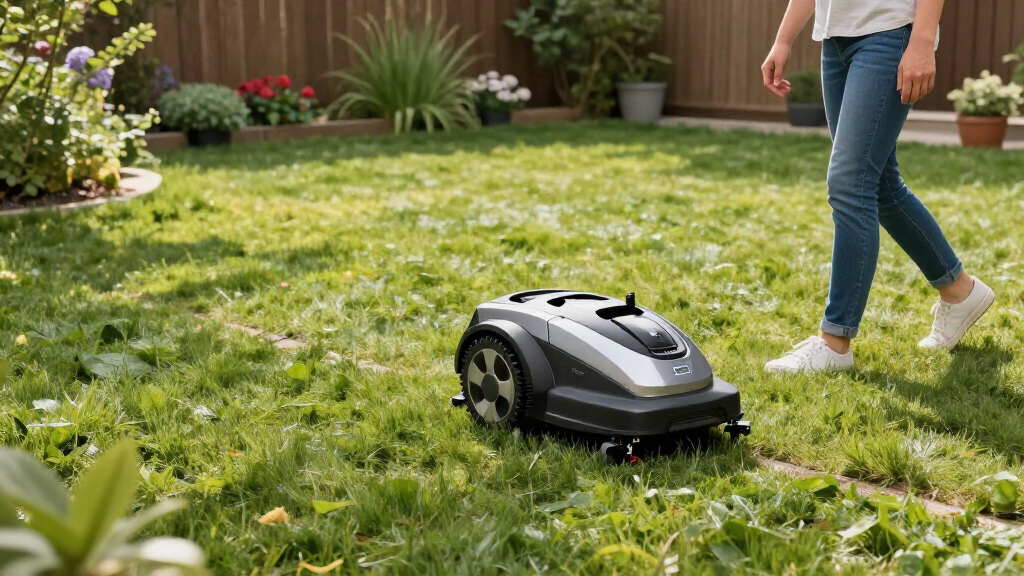
I ranked these models by how well their published designs address the specific promise of mowing plus edge trimming. A named trimming mechanism received more weight than a general zero-edge claim because the former is more likely to help beside raised borders. I then compared cutting-deck placement, boundary approach, mapping method, obstacle detection, supported lawn area, and multi-zone flexibility. This placed the Goat A2000 ahead of models that may navigate well but rely mainly on close deck positioning. I did not treat every use of the word edge as proof that a mower can replace a handheld string trimmer.
After edge performance, I ranked products by navigation fit and usability. RTK, LiDAR, and camera-led systems behave differently around tree cover, narrow passages, buildings, and open sky, so I matched each one to the property where it makes the most sense. I also weighed mapping effort, app control, obstacle avoidance, expected blade upkeep, and the usefulness of stated zone support. Value reflected how directly a model solves the trimming need relative to the complexity a buyer is paying for, which is why the Litheli FYELD 500 earns a defined role despite its smaller scope. Premium placement went to the MOVA LiDAX Ultra 1000 for its 360-degree LiDAR, vision support, and extensive zone management rather than trimming hardware alone.
| robotic lawn mower with edge trimming mode | Navigation |
|---|---|
| ECOVACS GOAT A2000 LiDAR PRO | Dual-LiDAR system |
| ECOVACS GOAT O1000 RTK | LELS navigation with U-shaped pattern |
| MOVA LiDAX Ultra 1000 | — |
| ANTHBOT M9 | RTK positioning with dual AI vision |
| YARDCARE N1600 PRO | RTK and AI vision |
| ECOVACS GOAT O1000 LiDAR PRO R | LiDAR |
| Litheli Robot Lawnmower FYELD | — |
| Sunseeker X3 Plus Robot Lawn M | RTK + VSLAM |
Factors to Consider When Choosing Robotic Lawn Mower With Edge Trimming Mode
I would choose an edge-focused robotic mower by starting with the physical borders around the lawn, not the size number on the box. A property bounded by flush paving creates a much easier cutting problem than one surrounded by walls, fences, deep beds, or drop-offs. The following factors explain where extra spending pays off and where a simpler mower can do the same practical job.
Dedicated Trimmer Versus Zero-Edge Cutting
I separate active edge trimming from close-to-edge mowing because the two designs solve different problems. A dedicated mechanism reaches beyond the main mowing path, while a zero-edge deck usually depends on positioning the outer blade close to the chassis. Close deck placement can work very well beside level pavers that let the mower safely overlap the lawn boundary. It is less effective beside a wall because the body reaches the obstacle before the blade reaches every grass tip. Buyers with many raised borders gain more from a named trimming system; buyers with flush hardscaping may get similar visual results from a simpler zero-edge model. I would check diagrams, blade placement, and stated boundary clearance rather than relying on the word edge in a product name.
Match Navigation to the Property
RTK navigation can provide precise positioning without a perimeter wire, but it works best where the mower and reference hardware have a reliable view of the sky. Dense trees, tall buildings, covered passages, and steep changes in elevation can make that environment harder. LiDAR mapping reads physical surroundings and reduces reliance on satellite reception, although glass, repetitive corridors, and major seasonal changes can still challenge mapping. Vision adds useful object recognition, but lighting and dirty lenses affect what cameras can see. I would favor RTK for an open, clearly shaped lawn and LiDAR-led mapping for a yard enclosed by structures or mature trees. Hybrid systems cost more, yet that extra sensing may be worthwhile when a single navigation method has an obvious weakness on the property.
Study the Border Before Measuring the Lawn
Acreage affects runtime, but border complexity often has a larger effect on the finished appearance. Ten straight metres beside paving are easier than ten metres broken up by posts, tree rings, tight corners, and curved beds. Narrow grass strips may also be too tight for the mower to turn while keeping its cutting side against the border. I would sketch the yard and mark every wall, flush path, drop-off, gate, and passage before comparing capacity figures. This reveals whether safe wheel overlap is possible and where manual trimming may remain necessary. Paying for a larger-area machine does not fix a chassis that cannot physically approach the difficult parts of a small lawn.
Capacity, Zones, and Real Mowing Time
A stated area limit assumes the mower receives enough charging and mowing time to keep up with grass growth. Multiple zones, long passages, wet-weather pauses, slopes, and frequent obstacle detours reduce the time spent actually cutting. I would leave capacity headroom rather than buying a model whose published maximum exactly matches the property. Extensive zone support matters when separate lawn sections need different schedules or cutting heights, but it adds little on one open rectangle. A larger battery can reduce charging interruptions, while efficient routing prevents the mower from repeatedly covering easy ground and neglecting borders. The right target is reliable weekly coverage, not the largest acreage claim available.
Plan for Blade Care, Safety, and App Dependence
Edge work places blades near soil, stones, roots, and hard landscaping, so replacement-blade access matters more than it might on an open lawn. I would check the replacement procedure, part availability, cleaning access, and whether the trimming blade uses a separate consumable. Boundary errors also carry more risk near ponds, steps, roads, and steep drop-offs; those areas may need a physical barrier or a wider digital setback. Object detection helps around toys and garden furniture, but small wire, pet waste, and low objects can still create trouble. App-based mapping is convenient only while software support, account access, and wireless coverage remain dependable. A slightly less advanced mower with readily available parts and clear controls may be the better long-term purchase.
Frequently Asked Questions
Does zero-edge cutting eliminate the need for a string trimmer?
Not on every border. Zero-edge cutting can leave a very clean result when the mower can place a wheel on flush paving and let the deck overlap the grass line. Beside walls, fences, posts, and raised beds, the mower body may stop before the blade reaches the final strip. A model with a dedicated edge trimmer has a better chance of reducing that leftover growth, though tight corners can still require occasional manual work. I would judge the feature against the hardest border in the yard rather than the easiest one.
Is a built-in edge trimmer worth paying more for?
I would pay extra when the lawn has long raised borders and reducing handheld trimming is a main reason for buying the mower. The price premium is harder to justify when most edges meet level paving, where an offset deck can often cut close without separate trimming hardware. A dedicated mechanism also introduces another blade or moving part that may need cleaning and replacement. The strongest value comes from a design that combines useful trimming reach with navigation suited to the property. Buyers who only need tidy open edges may be better served by a less complex zero-edge model.
Should I choose RTK or LiDAR for a wire-free mower?
I would choose RTK for an open property with good sky visibility and few tall obstructions. LiDAR is often the more logical choice around buildings, mature trees, and enclosed garden sections because it maps nearby physical features. Neither system is immune to trouble: satellite signals can be obstructed, while LiDAR maps can be affected by changing surroundings and difficult reflective surfaces. Vision can strengthen either approach by helping the mower recognize obstacles and lawn boundaries. The best choice is the sensing system whose known weakness is least relevant to the yard.
Can a wire-free robotic mower handle several disconnected lawn areas?
It can manage separate maps or zones only if the software supports them, but zone count alone does not provide physical access. The mower still needs a safe route between sections, or someone must carry it to each disconnected area. Gates, gravel paths, steps, and public sidewalks can make automated travel unsuitable even when mapping software accepts many zones. I would confirm whether schedules and cutting heights can be assigned separately if the lawn sections grow at different rates. For fragmented properties, mapping flexibility and transport effort matter more than headline acreage.
How close can a robotic mower safely cut near beds, ponds, and drop-offs?
The safe distance depends on boundary detection, wheel placement, terrain, and whether the edge is physically contained. I would allow a wider no-go margin beside water, steps, retaining walls, and soft bed edges than beside flat paving. A close-cutting mode should not be treated as permission to let the chassis overhang a hazardous boundary. Low edging, a firm curb, or a deliberate unmown buffer can add protection where a mapping error would have serious consequences. In these locations, safety should take priority over removing the final centimetre of grass.
Conclusion
For most buyers, my best overall pick is the ECOVACS Goat A2000 LiDAR PRO because its built-in TruEdge trimmer most directly matches the goal of reducing separate border work. I would choose the Litheli FYELD 500 as the best value for a smaller property where explicit 2-in-1 mowing and trimming matters more than an elaborate mapping package. The MOVA LiDAX Ultra 1000 is my premium choice for complex, heavily zoned yards, while the ECOVACS GOAT O1000 LiDAR PRO is the easier starting point for beginners who want wire-free mapping without relying on an RTK installation. For an open quarter-acre lawn, the ANTHBOT M9 combines RTK with dual vision; the ECOVACS GOAT O1000 RTK offers a more compact zero-edge route, and the Sunseeker X3 Plus is another RTK-and-vision option for lawns up to 0.3 acre. I would reserve the YARDCARE N1600 PRO for buyers prioritizing broader RTK coverage, while remembering that navigation range does not equal active trimming. The final choice should follow the border type: pick a real trimmer for raised obstacles, or save money with zero-edge cutting when most boundaries are level and accessible.
Fall Picks
fall essentials
As an affiliate, we earn on qualifying purchases.