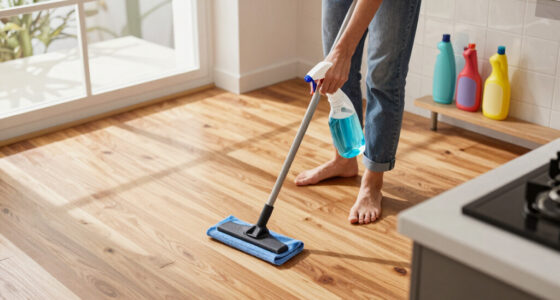
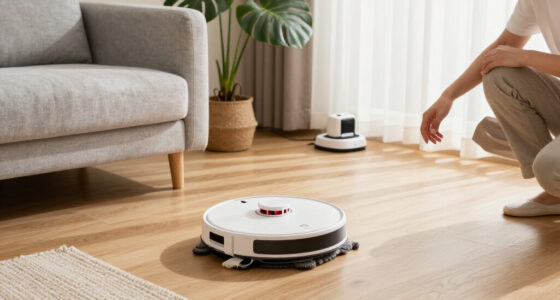
Kitchens demand a specific type of cleaning power, mixing fine dust with sticky spills and heavy foot traffic. After evaluating fourteen models, iRobot Roomba 105 Combo stands out as the best overall choice for most households due to its balanced vacuuming and mopping capabilities. For those needing aggressive debris removal, the Roborock Q10 S5+ offers superior suction, while the Shark AV2501S AI Ultra excels in navigating complex layouts with its advanced obstacle avoidance. The primary tradeoff often lies between raw suction power and the ability to effectively mop hard floors without creating a mess. Continue reading to see which model fits your kitchen’s unique floor plan and cleaning needs.

Get cleaning gear delivered free with Prime
- Fast, free delivery on millions of items
- Prime Video, Amazon Music and more included
- Member-only deals all year
Complete the kit


Key Takeaways
- Laser navigation (LiDAR) models like the Roborock Q7 L5 consistently outperform random navigation bots in avoiding kitchen chair legs and table bases.
- Vacuum-mop combos with separate water tanks and vacuum bins prevent dirty water from contaminating the vacuuming pathway, a critical feature for kitchen hygiene.
- High suction power (above 5000 Pa) is necessary for removing crumbs from grout lines and textured kitchen rugs, where lower-power models leave debris behind.
- Self-emptying bases significantly reduce maintenance frequency, but they require sufficient clearance under kitchen cabinets or islands to dock properly.
- Budget-friendly models often lack mapping capabilities, leading to repetitive cleaning patterns that miss high-traffic kitchen zones near the stove and sink.
| iRobot Roomba 105 Combo Robot Vacuum & Mop with AutoEmpty Dock |  | Best Overall for Hands-Free Kitchen Maintenance | AutoEmpty Duration: 75 days | Suction Power: 70X more power-lifting suction | Mapping Technology: LiDAR | VIEW ON AMAZON | See Our Full Breakdown |
| Roborock Q10 S5+ Robot Vacuum and Mop |  | Best for Deep Cleaning and Pet Hair | Suction Power: 10,000 Pa | Dustbin Capacity: 2.7 L | Battery Life: 150 minutes | VIEW ON AMAZON | See Our Full Breakdown |
| ROPVACNIC Robot Vacuum and Mop Combo, 5200 Pa |  | Best Budget Option for Small Kitchens | Suction power: 5200 Pa | Cleaning functions: Vacuuming and mopping | Battery life: 120 minutes | VIEW ON AMAZON | See Our Full Breakdown |
| Shark AV2501S AI Ultra Robot Vacuum with Matrix Clean and Self-Empty Base |  | Best for Allergy Sufferers and Mixed Flooring | Surface compatibility: Carpets and hard floors | Navigation: Matrix Clean and 360° LiDAR mapping | Dust collection: Bagless self-emptying base; up to 30 days of debris | VIEW ON AMAZON | See Our Full Breakdown |
| Robot Vacuum and Mop with 6500Pa Suction, 2-in-1, Gyro Navigation |  | Best for Large Kitchens and Long Runtimes | Suction Power: 6500 Pa | Runtime: 200 minutes | Battery Capacity: 2600mAh | VIEW ON AMAZON | See Our Full Breakdown |
| iRobot Roomba 115 Combo Robot Vacuum and Mop with AutoEmpty Dock |  | Best Hybrid for Small Kitchens | Suction Power: 15,000 Pa | Navigation: LiDAR | Dust Bag Capacity: 2.5 L | VIEW ON AMAZON | See Our Full Breakdown |
| iRobot Roomba 105 Vac Robot Vacuum |  | Best Dedicated Vacuum for Hard Floors | Navigation: ClearView LiDAR | Cleaning System: 3-stage | Suction Levels: 4 | VIEW ON AMAZON | See Our Full Breakdown |
| ILIFE V2 Robot Vacuum Cleaner, White |  | Best Budget Option for Pet Hair | Runtime: Up to 120 minutes | Dust Capacity: 300 ml | Noise Level: 69 dB | VIEW ON AMAZON | See Our Full Breakdown |
| Lefant M210 Robot Vacuum Cleaner |  | Best Compact Smart Vacuum | Diameter: 11 in | Height: 2.99 in | Runtime: Up to 120 minutes | VIEW ON AMAZON | See Our Full Breakdown |
| iRobot Roomba Plus 415X Robot Vacuum and Mop Combo |  | Best Premium All-in-One Solution | Suction Power: 20,000 Pa | Dock Features: AutoWash Dock with 90-day debris emptying | Mop Pad Care: Washes and heat-dries at 113°F | VIEW ON AMAZON | See Our Full Breakdown |
| Tikom G8000 Max Robot Vacuum and Mop Combo |  | Best Value for Hard Floors | Suction Power: 5000 Pa | Runtime: Up to 150 minutes | Height: 2.99 inches | VIEW ON AMAZON | See Our Full Breakdown |
| Shark AI Ultra Robot Vacuum with 60-Day Self-Emptying Base |  | Best for Hands-Free Maintenance | Base Capacity: Up to 60 days of debris | Navigation: 360° LiDAR mapping | Brushroll: Self-cleaning | VIEW ON AMAZON | See Our Full Breakdown |
| Wrydao S6-Pro Robot Vacuum and Mop |  | Best for Extended Hands-Free Cleaning | Max Suction: 6000 Pa | Dust Bag Capacity: 3L | Battery Life: 160 minutes | VIEW ON AMAZON | See Our Full Breakdown |
| Roborock Q7 L5 Robot Vacuum and Mop Combo |  | Best Premium Performance | Suction Power: 8,000 Pa | Water Tank Capacity: 270 ml | Battery Life: 150 minutes | VIEW ON AMAZON | See Our Full Breakdown |
| robot vacuums for kitchen | Navigation | Suction Power |
|---|---|---|
| iRobot Roomba 105 Combo Robot | — | 70X more power-lifting suction |
| Roborock Q10 S5+ Robot Vacuum | — | 10,000 Pa |
| ROPVACNIC Robot Vacuum and Mop | — | 5200 Pa |
| Shark AV2501S AI Ultra Robot V | Matrix Clean and 360° LiDAR mapping | — |
| Robot Vacuum and Mop with 6500 | Gyro Inertial Navigation | 6500 Pa |
| iRobot Roomba 115 Combo Robot | LiDAR | 15,000 Pa |
| iRobot Roomba 105 Vac Robot Va | ClearView LiDAR | — |
| ILIFE V2 Robot Vacuum Cleaner | — | — |
| Lefant M210 Robot Vacuum Clean | — | — |
| iRobot Roomba Plus 415X Robot | LiDAR mapping and obstacle recognition | 20,000 Pa |
| Tikom G8000 Max Robot Vacuum a | Anti-collision and anti-fall sensors | 5000 Pa |
| Shark AI Ultra Robot Vacuum wi | 360° LiDAR mapping | — |
| Wrydao S6-Pro Robot Vacuum and | LiDAR smart mapping | — |
| Roborock Q7 L5 Robot Vacuum an | LiDAR | 8,000 Pa |
More Details on Our Top Picks
iRobot Roomba 105 Combo Robot Vacuum & Mop with AutoEmpty Dock
This model stands out for its 75-day hands-free cleaning, a critical feature for kitchens where crumbs accumulate daily. Compared to the Roborock Q10 S5+, which offers higher raw suction, the Roomba 105 prioritizes consistent, low-maintenance operation via its reliable LiDAR mapping and automatic debris disposal. The ability to vacuum and mop simultaneously is particularly useful for kitchen spills, though the mop avoids carpets, which limits mixed-surface efficiency. While the 70X power-lifting suction is robust, the primary advantage here is the AutoEmpty Dock, eliminating the weekly chore of emptying the bin. This pick makes the most sense for users who value convenience over peak suction power, ensuring the kitchen stays clean without constant user intervention.Pros:- Extremely low maintenance with up to 75 days of self-emptying capability
- Simultaneous vacuuming and mopping handles kitchen spills efficiently
- LiDAR mapping provides reliable navigation around kitchen islands and chairs
Cons:- Higher initial cost compared to basic models
- Mopping feature is not suitable for carpeted areas, limiting mixed-surface use
- Requires Wi-Fi setup and app integration for full functionality
Best for: Busy homeowners who want minimal interaction with their cleaning device and have mostly hard floors in the kitchen.
Not ideal for: Users with thick shag carpets in the kitchen, as the mop function disengages on carpeted areas.
- AutoEmpty Duration:75 days
- Suction Power:70X more power-lifting suction
- Mapping Technology:LiDAR
- Cleaning Modes:Vacuum, Mop, Vacuum & Mop
- Control Options:App, voice assistant, buttons
- Connectivity:Wi-Fi 2.4 GHz
- Includes:Robot, AutoEmpty Dock, extra mop pad
Our verdict“Choose this if you prioritize automated maintenance and reliable navigation over maximum suction power.”
Roborock Q10 S5+ Robot Vacuum and Mop
The 10,000 Pa suction makes this model superior for lifting embedded debris from kitchen grout and tile, outperforming the ROPVACNIC in raw power. Its VibraRise 2.0 sonic mopping system scrubs stains more effectively than static mop pads, which is vital for kitchen grease. The dual anti-tangle brush specifically addresses pet hair, a common kitchen nuisance, reducing maintenance compared to traditional roller brushes. While the 2.7 L self-emptying bin offers 70 days of freedom, similar to the Roomba, the Roborock’s advantage lies in its ReactiveTech obstacle avoidance, which handles kitchen toys or dropped items better. However, the 150-minute battery may require recharging in larger homes, unlike the longer-running budget options. This is the best choice for households needing aggressive cleaning on hard surfaces.Pros:- Exceptional 10,000 Pa suction lifts deeply embedded kitchen debris
- Sonic mopping system actively scrubs stains rather than just wiping
- Anti-tangle brush design minimizes maintenance from pet hair and strings
Cons:- Limited to 2.4 GHz Wi-Fi networks
- Battery life may require mid-cycle recharging in large spaces
Best for: Households with pets or heavy foot traffic that need powerful suction and effective stain removal on tiles.
Not ideal for: Users with very large, open-plan kitchens where a 150-minute runtime might not cover the area in one go.
- Suction Power:10,000 Pa
- Dustbin Capacity:2.7 L
- Battery Life:150 minutes
- Cleaning Path Width:13.9 inches
- Noise Level:65 dB
- Navigation System:LiDAR with ReactiveTech obstacle avoidance
- Mopping System:VibraRise 2.0 (3000 vibrations/min)
- Carpet Care:Ultrasonic detection and auto boost
Our verdict“This is the top pick for rigorous cleaning performance, especially where pet hair and tough stains are concerns.”
ROPVACNIC Robot Vacuum and Mop Combo, 5200 Pa
This model offers a roller-free design, which prevents the hair wrap issues common in cheaper robots, making it easier to maintain than the Shark AV2501S’s self-cleaning brushroll which still requires occasional checks. With 5200 Pa suction, it handles daily crumbs and light dust effectively, though it lacks the deep-cleaning power of the Roborock Q10 S5+. The adjustable water flow allows for gentle mopping on delicate hardwoods, a feature often missing in budget units. However, it is explicitly recommended for low-pile carpets, meaning it may struggle with thicker rugs near the kitchen entrance. The lack of a self-emptying base means you will need to empty the bin frequently, unlike the Roomba 105. This is a solid choice for smaller spaces where budget constraints outweigh the need for automation.Pros:- Roller-free design significantly reduces pet hair tangling and maintenance
- Electronically controlled mopping allows for adjustable water flow
- Affordable entry point into robot vacuum technology
Cons:- Limited compatibility with high-pile carpets
- No self-emptying base, requiring frequent manual bin emptying
Best for: Owners of small apartments or kitchens with mostly hard floors and low-pile rugs who want a low-cost entry point.
Not ideal for: Homes with high-pile carpets or those who want to avoid manually emptying the dustbin every few days.
- Suction power:5200 Pa
- Cleaning functions:Vacuuming and mopping
- Battery life:120 minutes
- Surface recommendation:Hardwood floors and low-pile carpets
- Control methods:App, remote, touchpad, and voice
- Voice assistant compatibility:Amazon Echo and Google Home
- Suction levels:3
- Form:Round
Our verdict“An ideal starter robot for small, hard-floor kitchens where budget is the primary constraint.”
Shark AV2501S AI Ultra Robot Vacuum with Matrix Clean and Self-Empty Base
The HEPA filtration system captures 99.97% of allergens, a distinct advantage over the ROPVACNIC and Roborock models which do not specify HEPA-grade filtering in their primary specs. This makes it particularly suited for kitchens where dust and dander can trigger reactions. The Matrix Clean navigation uses a grid pattern to ensure thorough coverage, contrasting with the random or LiDAR paths of competitors. While the bagless self-emptying base offers 30 days of convenience, it is less impressive than the Roomba 105’s 75-day capacity. The self-cleaning brushroll is effective for pet hair, but the 0.09 liter on-board bin is small, meaning it relies heavily on the base. This model is best for those who prioritize air quality and have both carpet and hard floors in their kitchen area.Pros:- HEPA filtration captures fine dust and allergens effectively
- Matrix Clean navigation ensures systematic and thorough coverage
- Self-cleaning brushroll reduces pet hair wrap maintenance
Cons:- Small on-board dustbin capacity requires frequent transfer to base
- Self-emptying base holds less debris than top-tier competitors
Best for: Individuals with allergies or asthma who need high-grade filtration and have mixed flooring types.
Not ideal for: Users who want the longest possible interval between emptying the dustbin, as the 30-day base is shorter than competitors.
- Surface compatibility:Carpets and hard floors
- Navigation:Matrix Clean and 360° LiDAR mapping
- Dust collection:Bagless self-emptying base; up to 30 days of debris
- Filtration:HEPA filtration captures 99.97% of dust and allergens
- Brushroll:Self-cleaning
- Runtime:Up to 120 minutes
- Capacity:0.09 liters
- Compatible devices:Amazon Alexa and Google Home
Our verdict“Select this model if air quality and thorough cleaning on mixed surfaces are your top priorities.”
Robot Vacuum and Mop with 6500Pa Suction, 2-in-1, Gyro Navigation
With a 200-minute runtime, this model outlasts the Shark AV2501S and Roborock Q10 S5+, making it suitable for larger kitchen and dining areas without needing a mid-cycle recharge. The 6500 Pa suction is competitive, falling between the ROPVACNIC and the Roborock, providing adequate power for standard kitchen debris. However, the Gyro Inertial Navigation is less sophisticated than the LiDAR systems found in the Roomba 105 and Shark, meaning it may be less efficient in complex layouts with many obstacles. The 200ml water tank is small for a device with such a long runtime, potentially requiring refills for large areas. This option makes the most sense for users with open floor plans who value battery life over advanced obstacle avoidance technology.Pros:- Extended 200-minute runtime covers large areas in one session
- Balanced 6500 Pa suction handles most common kitchen debris
- Versatile control options via app, remote, and voice
Cons:- Gyro navigation is less precise than LiDAR in complex environments
- Small water tank may require refilling for large mopping sessions
Best for: Owners of large, open-plan kitchens and dining areas who need extended cleaning coverage on a single charge.
Not ideal for: Users with cluttered kitchens or many small obstacles, as Gyro navigation is less precise than LiDAR.
- Suction Power:6500 Pa
- Runtime:200 minutes
- Battery Capacity:2600mAh
- Water Tank Capacity:200ml
- Dustbin Capacity:300ml
- Navigation:Gyro Inertial Navigation
- Control:App, Remote, Voice (Google Assistant)
- Floor Compatibility:Hard floors, Carpet
Our verdict“This is the best choice for large spaces where battery endurance is more critical than advanced navigation.”
iRobot Roomba 115 Combo Robot Vacuum and Mop with AutoEmpty Dock
This model stands out for its LiDAR navigation, which allows it to map your kitchen layout accurately and avoid obstacles like chair legs or pet bowls. Unlike the ILIFE V2, which relies on random movement, the Roomba 115 follows logical paths, ensuring consistent coverage in tight spaces. The AutoEmpty dock is a significant convenience for kitchens, where crumbs accumulate quickly, though the 900 sq ft per charge limit means it may need to recharge if your home is large. The No Mop Zones feature is particularly useful for protecting area rugs, a common pain point in open-plan kitchen-dining areas. However, the requirement for 2.4 GHz Wi-Fi can be a hurdle for users with modern 5 GHz-only routers.
Pros:- LiDAR mapping provides efficient, logical navigation around kitchen obstacles
- AutoEmpty dock stores debris for up to three months, reducing maintenance
- No Mop Zones allow you to protect rugs from wet mop pads
- 15,000 Pa suction handles fine crumbs and light debris effectively
Cons:- Limited to 900 sq ft per charge, requiring recharges for larger spaces
- Requires 2.4 GHz Wi-Fi for setup, which may conflict with modern networks
- Filters and brushes require replacement every 3–6 months, adding ongoing costs
Best for: Homeowners with small to medium-sized kitchens who want automated mopping and hands-off dust disposal.
Not ideal for: Users with large homes or 5 GHz-only Wi-Fi networks, as the coverage and connectivity requirements may cause frustration.
- Suction Power:15,000 Pa
- Navigation:LiDAR
- Dust Bag Capacity:2.5 L
- Coverage per Charge:Up to 900 sq ft
- Battery Life:173 minutes
- Control Methods:App, push button, voice
Our verdict“This pick makes the most sense for small kitchens where automated mopping and dust disposal are priorities over maximum suction power.”
iRobot Roomba 105 Vac Robot Vacuum
The Roomba 105 Vac is a strong contender for kitchens dominated by hard flooring, where mopping is often handled separately. Compared to the Roomba 115 Combo, it lacks mopping capabilities but focuses entirely on vacuuming, which can simplify maintenance. Its ClearView LiDAR ensures it doesn’t get lost under counters, while the three-stage cleaning system effectively picks up crumbs from grout lines. The ability to set keep-out zones is handy for avoiding pet food stations or delicate decor. However, the bagless design means you’ll empty the bin more frequently than with self-emptying models, a trade-off for the lower upfront cost. The 70x suction claim is relative to older models, so don’t expect industrial-grade power.
Pros:- ClearView LiDAR provides reliable obstacle avoidance and room mapping
- Three-stage cleaning system effectively captures debris from hard floors
- Automatically recharges and resumes cleaning, ensuring complete coverage
- Supports targeted and spot cleaning modes for quick kitchen messes
Cons:- Bagless design requires frequent manual emptying compared to self-emptying docks
- No mopping functionality, limiting its role to vacuuming only
- Wi-Fi setup is restricted to 2.4 GHz networks
Best for: Users with primarily hard-floor kitchens who prefer a dedicated vacuum without the complexity of mopping systems.
Not ideal for: Those who want a self-emptying dock or combined mopping capabilities, as this model lacks both features.
- Navigation:ClearView LiDAR
- Cleaning System:3-stage
- Suction Levels:4
- Surface Recommendation:Carpet and hard floor
- Control Types:App, buttons, voice
- Recharge Behavior:Self-charging; resumes cleaning
Our verdict“This model is better suited to hard-floor households that want reliable vacuuming without the maintenance of a mop system.”
ILIFE V2 Robot Vacuum Cleaner, White
This slim robot is a practical choice for budget-conscious buyers who struggle with pet hair on hard floors. Unlike the Lefant M210, which relies on app connectivity, the ILIFE V2 includes a remote control, making it accessible for users who prefer physical buttons or lack smartphone proficiency. Its tangle-free suction is specifically designed to handle fur without constant brush cutting. However, the random navigation pattern means it can miss spots in complex kitchen layouts, unlike LiDAR-equipped models. The 300 ml dustbin is small, requiring frequent emptying in high-traffic kitchens. It’s a simple, no-frills solution that prioritizes basic cleaning over smart features.
Pros:- Tangle-free suction is effective at capturing pet hair without manual brush cleaning
- Slim 2.99-inch profile fits easily under low kitchen cabinets and chairs
- Includes a remote control for operation without smartphone or Wi-Fi setup
- Quiet 69 dB operation is unobtrusive during daily kitchen activities
Cons:- Random navigation can lead to uneven coverage in structured kitchen spaces
- Small 300 ml dustbin requires frequent emptying
- Only one power level limits adaptability to different floor types
Best for: Budget buyers with small kitchens who need a simple, remote-controlled vacuum for pet hair on hard floors.
Not ideal for: Users with complex layouts or large areas, as the random navigation and small bin require frequent intervention.
- Runtime:Up to 120 minutes
- Dust Capacity:300 ml
- Noise Level:69 dB
- Dimensions:12.2 × 12.2 × 2.99 inches
- Control Type:Remote control
- Filter Type:Sponge
Our verdict“This option stands out for its simplicity and pet-hair focus, making it ideal for small, hard-floor kitchens on a tight budget.”
Lefant M210 Robot Vacuum Cleaner
The Lefant M210 offers smart features like app scheduling and voice control in a compact, affordable package. Compared to the ILIFE V2, it provides more navigation modes, including Zigzag and spot cleaning, which can help target specific kitchen messes. Its brushless suction structure is designed to prevent hair tangles, a common issue in pet-friendly homes. However, the 1100 feet suction specification is ambiguous and likely not comparable to standard Pa ratings, making it hard to gauge true power. The 500 ml dustbin is larger than the ILIFE’s, reducing emptying frequency. It’s a solid entry-level smart vacuum for users who want connectivity without the premium price tag.
Pros:- App and voice control allow for easy scheduling and hands-free operation
- Brushless suction structure helps prevent pet hair from tangling in the rollers
- Six cleaning modes, including spot and edge, offer flexibility for kitchen messes
- 500 ml dustbin reduces the frequency of manual emptying
Cons:- Suction power specification is listed in ‘feet,’ making comparisons difficult
- Zigzag mode is not recommended for carpet, limiting versatility
- Lacks LiDAR, so navigation is less precise than premium models
Best for: Tech-savvy buyers with small kitchens who want app and voice control without paying for LiDAR navigation.
Not ideal for: Those needing verified high-suction power or carpet-heavy cleaning, as the suction spec is unclear and carpet modes are limited.
- Diameter:11 in
- Height:2.99 in
- Runtime:Up to 120 minutes
- Dustbin Capacity:500 ml
- Noise Level:52 dB
- Controls:App, Alexa, and Google Assistant
Our verdict“This model is better suited to small, hard-floor kitchens where smart controls and compact size are more valuable than raw suction power.”
iRobot Roomba Plus 415X Robot Vacuum and Mop Combo
This model represents the high end of kitchen cleaning, combining 20,000 Pa suction with an AutoWash Dock that cleans and dries mop pads. Unlike the Roomba 115 Combo, which requires manual pad washing, the 415X automates the entire process, including heat-drying at 113°F to prevent odors. The 10 mm mop lifting ensures rugs stay dry, a critical feature for mixed-floor kitchens. However, the dock requires water refills and ongoing maintenance, adding complexity. The lack of stated battery life or coverage area makes it hard to compare directly with competitors like the Shark AI Ultra. It’s a powerful, automated solution for those who want to eliminate all manual cleaning steps.
Pros:- AutoWash Dock automatically empties debris and washes and heat-dries mop pads
- 20,000 Pa suction provides strong cleaning power for stubborn kitchen grime
- 10 mm mop lifting prevents rugs from getting wet during cleaning runs
- Tangle-free rubber brushes are highly effective at handling pet hair
Cons:- Dock requires water refills and regular maintenance, adding to daily upkeep
- Battery life and coverage area are not specified, making comparisons difficult
- Higher complexity and potential maintenance costs compared to simpler models
Best for: Users seeking maximum automation for vacuuming, mopping, and mop pad maintenance in a premium kitchen setup.
Not ideal for: Budget-conscious buyers or those who prefer simple, low-maintenance devices, as the dock system adds complexity and upkeep.
- Suction Power:20,000 Pa
- Dock Features:AutoWash Dock with 90-day debris emptying
- Mop Pad Care:Washes and heat-dries at 113°F
- Navigation:LiDAR mapping and obstacle recognition
- Mop Lifting:10 mm
- Cleaning Modes:Vacuum, mop, vacuum and mop, vacuum then mop
Our verdict“This pick makes the most sense for premium buyers who want a fully automated vacuum and mop system with minimal manual intervention.”
Tikom G8000 Max Robot Vacuum and Mop Combo
This model stands out for its slim 2.99-inch profile, making it better suited to kitchens with low-clearance cabinets than taller competitors like the Shark AI Ultra. The 5000 Pa suction is adequate for dust and light debris on tiles or vinyl, though it lacks the raw power of the Roborock Q7 for embedded grit. I appreciate the 150-minute runtime, which allows it to cover larger kitchen areas without frequent recharging. However, the 300 ml water tank is modest, meaning you will need to refill it more often than models with larger reservoirs. It is a strong contender for budget-conscious buyers who prioritize vacuuming over heavy-duty mopping.
Pros:- Slim profile fits under most kitchen cabinets
- Long 150-minute runtime in quiet mode
- Combines vacuuming and mopping in one pass
- Automatic recharging with resume feature
Cons:- Small 300 ml water tank requires frequent refills
- Suction power is lower than premium competitors
- Mopping performance is basic for greasy kitchen floors
Best for: Owners of hard-surface kitchens with low-clearance furniture who want a capable vacuum with light mopping capabilities.
Not ideal for: Users with high-pile rugs or heavy grease buildup, as the suction and water tank size are limited.
- Suction Power:5000 Pa
- Runtime:Up to 150 minutes
- Height:2.99 inches
- Water Tank:300 ml
- Dustbin Capacity:450 ml
- Navigation:Anti-collision and anti-fall sensors
- Control Methods:App, remote, voice, and button
Our verdict“Choose this if you need a slim, long-running vacuum for hard floors and don’t mind refilling a small mop tank.”
Shark AI Ultra Robot Vacuum with 60-Day Self-Emptying Base
The 60-day self-emptying base is this unit’s defining feature, making it far more convenient than the Wrydao S6-Pro for users who dislike frequent dustbin changes. Its LiDAR mapping and object detection help it navigate complex kitchen layouts, avoiding table legs and chairs better than gyro-navigated models. However, this is a vacuum-only unit despite some marketing confusion, so it lacks the mopping capability found in the Tikom G8000 Max. The self-cleaning brushroll is excellent for pet hair, a common kitchen nuisance. I recommend this for those who want to minimize daily interaction, provided you are willing to mop manually or buy a separate device.
Pros:- Bagless base holds up to 60 days of debris
- Self-cleaning brushroll resists pet hair tangles
- LiDAR navigation with object detection
- Recharge-and-resume functionality
Cons:- No mopping function included
- Conflicting runtime specifications (90 vs 120 minutes)
- Dustbin capacity is smaller than self-emptying competitors
Best for: Pet owners and busy households who want to empty the dustbin only twice a year.
Not ideal for: Users who need simultaneous vacuuming and mopping to handle kitchen spills and sticky residues.
- Base Capacity:Up to 60 days of debris
- Navigation:360° LiDAR mapping
- Brushroll:Self-cleaning
- Runtime:Up to 120 minutes
- Control:App and Voice Assistant
- Filter Type:Cartridge
- Battery Type:Lithium-ion
Our verdict“Ideal for those who prioritize low-maintenance vacuuming and have separate mopping solutions.”
Wrydao S6-Pro Robot Vacuum and Mop
This model offers a 3L dust bag capacity, advertised for up to 90 days between changes, which exceeds the Shark AI Ultra‘s 60-day claim. The 6000 Pa suction provides a slight boost over the Tikom G8000 Max, helping with stubborn debris on tiles. It includes both vacuuming and mopping modes with adjustable water flow, offering more flexibility than the vacuum-only Shark. However, the 2.4GHz Wi-Fi requirement can be a hurdle for homes with modern 5GHz networks. While the LiDAR mapping is solid, the brand is less established than Roborock, which may affect long-term software support. It is a strong value pick for those wanting high capacity and combo functionality.
Pros:- 3L dust bag supports up to 90 days of hands-free use
- 6000 Pa suction with automatic carpet boost
- LiDAR mapping with room selection and no-go zones
- Adjustable water flow for mopping
Cons:- Requires 2.4GHz Wi-Fi connection
- Extended warranty requires registration
- Less established brand compared to market leaders
Best for: Users who want maximum time between dustbin changes and need both vacuuming and mopping.
Not ideal for: Tech-savvy users who require advanced app features or robust long-term software updates.
- Max Suction:6000 Pa
- Dust Bag Capacity:3L
- Battery Life:160 minutes
- Navigation:LiDAR smart mapping
- Hands-Free Cleaning:Up to 90 days
- Wi-Fi Requirement:2.4GHz
- Dimensions:12.35 × 3.87 × 12.35 in
Our verdict“A high-capacity combo unit for those who want to minimize maintenance and handle both dry and wet messes.”
Roborock Q7 L5 Robot Vacuum and Mop Combo
With 8,000 Pa suction, this unit significantly outperforms the Wrydao S6-Pro and Tikom G8000 Max in raw cleaning power, making it better suited for kitchens with heavy foot traffic and grit. The anti-tangle brush design is a practical feature for homes with long-haired pets, reducing maintenance time. Its multi-floor mapping capability is superior to the single-floor limits of many budget competitors, ideal for split-level homes. The 270 ml water tank is smaller than the Tikom’s, but the consistent water distribution is more precise. While it lacks a self-emptying base, the LiDAR navigation and robust app ecosystem justify its premium positioning for performance-focused buyers.
Pros:- Powerful 8,000 Pa suction with carpet boost
- Anti-tangle brush design reduces maintenance
- Multi-floor mapping supports complex homes
- Precise LiDAR navigation with no-go zones
Cons:- No self-emptying base included
- Small 270 ml water tank requires frequent refills
- Only supports 2.4GHz Wi-Fi
Best for: Homeowners who prioritize strong suction and advanced navigation over self-emptying convenience.
Not ideal for: Users who want a completely hands-off experience, as it requires manual dustbin emptying.
- Suction Power:8,000 Pa
- Water Tank Capacity:270 ml
- Battery Life:150 minutes
- Navigation:LiDAR
- Filter:Washable
- Noise Level:60 dB
- Surfaces:Carpet, laminate, tile, vinyl, wood
Our verdict“The best choice for those who want maximum suction and smart navigation, provided they don’t mind emptying the bin manually.”

How We Picked
I evaluated these robot vacuums based on their specific suitability for kitchen environments, prioritizing features that address common kitchen messes. Key criteria included suction strength for picking up food particles, mopping effectiveness for sticky spills, and navigation intelligence to avoid obstacles like chair legs and pet bowls. I also considered the ease of maintenance, particularly how often filters and mop pads need cleaning, and the reliability of the app connectivity for scheduling cleanings.
The ranking reflects a balance between performance and value. Models with advanced mapping and self-emptying docks rank higher for convenience, while budget options are judged on their core cleaning ability without extra features. I excluded models with poor user feedback regarding battery life or navigation errors, ensuring that every recommendation offers reliable performance in a real-world kitchen setting.
Factors to Consider When Choosing Robot Vacuums For Kitchens
Choosing a robot vacuum for a kitchen involves more than just picking the highest suction rating. You need a device that can handle both dry debris and wet spills without damaging your floors or the machine itself. Here are the critical factors to weigh before making your purchase.
Navigation and Mapping Intelligence
Kitchens are often cluttered with dining chairs, islands, and appliances, making navigation a significant challenge. Random navigation models may bump into furniture repeatedly or get stuck under low-clearance cabinets, wasting battery life. Models equipped with LiDAR or visual SLAM technology create accurate maps of your floor plan, allowing them to plan efficient cleaning paths and avoid obstacles. This intelligence ensures that high-traffic areas near the stove and sink are cleaned thoroughly rather than randomly hit. Without proper mapping, you may find yourself frequently rescuing the robot from under the dining table.
Suction Power and Brush Design
Kitchen floors often harbor fine dust, flour, and larger food scraps like rice or lentils. Standard suction settings may miss heavier debris trapped in floor grout or textured rugs. Look for models with adjustable suction modes and specialized brush designs, such as rubber rollers that resist hair tangling and provide better ground contact. Higher Pascal ratings generally indicate stronger airflow, but brush design plays an equally important role in agitating and lifting dirt. A model with strong suction but poor brush contact will still leave crumbs behind.
Mopping Capabilities and Water Management
For kitchens, mopping is often as important as vacuuming. However, not all mopping systems are created equal. Basic models drag a wet cloth around, which can spread dirt rather than clean it. Advanced models use vibrating or rotating pads that scrub the floor, mimicking manual mopping. Consider whether you need a separate water tank to avoid cross-contamination with vacuumed debris. Also, check if the mop pad is easy to remove and wash, as hygiene is critical in food preparation areas.
Self-Emptying and Maintenance Frequency
Kitchens generate more dust and debris than other rooms, leading to fuller dustbins. Self-emptying docks extend the time between manual emptying, which is a major convenience factor. However, these docks require space and may not fit under low kitchen cabinets. If you prefer a smaller footprint, choose a model with a larger onboard dustbin and easy-to-clean filters. Weigh the cost of disposable bags against the convenience of hands-free maintenance. Regular filter cleaning is still required for all models to maintain suction performance.
Battery Life and Coverage Area
Open-plan kitchens connected to living or dining areas require significant battery life to complete a full cleaning cycle. Check the manufacturer’s stated coverage area and runtime. If your kitchen is part of a larger open space, a robot that runs out of battery halfway through will leave half the floor dirty. Some models offer recharge and resume features, allowing the robot to return to its dock, charge, and then continue cleaning from where it left off. This feature is invaluable for larger homes.
Frequently Asked Questions
Can robot vacuums handle wet spills in the kitchen?
Most standard robot vacuums are not designed to handle large wet spills and can suffer motor damage if water enters the vacuum system. However, hybrid vacuum-mop models are specifically built to manage light liquid messes and sticky residues. These models typically have separate compartments for water and dirt, allowing them to mop floors safely. It is still advisable to wipe up large puddles manually before running the robot to prevent overflow or clogging of the mop mechanism.
How do I keep the robot from getting stuck under kitchen cabinets?
Kitchen cabinets often sit close to the floor, creating low-clearance zones that can trap robots. To prevent this, measure the height of your cabinets and compare it to the robot’s height. Many modern models use sensors to detect drop-offs or low spaces, but physical barriers like magnetic tape or app-defined no-go zones are more reliable. Setting up virtual boundaries in the app ensures the robot avoids these tight spaces entirely, preserving battery life and preventing frustration.
Is a self-emptying base worth it for a kitchen robot vacuum?
A self-emptying base is highly beneficial in kitchens due to the high volume of debris generated from cooking and eating. It reduces the frequency of manual dustbin emptying, which can be messy and frequent in this specific room. However, these bases take up floor space and may not fit under standard kitchen counters. If you have limited space, a model with a larger onboard bin and easy-empty design might be a better fit. Weigh the convenience against the available real estate in your kitchen.
Do robot vacuums damage hardwood kitchen floors?
Robot vacuums are generally safe for sealed hardwood floors, provided they are well-maintained. Dirty brushes or wheels can scratch the finish if they pick up grit or small stones. Regularly cleaning the robot’s wheels and brushes is essential to prevent accidental scratches. Additionally, ensure the mop pad is clean and not dragging hard debris across the floor. Using a model with soft rubber wheels and gentle mopping settings further protects the floor’s finish.
Can a robot vacuum clean under the kitchen table and chairs?
Cleaning under dining tables and chairs depends on the robot’s height and the furniture’s clearance. Slim models can fit under standard dining chairs, but bulky units may not. Chairs can also create obstacles that confuse random navigation algorithms, causing the robot to get stuck. Models with advanced obstacle avoidance and mapping capabilities handle these cluttered spaces better. You can also set no-go zones for chair legs if the robot struggles to navigate around them.
Conclusion
Selecting the right robot vacuum for your kitchen depends on your specific cleaning habits and floor layout. For most users, the iRobot Roomba 105 Combo offers the best balance of vacuuming and mopping performance, making it the top choice for general kitchen maintenance. If you have heavy debris or large open areas, the Roborock Q10 S5+ provides the necessary suction power and navigation intelligence to tackle tough messes efficiently. For those on a tight budget, the Lefant M210 serves as a solid entry-level option for basic dust and crumb removal, though it lacks advanced mopping features. Finally, if obstacle avoidance is your primary concern due to a cluttered kitchen, the Shark AV2501S AI Ultra stands out for its ability to navigate around furniture without getting stuck. Consider your floor type, debris volume, and budget to make the final decision.