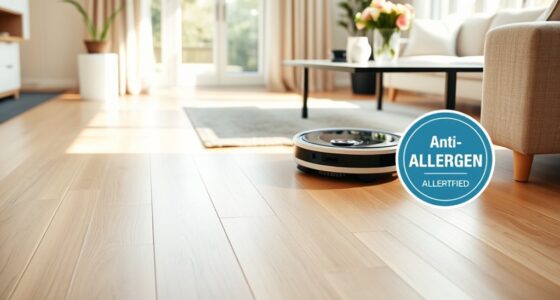
For a split-level home, I’d choose a robot vacuum that maps separate floors well and makes room-to-room cleaning easy to restart after you move it. My best overall pick is the Dreame L40 Ultra Gen 2 for its premium vacuum-and-mop setup; the Roborock Q7 L5 is a more straightforward alternative, while the Shark AI Ultra stands out for its self-emptying base. The main tradeoffs are navigation and floor-map flexibility versus simpler controls, and hands-off upkeep versus a smaller, less complex setup. A robot generally cannot climb stairs, so multi-level use still means carrying it between floors. Read on for the full comparison and guidance on choosing for your layout.

Get cleaning gear delivered free with Prime
- Fast, free delivery on millions of items
- Prime Video, Amazon Music and more included
- Member-only deals all year
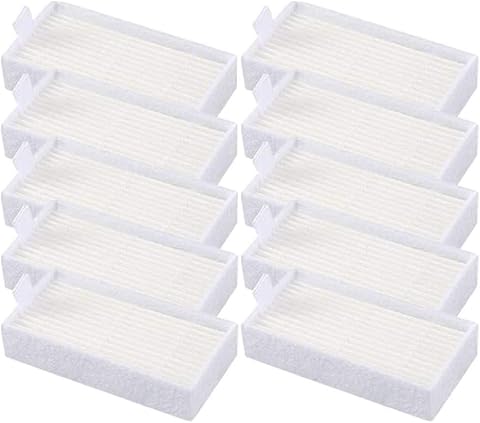
Complete the kit


Key Takeaways
- Floor maps matter more than a long feature list: LiDAR-equipped options such as the Dreame L40 Ultra Gen 2, Roborock Q7 L5, and Wrydao S6-Pro are the clearest fits for homes where each level needs its own mapped route.
- A self-emptying dock can reduce chores, but it does not solve stair access: Shark AI Ultra, VONKO S6Pro, and several other dock-equipped models still need to be carried to each level.
- The premium picks emphasize different priorities: MOVA V50 Ultra Complete leads on stated suction and zero-tangling claims, while Dreame L40 Ultra Gen 2 offers a prominent all-in-one vacuum-and-mop setup.
- Not every split-level home needs a mop: The iRobot Roomba 105 and Lefant M210 focus on vacuuming, making them simpler choices for carpet-heavy homes or buyers who prefer fewer mop parts to maintain.
- High suction figures alone do not determine the best fit: The 20,000Pa R11, 15,000Pa eufy C28, and 10,000Pa Roborock model also need to be judged by mapping, dock needs, and how comfortably the owner can move the robot between floors.
| Robot Vacuum and Mop Self-Emptying, 8000Pa Suction for Pet Hair/Carpet |  | Best Overall for Frequent Floor Changes | Suction power: 8,000Pa | Navigation: LiDAR and SLAM mapping | Maximum runtime: 150 minutes | VIEW ON AMAZON | See Our Full Breakdown |
| Tikom G8000 Max Robot Vacuum and Mop Combo |  | Best Value for a Simple Second-Floor Routine | Model: G8000 Max | Suction power: 5,000Pa | Dustbin capacity: 450ml | VIEW ON AMAZON | See Our Full Breakdown |
| Dreame L40 Ultra Gen 2 Robot Vacuum and Mop |  | Best Premium Pick for Carpet-Heavy Levels | Suction power: 25,000Pa | Suction levels: 5 | Battery capacity: 5,200mAh | VIEW ON AMAZON | See Our Full Breakdown |
| Wrydao S6-Pro Robot Vacuum and Mop with LiDAR and Self-Emptying |  | Best for Scheduled, Level-by-Level Cleaning | Suction power: 6,000Pa | Navigation: LiDAR smart mapping | Dust bag capacity: 3L | VIEW ON AMAZON | See Our Full Breakdown |
| ROPVACNIC Robot Vacuum and Mop Combo with 5200Pa Suction |  | Best for Pet Hair on Hard Floors | Suction power: 5,200Pa | Battery life: 120 minutes | Supported surfaces: Hardwood floors and low-pile carpets | VIEW ON AMAZON | See Our Full Breakdown |
| roborock Robot Vacuum Mop with LiDAR, 10000Pa, Anti-Tangle, 7–9 Weeks |  | Best for Pet Hair and Low-Upkeep Cleaning | Maximum suction: 10,000 Pa | Navigation: PreciSense LiDAR | Dust-bag capacity: 2.7 L | VIEW ON AMAZON | See Our Full Breakdown |
| iRobot Roomba Plus 415X Robot Vacuum and Mop Combo |  | Best for Automated Mop Care | Suction power: 20,000 Pa | Navigation: LiDAR mapping and obstacle recognition | Dock: AutoWash Dock with debris emptying, water refilling, mop washing, and heat drying | VIEW ON AMAZON | See Our Full Breakdown |
| eufy C28 Robot Vacuum Cleaner and Mop Combo, 15,000 Pa, HydroJet Roller Mop |  | Best for Continuous Roller Mopping | Suction power: 15,000 Pa | Mopping system: HydroJet roller with 24 water ports | Water-port speed: 270 RPM | VIEW ON AMAZON | See Our Full Breakdown |
| iRobot Roomba 105 Vac Robot Vacuum |  | Best for Straightforward Vacuum-Only Cleaning | Navigation: ClearView LiDAR | Cleaning system: Three-stage with multi-surface and edge-sweeping brushes | Suction levels: 4 | VIEW ON AMAZON | See Our Full Breakdown |
| Redroad R11 Robot Vacuum and Mop with 20,000Pa Suction and Self-Emptying Station |  | Best for Multi-Floor Map Storage | Maximum suction: 20,000 Pa | Battery capacity: 3,200 mAh | Dust-bag capacity: 4 L | VIEW ON AMAZON | See Our Full Breakdown |
| VONKO S6Pro Robot Vacuum and Mop with Self-Emptying Station |  | Best for Multi-Level Mapping and Low-Touch Upkeep | Suction power: Up to 8,000Pa | Navigation: LiDAR 2.0 | Multi-floor mapping: Up to 5 floors | VIEW ON AMAZON | See Our Full Breakdown |
| Lefant M210 Robot Vacuum Cleaner |  | Best Compact Pick for Simple Split-Level Routines | Dimensions: 11-inch diameter; 2.99-inch height | Runtime: Up to 120 minutes on low suction | Dustbin capacity: 500ml | VIEW ON AMAZON | See Our Full Breakdown |
| Shark AI Ultra Robot Vacuum with 60-Day Self-Emptying Base, Black (AV2511AE) |  | Best Bagless Self-Emptying Option | Navigation: 360° LiDAR mapping with obstacle detection | Cleaning pattern: Precision grid pattern | Self-emptying capacity: Up to 60 days of debris | VIEW ON AMAZON | See Our Full Breakdown |
| Roborock Q7 L5 Robot Vacuum and Mop Combo |  | Best for Carpet-and-Hard-Floor Map Control | Suction power: 8,000Pa | Navigation: LiDAR with multi-floor mapping | Water tank capacity: 270ml | VIEW ON AMAZON | See Our Full Breakdown |
| MOVA V50 Ultra Complete Robot Vacuum and Mop, 24,000Pa, Zero-Tangling |  | Best Premium Pick for Challenging Floor Transitions | Suction power: 24,000Pa | Navigation: FlexiRise LDS sensor with adjustable height | Mopping system: DuoSolution with warm water and optional cleaning solutions | VIEW ON AMAZON | See Our Full Breakdown |
| robot vacuum for split level house | Navigation | Suction power | Controls |
|---|---|---|---|
| Robot Vacuum and Mop Self-Empt | LiDAR and SLAM mapping | 8,000Pa | App, button, and voice control |
| Tikom G8000 Max Robot Vacuum a | — | 5,000Pa | App, remote, voice, and button |
| Dreame L40 Ultra Gen 2 Robot V | — | 25,000Pa | — |
| Wrydao S6-Pro Robot Vacuum and | LiDAR smart mapping | 6,000Pa | App and Alexa |
| ROPVACNIC Robot Vacuum and Mop | — | 5,200Pa | — |
| roborock Robot Vacuum Mop with | PreciSense LiDAR | — | — |
| iRobot Roomba Plus 415X Robot | LiDAR mapping and obstacle recognition | 20,000 Pa | — |
| eufy C28 Robot Vacuum Cleaner | LiDAR | 15,000 Pa | — |
| iRobot Roomba 105 Vac Robot Va | ClearView LiDAR | — | App, onboard buttons, and voice assistant |
| Redroad R11 Robot Vacuum and M | 360° LiDAR | — | — |
| VONKO S6Pro Robot Vacuum and M | LiDAR 2.0 | Up to 8,000Pa | App, voice, and Alexa |
| Lefant M210 Robot Vacuum Clean | — | — | App, Alexa, and Google Assistant |
| Shark AI Ultra Robot Vacuum wi | 360° LiDAR mapping with obstacle detection | — | App and voice; Alexa and Google Assistant compatible |
| Roborock Q7 L5 Robot Vacuum an | LiDAR with multi-floor mapping | 8,000Pa | App, buttons, and voice; compatible with Amazon Echo and Google Home |
| MOVA V50 Ultra Complete Robot | FlexiRise LDS sensor with adjustable height | 24,000Pa | — |
More Details on Our Top Picks
Robot Vacuum and Mop Self-Emptying, 8000Pa Suction for Pet Hair/Carpet
For a split-level home, I rank the Q10 PRO first because LiDAR and SLAM mapping support planned, room-by-room cleaning rather than relying on random passes. That can make it easier to run the robot on one level at a time, though it still needs to be carried between floors. Its 8,000Pa suction and carpet-capable design give it more headroom for tracked-in debris and pet hair than the Tikom G8000 Max, while the self-emptying station cuts down on routine bin handling. The stated 150-minute runtime also suits longer sessions. The tradeoffs are a bulky station to place on each level if you want convenient access, a 2.4GHz Wi-Fi requirement, and a mop that needs careful carpet exclusion. The robot’s own 1.5L dustbin may still need attention in a busy home.
Pros:- LiDAR and SLAM mapping support organized room cleaning and no-go planning.
- 8,000Pa suction is a stronger stated rating than the Tikom G8000 Max’s 5,000Pa.
- Self-emptying station reduces routine dustbin handling.
- 150-minute runtime with auto-recharge and resume support.
Cons:- A self-emptying dock on every level would add bulk and duplicate equipment.
- Mop mode can wet carpet if the holder is left on or zones are not configured.
- The app requires a 2.4GHz Wi-Fi network, and the 1.5L robot bin may still need emptying in high-traffic homes.
Best for: Pet owners in multi-level homes who want mapped cleaning, strong carpet pickup, and less frequent debris disposal.
Not ideal for: Buyers who expect one robot to clean multiple floors without being carried, or who need mop mode to avoid carpet automatically without setup.
- Suction power:8,000Pa
- Navigation:LiDAR and SLAM mapping
- Maximum runtime:150 minutes
- Dustbin capacity:1.5L
- Cleaning path width:12.6 inches
- Supported surfaces:Wooden and hard floors, low-pile carpet, ceramic
- Controls:App, button, and voice control
- Filter:HEPA
Our verdict“Choose the Q10 PRO if mapped, high-suction cleaning and reduced bin maintenance matter more than avoiding floor-to-floor carrying and setup.”
Tikom G8000 Max Robot Vacuum and Mop Combo
The Tikom G8000 Max is a straightforward pick for households that will carry a robot upstairs and want vacuuming and mopping in one run without relying on a self-emptying dock. Its 2.99-inch profile can reach beneath some low furniture, and the anti-fall sensors are useful around stair edges—a particularly relevant safeguard in split-level layouts. Compared with the Q10 PRO, it gives up LiDAR mapping, stronger suction, and hands-free emptying, so I would not make it my first choice for complicated rooms or heavy pet shedding. Its 450ml dustbin also means more frequent manual emptying. The stated runtime reaches 150 minutes only in quiet mode, and carpet suitability is limited to short- and medium-pile types. Multiple control options make it less dependent on app use, but it offers less precise room-by-room planning.
Pros:- Slim 2.99-inch height can fit beneath some low-clearance furniture.
- Anti-fall sensors add a useful safeguard near stair edges.
- Vacuums and mops simultaneously, with several cleaning modes.
- App, remote, voice, and button controls offer flexible operation.
Cons:- No LiDAR mapping is specified, so it lacks the room-planning precision of the Q10 PRO.
- The 450ml dustbin requires manual emptying and can fill quickly in pet-heavy homes.
- Carpet guidance is limited to short- and medium-pile surfaces.
Best for: Buyers who want a slim, carryable vacuum-mop for mostly hard floors and short- or medium-pile carpet on a second level.
Not ideal for: Homes with thick carpet, heavy shedding, or complex floor plans where LiDAR maps and self-emptying would save more effort.
- Model:G8000 Max
- Suction power:5,000Pa
- Dustbin capacity:450ml
- Water tank capacity:300ml
- Maximum runtime:Up to 150 minutes in quiet mode
- Height:2.99 inches
- Cleaning modes:Spot, edge, zig-zag, and manual
- Controls:App, remote, voice, and button
Our verdict“Pick the G8000 Max for a slim, uncomplicated hard-floor cleaner you are willing to carry and empty between levels.”
Dreame L40 Ultra Gen 2 Robot Vacuum and Mop
The Dreame L40 Ultra Gen 2 is the premium-leaning choice for a split-level home where one floor has substantial carpet and the owner wants detailed control over how the robot handles it. Its 25,000Pa suction, five power levels, and several carpet modes offer more adjustment than the Q10 PRO’s simpler pitch. Mop lifting and carpet avoidance can help manage mixed flooring without treating every rug like a hard floor, while the long quiet-mode runtime supports larger cleaning sessions. A self-cleaning dock also reduces routine upkeep, though the product details do not specify its capacity here. As with the other robots in this roundup, it cannot climb stairs, so it still needs to be moved between levels. The main drawbacks are its USA-only region compatibility, 2.4GHz Wi-Fi requirement, and separately sold module for automatic cleaning-solution filling.
Pros:- 25,000Pa suction and five levels allow more adjustment than the Q10 PRO’s stated 8,000Pa.
- Carpet avoidance, suction boost, intensive cleaning, and mop lifting support mixed floor types.
- Extendable corner-cleaning components target edges and hard-to-reach areas.
- 231-minute maximum quiet-mode runtime and a self-cleaning dock reduce interruptions and upkeep.
Cons:- The robot must still be carried between floors; mapping does not remove the stair barrier.
- Automatic cleaning-solution filling needs a separately purchased module.
- USA-only region compatibility and 2.4GHz Wi-Fi limit who can use it.
Best for: Owners of larger split-level homes with carpet and hard-floor zones who want adjustable cleaning and advanced mop-and-carpet settings.
Not ideal for: Buyers outside the USA, households that need 5GHz-only connectivity, or anyone seeking a simple, low-setup robot.
- Suction power:25,000Pa
- Suction levels:5
- Battery capacity:5,200mAh
- Maximum runtime:231 minutes in quiet mode
- Maximum cleaning area:1,679 sq ft
- Mop lift height:0.41 inches
- Carpet modes:Carpet avoidance, suction boost, intensive carpet cleaning, and mop lifting
- Connectivity:2.4GHz Wi-Fi; Alexa, Siri, and Google Home compatible
- Region compatibility:USA only
Our verdict“Choose the Dreame if you want the most configurable carpet and mop handling here and can accept its regional and connectivity limits.”
Wrydao S6-Pro Robot Vacuum and Mop with LiDAR and Self-Emptying
The Wrydao S6-Pro suits a split-level routine built around scheduled room cleaning: LiDAR maps, room scheduling, and no-go zones let you organize each run instead of asking the robot to cover the whole home at once. Its 3L self-emptying bag is rated for up to 90 days of debris, which is a useful maintenance advantage over the Tikom G8000 Max’s manually emptied 450ml bin. At 6,000Pa, it offers a middle ground between that model and the Q10 PRO’s stated 8,000Pa, with automatic carpet boost for low- to mid-pile carpet. The tradeoff is that the Wrydao’s mapped convenience still does not solve stairs: moving it between levels remains part of the routine. Its 2.4GHz Wi-Fi requirement may also rule it out for some networks, and the extended warranty may require registration.
Pros:- LiDAR mapping, room schedules, and no-go zones support deliberate level-by-level runs.
- 3L dust bag is rated for up to 90 days of hands-free debris collection.
- Automatic carpet boost helps adapt suction when it reaches carpet.
- Vacuum, mop, and combined modes include three water-flow settings.
Cons:- It must be carried between floors; the mapping features do not provide stair climbing.
- 2.4GHz Wi-Fi is required.
- Supported carpet range is low to mid pile, and extended warranty coverage may require registration.
Best for: Multi-level households that want mapped schedules and a self-emptying dock for regular cleaning on selected floors.
Not ideal for: Buyers who want a robot to travel between levels on its own, use 5GHz-only Wi-Fi, or clean thick carpet.
- Suction power:6,000Pa
- Navigation:LiDAR smart mapping
- Dust bag capacity:3L
- Maximum runtime:160 minutes
- Water-flow settings:3
- Supported surfaces:Hardwood, low- to mid-pile carpet, tile, and marble
- Controls:App and Alexa
- Wi-Fi requirement:2.4GHz
- Dimensions:12.35 × 3.87 × 12.35 inches
Our verdict“Choose the S6-Pro if you want a mapped, self-emptying cleaner for planned runs on separate levels and your carpets are not thick.”
ROPVACNIC Robot Vacuum and Mop Combo with 5200Pa Suction
The ROPVACNIC is a practical fit for split-level homes where the upstairs is mostly hardwood or other hard flooring and pet hair is the main daily nuisance. Its brush-free design and dual side brushes are intended to reduce hair tangling, while adjustable water flow lets it mop during a separate or combined routine. It offers app, remote, touchpad, and voice controls, giving more control options than the Wrydao S6-Pro, but it lacks the Wrydao’s stated LiDAR mapping and self-emptying bag. That difference matters when scheduling precise rooms or reducing maintenance across floors. With a 120-minute runtime and recommendations limited to low-pile carpet and hardwood, I would not choose it for a carpet-heavy level or long unattended sessions. It still needs carrying between floors, and no mapping system is specified.
Pros:- Brush-free design is intended to reduce pet-hair tangling.
- Adjustable electric mopping supports different water-flow needs.
- App, remote, touchpad, and voice controls offer flexible operation.
- Obstacle detection and automatic return-to-charge support routine cleaning.
Cons:- Recommended surfaces are hardwood and low-pile carpet, limiting its use on carpet-heavy levels.
- 120-minute runtime is shorter than the 150-minute figures listed for the Q10 PRO and Tikom G8000 Max.
- No LiDAR mapping or self-emptying station is specified, so planning and bin maintenance are more hands-on.
Best for: Pet owners with mostly hard flooring who want a brush-free vacuum-mop and several ways to control it.
Not ideal for: Homes with thick carpet, large levels that need extended runtime, or buyers who prioritize LiDAR mapping and self-emptying.
- Suction power:5,200Pa
- Battery life:120 minutes
- Supported surfaces:Hardwood floors and low-pile carpets
- Cleaning functions:Vacuuming and adjustable electric mopping
- Suction levels:3
- Filter:Multi-layer high-efficiency filtration
- Control options:App, remote, touchpad, and voice
- Voice compatibility:Amazon Echo and Google Home
- Battery type:Lithium-ion
Our verdict“Pick the ROPVACNIC for pet hair on hard floors if you value low-tangle upkeep over advanced mapping, self-emptying, or thick-carpet performance.”
roborock Robot Vacuum Mop with LiDAR, 10000Pa, Anti-Tangle, 7–9 Weeks
For a split-level home where carrying a robot between floors is already part of the routine, I’d favor this Roborock for its pet-hair-resistant brushes and 2.7L self-empty dock. LiDAR mapping can make room coverage more orderly on each mapped level, while app-set no-go zones help keep it away from stairs; the robot still needs to be carried between floors, and the listing does not specify multi-floor map storage. Its advertised 7–9 weeks between dust-bag changes can reduce upkeep, though actual intervals depend on household debris. Compared with the Roomba Plus 415X, it offers strong listed suction and anti-tangle design, but the Roomba’s dock also washes and heat-dries mop pads. Choose this Roborock for vacuuming and basic mopping with less brush maintenance; skip it if hands-free mop care is your priority.
Pros:- LiDAR mapping supports planned coverage and app-set no-go zones.
- Dual anti-tangle brush design targets long hair and pet fur.
- 2.7L sealed dust bag is advertised for up to 7–9 weeks of use.
- Vacuum-and-mop function offers three water-flow settings.
Cons:- Must be carried between levels; automatic stair travel is not described.
- No multi-floor map storage is specified in the provided details.
- The dock self-empties debris but does not list mop-pad washing or drying.
Best for: Pet owners in a split-level home who want mapped cleaning, reduced hair wrap, and fewer dust-bag changes.
Not ideal for: Buyers who want a robot to travel between floors on its own or a dock that washes and dries mop pads.
- Maximum suction:10,000 Pa
- Navigation:PreciSense LiDAR
- Dust-bag capacity:2.7 L
- Advertised hands-free interval:Up to 7–9 weeks
- Battery life:150 minutes
- Cleaning path width:12.8 inches
- Noise level:65 dB
- Supported surfaces:Wood, tile, marble, and carpet
- Connectivity:2.4 GHz Wi-Fi
Our verdict“Choose this Roborock if pet hair and reduced dust-bin maintenance matter more than automated mop-pad care or hands-free movement between levels.”
iRobot Roomba Plus 415X Robot Vacuum and Mop Combo
I’d put the Roomba Plus 415X on the shortlist for split-level households that want more than an auto-empty bin. Its dock washes and heat-dries mop pads, then refills water, reducing the manual work after a combined clean. LiDAR mapping and obstacle recognition support planned cleaning on each level, but the supplied details do not state that it stores maps for multiple floors, so expect to move the robot between levels yourself. Compared with the Roborock model in this batch, the 415X has a more involved mop-service dock, while the Roborock explicitly lists anti-tangle brushes and a 2.7L dust bag. The 415X’s mop lift can help when it reaches rugs, but 10 mm of clearance is not a substitute for checking rug compatibility. Battery life and dustbin capacity are not specified.
Pros:- Dock automatically empties debris, refills water, and washes mop pads.
- Heat drying helps leave mop pads ready between cleaning runs.
- LiDAR navigation and obstacle recognition support room-based cleaning.
- Mop pads lift 10 mm when the robot encounters rugs.
Cons:- Battery life and robot dustbin capacity are not provided.
- Multi-floor map storage is not specified.
- The dock’s mop-washing and water-refilling functions add maintenance components beyond a basic self-empty base.
Best for: Split-level households with hard floors and rugs that want a dock to handle debris, mop washing, drying, and water refilling.
Not ideal for: Buyers who need documented multi-floor map storage, known battery runtime, or a simpler dock with fewer mop-related components.
- Suction power:20,000 Pa
- Navigation:LiDAR mapping and obstacle recognition
- Dock:AutoWash Dock with debris emptying, water refilling, mop washing, and heat drying
- Advertised debris-emptying duration:Up to 90 days
- Mop-pad drying temperature:113°F
- Mop lifting height:10 mm
- Cleaning modes:Vacuum-only, mop-only, vacuum and mop, or vacuum then mop
Our verdict“Pick the Roomba Plus 415X if automated mop-pad washing and drying are worth more to you than clearly documented runtime and multi-floor mapping.”
eufy C28 Robot Vacuum Cleaner and Mop Combo, 15,000 Pa, HydroJet Roller Mop
The eufy C28 takes a different approach to floor washing than the Roomba Plus 415X: its HydroJet roller mop uses 24 water ports for continuous cleaning, while the Roomba’s dock focuses on washing and drying mop pads after a run. For a split-level home, LiDAR mapping supports orderly room coverage on the active floor, and its 3L auto-empty bag is listed for up to 75 days of maintenance relief. The robot will still need to be carried upstairs, and the details do not confirm multi-floor map storage. A 10.8 mm mop lift offers some rug clearance, but buyers with thick rugs should check whether that height is enough. The stated 54.89 dB noise level is lower than the Roborock’s listed 65 dB, though sound perception varies by setting and room.
Pros:- HydroJet roller uses 24 water ports for ongoing mop cleaning.
- 3L auto-empty bag is listed for up to 75 days of maintenance.
- LiDAR navigation avoids camera-based mapping.
- Mop lifts 10.8 mm to help clear some rugs.
Cons:- Specific battery runtime is not provided.
- Must be carried between floors, and multi-floor map storage is not confirmed.
- The listed noise level may bother people sensitive to vacuum sound.
Best for: Households with mostly hard flooring on each level that want a continuously cleaned roller mop and an automated maintenance station.
Not ideal for: Homes with thick rugs throughout or buyers who need confirmed battery runtime and documented multi-floor map storage.
- Suction power:15,000 Pa
- Mopping system:HydroJet roller with 24 water ports
- Water-port speed:270 RPM
- Auto-empty bag capacity:3 L
- Advertised maintenance duration:Up to 75 days
- Mop drying:50°C hot air
- Mop lifting height:10.8 mm
- Navigation:LiDAR
- Noise level:54.89 dB
Our verdict“Choose the C28 if roller-style mopping and a camera-free LiDAR system appeal more than documented runtime or confirmed multi-level map handling.”
iRobot Roomba 105 Vac Robot Vacuum
For buyers who want a simpler split-level routine, I’d choose the Roomba 105 over combo models when mopping is not a priority. ClearView LiDAR helps it map rooms, while recharge-and-resume can help it finish a larger level after its battery needs a top-up. That matters in a multi-floor home, though the robot still needs to be carried upstairs and the product details do not specify multi-floor map storage. Its three-stage cleaning system, edge-sweeping brush, and four suction levels cover basic carpet and hard-floor upkeep without adding a mop or wash station. Compared with the Roborock and Roomba Plus 415X in this batch, the 105 gives up self-emptying and mopping in favor of a less elaborate setup. It makes the most sense for buyers who value room mapping and app or voice control over reduced bin maintenance.
Pros:- ClearView LiDAR maps rooms for planned coverage.
- Recharge-and-resume helps complete larger cleaning areas.
- Offers app, onboard-button, and voice-assistant control.
- Includes spot cleaning, dirt detection, and anti-fall sensors.
Cons:- Does not mop or include a self-emptying dock.
- Multi-floor map storage is not specified.
- Requires a 2.4 GHz Wi-Fi network for connected functions.
Best for: Split-level households seeking mapped vacuuming, scheduled room cleaning, and recharge-and-resume without a mop system.
Not ideal for: Pet-heavy homes or busy households that want self-emptying, mopping, or less frequent dustbin maintenance.
- Navigation:ClearView LiDAR
- Cleaning system:Three-stage with multi-surface and edge-sweeping brushes
- Suction levels:4
- Floor types:Carpet and hard floors
- Controls:App, onboard buttons, and voice assistant
- Special features:Anti-fall sensors, dirt detection, eco mode, spot cleaning, recharge and resume
- Wi-Fi:2.4 GHz
- Filter:Cartridge
Our verdict“Pick the Roomba 105 if you want mapped vacuuming and recharge-and-resume without paying for a mop system or automated dock.”
Redroad R11 Robot Vacuum and Mop with 20,000Pa Suction and Self-Emptying Station
The Redroad R11 has the clearest split-level advantage in this batch: it stores up to four maps, which can make room plans more practical when the robot is carried between floors. That does not let it climb stairs, but it may avoid rebuilding a layout at each level. The 4L self-empty station and included two dust bags are also aimed at longer intervals between emptying; the listing advertises up to 120 days per bag and 240 days with both, claims that depend on use. Compared with the Roomba 105, the R11 adds mopping, self-emptying, and multi-map storage. Its feature list is broader, but the 20,000 Pa suction and long maintenance intervals are manufacturer claims, and no battery runtime or noise level is supplied. I’d favor it for multi-level convenience over buyers who prefer a simpler, better-documented setup.
Pros:- Stores up to four maps for homes with multiple levels.
- 4L station and two included dust bags are designed to extend time between emptying.
- Vacuuming, sweeping, and mopping modes offer different floor-care options.
- Extendable side brush and anti-tangle roller target corners and hair wrap.
Cons:- Must still be carried between floors; map storage does not provide stair climbing.
- Battery runtime and operating noise are not specified.
- The advertised dust-collection duration depends on household conditions and cleaning frequency.
Best for: Owners of split-level homes who want stored maps for up to four floors, app-based control, and a large self-empty station.
Not ideal for: Buyers who need a clearly stated battery runtime, independently documented performance, or a dock that also washes and dries mop components.
- Maximum suction:20,000 Pa
- Battery capacity:3,200 mAh
- Dust-bag capacity:4 L
- Included dust bags:2
- Advertised dust-collection duration:Up to 120 days per bag; up to 240 days with two bags
- Navigation:360° LiDAR
- Stored maps:Up to 4
- Water settings:3 adjustable flow levels
- Wi-Fi:2.4 GHz and 5 GHz
Our verdict“Choose the R11 if stored maps for several levels and a large self-empty station outweigh the appeal of a simpler, more fully specified vacuum.”
VONKO S6Pro Robot Vacuum and Mop with Self-Emptying Station
For a split-level home where the robot may need separate maps for different floors, the VONKO S6Pro supports up to five floor maps and lets you set room and no-go zones in the app. Its LiDAR navigation gives you more control over cleaning areas than the simpler Lefant M210, which is a better fit for basic, single-level routines. The self-emptying station and 2.5-liter bag also reduce trips to the bin when you run frequent sessions across floors; moving the robot between levels is still a manual task, not something the maps do for you. Vacuuming and mopping add flexibility on hard flooring, while up to 8,000Pa suction suits homes with debris and pet hair. The tradeoff is that mopping does not cover carpet, and the claimed hands-free period varies with use.
Pros:- Stores maps for up to five floors, useful when carrying the robot between levels.
- LiDAR mapping and no-go zones support more directed cleaning than basic-mode models.
- Self-emptying station uses a 2.5-liter dust bag to cut down on routine bin emptying.
- Combines vacuuming and hard-floor mopping with up to 8,000Pa suction.
Cons:- The robot must still be moved manually between floors.
- Mopping is limited to hard floors.
- The up-to-60-day hands-free interval depends on household use.
Best for: Owners of split-level homes who want saved maps for several floors, scheduled room cleaning, and less frequent dustbin emptying.
Not ideal for: Households that need the robot to climb stairs or mop carpet; the multi-floor maps do not remove the need to carry it between levels, and mopping is for hard floors.
- Suction power:Up to 8,000Pa
- Navigation:LiDAR 2.0
- Multi-floor mapping:Up to 5 floors
- Runtime:Up to 180 minutes
- Dust bag capacity:2.5 liters
- Surfaces:Hard floors and carpet; mopping for hard floors
- Controls:App, voice, and Alexa
Our verdict“Choose the S6Pro if you want multi-floor maps, strong suction, and a self-emptying dock, and are comfortable carrying it between levels.”
Lefant M210 Robot Vacuum Cleaner
The 11-inch-wide, 2.99-inch-tall Lefant M210 is the straightforward choice for buyers who value fitting beneath low furniture over advanced floor-by-floor automation. Its compact shape can help with beds and sofas on whichever level you place it, and app or voice controls make scheduled runs easy. Compared with the VONKO S6Pro, it gives up LiDAR multi-floor mapping, mopping, and a self-emptying station; in return, its simpler setup suits someone who wants a basic vacuum without a larger dock. The brushless suction design is intended to reduce pet-hair tangles, but the listed maximum-suction figure is given as “1100 feet,” so it does not offer a clear, directly comparable suction rating. Runtime reaches 120 minutes only on low suction, and zigzag mode is not recommended for carpet.
Pros:- Low 2.99-inch profile can reach under many beds and sofas.
- Brushless suction is designed to reduce hair tangles.
- App scheduling and Alexa or Google Assistant controls offer simple routine management.
- Six cleaning modes include spot, edge, scheduled, and manual cleaning.
Cons:- No multi-floor mapping is listed, so it is less suited to repeatable split-level room plans.
- The 120-minute runtime applies to low suction.
- Zigzag mode is not recommended for carpet, and the supplied suction figure is unclear.
Best for: Apartment or townhouse owners with low furniture and mostly hard floors who want a compact robot for scheduled cleaning on one level at a time.
Not ideal for: Buyers who need saved maps for multiple floors, carpet-focused cleaning, mopping, or a self-emptying base.
- Dimensions:11-inch diameter; 2.99-inch height
- Runtime:Up to 120 minutes on low suction
- Dustbin capacity:500ml
- Noise level:52dB
- Cleaning modes:Zigzag, random, spot, edge, scheduled, and manual
- Surfaces:Wood, hard floors, and low-pile carpet
- Controls:App, Alexa, and Google Assistant
Our verdict“Pick the M210 for compact, basic vacuuming on one level at a time, not for mapped multi-floor coverage or carpet-heavy homes.”
Shark AI Ultra Robot Vacuum with 60-Day Self-Emptying Base, Black (AV2511AE)
The Shark AI Ultra is the clearest choice here for buyers who want a bagless self-emptying base and mapped vacuuming without adding a mop system. Its 360-degree LiDAR and precision grid pattern are aimed at orderly coverage, while recharge-and-resume helps when a session outlasts a charge—useful when cleaning larger areas across a split-level routine. Compared with the VONKO S6Pro, Shark’s listed advantage is its bagless base; the VONKO instead offers multi-floor map capacity, mopping, and a stated longer runtime. The Shark description does not specify how many floor maps it stores, so buyers should not assume the same multi-floor flexibility. The self-cleaning brushroll is geared toward pet hair, but the runtime data conflicts: the description says up to 90 minutes, while specifications list 120 minutes. I would treat that figure cautiously.
Pros:- Bagless self-emptying base is listed to hold up to 60 days of debris.
- 360-degree LiDAR and a precision grid pattern support structured cleaning.
- Self-cleaning brushroll is designed to handle pet hair and limit hair wrap.
- Recharge-and-resume can continue a cleaning session after charging.
Cons:- No mopping capability is clearly established by the product data.
- The listed runtime conflicts between 90 and 120 minutes.
- The number of supported floor maps is not specified.
Best for: Pet owners who want a mapped vacuum with a bagless debris base and recharge-and-resume for longer cleaning sessions.
Not ideal for: Buyers seeking mopping or clearly specified multi-floor map storage; the product information does not confirm either, and its runtime figures conflict.
- Navigation:360° LiDAR mapping with obstacle detection
- Cleaning pattern:Precision grid pattern
- Self-emptying capacity:Up to 60 days of debris
- Runtime:Conflicting listing: up to 90 minutes in description; 120 minutes in specifications
- Dust capacity:0.27 gallons
- Surfaces:Carpets and hard floors
- Controls:App and voice; Alexa and Google Assistant compatible
Our verdict“Choose the Shark if bagless self-emptying and pet-hair-focused vacuuming matter more than mopping or confirmed multi-floor mapping.”
Roborock Q7 L5 Robot Vacuum and Mop Combo
The Q7 L5 balances vacuuming and mopping with LiDAR navigation and multi-floor mapping, making it a useful fit for homes where cleaning needs change from carpeted rooms to hard floors between levels. Its 8,000Pa suction and anti-tangle brushes give it a stronger pet-hair and debris focus than the compact Lefant M210, while the M210 may suit buyers who mainly need a slim vacuum for one floor. App and voice controls support scheduling and no-go zones, so you can set boundaries around stairs or areas that should stay dry. The 270ml water tank adds a mopping option, but the dustbin and water tank are an integrated combo part, which can make managing vacuum-only and mop runs less convenient. It also requires 2.4GHz Wi-Fi, a potential setup snag in homes configured for 5GHz only.
Pros:- Multi-floor mapping helps organize cleaning routines across different levels.
- 8,000Pa suction is suited to carpet, hard floors, and everyday debris.
- Vacuuming and mopping cover a wider range of floor-care needs than the Shark AI Ultra.
- Anti-tangle brushes and app or voice controls support easier routine management.
Cons:- Only supports 2.4GHz Wi-Fi.
- The water tank and dustbin are an integrated combo part.
- The product data does not list a self-emptying station.
Best for: Split-level households that want mapped vacuuming and mopping across mixed surfaces and are comfortable managing the robot through a 2.4GHz network.
Not ideal for: Buyers with 5GHz-only Wi-Fi or anyone who wants separate, simple-to-manage dust and water containers.
- Suction power:8,000Pa
- Navigation:LiDAR with multi-floor mapping
- Water tank capacity:270ml
- Battery life:150 minutes
- Noise level:60dB
- Wi-Fi:2.4GHz only
- Surfaces:Carpet, laminate, tile, vinyl, wood, and marble
- Controls:App, buttons, and voice; compatible with Amazon Echo and Google Home
Our verdict“Choose the Q7 L5 if you need multi-floor mapping plus vacuum-and-mop flexibility and can work with its 2.4GHz connection and combined tank design.”
MOVA V50 Ultra Complete Robot Vacuum and Mop, 24,000Pa, Zero-Tangling
The MOVA V50 Ultra stands apart from the other picks with 24,000Pa suction and listed obstacle clearance up to 1.6 inches, features aimed at powerful cleaning and handling changes in floor height. That clearance may help with some thresholds between rooms, but it does not mean the robot can climb stairs; split-level owners still need to move it between levels. Its adjustable-height FlexiRise LDS sensor and obstacle avoidance add to the navigation package, while the DuoSolution system offers warm-water mopping and optional cleaning solutions. Compared with the Roborock Q7 L5, the MOVA presents a more elaborate cleaning system and much higher stated suction, but the provided product data does not specify multi-floor map storage, runtime, or dock details. That leaves more unanswered for a buyer planning separate level-by-level routines. Its feature set may also take more setup and upkeep to manage.
Pros:- 24,000Pa stated suction targets deep cleaning on carpets and hard floors.
- Obstacle clearance is listed up to 1.6 inches, which may help with some floor transitions.
- FlexiRise LDS navigation and obstacle avoidance support route planning.
- DuoSolution mopping uses warm water and allows optional cleaning solutions.
Cons:- Obstacle clearance does not let the robot travel between levels by itself.
- Multi-floor map capacity and runtime are not specified in the supplied data.
- The advanced feature set may require more setup and routine management.
Best for: Buyers seeking high stated suction, advanced navigation, and a feature-rich mop system for mixed flooring and modest thresholds.
Not ideal for: Split-level owners who prioritize confirmed multi-floor map storage, simple controls, or clear information about runtime and dock maintenance.
- Suction power:24,000Pa
- Navigation:FlexiRise LDS sensor with adjustable height
- Mopping system:DuoSolution with warm water and optional cleaning solutions
- Obstacle clearance:Up to 1.6 inches
- Water spray nozzles:20
- Floor compatibility:Carpets and hard floors
- Hair management:Anti-tangle mechanisms
Our verdict“Choose the MOVA for its high stated suction, threshold clearance, and configurable mopping, but not if confirmed multi-floor mapping is your main requirement.”
How We Picked
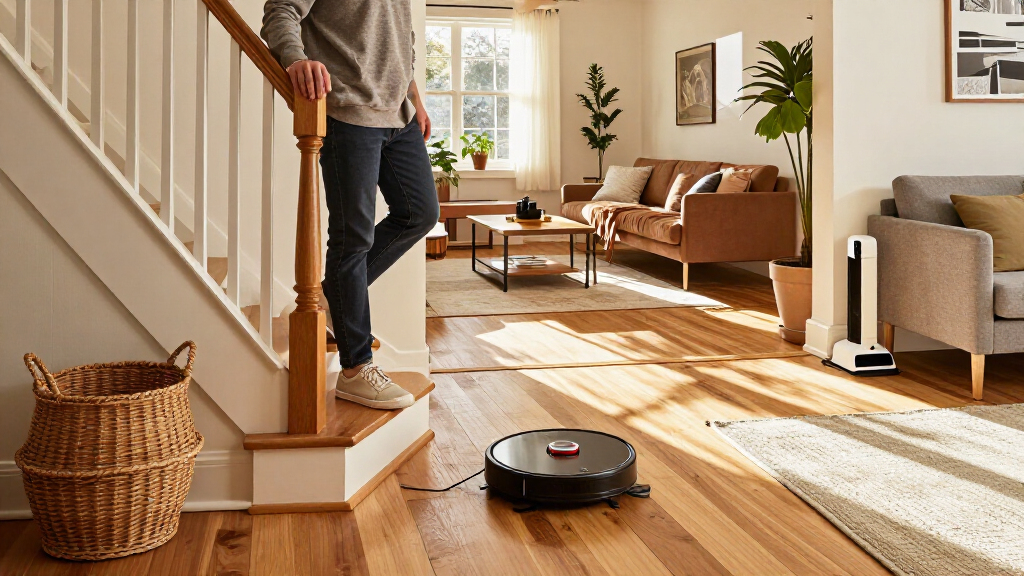
I ranked these models around the extra work a split-level layout creates: the robot must be easy to carry between floors, resume cleaning without confusion, and handle different floor types across levels. I gave greater weight to navigation and multi-map usefulness where those capabilities are specified, then considered self-emptying, mop design, pet-hair features, and the amount of routine care each setup is likely to require. A robot cannot replace a vacuum on every level at once, so portability and simple control matter alongside cleaning claims.
The order reflects the balance of those factors, not a single headline specification. Models with more elaborate cleaning systems rank higher for households that want less manual upkeep, while simpler or vacuum-only options suit buyers who value lower complexity. Product names and listed specifications do not confirm identical map behavior, carpet handling, or station needs across every floor, so I favor choices with a clear fit and call out meaningful tradeoffs rather than treating suction numbers as a complete verdict.
Factors to Consider When Choosing Robot Vacuum For Split Level House
For a split-level home, the right robot is the one that fits the way you move it and maintain it—not necessarily the one with the biggest suction claim. I’d settle the practical questions about stairs, map handling, flooring, and station placement before comparing extras.
Plan for carrying the robot between floors
No robot in this lineup should be treated as a stair-climbing cleaner. Before choosing, count how many levels you want cleaned in a typical week and decide whether you are comfortable carrying the unit between them. A heavier robot or a large docking station may be less convenient if you need to move equipment regularly. You can leave a dock on the main level and carry the robot elsewhere, but that changes how often it can recharge or empty itself. A common mistake is buying a large all-in-one system before deciding where it can live. If one level is rarely used, a simpler plan for that floor may be more practical than optimizing every feature for the whole house.
Check how multi-floor maps fit your routine
Mapping helps the robot follow a deliberate route instead of wandering, but a split-level owner should check whether the app supports saving maps for multiple floors and selecting the correct one after a move. Do not assume that a model with LiDAR automatically offers the exact map workflow you want. Consider whether you need room-by-room cleaning, no-go zones near stairs, or a simple whole-floor run. If different levels have different furniture arrangements, saved maps can reduce repeated setup, provided the robot recognizes each map reliably. Test your intended app workflow early, while the return window is open. A sophisticated map is less useful if the household finds it frustrating to switch levels or set cleaning zones.
Match vacuum and mop features to each level
Many split-level homes have carpet upstairs and hard floors on another level, so a combo robot may not be equally useful everywhere. Check how the model handles rugs during mopping and whether the mop can be removed or kept off carpeted areas. A vacuum-only model can make more sense if most rooms are carpeted or if you already mop by hand. Combo models add water tanks, pads, or roller components that need attention after use, which can offset some of their convenience. Think about the floors you clean most often rather than buying a mop feature for a small entryway. For mixed surfaces, clear app controls for rooms and zones can matter as much as the mop hardware.
Choose a dock based on where it can stay
Self-emptying and mop-care stations can cut down on routine chores, but they take up space and are intended to remain in one location. Measure the chosen spot, including room for the robot to approach and leave the dock, before committing to a larger base. If you plan to carry the robot upstairs, decide whether the dock will stay on the main floor or whether you need a lighter, simpler routine on upper levels. A self-emptying base reduces how often you handle collected debris, but it does not mean the robot needs no maintenance. Filters, brushes, bags, water components, and mop parts may still need care depending on the model. Buyers who want less equipment may be better served by a simpler robot than a station that dominates a narrow landing.
Treat suction claims as one part of the comparison
Large suction figures can help distinguish product positioning, but they do not alone describe how well a robot cleans your rooms. Brush design, navigation, floor type, edge coverage, and the way a robot handles hair all affect the result. Pet owners should look for specific anti-tangle claims and plan for occasional brush cleaning rather than assuming hair will never collect. Carpet-heavy households should give more weight to vacuuming behavior and room coverage than to mop features. Hard-floor homes may care more about mop design and upkeep. When comparing models with different advertised suction values, focus on the feature mix that addresses your own messes and layout.
Keep stair safety and daily setup simple
Stairs create a safety issue as well as a portability issue, so use map boundaries and physical placement thoughtfully rather than relying on a robot to solve every edge case. Keep the route to the dock clear on the floor where it sits, and avoid placing it where a carried robot can be bumped or dropped. If multiple people will operate the vacuum, consider whether everyone can select the right floor and cleaning mode in the app. A complicated setup can lead to missed rooms or repeated runs, especially when the robot changes levels. Buyers who prefer minimal setup may value simple scheduling more than advanced customization. A short routine—carry, select the floor, start—can be more useful than a long feature list nobody uses.
Frequently Asked Questions
Can one robot vacuum clean every floor of a split-level home?
One robot can clean multiple floors if you are willing to carry it between them, but it cannot climb stairs by itself. Look for clear support for saved multi-floor maps and check how the app handles a robot moved to a different level. You may also need to return it to its dock manually if the dock stays on another floor. If you want unattended cleaning on more than one level, a single robot may not meet that expectation. The most useful choice depends on how often you clean each floor and how much manual moving you accept.
Should I buy a self-emptying model if its dock will stay downstairs?
A downstairs dock can still be useful: the robot may empty its bin when it returns there, but it will not automatically visit the dock after cleaning upstairs. You will need to carry the robot back or empty it yourself after an upper-floor run if it cannot return to its base. Consider how much debris the upper levels collect and how often you plan to clean them. A self-emptying base is more valuable when the main floor gets frequent runs and has a convenient permanent dock location. If moving the robot is already a regular task, a simpler model may be easier to live with.
Is LiDAR worth prioritizing for a split-level layout?
LiDAR can support more structured navigation, which is useful when rooms and passageways differ from one level to another. The deciding point is whether the particular robot can save and switch between maps in a way that suits your routine; the sensor label alone does not confirm that. If you want scheduled room-by-room cleaning or boundaries near stairs, mapping features are more relevant than a basic random-cleaning approach. For a small, open floor that needs occasional vacuuming, simpler navigation may be adequate. Check app controls and multi-floor map behavior before paying extra for a navigation feature.
Do I need a vacuum-and-mop combo for a home with both carpet and hard floors?
Not necessarily. A combo can help on hard floors, but it adds mop parts and upkeep that may be of little use on carpeted levels. Check whether the robot can avoid rugs while mopping and whether you can set room-specific cleaning rules. If carpet covers most of the area, a vacuum-focused model such as the Roomba 105 or Lefant M210 may be a simpler match. If hard floors make up a large share of the home, a combo may justify its extra maintenance. Choose based on the flooring you clean most often, not just the number of features offered.
When does a premium robot make sense over a simpler model?
A premium model is easier to justify when its added functions solve repeat chores you actually have, such as frequent mopping, pet hair, or regular cleaning across mapped rooms. A complex station may save upkeep on the floor where it stays, but it cannot remove the need to carry the robot to other levels. If you mostly want occasional vacuuming in a compact area, the extra mop and dock systems may add cost and maintenance without changing your routine much. Compare the station footprint and care requirements with the time you expect to save. Pay for features that match your floor plan and habits, not a headline specification by itself.
Conclusion
For a broad mix of split-level cleaning needs, I’d start with the Dreame L40 Ultra Gen 2 as best overall, especially if you want a premium vacuum-and-mop setup and are comfortable managing a more involved system. For a best value-style choice, the Roborock Q7 L5 offers a more focused mapped vacuum-and-mop alternative without the same premium positioning. The MOVA V50 Ultra Complete is my best premium pick for buyers drawn to its high stated suction and zero-tangling claim, while the iRobot Roomba 105 is a best-for-beginners option for households that prefer vacuuming without mop-system upkeep. For specific needs, choose the Shark AI Ultra if a self-emptying base is your priority, or the Lefant M210 if a simpler, compact vacuum is more appealing. Whichever you pick, plan for carrying it between levels and confirm that its map and dock routine fit your home before relying on unattended cleaning.
Halloween Picks
halloween
As an affiliate, we earn on qualifying purchases.