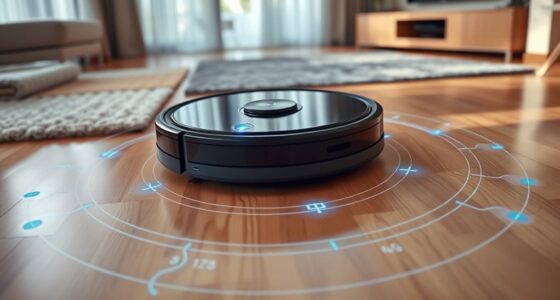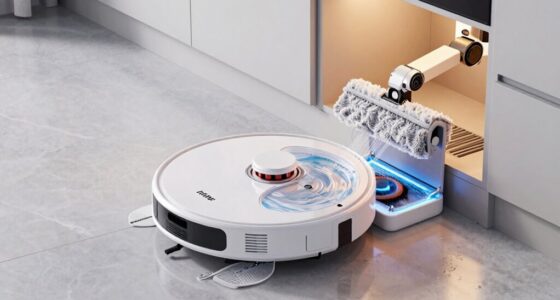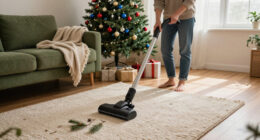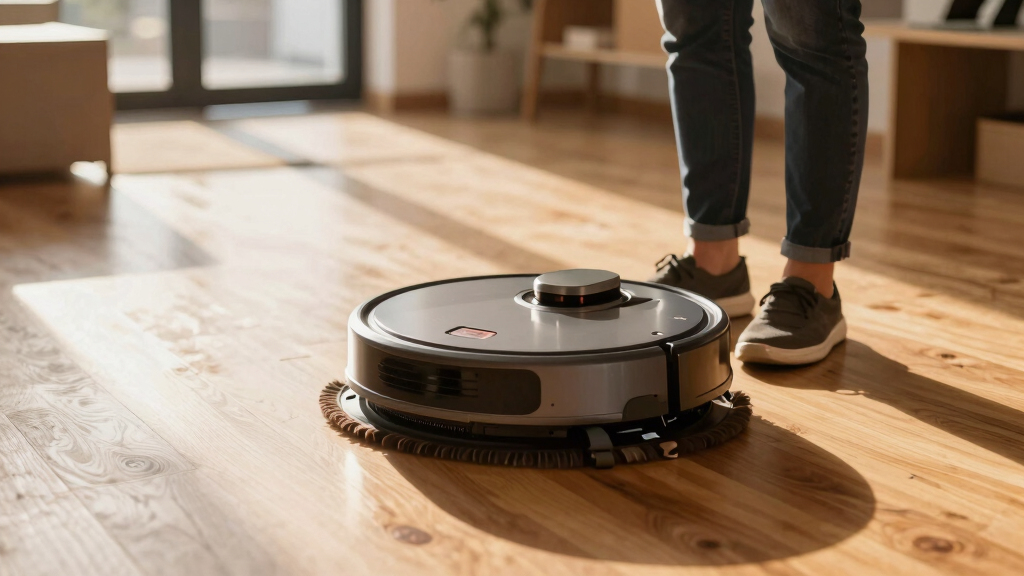

Robotic floor scrubbers range from basic vacuum-mop combos to docked systems that wash, dry, and manage mop pads with far less daily input. My top overall pick is the Roborock Qrevo S Pro because it offers the strongest balance of suction, liftable spinning mops, obstacle handling, and dock maintenance for mixed homes. The eufy E25 is the premium standout for buyers who want a roller-style self-cleaning mop system, while the Tikom L8000 Plus makes sense for value-focused shoppers who still want LiDAR and a self-emptying base. The main tradeoffs are mop pressure versus vacuum power, hands-off docking versus price, and smart mapping versus simple room-by-room cleanup. Keep reading for the full breakdown of which robotic floor scrubbers fit different homes, budgets, floor types, and tolerance for maintenance.

Get cleaning gear delivered free with Prime
- Fast, free delivery on millions of items
- Prime Video, Amazon Music and more included
- Member-only deals all year
Key Takeaways
- The strongest picks are not just higher-suction vacuums; the best robotic floor scrubbers pair strong pickup with better mop contact, pad cleaning, mapping, and dock support.
- Roborock models dominate the upper rankings because they combine LiDAR navigation, stronger mopping systems, and better carpet handling than most budget combos.
- The eufy E25 is the most premium hands-off option here, but its advanced dock and roller mop make the most sense only if hard-floor scrubbing is the main priority.
- Budget models such as the Tikom G8000 Max, ILIFE V5s Plus, and slim 2-in-1 combo are easier to buy, but they ask for more manual emptying, refilling, and map management.
- Dedicated mopping models like the EVERYBOT Three-Spin can scrub hard floors better than cheap vacuum-mop hybrids, but they are less versatile for homes with rugs, carpet, or pet hair.
| ROPVACNIC Robot Vacuum and Mop Combo with 5200Pa Suction |  | Best Entry-Level Pet-Hair Scrubber | Suction Power: 5200Pa | Surface Recommendation: Hardwood floors and low-pile carpets | Mopping: Adjustable electric mopping | VIEW LATEST PRICE | See Our Full Breakdown |
| Roborock Q10 S5+ Robot Vacuum and Mop |  | Best Self-Emptying Value | Suction Power: 10,000Pa | Dust Capacity: 2.7L dock capacity | Self-Emptying: Up to 70 days | VIEW LATEST PRICE | See Our Full Breakdown |
| Tikom G8000 Max Robot Vacuum and Mop Combo |  | Best Long-Run Budget Pick | Suction Power: 5000Pa | Battery Life: 150 minutes | Dustbin Capacity: 450ml | VIEW LATEST PRICE | See Our Full Breakdown |
| eufy E25 Robot Vacuum and Mop Combo |  | Best Premium Hands-Free Scrubber | Suction Power: 20,000Pa | Mop System: HydroJet self-clean roller mop | Dust Capacity: 3L auto-empty bag | VIEW LATEST PRICE | See Our Full Breakdown |
| EVERYBOT Three-Spin Robot Mop for Hard Floors |  | Best Dedicated Hard-Floor Scrubber | Surface Recommendation: Hard floors | Mopping System: Three independently spinning pads | Battery Life: 120 minutes | VIEW LATEST PRICE | See Our Full Breakdown |
| Roborock Qrevo S Pro Robot Vacuum and Mop |  | Best High-Power Scrubber Dock | Suction Power: 18,500 Pa | Battery Life: 180 minutes | Capacity: 2.7 liters | VIEW LATEST PRICE | See Our Full Breakdown |
| Roborock Q7 L5 Robot Vacuum and Mop Combo |  | Best Mapping Pick Without a Big Base | Suction Power: 8,000 Pa | Navigation: LiDAR | Water Tank Capacity: 270 ml | VIEW LATEST PRICE | See Our Full Breakdown |
| Kilgone Robot Vacuum and Mop Combo |  | Best Slim Pick for Pet Hair on Hard Floors | Suction Power: 2300 Pa | Water Tank Capacity: 230 ml | Battery Life: 120 minutes | VIEW LATEST PRICE | See Our Full Breakdown |
| Tikom L8000 Plus Robot Vacuum and Mop |  | Best Self-Emptying Value | Suction Power: 6000 Pa | Dustbin Capacity: 3 liters | Battery Life: 150 minutes | VIEW LATEST PRICE | See Our Full Breakdown |
| Robot Vacuum and Mop Combo 2-in-1 Robotic Vacuum Cleaner |  | Best Basic Budget Scrubber | Suction Power: 2000 Pa | Water Tank Capacity: 230 ml | Battery Life: 100 minutes | VIEW LATEST PRICE | See Our Full Breakdown |
| ILIFE V5s Plus Robot Vacuum and Mop Combo |  | Best Slim Budget Scrubber | Battery: 2600mAh | Runtime: 110 minutes | Max Cleaning Area: 1290 ft² | VIEW LATEST PRICE | See Our Full Breakdown |
| iRobot Roomba 505X Robot Vacuum & Mop Combo |  | Best Hands-Off Premium Pick | Suction Power: 70x stronger than Roomba 600 series | AutoEmpty Duration: Up to 75 days | Mop Pads: DualClean with washing and heat-drying | VIEW LATEST PRICE | See Our Full Breakdown |
| MONSGA Robot Vacuum and Mop Combo with Self-Emptying |  | Best for Large Homes | Max Suction: 8000Pa | Water Tank Capacity: 460ml | Dustbin Capacity: 4L | VIEW LATEST PRICE | See Our Full Breakdown |
| Tikom L8000 Pro Robot Vacuum and Mop Combo |  | Best Quiet LiDAR Option | Suction Power: 6000Pa | Battery Life: 150 minutes | Water Tank Capacity: 300ml | VIEW LATEST PRICE | See Our Full Breakdown |
| Bagotte Robot Vacuum and Mop Combo |  | Best Control Options | Suction Power: 6000Pa | Navigation: LiDAR | Cleaning Modes: Sweep, vacuum, mop, roll | VIEW LATEST PRICE | See Our Full Breakdown |
More Details on Our Top Picks
ROPVACNIC Robot Vacuum and Mop Combo with 5200Pa Suction
I place the ROPVACNIC Robot S1 here because it gives buyers a practical middle ground: stronger suction than basic mop-first bots, plus adjustable electric mopping for everyday hard-floor upkeep. Compared with the Tikom G8000 Max, it has a shorter 120-minute battery life, but its pet-hair focus and obstacle avoidance make it feel better matched to homes where crumbs, fur, and tracked-in dirt pile up between deeper cleans. It cannot match the Roborock Q10 S5+ for self-emptying or sonic scrubbing, so I would not treat it as a low-maintenance pick. The tradeoff is clear: this is a capable robotic floor scrubber for mixed messes, not a premium docked system that handles most cleanup chores by itself.
Pros:- 5200Pa suction helps pull pet hair and grit before mopping
- Adjustable electric mopping gives more control than fixed damp-pad systems
- Obstacle avoidance and self-charging reduce daily babysitting
- App, remote, and voice controls suit different household habits
Cons:- No self-emptying dock, so dustbin maintenance stays manual
- Best suited to hard floors and low-pile carpets, not plush carpet
- Full feature access depends on app or voice setup
Best for: Pet owners in apartments or small homes who want one robot for daily vacuuming and light mopping on hard floors
Not ideal for: Large homes or thick-carpet spaces where the 120-minute runtime and low-pile carpet limit may feel restrictive
- Suction Power:5200Pa
- Surface Recommendation:Hardwood floors and low-pile carpets
- Mopping:Adjustable electric mopping
- Navigation:Intelligent navigation with obstacle avoidance
- Controls:App, remote, and voice
- Battery Life:120 minutes
- Dimensions:12 x 12 x 2.99 inches
- Weight:3.3 kg
Bottom line: This is my pick for pet-heavy homes that want affordable vacuum-and-mop coverage without paying for a large docking station.
Roborock Q10 S5+ Robot Vacuum and Mop
The Roborock Q10 S5+ earns a high spot because it pairs 10,000Pa suction with a dock that can hold debris for up to 70 days, which matters if the goal is a robotic floor scrubber that does more than drag a damp pad around. Compared with the ROPVACNIC Robot S1, it is the more hands-off choice, especially for pet hair and larger floor plans. Against the eufy E25, though, it looks more restrained: the eufy brings far higher suction and a self-cleaning roller mop, while this Roborock leans on sonic vibration and a smaller lift range. I like it most for buyers who want strong mapping, automatic emptying, and real mopping help without moving all the way into premium all-in-one territory.
Pros:- 10,000Pa suction gives it stronger debris pickup than many midrange mop combos
- Self-emptying station can reduce dustbin chores for up to 70 days
- Sonic mopping adds more agitation than a passive wet pad
- LiDAR mapping and structured-light avoidance suit multi-room cleaning
Cons:- Only supports 2.4GHz Wi-Fi
- App setup is needed to get the best mapping and cleaning controls
- Mop lift is limited to 8mm, which may not clear every rug
Best for: Busy households that want self-emptying cleanup, LiDAR mapping, and stronger-than-average mopping without buying the priciest docked system
Not ideal for: Homes with 5GHz-only Wi-Fi or buyers who want a fully self-washing mop dock
- Suction Power:10,000Pa
- Dust Capacity:2.7L dock capacity
- Self-Emptying:Up to 70 days
- Mopping Technology:Sonic vibration up to 3000 times per minute
- Carpet Lift:Up to 8mm
- Navigation:PreciSense LiDAR
- Obstacle Avoidance:ReactiveTech structured light
- Connectivity:2.4GHz Wi-Fi, app, and voice control
Bottom line: This is the best fit when I want strong automated cleaning and lower upkeep, but not the cost or bulk of a flagship scrubber dock.
Tikom G8000 Max Robot Vacuum and Mop Combo
I rank the Tikom G8000 Max as the runtime-focused value pick because its 150-minute battery life gives it more staying power than the ROPVACNIC Robot S1 and EVERYBOT Three-Spin. That matters for buyers who want a robotic floor scrubber to finish more rooms in one pass rather than heading back to charge halfway through. Its 5000Pa suction is close to the ROPVACNIC, but Tikom’s appeal is the balance of vacuuming, mopping, multiple controls, and a slim 2.99-inch body. The drawback is mopping depth: compared with the Roborock Q10 S5+ or eufy E25, this is less of a scrub-heavy system and more of a daily maintenance cleaner. The 300ml tank may also need refilling during larger mop runs.
Pros:- 150-minute runtime is strong for the price class
- Simultaneous vacuuming and mopping can shorten routine cleanups
- 5000Pa suction is useful for dust, crumbs, and pet hair on hard floors
- App, remote, voice, and button controls give flexible operation
Cons:- Mopping is lighter-duty than sonic or roller-mop systems
- 300ml water tank may need refills in larger homes
- Setup may feel less simple for buyers who want a basic remote-only robot
Best for: Budget-minded buyers with mostly hard floors who need longer coverage across several rooms before recharging
Not ideal for: Buyers with thick rugs or sticky kitchen messes who need stronger agitation from sonic or roller-style mopping
- Suction Power:5000Pa
- Battery Life:150 minutes
- Dustbin Capacity:450ml
- Water Tank Capacity:300ml
- Height:2.99 inches
- Controls:App, remote, voice, and button
- Cleaning Modes:Spot, edge, zig-zag, and manual
- Safety Sensors:Obstacle and stair detection
Bottom line: This is the value choice I would point to for longer daily cleaning runs, as long as deep scrubbing is not the main need.
eufy E25 Robot Vacuum and Mop Combo
The eufy E25 is the premium choice in this group because it treats floor scrubbing as a full system: 20,000Pa suction, a HydroJet self-clean roller mop, auto-emptying, and pet-hair controls all work toward lower-touch cleaning. Compared with the Roborock Q10 S5+, it brings more suction and a more aggressive mop design, which should appeal to buyers dealing with larger homes, mixed flooring, and repeated pet mess. Compared with the EVERYBOT Three-Spin, it is far more versatile, since it can handle carpets as well as hard floors. The cost is size, price, and dock weight: at 37.48 pounds, this is not a discreet little helper. It also still uses 2.4GHz Wi-Fi, so smart-home setup has the same network limit as the Roborock.
Pros:- 20,000Pa suction is the strongest in this batch
- HydroJet self-clean roller mop is better suited to real scrubbing than a simple damp pad
- Auto-emptying and mop maintenance reduce routine cleanup chores
- Zero-tangle pet-hair design helps in shedding households
Cons:- Large 37.48-pound station can be hard to place or move
- Premium feature set likely comes with a higher price
- Only supports 2.4GHz Wi-Fi
Best for: Large homes with pets where buyers want vacuuming, scrubbing, emptying, and mop maintenance handled by one docked system
Not ideal for: Small apartments, tight utility rooms, or buyers who want a lightweight robot they can move between floors often
- Suction Power:20,000Pa
- Mop System:HydroJet self-clean roller mop
- Dust Capacity:3L auto-empty bag
- Battery Life:125 minutes
- Noise Level:61dB or lower
- Floor Compatibility:Hard floors, carpet, wood, and tile
- Dimensions:14.55 x 18.18 x 17.17 inches
- Weight:37.48 pounds
- Connectivity:2.4GHz Wi-Fi, Alexa, Google Assistant, and Siri
Bottom line: This is the pick I would choose for the most automated scrub-and-vacuum setup, provided the home has room for the dock.
EVERYBOT Three-Spin Robot Mop for Hard Floors
I include the EVERYBOT Three-Spin because it is the most mop-first option here: instead of trying to be a vacuum replacement, it uses three independently spinning pads to work on dirt and stains across hard floors. Compared with the Tikom G8000 Max or ROPVACNIC Robot S1, it gives up suction, app control, and carpet flexibility, but its identity is clearer for buyers who already have vacuuming covered. It also runs quietly at 43dB, making it better suited to early or late cleaning than louder docked systems like the eufy E25. The limitation is range: no Wi-Fi, no mapping depth, and hard-floor-only use make it a focused scrubber rather than a whole-home robotic cleaner.
Pros:- Three spinning pads provide more scrubbing action than a passive mop cloth
- 43dB operation is quiet enough for early morning or late evening runs
- 120-minute battery life supports longer hard-floor sessions
- Remote control keeps operation simple for buyers who dislike app setup
Cons:- No vacuum function, so debris needs to be picked up separately
- Hard-floor-only design limits whole-home usefulness
- No Wi-Fi or app controls for scheduling, maps, or room targeting
Best for: Homes with tile, vinyl, sealed wood, or laminate floors where vacuuming is already handled separately
Not ideal for: Mixed-floor homes with rugs, carpet, or buyers who want app scheduling and smart maps
- Surface Recommendation:Hard floors
- Mopping System:Three independently spinning pads
- Battery Life:120 minutes
- Noise Level:43dB
- Water Tank Capacity:0.3L
- Controller Type:Remote control
- Voltage:110V
- Warranty:12 months
Bottom line: This is the dedicated scrubber I would choose for hard floors when simplicity matters more than smart mapping or vacuuming.
Roborock Qrevo S Pro Robot Vacuum and Mop
I rank the Roborock Qrevo S Pro highest in this group for buyers who want a floor scrubber that minimizes hands-on cleanup. Its 18,500Pa suction is far stronger than the Roborock Q7 L5 and Tikom L8000 Plus, so it makes more sense for mixed debris, pet hair, and rugs near hard-floor zones. The bigger difference is the dock: hot mop washing, hot-air drying, and self-emptying make it feel closer to a maintenance-light floor care system than a simple vacuum-mop combo. I would still skip it for tight apartments because the station is large, and the 2.4GHz-only WiFi may bother buyers with newer network setups. Compared with the budget models here, this is less about price discipline and more about reducing floor-scrubbing chores.
Pros:- Very strong 18,500Pa suction for hair, crumbs, and carpet-adjacent debris
- Self-cleaning dock washes mops, dries them with hot air, and empties dust
- Liftable spinning mops help protect carpets during mixed-floor cleaning
- Anti-tangle brush system is better suited to pet hair than basic suction-only designs
Cons:- Large dock footprint can be hard to place in smaller homes
- 2.4GHz-only WiFi limits network flexibility
- Costs more than simpler vacuum-and-mop robots
Best for: Pet-heavy homes with mixed hard floors and carpets where dock automation matters more than saving counter or closet space
Not ideal for: Small apartments or buyers with limited dock space, since the base is bulky and the price is above simpler robot mop combos
- Suction Power:18,500 Pa
- Battery Life:180 minutes
- Capacity:2.7 liters
- Self-Cleaning:High-temperature mop cleaning, auto mop washing, hot air drying, self-emptying
- Controls:App, push button, voice
- Surface Compatibility:Carpet, marble, wood, tile
- Dimensions:13.38 in L x 19.17 in W x 20.51 in H
- Weight:25.57 pounds
- WiFi:2.4 GHz only
Bottom line: Choose this if you want the most automated scrubber setup in this batch and have room for the dock.
Roborock Q7 L5 Robot Vacuum and Mop Combo
I would put the Roborock Q7 L5 in front of buyers who want smart room coverage without committing to a large self-cleaning station. Its LiDAR navigation and multi-level mapping give it a more deliberate cleaning pattern than the Kilgone or the 2000Pa budget combo, which matters when a robot is expected to mop rooms in a set order rather than wander. Against the Qrevo S Pro, it gives up the premium dock, hot mop care, and extreme suction, but the smaller body is easier to store and the 8,000Pa suction is still strong for daily dirt. The combined dustbin and water tank are the main compromise: I would expect more refills and empties than with dock-based picks. This is the practical middle lane.
Pros:- LiDAR navigation supports organized room-by-room cleaning
- 8,000Pa suction is strong for a midrange vacuum-mop combo
- Multi-level mapping fits homes with more than one floor
- Dual anti-tangle system helps reduce hair wrap
Cons:- No self-emptying or self-washing dock
- Combined dustbin and water tank can reduce usable capacity
- Requires a 2.4GHz WiFi network
Best for: Multi-room homes where buyers want accurate mapping and scheduled vacuum-mop runs without a bulky automated dock
Not ideal for: Buyers who want hands-off mop washing or long gaps between maintenance, since the combined tank limits capacity
- Suction Power:8,000 Pa
- Navigation:LiDAR
- Water Tank Capacity:270 ml
- Battery Life:150 minutes
- Controls:App and voice
- Smart Features:No-go zones, multi-level mapping, child lock
- Dimensions:13.8 in L x 13.8 in W x 3.89 in H
- Weight:7.27 pounds
Bottom line: Pick this when mapping accuracy matters more than full dock automation.
Kilgone Robot Vacuum and Mop Combo
The Kilgone Robot Vacuum and Mop Combo earns its place as the slim, pet-focused pick for hard floors and low-pile carpet. I would choose it over the 2000Pa Robot Vacuum and Mop Combo when pet hair is a bigger issue, since its tangle-free suction and 2300Pa rating give it a small but useful lift. Compared with the Roborock Q7 L5, though, it is less convincing as a mapping machine; the specs list smart 3D avoidance, but not the same LiDAR-based room planning. That makes it better for simple layouts than for complex multi-room routines. The 120-minute runtime and 1,290-square-foot coverage are solid for small to midsize homes, while the 230ml water tank keeps it in light-mopping territory rather than heavy scrubbing.
Pros:- Slim design can reach under more low furniture than taller mapping robots
- Tangle-free suction is useful for pet hair maintenance
- App and voice control support scheduled cleaning
- Multiple cleaning modes cover auto, spot, edge, and zone tasks
Cons:- No listed LiDAR navigation for precise room mapping
- Best suited only to hard floors and low-pile carpet
- 230ml tank limits heavier wet cleaning sessions
Best for: Pet owners in small to midsize homes who mostly need routine hard-floor dusting, hair pickup, and light mopping
Not ideal for: Homes with thick rugs or complex floor plans, since it is limited to hard floors and low-pile carpet and lacks LiDAR mapping details
- Suction Power:2300 Pa
- Water Tank Capacity:230 ml
- Battery Life:120 minutes
- Coverage Area:1,290 sq ft
- Controls:App and voice via Google Assistant and Tuya Smart App
- Cleaning Modes:Auto, spot, edge, zone
- Connectivity:2.4GHz WiFi
- Design:Ultra-slim
Bottom line: Buy this for light daily pet-hair control on mostly hard floors, not for advanced mapping or heavy scrubbing.
Tikom L8000 Plus Robot Vacuum and Mop
I see the Tikom L8000 Plus as the value play for buyers who want a self-emptying robot without stepping up to the Roborock Qrevo S Pro. Its 3-liter dustbin base is the key advantage over the Roborock Q7 L5 and Kilgone, because it cuts down the most repetitive part of ownership: emptying dust after pet-hair runs. The 6000Pa suction is lower than Roborock’s 8,000Pa and far below the Qrevo S Pro, but it is still credible for hard floors, carpets, and everyday debris. I also like that it supports 2.4GHz and 5GHz WiFi, which is rare in this batch. The tradeoff is mop handling: removing the mop holder for carpet zones makes it less seamless than liftable-mop models.
Pros:- Self-emptying base reduces dustbin maintenance for weeks at a time
- LiDAR navigation and home mapping support organized cleaning
- 6000Pa suction handles pet hair and daily debris
- Works with both 2.4GHz and 5GHz WiFi networks
Cons:- Mop holder removal is inconvenient around carpets
- Lower suction than the Roborock Q7 L5 and Qrevo S Pro
- Base needs more storage space than dockless models
Best for: Budget-minded pet owners who want LiDAR mapping and self-emptying without paying for a full mop-washing dock
Not ideal for: Homes with frequent hard-floor-to-carpet changes, since the mop holder needs to be removed for carpet areas
- Suction Power:6000 Pa
- Dustbin Capacity:3 liters
- Battery Life:150 minutes
- Navigation:LiDAR with home mapping
- Controls:App and voice control
- WiFi:2.4GHz and 5GHz
- Dimensions:13.5 in L x 7.6 in W x 13.2 in H
- Weight:11 pounds
- Filter:HEPA filter
Bottom line: Choose this if self-emptying is your priority and you can accept a more manual mopping setup.
Robot Vacuum and Mop Combo 2-in-1 Robotic Vacuum Cleaner
This Robot Vacuum and Mop Combo is the simplest pick in this batch, and I would frame it as a starter floor scrubber for smaller spaces. Its 2000Pa suction trails the Kilgone, Tikom L8000 Plus, and both Roborock models, so it is not the one I would choose for heavy pet hair or gritty entryways. What it does offer is a compact 2.87-inch slim body, a 230ml water tank, and several control options, including app, remote, voice, and onboard button. Compared with the Roborock Q7 L5, it lacks LiDAR and advanced mapping, but it is easier to justify for a small kitchen, hallway, or apartment with mostly hard floors. The 100-minute runtime also keeps it away from larger homes.
Pros:- Slim 2.87-inch height helps it clean under low furniture
- App, remote, voice, and button controls give flexible operation
- Vacuum and mop functions cover basic wet-dry floor care
- Anti-fall and scheduling features add useful everyday automation
Cons:- 2000Pa suction is weak compared with the other picks here
- 100-minute battery life may fall short in larger spaces
- 230ml water tank can require refills during longer mopping jobs
Best for: First-time robot mop buyers in small apartments who need light wet-dry cleaning on hard floors and low-pile rugs
Not ideal for: Large homes, heavy pet-hair households, or buyers who want LiDAR mapping and longer unattended cleaning runs
- Suction Power:2000 Pa
- Water Tank Capacity:230 ml
- Battery Life:100 minutes
- Controls:App, remote, voice, button
- Surface Recommendation:Low-pile carpet, hard floors, wood, tile
- Special Features:360-degree swivel, anti-fall, scheduling, wet/dry control
- Dimensions:11.8 in L x 11.8 in W x 2.87 in H
- Weight:5.51 pounds
Bottom line: Pick this only for low-cost, light-duty floor scrubbing in compact spaces.
ILIFE V5s Plus Robot Vacuum and Mop Combo
I would place ILIFE V5s Plus here for buyers who want a lighter robotic floor scrubber without paying for LiDAR or a dock system. Its 2.99-inch low profile is the real selling point: compared with the taller Tikom L8000 Pro, it should reach more easily under sofas, beds, and cabinets where dust and pet hair collect. The tradeoff is cleaning intelligence. With no listed LiDAR mapping and a smaller 2600mAh battery, it is less suited to planned whole-home scrubbing than the MONSGA or Roomba 505X. I see it as a practical hard-floor helper for smaller homes, not a heavy-duty mop replacement. App and voice control add convenience, but Wi-Fi reliance may annoy buyers who prefer a simple remote-first setup.
Pros:- Very slim 2.99-inch body can clean under low furniture
- Up to 110 minutes of runtime is workable for smaller layouts
- Voice control with Alexa and Google Assistant
- Automatic return to dock reduces babysitting
Cons:- No listed LiDAR mapping, so room coverage may feel less deliberate
- Mopping is better for light maintenance than stuck-on grime
- App features depend on a Wi-Fi connection
Best for: Apartment dwellers or budget-focused buyers who need a slim vacuum-mop helper for light daily hard-floor upkeep.
Not ideal for: Large homes with messy pets or sticky kitchen floors, since it lacks the power, mapping, and dock automation of higher-ranked models.
- Battery:2600mAh
- Runtime:110 minutes
- Max Cleaning Area:1290 ft²
- Low Profile Height:2.99 inches
- Climb Height:Up to 12mm
- Controls:Wi-Fi app, Alexa, Google Assistant
- Docking:Self-charging
Bottom line: I would choose this for low-cost, low-profile floor maintenance, not for deep scrubbing or large multi-room plans.
iRobot Roomba 505X Robot Vacuum & Mop Combo
I rank iRobot Roomba 505X as the premium choice because it focuses less on raw spec bragging and more on reducing daily floor-care chores. The AutoEmpty dock handles debris, while the DualClean pads are washed and heat-dried, which gives it a stronger scrubber identity than simpler vacuum-mop hybrids like the Bagotte 6000Pa. Compared with the MONSGA, it trades a longer 90-day emptying claim for a more complete dock that also manages mop-pad hygiene. That matters for pet homes and kitchens where damp pads can become a chore. The drawbacks are real: it costs more, setup may take patience, and many of its best features depend on Wi-Fi and app control. I would not buy it just for occasional spot cleaning.
Pros:- AutoEmpty dock can manage debris for up to 75 days
- Self-cleaning and heat-drying mop system lowers pad upkeep
- AI obstacle avoidance helps in busy pet homes
- Room-specific targeting supports more controlled cleaning
Cons:- Higher price than most basic robot vacuum-mop combos
- Setup and app features may feel involved for casual users
- Full feature set requires Wi-Fi
Best for: Busy pet households that want the robot and dock to manage vacuuming, mopping, debris disposal, and mop-pad care.
Not ideal for: Budget buyers or anyone who wants a simple plug-and-go cleaner without app setup and premium dock maintenance.
- Suction Power:70x stronger than Roomba 600 series
- AutoEmpty Duration:Up to 75 days
- Mop Pads:DualClean with washing and heat-drying
- Navigation:ClearView Pro LiDAR
- Obstacle Avoidance:AI obstacle avoidance
- Cleaning Modes:Vacuum, mop, combo, room-specific targeting
- Voice Compatibility:Alexa, Siri, Google Assistant
- Suitable For:Pet hair and multiple surfaces
Bottom line: I would pick this when convenience and mop-pad upkeep matter more than getting the lowest price.
MONSGA Robot Vacuum and Mop Combo with Self-Emptying
I see MONSGA Robot Vacuum and Mop Combo as the large-home pick because it pairs 8000Pa suction, a 160-minute runtime, 5-floor mapping memory, and a 4L self-emptying dustbin. Compared with the Tikom L8000 Pro, it offers stronger suction and a longer maintenance window, which matters when pet hair and debris build up across several rooms or floors. It also feels more practical for mixed routines than the ILIFE V5s Plus, since LiDAR mapping should make repeated scrubbing routes more orderly. The compromise is network flexibility and polish: it supports only 2.4GHz Wi-Fi, and the product data says less about fine app controls than some rivals. I would treat it as a capacity-first choice rather than the most refined smart-home option.
Pros:- 8000Pa suction gives it more debris-pulling strength than 6000Pa models in this batch
- Self-emptying dustbin is rated for up to 90 days
- LiDAR mapping with 5-floor memory suits larger homes
- Large 460ml water tank supports longer mop sessions
Cons:- Only supports 2.4GHz Wi-Fi
- App customization details are less clear than with some competitors
- Likely overbuilt for small apartments
Best for: Multi-floor homes with pets, larger hard-floor areas, and owners who want fewer dustbin emptying sessions.
Not ideal for: Buyers with only 5GHz Wi-Fi networks or those who want the most polished app ecosystem and advanced customization.
- Max Suction:8000Pa
- Water Tank Capacity:460ml
- Dustbin Capacity:4L
- Battery Capacity:3200mAh
- Runtime:160 minutes
- Mapping Memory:5 floors
- Connectivity:2.4GHz Wi-Fi, Alexa, Google Assistant
- Warranty:2 years
Bottom line: I would buy this for coverage, suction, and low-maintenance emptying across a larger home.
Tikom L8000 Pro Robot Vacuum and Mop Combo
Tikom L8000 Pro earns its place for buyers who want mapped cleaning without a bulky self-emptying base. I would choose it over the Bagotte 6000Pa if quiet operation is a priority, since its listed 45dB noise level makes it better suited to work-from-home schedules, apartments, or evening cleanups. Against the MONSGA, it gives up 8000Pa suction and self-emptying convenience, but it counters with 2.4GHz and 5GHz Wi-Fi support, a HEPA filter, and detailed tank and dustbin specs. For robotic floor scrubbers, the 300ml water tank is fine for routine passes, though not ideal for heavy dried messes. I like it most as a balanced daily cleaner: smart enough to map, quiet enough to run often, but not the lowest-maintenance model here.
Pros:- 45dB operation is quieter than many high-suction robot cleaners
- LiDAR smart mapping helps create more efficient routes
- Supports both 2.4GHz and 5GHz Wi-Fi
- HEPA filtration adds value for dust and pet-hair cleanup
Cons:- No self-emptying base included
- Mopping is not meant for heavy stuck-on messes
- 3.6-inch height is less low-profile than the ILIFE V5s Plus
Best for: Work-from-home households that want LiDAR mapping, quieter operation, and both vacuuming and light mopping in one robot.
Not ideal for: Owners who want self-emptying or stronger scrubbing for heavily soiled floors, since this model needs more manual upkeep.
- Suction Power:6000Pa
- Battery Life:150 minutes
- Water Tank Capacity:300ml
- Dustbin Capacity:450ml
- Noise Level:45dB
- Dimensions:12.6 in L x 12.6 in W x 3.6 in H
- Weight:5.3 pounds
- Wi-Fi Compatibility:2.4GHz and 5GHz
- Filter Type:HEPA
Bottom line: I would pick this for quieter mapped maintenance when a self-emptying dock is not a must-have.
Bagotte Robot Vacuum and Mop Combo
I would shortlist Bagotte Robot Vacuum and Mop Combo for buyers who want more ways to control the robot without jumping straight to a premium dock system. Its WiFi, app, Alexa, and remote controls make it friendlier for mixed households than app-heavy options, while LiDAR and no-go zones give it more structure than the slimmer ILIFE V5s Plus. Compared with the Tikom L8000 Pro, it has similar 6000Pa suction, but the listed 4-in-1 cleaning modes make it feel more flexible on paper. The tradeoff is uncertainty around battery life and dock automation: unlike the MONSGA or Roomba 505X, it does not promise extended self-emptying or mop-pad care. I would choose it for control flexibility, not for the most hands-off scrubbing routine.
Pros:- Multiple control methods: WiFi, app, Alexa, and remote
- 6000Pa suction is strong for dust and pet hair
- LiDAR mapping supports planned routes and no-go zones
- 4-in-1 cleaning modes add flexibility across hard floors and carpets
Cons:- No stated runtime makes large-area planning harder
- No self-emptying or self-cleaning dock listed
- Feature set may take time for new robot-vacuum owners to learn
Best for: Households where different users prefer app, voice, or remote control for scheduled vacuuming and light mopping.
Not ideal for: Large homes needing long runtime certainty or buyers who want self-emptying and self-cleaning dock features.
- Suction Power:6000Pa
- Navigation:LiDAR
- Cleaning Modes:Sweep, vacuum, mop, roll
- Connectivity:WiFi, app, Alexa, remote
- No-Go Zones:Supported through smart app control
- Docking:Automatic recharging
- Warranty:2 years
Bottom line: I would buy this when control flexibility and mapped cleaning matter more than dock automation.
How We Picked
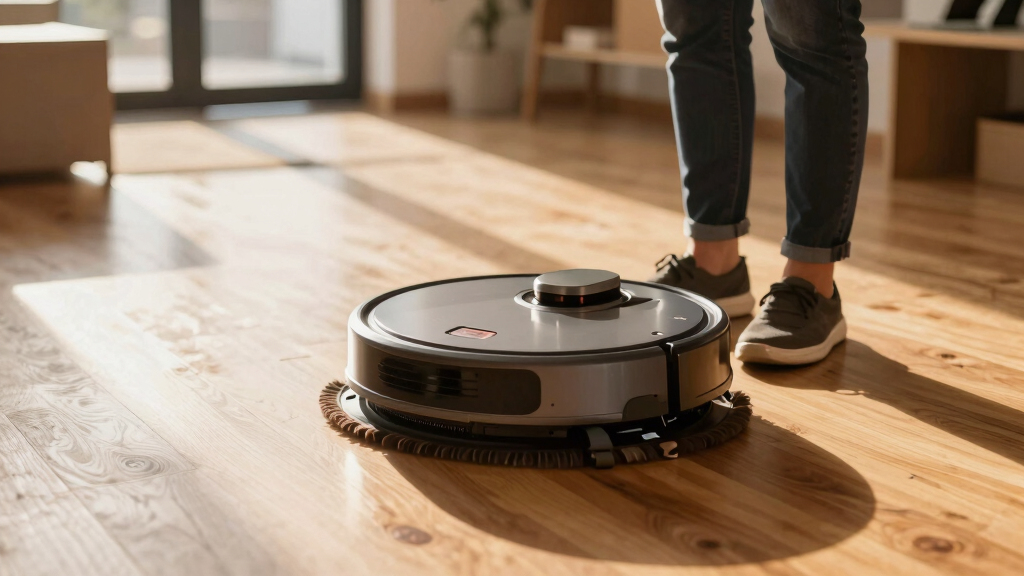
I ranked these robotic floor scrubbers by looking at the full cleaning loop: how well each model can pick up debris, keep the mop in contact with the floor, avoid common obstacles, return to base, and reduce the amount of manual cleanup after a run. Models with LiDAR mapping, self-emptying or self-cleaning docks, stronger mop hardware, and carpet-aware behavior moved higher because those features change daily use, not just the spec sheet.
I also weighed buyer fit against price. A premium docked scrubber can be the right answer for a large hard-floor home, but it may be overkill for a small apartment where a compact vacuum-mop combo is easier to live with. The final order favors models that solve more of the real ownership problems: missed rooms, wet carpets, tangled hair, weak edge cleaning, small tanks, noisy docks, and frequent hands-on maintenance.
Factors to Consider When Choosing Robotic Floor Scrubbers
Choosing among robotic floor scrubbers is less about finding the biggest suction number and more about matching the cleaning system to your floors, messes, and patience for upkeep.Match The Mop System To Your Floors
The biggest split in this category is between drag-pad mop combos, spinning mop systems, and self-cleaning roller designs. A basic pad can handle light dust and kitchen film, but it usually will not compete with models like the Roborock Qrevo S Pro or eufy E25 when dried spots are common. Spinning mops add better floor contact, which helps on tile, vinyl, and sealed hardwood. Roller systems can feel more like a true floor scrubber because they refresh the cleaning surface during use. The mistake I see buyers make is paying for suction while ignoring mop mechanics. If hard-floor washing is the reason for buying, mop design should carry more weight than peak vacuum power.
Decide How Hands-Off You Want The Dock To Be
A self-emptying base saves time, but a self-cleaning dock changes the routine much more. Models like the eufy E25 and Roborock Qrevo S Pro reduce the work of rinsing mop hardware, while simpler options still need frequent tank refills, pad washing, and dustbin emptying. This matters most in homes with pets, kids, or large kitchens because dirty water and hair build up fast. A dock also takes up floor space and raises the price, so it is not automatically the right buy. For a small apartment, the Tikom G8000 Max or ILIFE V5s Plus may be easier to justify. For a busy household, paying more for dock automation can be the difference between using the robot daily and letting it sit idle.
Do Not Treat Suction As The Whole Story
High suction numbers look persuasive, and they matter for crumbs, pet hair, and debris in grout lines. Still, robotic floor scrubbers need a balanced cleaning system because water control, navigation, brush design, and mop lift can matter just as much. The Roborock Q10 S5+ brings very strong suction and sonic mopping, while the Qrevo S Pro adds a more complete dock and mop setup. A lower-suction model with smart mapping may clean more reliably than a powerful unit that bumps around or misses zones. Carpet owners should also check whether the mop lifts or whether no-mop zones must be managed manually. The best choice is the one that avoids creating new chores while cleaning the messes you actually have.
Choose Navigation Based On Room Complexity
LiDAR navigation is worth paying for when a home has multiple rooms, furniture clusters, hallway turns, or zones that need different cleaning rules. The Roborock Q7 L5, Tikom L8000 Plus, MONSGA, and Bagotte models all appeal because mapping gives the robot a cleaner sense of where it has been. Simpler app-based or remote-controlled models can still work in open layouts, but they are more likely to repeat areas or miss corners. Obstacle avoidance is separate from mapping, so do not assume a mapped robot will handle cords, socks, and pet toys perfectly. AI avoidance adds value in busier homes, especially with pets. If your floor plan is simple, money may be better spent on stronger mopping or a better dock instead.
Think About Hair, Edges, And Maintenance Together
Pet hair buyers should look past the phrase pet hair handling and focus on brush design, tangle resistance, bin capacity, and how often the base needs attention. Anti-tangle systems on models like the Roborock Qrevo S Pro, Roborock Q7 L5, eufy E25, and Kilgone matter because wrapped hair slowly reduces pickup. Edge cleaning is another weak spot for many round robots, so extendable side brushes or stronger path planning can make a visible difference near cabinets and baseboards. A slim robot can reach under more furniture, but it may give up dock features or larger tanks. If hair is the main issue, self-emptying is more valuable than it looks. If sticky kitchen residue is the bigger issue, mop cleaning and water management should rank higher.
Frequently Asked Questions
Are Robotic Floor Scrubbers Better Than Robot Vacuum And Mop Combos?
Some are, but the label alone does not settle it. A true floor-scrubbing design has better mop pressure, movement, or self-cleaning hardware than a basic vacuum with a damp cloth attached. In this lineup, the eufy E25 and Roborock Qrevo S Pro are closer to hands-off scrubbing systems, while entry-level combos are better viewed as maintenance cleaners. If your floors mostly need dust removal and light wiping, a combo can be enough. If you deal with sticky spots, tracked-in dirt, or large hard-floor areas, pay more attention to mop mechanics than the product name.
Which Pick Makes The Most Sense For A Home With Pets?
For pet-heavy homes, I would start with the Roborock Qrevo S Pro, eufy E25, or iRobot Roomba 505X. These models are better aligned with hair pickup, dock support, and reduced hands-on cleanup than basic vacuum-mop combos. The Kilgone is a lower-cost pet-focused option, but it does not offer the same premium dock experience. Pet owners should value anti-tangle design and self-emptying more than small differences in water tank size. The best fit depends on whether hair, paw prints, or both are the daily problem.
Is A Self-Cleaning Dock Worth Paying More For?
A self-cleaning dock is worth it when the robot will run several times per week or cover a lot of hard flooring. It cuts down on dirty mop handling, which is the chore that makes many people stop using mop robots regularly. The tradeoff is cost, dock size, noise, and periodic cleaning of the dock itself. For a compact space, a lower-priced self-charging model may be enough. For kitchens, mudrooms, pets, and larger layouts, dock automation often matters more than another bump in suction power.
Should I Pick LiDAR Mapping Or AI Obstacle Avoidance First?
I would prioritize LiDAR mapping for structured cleaning and AI obstacle avoidance for cluttered homes. LiDAR helps the robot divide rooms, remember maps, clean zones, and avoid random wandering. AI avoidance helps with objects that appear after the map is made, such as cords, toys, shoes, and pet bowls. The best premium models combine both, but value models often force a choice. If your rooms are tidy but spread out, mapping matters more; if your floors change day to day, obstacle handling deserves extra weight.
Can These Robotic Floor Scrubbers Replace Manual Mopping?
They can replace a lot of routine mopping, but they are not a full replacement for every mess. Daily maintenance cleaning is where these machines shine, especially when they run on a schedule before grime builds up. Dried spills, grout restoration, sticky residue near stoves, and corners may still need manual work. The higher-ranked scrubbers reduce that gap with spinning or roller mops and better dock cleaning. I would buy one to keep floors consistently cleaner between deeper cleanings, not to retire every mop in the house.
Conclusion
If I were choosing one model for most homes, I would pick the Roborock Qrevo S Pro as the best overall robotic floor scrubber because it balances suction, smart mapping, mop lift, dock cleaning, and hair handling better than the rest of this lineup. For value, the Tikom L8000 Plus gives buyers self-emptying and LiDAR without jumping into the highest price tier, while the eufy E25 is the best premium choice for shoppers who want a more serious self-cleaning mop system. Beginners should look at the Tikom G8000 Max or ILIFE V5s Plus because they keep the learning curve and cost lower. For compact homes, the slim 2-in-1 combo or Kilgone makes more sense than a large docked system, while pet-focused buyers should start with Roborock, eufy, iRobot, or MONSGA depending on budget. The right pick is the one that matches your floor type, mess level, and maintenance tolerance rather than the one with the loudest spec sheet.
Halloween Picks
halloween
As an affiliate, we earn on qualifying purchases.