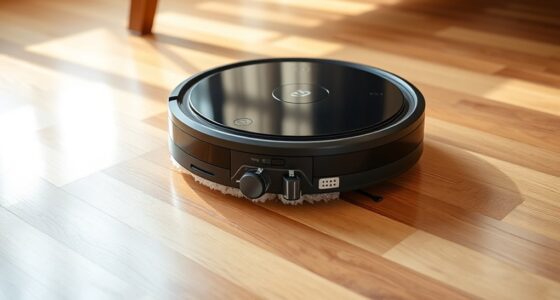
Robot mop vacuum combos promise to handle both dry debris and sticky floors in a single pass, but the gap between a good one and a frustrating one comes down to suction power, mopping technology, and navigation intelligence. After comparing 14 current models, the Roborock Qrevo S Pro stands out as the best overall pick, pairing 18,500Pa suction with a self-washing roller mop and a self-emptying dock. If budget matters more than frills, the Tikom G8000 Max covers the basics of vacuuming and mopping at a fraction of the complexity, while the eufy E25 rivals flagship models with 20,000Pa suction and a HydroJet roller mop. The main tradeoffs you’ll face are paying more for dock automation versus emptying tanks yourself, and choosing between flat mopping pads (simpler, cheaper) versus roller mops (better scrubbing, more maintenance). Read on for the full breakdown of which combo fits your home, floors, and patience for upkeep.

Get cleaning gear delivered free — and shop member deals
- Fast, free delivery on millions of items
- Access to Prime Big Deal Days deals on October 6–7
- Prime Video, Amazon Music and more included
Complete the kit


Key Takeaways
- Suction specs ranged from roughly 4,000Pa to 20,000Pa across the lineup, but the models that ranked highest paired strong suction with intelligent obstacle avoidance — raw Pa numbers alone didn’t predict cleaning quality on carpet or pet hair.
- Roller mop systems (eufy C28, eufy E25, Roborock Qrevo S Pro) consistently outclean flat-pad mops on dried spills but demand more maintenance, making them a better fit for homeowners who want hands-off deep cleans rather than light upkeep.
- Self-emptying docks were the single biggest quality-of-life upgrade in this roundup — Shark‘s 60-day capacity models (Stratos AV2700ZE and Matrix Plus AV2610WA) reduce intervention to roughly every two months.
- The budget end of the lineup (Tikom G8000 Max, ROPVACNIC S1, generic 5000Pa model) is genuinely usable for small apartments with hard floors, but nearly all of them cut corners on carpet deep-cleaning and pet-hair anti-tangle design.
- LiDAR navigation (the Roborock trio, wrydao, eufy Omni C20) proved more reliable than camera or gyro-based mapping for multi-room homes with furniture, making it the feature most worth paying extra for beyond about 1,500 square feet.
| iRobot Roomba 415X Robot Vacuum & Mop Combo |  | Best Overall | Suction: 2.3x more than Roomba 600 series | Mop System: DualClean spinning pads with SmartScrub | Dock Functions: Self-empty, pad wash, heat-dry, water refill | VIEW LATEST PRICE | See Our Full Breakdown |
| Shark Stratos Robot Vacuum & Mop Combo, 60-Day Self-Empty, AV2700ZE |  | Best for Pet Owners | Self-Empty Base: 60-day bagless bin | Water Refill: Up to 30 days | Mopping: Sonic mopping, up to 100 scrubs per minute | VIEW LATEST PRICE | See Our Full Breakdown |
| Tikom G8000 Max Robot Vacuum and Mop Combo |  | Best Value | Suction Power: 5000Pa | Runtime: 150 minutes (quiet mode) | Dustbin: 450 ml | VIEW LATEST PRICE | See Our Full Breakdown |
| Robot Vacuum and Mop Combo, 5000Pa Self-Charging Robotic Vacuum Cleaner with Alexa & App Control |  | Best for Beginners | Suction Power: 5000Pa | Dustbin: 250 ml | Water Tank: 200 ml | VIEW LATEST PRICE | See Our Full Breakdown |
| Roborock Q7 L5 Robot Vacuum and Mop Combo, 8000Pa Suction |  | Best for Carpet | Suction Power: 8,000 Pa | Navigation: LiDAR smart mapping, multi-floor | Water Tank: 270 ml | VIEW LATEST PRICE | See Our Full Breakdown |
| wrydao Robot Vacuum and Mop Combo, 6000Pa, LiDAR Mapping, Self-Emptying Station |  | Best Hands-Off Value | Suction Power: 6000Pa | Navigation: LiDAR with No-Go Zones | Dust Bag Capacity: 3L (up to 90 days) | VIEW LATEST PRICE | See Our Full Breakdown |
| Roborock Robot Vacuum and Mop with LiDAR Navigation, 10000Pa Suction, Anti-Tangle, Self-Emptying Dock |  | Best for Pet Hair | Suction Power: 10000Pa | Navigation: PreciSense LiDAR | Dust Bag Capacity: 2.7L (7-9 weeks) | VIEW LATEST PRICE | See Our Full Breakdown |
| ROPVACNIC S1 Robot Vacuum and Mop Combo, 5200Pa Suction |  | Best Starter Combo | Suction Power: 5200Pa | Functions: Vacuuming and mopping | Water Control: Four-stage adjustment | VIEW LATEST PRICE | See Our Full Breakdown |
| eufy Omni C20 Robot Vacuum and Mop Combo for Hardwood and Carpet |  | Best Slim Design | Suction Power: 7,000 Pa | Height: 3.35 inches | Battery Life: 132 minutes | VIEW LATEST PRICE | See Our Full Breakdown |
| eufy C28 Robot Vacuum Cleaner and Mop Combo, 15,000 Pa, HydroJet Roller Mop |  | Best Premium All-in-One | Suction Power: 15,000 Pa | Mop Roller: 28cm HydroJet, 270 RPM, 24 water ports | Dust Bag Capacity: 3L | VIEW LATEST PRICE | See Our Full Breakdown |
| iRobot Roomba 105 Combo Robot Vacuum & Mop with AutoEmpty Dock |  | Best for Allergy Sufferers | Brand: iRobot | AutoEmpty Dock: Yes, up to 75 days | Allergen Filtration: Traps 99% of allergens down to 0.7 microns | VIEW LATEST PRICE | See Our Full Breakdown |
| Roborock Qrevo S Pro Robot Vacuum and Mop, 18,500Pa Suction |  | Best Premium Pick | Brand: Roborock | Suction Power: 18,500 Pa | Dock Functions: Auto-empty, mop washing, warm-air drying | VIEW LATEST PRICE | See Our Full Breakdown |
| eufy E25 Robot Vacuum and Mop Combo, 20,000Pa, HydroJet Roller Mop |  | Best Mopping Performance | Brand: eufy | Suction Power: 20,000 Pa | Mopping System: HydroJet roller mop, self-rinsing 2x per second | VIEW LATEST PRICE | See Our Full Breakdown |
| Shark Matrix Plus Robot Vacuum & Mop Combo, 60-Day Self-Emptying, AV2610WA |  | Best Value for Carpet Coverage | Model: Shark AV2610WA | Cleaning Modes: Vacuum and sonic mop (100 scrubs/min) | Carpet Technology: Matrix Clean multi-pass precision grid | VIEW LATEST PRICE | See Our Full Breakdown |
| robot mop vacuum combo | Navigation | Suction Power |
|---|---|---|
| iRobot Roomba 415X Robot Vacuu | LiDAR mapping with obstacle recognition | — |
| Shark Stratos Robot Vacuum & M | 360° LiDAR mapping | — |
| Tikom G8000 Max Robot Vacuum a | — | 5000Pa |
| Robot Vacuum and Mop Combo | — | 5000Pa |
| Roborock Q7 L5 Robot Vacuum an | LiDAR smart mapping, multi-floor | 8,000 Pa |
| wrydao Robot Vacuum and Mop Co | LiDAR with No-Go Zones | 6000Pa |
| Roborock Robot Vacuum and Mop | PreciSense LiDAR | 10000Pa |
| ROPVACNIC S1 Robot Vacuum and | Obstacle detection with self-recharge | 5200Pa |
| eufy Omni C20 Robot Vacuum and | iPath Laser, up to 3 floor maps | 7,000 Pa |
| eufy C28 Robot Vacuum Cleaner | LiDAR with 3 x 3 x 3 cm obstacle threshold | 15,000 Pa |
| iRobot Roomba 105 Combo Robot | ClearView LiDAR | — |
| Roborock Qrevo S Pro Robot Vac | — | 18,500 Pa |
| eufy E25 Robot Vacuum and Mop | Laser-guided mapping, up to 5 floor plans | 20,000 Pa |
| Shark Matrix Plus Robot Vacuum | 360° LiDAR vision with object detection | — |
More Details on Our Top Picks
iRobot Roomba 415X Robot Vacuum & Mop Combo
This model stands out for doing the whole job — vacuuming and mopping in one pass — and then handling its own cleanup afterwards. The multifunction dock is what separates it from the rest of this lineup: it self-empties debris for up to 90 days, washes the mop pads at 113°F, heat-dries them, and refills water. Compared with the Roborock Q7 L5, which asks you to swap and rinse tanks yourself, the 415X is dramatically less hands-on. SmartScrub mopping adds downward pressure for dried-on spills, something sonic-mopping rivals like the Shark Stratos can’t match on stubborn messes. The tradeoff is a dock that needs dedicated floor space and occasional supply upkeep, and the deep app controls will feel like overkill if all you want is a daily tidy-up.
Pros:- Vacuums and scrubs mops in a single pass with SmartScrub pressure for dried spills
- Dock empties debris, washes and heat-dries pads, and refills water for up to 90 days of hands-off upkeep
- Slim body with extending edge brushes reaches under furniture and into corners
- LiDAR mapping with 10mm mop pad lift protects rugs from getting wet
Cons:- Multifunction dock requires dedicated space and periodic supply maintenance
- Feature-rich app navigation is more than simple-cleaner buyers need
Best for: Busy households that want weeks of unattended cleaning with minimal pad and bin maintenance
Not ideal for: Small apartments or minimalists — the dock is large and the feature set goes far beyond basic cleaning
- Suction:2.3x more than Roomba 600 series
- Mop System:DualClean spinning pads with SmartScrub
- Dock Functions:Self-empty, pad wash, heat-dry, water refill
- Self-Empty Capacity:Up to 90 days
- Navigation:LiDAR mapping with obstacle recognition
- Mop Pad Lift:10mm over rugs
Our verdict“This pick makes the most sense for buyers who want the most complete self-maintaining combo in the roundup and have the space for its dock.”
Shark Stratos Robot Vacuum & Mop Combo, 60-Day Self-Empty, AV2700ZE
Where the Roomba 415X wins on scrubbing power, the Shark Stratos wins on allergen and hair management. The self-cleaning anti-hair-wrap brushroll and sealed HEPA filtration form a closed system that keeps pet dander trapped rather than recirculated — a genuine advantage over the Tikom G8000 Max, whose open bin design means more contact with fur during emptying. Its NeverTouch base empties debris, refills water for up to 30 days, and washes and dries the mop pad automatically, landing between the budget picks and the Roomba’s full-service dock in terms of upkeep. Sonic mopping at 100 scrubs per minute handles everyday grime, though it lacks the pressurized scrub of pricier rivals. Carpet zones need careful setup in the app so the mop doesn’t go where it shouldn’t.
Pros:- Sealed HEPA filtration with Anti-Allergen Complete Seal traps dander and dust
- Anti-hair-wrap self-cleaning brushroll minimizes pet hair tangles
- NeverTouch base empties, refills, washes, and dries with minimal manual work
- Edge Detect air blasts pull debris from corners other robots leave behind
Cons:- Base still needs periodic emptying, cleaning, and supply replacement
- Carpet zones and mop settings require configuration to avoid wet carpet
Best for: Allergy-sensitive households with shedding pets who want sealed filtration and hair-resistant brushes
Not ideal for: Buyers with heavy dried-on spills — sonic mopping is gentler than pressure-scrubbing systems like SmartScrub
- Self-Empty Base:60-day bagless bin
- Water Refill:Up to 30 days
- Mopping:Sonic mopping, up to 100 scrubs per minute
- Filtration:HEPA with Anti-Allergen Complete Seal
- Navigation:360° LiDAR mapping
- Voice Control:Amazon Alexa, Google Voice
Our verdict“The strongest choice in this lineup for pet and allergy households that prioritize clean air and hair resistance over maximum scrub power.”
Tikom G8000 Max Robot Vacuum and Mop Combo
The Tikom G8000 Max proves you don’t need a docking station to get serious combo cleaning. With 5000Pa suction, a 450ml dustbin, and a 300ml tank, it vacuums and mops simultaneously — matching the suction of the unnamed budget combo in this lineup while offering a bigger bin and a quieter 45 dB floor. The 2.99-inch height is the slimmest profile here, slipping under furniture the bulkier Roomba 415X can’t attempt. Its 150-minute runtime outlasts most rivals, making it well suited to larger single-floor homes. The honest tradeoff: there’s no self-emptying station, so you’ll be emptying the bin and rinsing the tank by hand every few runs — the price you pay for skipping the dock entirely. Carpets are handled, but only short to medium pile.
Pros:- 5000Pa suction handles pet hair and debris across multiple floor types
- Simultaneous vacuum-plus-mop runs cut cleaning time roughly in half
- 150-minute runtime with auto-recharge covers large floor plans
- Ultra-slim 2.99-inch body cleans under low furniture
Cons:- No self-emptying dustbin station
- Carpet cleaning limited to short and medium pile
Best for: Budget-conscious buyers in mid-sized homes who will tolerate manual bin emptying for a low price
Not ideal for: Hands-off cleaners — without any self-empty or pad-washing base, weekly maintenance is unavoidable
- Suction Power:5000Pa
- Runtime:150 minutes (quiet mode)
- Dustbin:450 ml
- Water Tank:300 ml
- Height:2.99 inches
- Noise Level:45 dB
- Controls:App, remote, voice, button
Our verdict“The smart pick for value shoppers who want capable dual cleaning and don’t mind rolling up their sleeves for bin duty.”
Robot Vacuum and Mop Combo, 5000Pa Self-Charging Robotic Vacuum Cleaner with Alexa & App Control
For a first robot vacuum, simplicity matters more than dock features, and that’s exactly this model’s strength. It sweeps, vacuums, and mops in one device with automatic carpet boost that raises suction when it senses rug, and it covers up to 1,400 sq ft on a single charge before returning to its charger. Compared with the Tikom G8000 Max, it matches the 5000Pa suction rating but carries a smaller 250ml bin and 200ml tank — fine for apartments, a refill headache for larger homes. Controls span app, remote, Alexa, and Google Assistant, so even non-technical users have an easy entry point. The compromises are real: the sponge filter needs frequent replacement, and there’s no self-empty station or LiDAR mapping, so coverage is more basic than the LiDAR-equipped picks above.
Pros:- 3-in-1 sweep, vacuum, and mop in a single affordable device
- Automatic carpet boost adjusts suction without manual settings
- Smart obstacle avoidance prevents falls and stuck situations
- Voice, app, and remote control options suit any comfort level
Cons:- Sponge filter requires frequent replacement
- Small 250ml bin and 200ml tank need frequent refills
Best for: First-time robot vacuum owners in apartments or small homes who want voice control without complexity
Not ideal for: Large-home owners — the small bin and tank demand constant refills across bigger floor plans
- Suction Power:5000Pa
- Dustbin:250 ml
- Water Tank:200 ml
- Runtime:120 minutes
- Coverage Area:Up to 1,400 sq ft
- Controls:App, remote, Alexa, Google Assistant
- Warranty:2 years
Our verdict“A sensible starter combo for small spaces where low cost and easy voice control outweigh capacity limits.”
Roborock Q7 L5 Robot Vacuum and Mop Combo, 8000Pa Suction
Carpet is where most mop-vacuum combos disappoint, and the Roborock Q7 L5 addresses that with 8,000Pa HyperForce suction — noticeably stronger than the 5000Pa Tikom G8000 Max or the budget beginner pick, and enough to pull embedded debris from medium-pile rugs. Dual anti-tangle brushes reduce hair wrap, making it a credible pet option even if it lacks the Shark Stratos’s sealed HEPA system. LiDAR mapping with multi-floor support means it remembers layouts across levels, a step up from sensor-bounce navigation on cheaper models. The catch is in the mopping hardware: the dustbin and water tank are a single combined module, so switching between heavy vacuuming and mopping modes is less convenient, and the 270ml tank runs dry on larger mopping sessions. It also only connects to 2.4 GHz Wi-Fi.
Pros:- 8,000Pa suction outcleans the 5000Pa picks on rugs and carpet
- Dual anti-tangle brushes reduce hair wrap and maintenance
- LiDAR smart mapping supports multiple floors and scheduled cleaning
- Vacuums and mops in one pass with app and voice control
Cons:- Dustbin and water tank are integrated as one combo part
- 270 ml tank is small for larger mopping jobs
- 2.4 GHz Wi-Fi only, which can complicate modern mesh networks
Best for: Carpet-heavy homes that need serious suction and multi-floor mapping more than full mopping coverage
Not ideal for: Buyers focused on mopping large hard floors — the small 270ml tank and combo tank design limit it
- Suction Power:8,000 Pa
- Navigation:LiDAR smart mapping, multi-floor
- Water Tank:270 ml
- Battery Life:150 minutes
- Noise Level:60 dB
- Filter:Washable
- Compatibility:Amazon Echo, Google Home, smartphones
Our verdict“The right pick for carpet-first homes that rank suction power and mapping above hands-free dock convenience.”
wrydao Robot Vacuum and Mop Combo, 6000Pa, LiDAR Mapping, Self-Emptying Station
Most budget-priced combos make you empty the dustbin daily, which quietly erases the convenience you paid for. The wrydao S6 Pro fixes that with a 3L self-emptying bag rated for up to 90 days — a longer hands-free window than the eufy Omni C20’s 60 days or the Roborock’s 7–9 weeks, at what is typically a friendlier price. Suction lands at 6000Pa, enough for pet hair and crumbs on hard floors and low-pile carpet, though it trails the Roborock’s 10000Pa on thick rugs. The LiDAR mapping with No-Go Zones matches what pricier rivals offer, and the 160-minute battery is the longest run time in this batch. Tradeoffs: it needs 2.4GHz Wi-Fi, and the sponge filter will need replacing more often than cartridge rivals.
Pros:- 3L self-emptying bag holds up to 90 days of debris — the longest interval in this lineup
- LiDAR mapping with No-Go Zones matches more expensive models
- 160-minute battery outlasts every comparable option here
- App and Alexa control plus a 2-year warranty
Cons:- Sponge filter needs frequent replacement compared with cartridge filters
- 6000Pa suction struggles on thick carpet versus the Roborock’s 10000Pa
Best for: Budget-conscious pet owners who want months of hands-free emptying without paying flagship prices
Not ideal for: Homes with high-pile carpet or 5GHz-only routers — the suction and connectivity both fall short there
- Suction Power:6000Pa
- Navigation:LiDAR with No-Go Zones
- Dust Bag Capacity:3L (up to 90 days)
- Battery Life:160 minutes
- Control:App, Alexa voice
- Wi-Fi:2.4GHz only
- Warranty:2 years
Our verdict“This pick makes the most sense for buyers who want maximum hands-off time per dollar, as long as their floors are mostly hard or low-pile.”
Roborock Robot Vacuum and Mop with LiDAR Navigation, 10000Pa Suction, Anti-Tangle, Self-Emptying Dock
Long-haired pets are where most robot vacuums fail — hair wraps around the brush roll and you end up doing maintenance more often than cleaning. The Roborock’s dual anti-tangle system is built specifically for that problem, and paired with 10000Pa of HyperForce suction, it pulls embedded fur out of carpet that the wrydao S6 Pro or ROPVACNIC S1 simply can’t reach. The RockDock Plus holds 2.7L of debris for 7–9 weeks, and VibraRise 2.0 lifts the mop over carpet so you’re not dragging a damp pad across rugs. Compared with the wrydao, you trade a slightly shorter hands-free interval for far stronger carpet performance and a cartridge filter that lasts longer. The ongoing cost is real, though: replacement dust bags are a permanent expense, and 2.4GHz is the only network option.
Pros:- 10000Pa suction handles deep carpet cleaning and embedded pet hair
- Dual anti-tangle brushes resist wrap from long-haired pets
- VibraRise 2.0 mop lifting protects carpet from wet pads
- PreciSense LiDAR with app, voice, and no-go zone control
Cons:- Self-emptying dock requires ongoing replacement dust bags
- Only supports 2.4GHz Wi-Fi
Best for: Multi-pet households with carpet who need serious suction and hair-wrap resistance
Not ideal for: Buyers who hate recurring costs — dock dust bags are a permanent consumable — or 5GHz-only homes
- Suction Power:10000Pa
- Navigation:PreciSense LiDAR
- Dust Bag Capacity:2.7L (7-9 weeks)
- Battery Life:150 minutes
- Noise Level:65 dB
- Special Features:Dual Anti-Tangle, VibraRise 2.0 mop lift
- Wi-Fi:2.4GHz only
Our verdict“If shedding pets and carpet define your home, this model justifies its cost where lighter-duty combos would flounder.”
ROPVACNIC S1 Robot Vacuum and Mop Combo, 5200Pa Suction
Not everyone needs a dock that empties, washes, and dries — sometimes you just want to find out whether a robot mop vacuum combo fits your routine at all. The ROPVACNIC S1 is that low-commitment entry point. There’s no self-emptying station to buy bags for (unlike the wrydao or Roborock), so the total cost of ownership stays flat. Suction is the weakest here at 5200Pa, but that’s plenty for daily dust and crumbs on hard floors, and the four-stage water adjustment lets you tune mopping from a light damp wipe to a heavier scrub. The no-entanglement dual side brushes handle pet hair reasonably well, though not to the Roborock’s anti-tangle standard. The real limitation is carpets: this is a low-pile machine, and anything plush will disappoint.
Pros:- Four-stage electronic water control for tuned mopping on hard floors
- No dock means no recurring bag costs
- App plus Alexa and Google Assistant voice control
- No-entanglement design with dual side brushes for pet hair
Cons:- 5200Pa is the weakest suction in this lineup
- No self-emptying dock — you empty the bin yourself
- Best on low-pile carpet only; plush rugs will frustrate
Best for: First-time robot vacuum buyers with mostly hard floors who want to try vacuum-mop combos without a dock investment
Not ideal for: Homes with high-pile carpet or anyone who wants weeks of hands-free emptying — it has no dock
- Suction Power:5200Pa
- Functions:Vacuuming and mopping
- Water Control:Four-stage adjustment
- Voice Compatibility:Alexa, Google Assistant
- Navigation:Obstacle detection with self-recharge
- Suitable Surfaces:Wood, hard floors, low-pile carpet
Our verdict“A sensible, low-risk way into combo cleaning for hard-floor homes that don’t need flagship suction or a dock.”
eufy Omni C20 Robot Vacuum and Mop Combo for Hardwood and Carpet
Under-bed and under-couch clearance is the spec nobody thinks about until their robot bumps off a sofa skirt and skips half the room. At 3.35 inches, the eufy Omni C20 is the slimmest option here, sliding under furniture the Roborock and eufy C28 can’t fit beneath. What makes it more than a novelty is the Omni Station, which washes and hot-dries the mop pads automatically — the ROPVACNIC S1 has nothing comparable, and it means no sour mop smell between runs. The 7000Pa suction with 6N of downward pad pressure handles dried stains that pad-draggers leave behind. Two quirks matter: there are no boundary strips (carpet taller than 20mm needs an app-set No-Go Zone instead), and the 60-day dust interval is shorter than the wrydao’s 90 days.
Pros:- 3.35-inch slim body reaches under low furniture others can’t
- Station auto-empties, washes, and dries mop pads
- 6N downward mopping pressure scrubs dried stains
- Runs at a quiet 56 dB with up to 3 floor maps
Cons:- No boundary strip support — carpet over 20mm requires app No-Go Zones
- 2.4GHz Wi-Fi only
- 60-day emptying interval trails the wrydao’s 90 days
Best for: Apartment dwellers and low-furniture homes where under-sofa and under-bed cleaning is the priority
Not ideal for: Buyers who want hardware boundary strips or deep-pile carpet over 20mm without app setup
- Suction Power:7,000 Pa
- Height:3.35 inches
- Battery Life:132 minutes
- Dust Bag Capacity:3.1L (up to 60 days)
- Navigation:iPath Laser, up to 3 floor maps
- Noise Level:56 dB
- Wi-Fi:2.4GHz only
Our verdict“The clear choice if low-clearance furniture defines your floor plan, provided you’re willing to manage carpet avoidance in the app.”
eufy C28 Robot Vacuum Cleaner and Mop Combo, 15,000 Pa, HydroJet Roller Mop
This is the closest thing in the mid-range to the flagship experience. The eufy C28 pairs 15,000Pa suction with a 28cm HydroJet roller mop that continuously cleans itself with 24 water ports while it scrubs — a fundamentally better mopping approach than the flat pads on the eufy Omni C20 or ROPVACNIC S1, which redistribute dirty water as they go. The station does everything: empties dust, washes the roller, hot-air dries at 50°C, and collects wastewater for up to 75 days of hands-off maintenance. The DuoSpiral brush handles hair up to 30cm long, rivaling the Roborock’s anti-tangle credentials. Compared with the Omni C20, you gain mopping quality and suction but lose the slim profile — the C28’s dock is a substantial appliance. One genuine gap: obstacles smaller than 3 x 3 x 3 cm may get pushed rather than avoided.
Pros:- 15,000Pa suction with automatic carpet boost rivals flagship models
- Self-cleaning HydroJet roller mops better than flat pads
- Station handles emptying, washing, hot-air drying, and wastewater for up to 75 days
- DuoSpiral brush resists tangles from hair up to 30cm long
Cons:- May miss or push obstacles smaller than 3 x 3 x 3 cm
- All-in-one station needs dedicated floor space
- Heavier investment than dock-free rivals
Best for: Buyers who want flagship-grade mopping and maximum automation without stepping up to the Qrevo or E25 price tier
Not ideal for: Small apartments without floor space for a full-size station, or homes littered with small objects under 3cm
- Suction Power:15,000 Pa
- Mop Roller:28cm HydroJet, 270 RPM, 24 water ports
- Dust Bag Capacity:3L
- Hands-Free Maintenance:Up to 75 days
- Drying:Hot air at 50°C
- Navigation:LiDAR with 3 x 3 x 3 cm obstacle threshold
- Noise Level:54.89 dB
Our verdict“For buyers who care as much about mopping quality as vacuuming, this delivers near-flagship automation at a mid-premium position.”
iRobot Roomba 105 Combo Robot Vacuum & Mop with AutoEmpty Dock
The Roomba 105 Combo stands out for one thing most rivals in this roundup don’t emphasize: allergen containment. Its AutoEmpty dock pulls debris into a sealed bag that traps 99% of allergens down to 0.7 microns, which matters far more for sneezy households than raw suction numbers. The 75-day capacity also beats the Shark Matrix Plus’s 60-day base, though unlike that Shark, you’ll buy replacement bags. SmartScrub gives the microfiber pad genuine scrubbing aggression, and carpet avoidance while mopping keeps rugs dry — something the eufy E25 handles differently with mop lifting instead. Compared with the Roborock Qrevo S Pro, this is a simpler machine: no mop washing, no hot-air drying, so you’ll rinse the reusable pad yourself.
Pros:- Sealed allergen bags trap 99% of particles down to 0.7 microns
- 75-day AutoEmpty capacity outlasts most rivals in this lineup
- SmartScrub provides 2x deeper scrubbing than passive pads
- Automatically avoids carpets while mopping to protect rugs
Cons:- Dock requires ongoing replacement debris bag purchases
- No mop washing or drying in the dock — pads are hand-rinsed
- Requires a 2.4 GHz Wi-Fi network, which limits router compatibility
Best for: Allergy-sensitive households who want sealed debris disposal and set-and-forget vacuuming for months at a time
Not ideal for: Buyers who want the dock to wash and dry the mop pads — this model only self-empties dust, leaving pad maintenance manual
- Brand:iRobot
- AutoEmpty Dock:Yes, up to 75 days
- Allergen Filtration:Traps 99% of allergens down to 0.7 microns
- Navigation:ClearView LiDAR
- Cleaning Modes:Vacuum only, mop only, vacuum and mop
- Mopping System:Micro-pump water flow, SmartScrub, reusable microfiber pad
- Carpet Handling:Avoids carpets while mopping
- Connectivity:2.4 GHz Wi-Fi, Roomba Home app, voice assistants
Our verdict“A smart buy for allergy sufferers who value sealed debris handling and months of hands-free emptying over full mop automation.”
Roborock Qrevo S Pro Robot Vacuum and Mop, 18,500Pa Suction
This is the most complete maintenance story in the batch. The Qrevo S Pro dock doesn’t just empty dust — it washes mops at 167°F and dries them with warm air, which the Roomba 105 Combo and Shark Matrix Plus simply don’t do. That means no sour-smelling pads and no hands-on rinsing, the single biggest pain point of cheaper combos like the Tikom G8000 Max. The all-rubber main brush and zero-tangle side brush make it the strongest pet-hair choice here alongside the eufy E25, and the 3.8-inch profile slips under furniture the bulkier Shark can’t. The honest tradeoff: the 2.7 L dust bag runs out in 7–9 weeks, well short of Roomba’s 75-day claim, and dock consumables add to the cost of ownership.
Pros:- All-in-one dock empties dust, washes mops at 167°F, and warm-air dries them
- Anti-tangle all-rubber brush system handles pet hair without wrapping
- Quiet 55 dB operation and 3.8-inch height clean under low furniture
- Boosts suction and lifts mops 10 mm on carpet automatically
Cons:- Dust bag needs replacing every 7–9 weeks, shorter than Roomba’s 75-day capacity
- 2.4 GHz-only Wi-Fi support
- Dock consumables create recurring costs
Best for: Pet owners who want a truly hands-off dock that washes and dries mops automatically
Not ideal for: Budget-conscious buyers — ongoing dust bag and dock consumable costs add up over time
- Brand:Roborock
- Suction Power:18,500 Pa
- Dock Functions:Auto-empty, mop washing, warm-air drying
- Dust Bag Capacity:2.7 L (7–9 week replacement)
- Mop Washing Temperature:167°F
- Noise Level:55 dB
- Robot Height:3.8 in
- Smart Features:SmartPlan 2.0, obstacle avoidance, carpet detection
Our verdict“The most automated cleaning experience in this lineup — worth it for pet owners who never want to touch a mop pad again.”
eufy E25 Robot Vacuum and Mop Combo, 20,000Pa, HydroJet Roller Mop
If mopping quality is your priority, the eufy E25 is the strongest argument in this roundup. Its HydroJet roller mop refreshes with clean water twice per second, so you’re never dragging dirty water across the floor — a genuine advantage over the flat-pad designs of the Roomba 105 Combo and Shark Matrix Plus, which smear soil around once the pad loads up. At 20,000 Pa, suction also edges out the Roborock Qrevo S Pro, and the CornerRover arm reaches edges that round robots typically miss. The station goes further than most too, handling water refilling on top of dust emptying and mop washing. Be aware it’s built for 110V US power and short carpet only — high-pile rugs are off the menu.
Pros:- Roller mop self-rinses with clean water twice per second for hygienic mopping
- 20,000 Pa suction leads this lineup
- Station auto-empties, washes, dries, and refills water
- CornerRover arm extends cleaning into edges and corners
Cons:- Best suited to short carpet — struggles with high-pile rugs
- 110V US power design limits international use
- 2.4 GHz Wi-Fi only
Best for: Hard-floor households who care most about hygienic mopping and want constantly-rinsed roller cleaning
Not ideal for: Homes with thick or high-pile carpet, where the roller mop system and suction setup underperform
- Brand:eufy
- Suction Power:20,000 Pa
- Mopping System:HydroJet roller mop, self-rinsing 2x per second
- Station Functions:Auto empty, self-wash, hot-air dry, auto water refill
- Dust Bag Capacity:3 L (~75 days)
- Runtime:125 minutes
- Edge Cleaning:CornerRover arm
- Navigation:Laser-guided mapping, up to 5 floor plans
Our verdict“The pick for buyers whose floors take a daily beating and who want the cleanest mop water in the roundup.”
Shark Matrix Plus Robot Vacuum & Mop Combo, 60-Day Self-Emptying, AV2610WA
The Shark Matrix Plus earns its spot by attacking carpet differently than everyone else here. Its Matrix Clean grid makes multiple precision passes over carpeted zones, and unlike the eufy E25 — which tops out at short pile — this one is built to actually vacuum rugs properly, with a self-cleaning brushroll that resists hair wrap. The bagless self-empty base is the standout value play: no replacement bags, ever, unlike the Roomba 105 Combo and Roborock Qrevo S Pro, both of which lock you into consumables. You do trade away mop sophistication — sonic mopping at 100 scrubs per minute is a light-duty hard-floor system, and there’s no dock-side pad washing like the Qrevo S Pro. True HEPA filtration down to 0.3 microns is a bonus for dust-sensitive homes.
Pros:- Matrix Clean multi-pass grid deep-cleans carpets more thoroughly than single-pass rivals
- Bagless base eliminates replacement bag costs entirely
- True HEPA captures 99.97% of dust and allergens down to 0.3 microns
- Self-cleaning brushroll and CleanEdge detection handle pet hair and corners
Cons:- Sonic mopping is hard-floor only and fairly gentle
- Bagless base still requires periodic manual emptying
- Only two reusable mop pads included
Best for: Mixed-floor homes with significant carpet who want bagless convenience and no recurring bag costs
Not ideal for: Buyers focused on serious mopping — sonic mopping is light-duty compared with roller systems like the eufy E25
- Model:Shark AV2610WA
- Cleaning Modes:Vacuum and sonic mop (100 scrubs/min)
- Carpet Technology:Matrix Clean multi-pass precision grid
- Navigation:360° LiDAR vision with object detection
- Self-Empty Base:Bagless, up to 60 days of debris
- Filtration:True HEPA, 99.97% at 0.3 microns
- Recharge and Resume:Yes
- Warranty:1-year limited
Our verdict“The smart choice for carpet-heavy homes that want strong vacuuming and zero bag costs without paying for premium mop automation.”

How We Picked
I evaluated these 14 robot mop vacuum combos across five buyer-relevant criteria: cleaning performance (suction power translated into real carpet and hard-floor results, pet hair handling, and mopping effectiveness on dried messes), navigation intelligence (LiDAR versus camera versus gyro mapping, obstacle avoidance, and multi-room reliability), dock automation (self-emptying, mop washing, and water tank management), maintenance burden (how often you must rinse pads, empty dustbins, and untangle brushes), and value for the feature set at each tier. No single spec decided a ranking — an 18,500Pa machine with poor navigation ranks differently than a 10,000Pa machine with excellent obstacle avoidance.
The ranking logic also reflects who each machine is for. Flagship models with roller mops and full dock automation sit at the top for large, mixed-floor homes; mid-tier LiDAR models with self-emptying docks fill the sweet spot for most buyers; and simpler pad-mop combos earn their place as value picks for apartments and first-time owners. Every model was required to have a meaningful drawback to stay honest — no product in this lineup is flawless, and I call out the tradeoffs in each review.
Factors to Consider When Choosing Robot Mop Vacuum Combos
Before picking a specific model, it helps to understand what actually separates robot mop vacuum combos at different tiers — and where buyers most often regret their choice. These six factors shaped my rankings more than any single spec sheet.Suction Power Means More on Carpet Than Hard Floors
Pa (Pascal) ratings are the most-marketed number in this category, but they matter unevenly depending on your flooring. On hard floors, even 4,000–5,000Pa picks up crumbs, dust, and hair effectively, which is why budget combos perform surprisingly well in apartments. Carpet is where the gap widens: embedded debris, pet hair, and fine dust in rug fibers demand 8,000Pa or more with an automatic carpet boost feature that raises suction when the machine detects carpet. The common mistake is paying for 20,000Pa in a home that’s 90% hardwood — that money is better spent on a better mop or dock. Conversely, buying a low-Pa model for a carpeted two-story home is the fastest route to disappointment. Match the spec to your actual floors, not the biggest number on the box.
Mop Type Determines How Dirty Your Floors Actually Get
There are three mopping approaches in this category, and they produce very different results. Flat pads (most budget and mid-tier combos) drag a damp cloth across the floor — fine for dust and light stickiness, but they smear dried spills and redistribute dirty water across the room. Vibrating or pressurized pads add scrubbing motion and handle moderate messes better. Roller mops (the eufy HydroJet models and Roborock Qrevo line) continuously wash the mop with clean water and scrub with downward pressure, which is the only approach that genuinely removes dried-on messes. The tradeoff: roller systems add tanks, more parts to clean, and higher dock requirements. If your goal is genuinely sanitized floors, a roller mop is worth the premium; if mopping is an afterthought for dust control, a pad system saves money and hassle.
Navigation Technology Is the Hidden Differentiator
Buyers obsess over suction numbers and ignore navigation, but navigation failures are the number-one reason robots get returned. LiDAR mapping — found on the Roborock models, wrydao, and eufy Omni C20 — builds precise floor plans, supports room-specific cleaning, no-go zones, and works in the dark. Camera and gyro-based systems (common on budget models) are more prone to getting lost, missing rooms, or bumping furniture repeatedly. In small studios this hardly matters; in multi-room homes with furniture, chairs, and cords, it’s the difference between a robot you trust and one you supervise. If your home is larger than roughly 1,500 square feet or has complex layouts, treat LiDAR as non-negotiable rather than a nice-to-have.
Dock Automation: Pay for What You’ll Actually Empty
Docks range from simple charging bases to full self-emptying, self-washing, self-refilling stations. Each layer of automation removes a recurring chore, but only buy the ones matching your tolerance. A self-emptying dustbin dock (Shark’s 60-day models are the benchmark here) means weeks without touching dust — the single highest-impact upgrade for most buyers. Mop-washing docks only matter if the robot has a roller or pad-washing system to support them; pairing a basic pad mop with an expensive dock wastes money. A frequent mistake is buying a flagship dock for a small apartment where the robot rarely fills its bin anyway. Write down how often you’d realistically empty a bin and rinse a pad — that frequency should drive your dock budget.
Pet Hair Changes the Requirements Entirely
Pet owners face a specific set of failure modes that casual specs don’t capture. Hair wraps around main brushes — look for anti-tangle brush designs and rubber rollers rather than bristle brushes, which turn into hair mats within days. Shedding volume also fills bins faster, making self-emptying docks more valuable for pet households than for anyone else. Obstacle avoidance matters too: a robot that eats pet toys, charging cables, or worse creates daily interventions. The Roborock models with anti-tangle engineering and the Shark Stratos handle this scenario well, while several budget combos in this roundup will need weekly brush surgery. If you have a shedding dog or two, budget for a mid-tier anti-tangle model rather than the cheapest combo available — the maintenance savings alone justify it.
The Total-Cost Trap: Consumables and Replacement Parts
The sticker price is only part of the cost equation. Robot mop vacuum combos consume mop pads, filters, side brushes, dust bags, and (on roller systems) cleaning solution, and these recurring costs vary widely by brand. Flagship dock systems require proprietary dust bags and sometimes brand cleaning solution, which adds a steady expense over the machine’s life. Budget models often use washable, generic-friendly parts, which keeps running costs near zero but may mean more frequent replacement due to cheaper materials. Before committing, check availability and cost of consumables for your specific model — a mid-tier robot with cheap, widely available parts can cost less over three years than a bargain robot with expensive proprietary ones. Factor app support longevity too: brands with a track record of software updates protect your investment far better than unknown labels.
Frequently Asked Questions
Do robot mop vacuum combos actually mop well, or is the mop just a gimmick?
It depends entirely on the mop type. Flat-pad systems — common on budget and mid-tier models like the Tikom G8000 Max and Roomba 415X — do a decent job on dust and light stickiness but will smear dried spills rather than remove them. Roller mop systems like the eufy HydroJet models and the Roborock Qrevo S Pro scrub with pressure and continuously rinse with clean water, and they genuinely replace a manual mop for most everyday messes. My practical guidance: if you mop mainly to control dust and footprints, a pad system is adequate and simpler to maintain. If you have kids, pets, or a kitchen that sees real spills, a roller mop is the only approach in this category that won’t leave you reaching for a traditional mop anyway.
Can these robots go from hardwood to carpet while mopping?
Most modern combos handle this with a carpet-detection feature, but the execution varies. The best systems — the Roborock Qrevo line and higher-end eufy models — lift or retract the mop pads when they detect carpet, preventing wet carpet edges, and boost suction automatically. Simpler models either avoid carpeted rooms entirely during mop cycles or require you to manually remove the pad before running the vacuum on rugs. This is a genuine differentiator worth checking: if your home mixes hard floors and carpet, choose a model with automatic mop lifting. If your home is almost entirely carpet, you might question whether you need a mop function at all, and a dedicated robot vacuum could serve you better for the money.
Is a self-emptying dock worth the extra cost?
For most buyers, yes — it’s the single highest-impact convenience upgrade in this category, and it matters more for some households than others. Without one, you empty a small dustbin every one to three cleaning cycles, which adds up to daily or every-other-day chores. With a dock like the Shark Stratos’s 60-day self-empty base, that chore drops to roughly every two months. Pet households and larger homes benefit most, since bins fill fastest with hair and debris volume. Where the dock stops paying off: small apartments with minimal foot traffic, where the robot’s bin rarely fills between cleans. Also confirm replacement dust bag availability and cost for your chosen model before buying, since that’s an ongoing expense the dock introduces.
How much suction do I actually need in a robot vacuum combo?
Far less than marketing suggests if your home is mostly hard flooring — anything from 4,000Pa to 6,000Pa handles crumbs, dust, and hair on tile, hardwood, and laminate effectively, which is why the budget picks in this roundup remain credible for apartments. Carpet changes the math: medium-pile rugs and carpet trap debris deep in fibers, and 8,000Pa or more with automatic carpet boost makes a visible difference in pickup. The 15,000–20,000Pa flagship models justify their numbers on thick carpet and heavy pet-hair households, not on bare floors. The practical mistake to avoid is paying flagship prices for suction you’ll never use — redirect that budget toward better navigation, a roller mop, or dock automation instead.
Are cheaper robot vacuum mop combos from lesser-known brands reliable?
They’ve become genuinely viable for simple use cases, with real caveats. Models like the Tikom G8000 Max and ROPVACNIC S1 deliver functional vacuuming and basic mopping at aggressive prices, and app control has become standard even at the low end. The risks concentrate in three areas: navigation quality (gyro-based systems get lost more in complex layouts), long-term software support (unknown brands may abandon app updates, which can brick smart features), and parts availability when brushes or batteries wear out. If you have a small, mostly hard-floor space and want to test whether a robot fits your lifestyle before spending more, a budget combo is a reasonable entry point. For a large or carpeted home, sticking with established brands — Roborock, Shark, eufy, iRobot — protects both performance and your investment.
Conclusion
After comparing all 14 models, the right choice comes down to your home and how much upkeep you’ll tolerate. For the best overall pick, the Roborock Qrevo S Pro combines flagship suction, a self-washing roller mop, and full dock automation in a package built for large, mixed-floor homes — this is the machine for buyers who want to stop thinking about floor cleaning entirely. The best premium alternative is the eufy E25, which matches the flagships on suction and roller-mop scrubbing and suits tech-forward buyers who prioritize raw cleaning power. For best value, the Roborock Q7 L5 hits the sweet spot: LiDAR navigation, 8,000Pa suction, and mopping without flagship pricing, making it the smartest choice for most average-sized homes. Beginners and small-apartment dwellers should start with the Tikom G8000 Max or ROPVACNIC S1 — simple, affordable, and low-risk ways to test whether a robot fits your routine. Pet owners get the best results from the Shark Stratos AV2700ZE with its 60-day self-emptying base and strong hair handling, while buyers who hate maintenance chores should gravitate toward the dock-heavy Shark Matrix Plus or iRobot Roomba 105 Combo with AutoEmpty. Whatever you choose, match the machine to your floors, your shedding load, and your patience for pad-rinsing — that alignment, not the spec sheet, determines whether you’ll still love the robot six months from now.
Halloween Picks
halloween
As an affiliate, we earn on qualifying purchases.