
The ethics of AI in home robots focus on protecting your privacy, controlling data use, and guaranteeing trustworthy decisions. These devices collect personal routines and conversations, raising concerns about misuse and security. It’s crucial that you stay aware of how much control you have over these robots and their actions, especially in emergencies or sensitive situations. Understanding these balance points helps you ensure your privacy and safety—if you want to learn more, there’s plenty to contemplate.
Listen free for 30 days with Audible
Thousands of audiobooks and originals — cancel anytime.
As an affiliate, we earn on qualifying purchases.
Key Takeaways
- Ensuring robust data security and privacy policies to protect user information from misuse and unauthorized access.
- Balancing autonomous decision-making with user control to maintain trust and respect user autonomy.
- Maintaining transparency about how AI systems make decisions and handle personal data.
- Upholding user agency by involving humans in critical decisions affecting safety and privacy.
- Addressing ethical concerns related to data collection, consent, and potential misuse of personal routines and conversations.
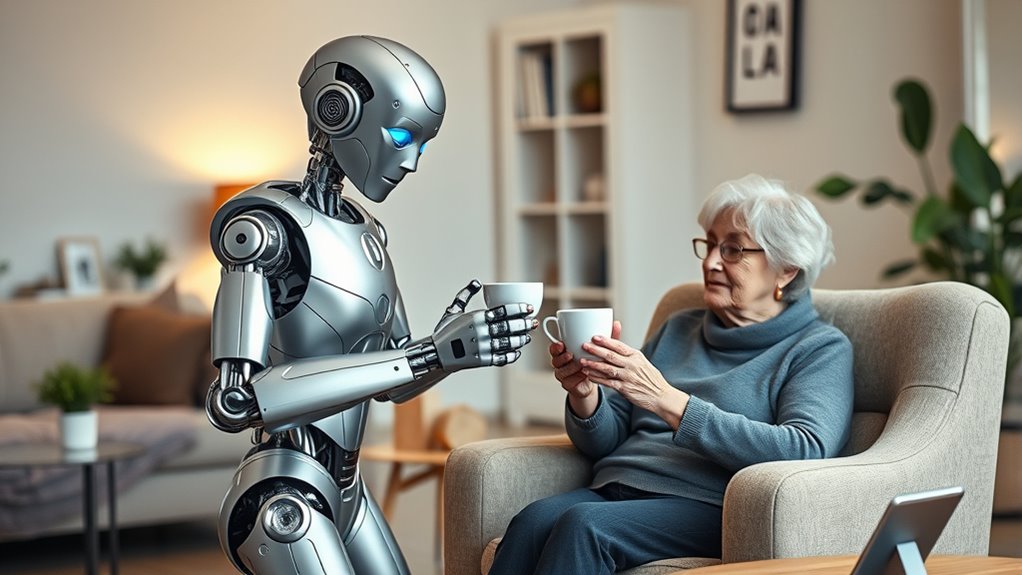
As home robots become increasingly integrated into daily life, understanding the ethical implications of their artificial intelligence is more important than ever. These devices can perform tasks ranging from cleaning to assisting with elderly care, but their capabilities raise significant questions about privacy concerns and decision-making autonomy. You might appreciate the convenience, but it’s essential to recognize how these robots handle your personal data. Many home robots collect extensive information about your routines, habits, and even conversations, which can be exploited if not properly secured. You need to consider how much data you’re comfortable sharing and whether the company’s privacy policies truly protect your information. If a robot learns enough about your daily patterns, it becomes a powerful tool—not just for convenience but also for potential misuse, making privacy concerns a central issue in ethical discussions.
Decision-making autonomy is another fundamental aspect. While these robots are designed to assist and make your life easier, they often operate under algorithms that determine their responses and actions. This raises the concern of how much control you retain over the robot’s choices. For example, if a robot detects a medical emergency or a safety risk, should it act independently or seek your input first? Autonomy can be beneficial, allowing robots to respond swiftly, but it also introduces risks if the AI misinterprets situations or makes decisions that aren’t aligned with your preferences or values. You might worry about losing agency in critical moments, especially when robots make decisions on your behalf without fully understanding the context or ethical considerations involved.
Furthermore, the balance between autonomy and control influences trust in these machines. If a robot frequently acts without your clear consent, it can erode your confidence in its reliability and ethical standing. Developers and users alike need to navigate these concerns carefully, establishing transparent guidelines about decision-making boundaries. It’s essential that you remain in control of critical decisions, especially those affecting your safety and privacy, rather than ceding total authority to the AI. As AI technology advances, ongoing dialogue about setting ethical limits and ensuring user agency will be pivotal. You should demand clear information about how decisions are made and insist on mechanisms for human oversight, so the autonomy of home robots enhances your life without compromising your rights or safety.
As an affiliate, we earn on qualifying purchases.
Frequently Asked Questions
How Does AI in Home Robots Impact User Privacy?
AI in home robots can impact your privacy by collecting personal data, but strong data encryption helps protect it from unauthorized access. You should be aware that giving user consent is essential before your information is gathered or shared. By understanding how your data is used and ensuring encryption, you can better safeguard your privacy while enjoying the convenience these robots offer.
Are Home Robots Capable of Making Moral Decisions Autonomously?
Home robots aren’t capable of making moral decisions autonomously. They rely on ethical programming and predefined rules to perform tasks, but lack true moral reasoning. You might think they can weigh complex ethical dilemmas, but they simply follow coded instructions without understanding morality. Their decision-making processes are limited to their programming, so they can’t genuinely assess right versus wrong like humans do, making autonomous moral judgment impossible for now.
What Are the Legal Liabilities if a Home Robot Causes Harm?
If a home robot causes harm, liability issues become complex because of regulatory challenges. You might be held responsible if you didn’t maintain or supervise the device properly, but manufacturers could also face legal action if the robot’s design is flawed. Laws are still catching up, so understanding your responsibilities and staying informed about evolving regulations helps protect you from potential legal liabilities.
How Transparent Are AI Algorithms in Home Robotic Devices?
You’ll find that AI algorithms in home robots often lack full transparency, making it hard to understand how decisions are made. Companies are beginning to prioritize algorithm transparency, but user control varies widely. You should look for devices that allow you to access and modify settings or review how the AI functions. Being aware of these transparency levels helps you make informed choices and guarantees you’re comfortable with your robot’s operations.
Can Home Robots Develop Emotional Attachments With Users?
Yes, home robots can develop emotional attachments with users through advanced programming and learning algorithms. You might find yourself forming emotional bonds as the robot adapts to your routines and preferences. However, attachment development raises ethical questions about dependence and authenticity. While these bonds can provide comfort, it’s important to remember that robots lack genuine emotions, and your emotional connection may be more about the robot’s design than true mutual attachment.
As an affiliate, we earn on qualifying purchases.
Conclusion
While some might worry about privacy invasion, embracing AI in home robots can actually enhance security and convenience. By setting clear boundaries and ethical guidelines, you can enjoy the benefits without compromising your privacy. Ignoring these advancements isn’t the answer; instead, actively shaping their development ensures they serve you ethically. So, rather than fear AI, take charge and foster responsible innovation—because a thoughtful approach creates a safer, smarter home for everyone.
As an affiliate, we earn on qualifying purchases.
As an affiliate, we earn on qualifying purchases.
Flea & tick season Picks
flea and tick prevention
As an affiliate, we earn on qualifying purchases.