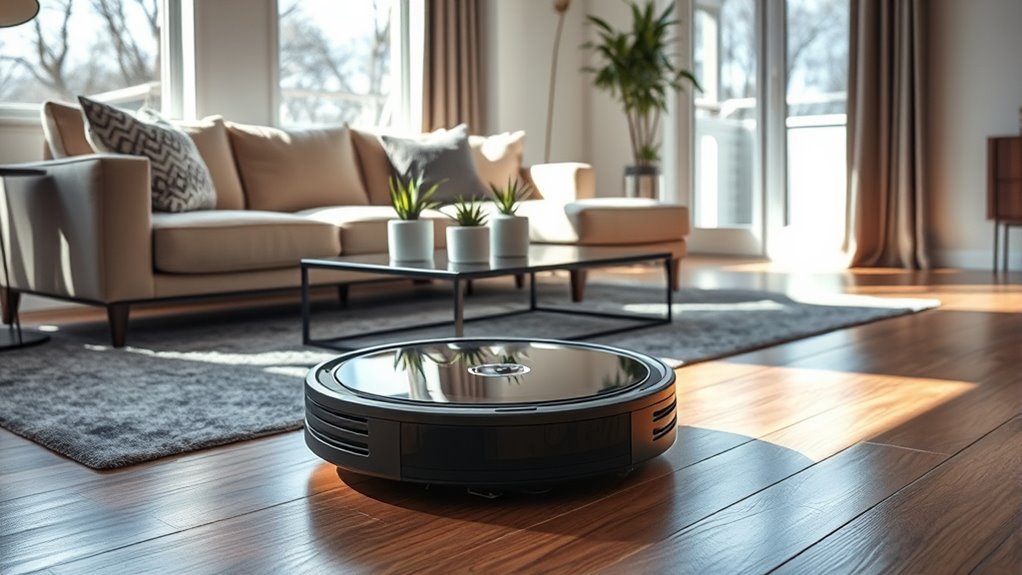

AI path planning helps your robotic devices move efficiently around furniture and obstacles, ensuring smooth and precise navigation. Using sensors like lidar and cameras, these systems scan environments in real-time, detect obstacles, and quickly adjust routes to avoid collisions. Algorithms such as A* and RRT optimize your device’s path, even in complex spaces. To learn how these technologies work together for seamless operation, stay tuned for more insights into smart navigation.
Key Takeaways
- AI path planning enables robotic vacuums to navigate efficiently around furniture, reducing cleaning time and avoiding obstacles.
- Sensors like lidar and cameras continuously detect furniture and other obstacles for real-time route adjustments.
- Algorithms such as A* and RRT analyze environment data to chart the most efficient cleaning paths.
- Dynamic obstacle avoidance allows vacuums to adapt to furniture movement or new obstacles during operation.
- Future advancements enhance precise navigation, ensuring thorough cleaning while protecting furniture and surroundings.
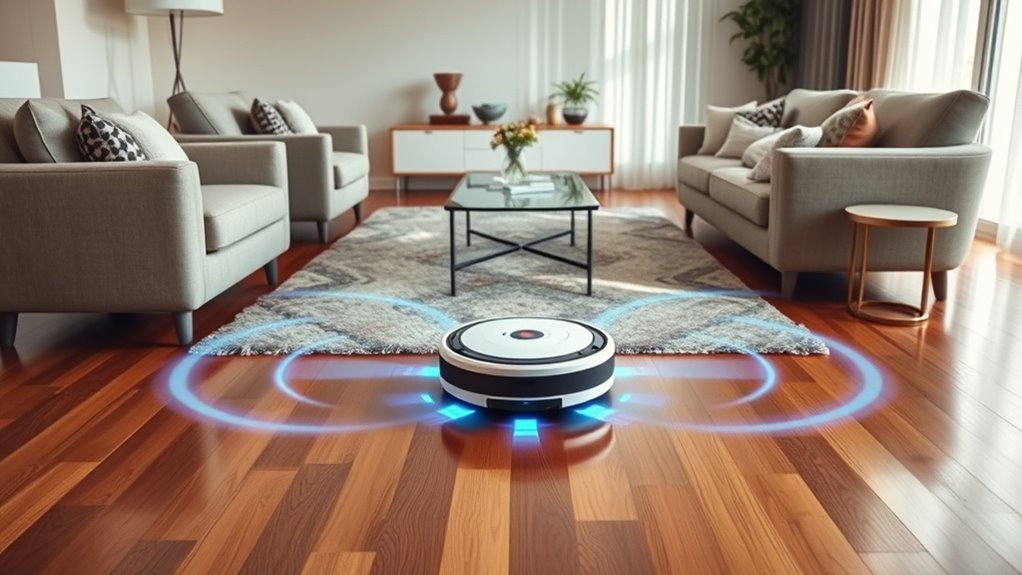
Ever wondered how robots and autonomous vehicles traverse complex environments seamlessly? It’s all thanks to advanced AI path planning, which enables these machines to find efficient routes while avoiding obstacles. When it comes to robot navigation, the system needs to process a vast amount of data in real-time, ensuring each movement is precise and purposeful. You might not realize it, but every time a robot moves around furniture or dodges a stray object, sophisticated algorithms are at work behind the scenes. These algorithms analyze the environment, identify potential obstacles, and chart a safe, ideal path forward.
Obstacle avoidance is the cornerstone of effective robot navigation. Without it, a robot could bump into furniture, knock over objects, or get stuck in tight spots. To prevent this, AI models employ sensors—like lidar, cameras, or ultrasonic devices—that continuously scan the surroundings. As soon as an obstacle appears, the system quickly recalculates its route, ensuring smooth and uninterrupted operation. This requires rapid data processing and decision-making capabilities, which AI handles with remarkable efficiency. By constantly updating its understanding of the environment, the robot maintains situational awareness, allowing it to adapt to dynamic changes like a person moving furniture or an unexpected object falling into its path.
AI sensors like lidar and cameras enable robots to detect obstacles and adapt instantly for smooth navigation.
The core of AI path planning involves algorithms such as A*, D*, or Rapidly-exploring Random Trees (RRT), which help determine the shortest or safest route from point A to point B. These algorithms consider both static obstacles—like furniture—and dynamic ones, such as humans or pets. They weigh factors like distance, obstacle density, and the robot’s capabilities to select the best course of action. You benefit from this technology every time your robotic vacuum efficiently cleans around your living room furniture, wandering tight corners and avoiding delicate objects without your intervention. The AI’s ability to plan routes swiftly and adaptively makes these devices highly effective at maintaining thorough cleaning while preventing damage.
In essence, AI path planning combines intelligent navigation and obstacle avoidance to create a smooth, efficient journey through cluttered spaces. It’s a continuous cycle of sensing, analyzing, and recalculating that keeps autonomous systems moving safely and purposefully. Whether it’s a robot vacuum dodging furniture or an autonomous vehicle navigating busy streets, this technology ensures they reach their destination without unnecessary delays or accidents. As AI continues to evolve, these systems will become even more adept at handling increasingly complex environments, making your interactions with smart devices more seamless and reliable. Additionally, support hours and real-time updates for these systems help maintain optimal performance in various environments.
Frequently Asked Questions
How Does AI Adapt to Moving Furniture During Cleaning?
When furniture moves, your vacuum uses real-time mapping to detect the new layout and identify dynamic obstacles. It adapts quickly by rerouting around the moving furniture, ensuring continuous cleaning without interruptions. Sensors help it recognize changes instantly, allowing the AI to update its path on the fly. This way, your vacuum stays efficient and effective, even as your home’s furniture shifts during cleaning sessions.
Can AI Path Planning Optimize Routes for Multiple Robots Simultaneously?
Think of your robots as a well-coordinated dance troupe. Yes, AI path planning can optimize routes for multiple robots simultaneously by managing robot coordination and route synchronization. It guarantees they work efficiently without bumping into each other or wasting time. The system dynamically adjusts their paths, much like choreographed dancers, to cover the area quickly and smoothly, maximizing cleaning performance while avoiding collisions and redundant efforts.
What Are the Energy Efficiency Benefits of AI Route Optimization?
You benefit from AI route optimization through significant energy savings, as it minimizes unnecessary movement and reduces power consumption. By optimizing routes, you also lower the environmental impact, since less energy is used overall. This efficiency means your robots operate more sustainably, conserving resources and decreasing emissions. Ultimately, AI path planning helps you achieve cost-effective cleaning while supporting eco-friendly practices, making your operations both smart and environmentally conscious.
How Does Obstacle Detection Influence AI Route Adjustments?
Think of obstacle detection like a GPS rerouting when you hit unexpected traffic. It relies on sensor accuracy and real-time updates to identify furniture and objects. This allows your AI to swiftly adjust its route, avoiding collisions and saving time. Without precise sensors and timely data, your device might bump into furniture or get stuck, reducing efficiency. Accurate obstacle detection keeps your route smooth and ensures ideal cleaning performance.
Are There Privacy Concerns With AI Mapping Home Layouts?
You might have privacy concerns with AI mapping your home layouts, especially regarding data security. When AI collects and stores detailed room information, there’s a risk of sensitive data being accessed or misused. To protect your privacy, make certain the device uses secure encryption and transparent data policies. Always read privacy settings and opt out of sharing data if you’re uncomfortable. Your home’s layout should remain private and secure.
Conclusion
Now that you understand the art of AI path planning, you’re like a skilled navigator steering through a maze of furniture. With every efficient route, you’re clearing a smooth highway through chaos, turning cluttered rooms into open plains. Embrace these intelligent pathways, and your vacuum becomes a graceful dancer avoiding obstacles with ease. Ultimately, mastering this tech transforms your cleaning routine into a symphony of precision—making messes vanish as effortlessly as a whisper in the wind.