To calibrate your side brushes for ideal edge cleaning, start by turning off your vacuum and carefully removing the brushes. Inspect for worn bristles or tangled debris, replacing them if needed. Reattach the brushes securely, ensuring they sit flush and spin freely without wobbling. Check for proper alignment and tighten fasteners gently. Run a short cleaning cycle to observe their contact and performance. For detailed steps and tips to keep your edges spotless, continue exploring the process.
Key Takeaways
- Turn off the vacuum and remove the side brushes for inspection and cleaning.
- Ensure brushes are properly aligned and securely attached, sitting flush with the housing.
- Check for worn or tangled bristles, replacing brushes if necessary to maintain cleaning efficiency.
- Manually spin the brushes to verify smooth, unobstructed movement without wobbling.
- Reassemble and run a short cleaning cycle to observe brush contact and edge cleaning performance.
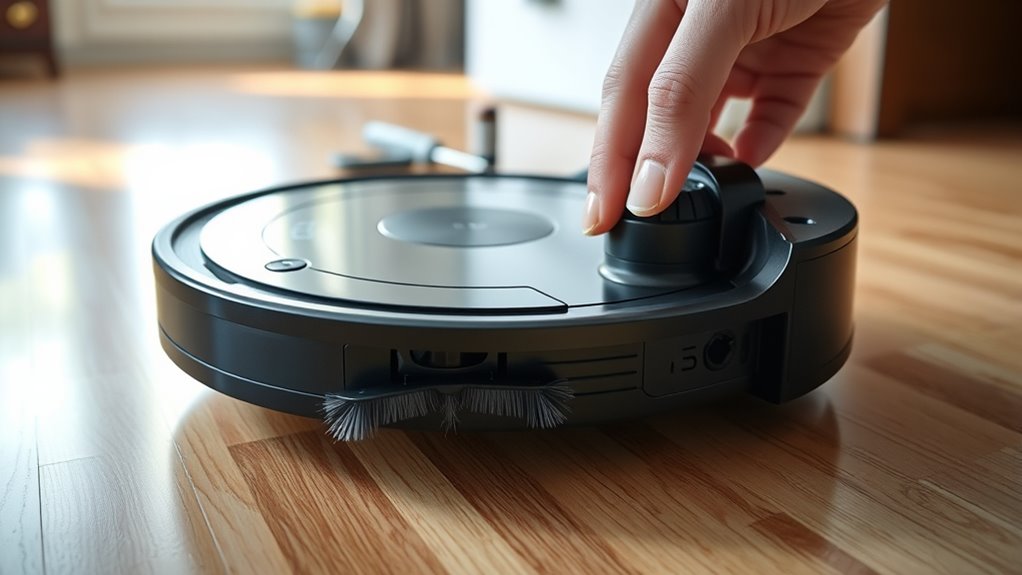
Calibrating your side brushes guarantees they clean effectively and last longer, preventing unnecessary wear or damage. When your robot vacuum’s side brushes aren’t properly aligned, they may miss dirt along edges or cause uneven wear, which could lead to more frequent brush replacements. Correct calibration ensures ideal edge cleaning and helps you avoid costly repairs. To start, turn off your vacuum and remove the side brushes carefully, inspecting them for signs of damage or buildup. If you notice worn bristles or debris tangled around the brush base, replace the brushes before recalibrating. Brush replacement at regular intervals keeps your vacuum performing at its best and prevents motor troubleshooting issues caused by overworking the motor with misaligned brushes.
Calibrate your side brushes to improve cleaning and extend their lifespan.
Next, reattach the side brushes securely, making sure they sit flush against the housing. Many models have adjustable or removable brushes with small screws or clips, so tighten these firmly but avoid overtightening, which can damage the brush or the motor. Once in place, turn the vacuum back on and run a short cleaning cycle to observe how the brushes spin and contact surfaces. If they wobble, don’t make contact with the floor evenly, or seem to spin unevenly, calibration is necessary. Proper alignment allows the brushes to sweep dirt efficiently along edges and into the vacuum intake, preventing missed spots.
If you notice the side brushes aren’t spinning properly or if the motor seems noisier than usual, motor troubleshooting might be needed. Sometimes, the motor struggles because debris or tangled hair hampers the brushes’ movement, or because the brushes aren’t aligned correctly, putting extra strain on the motor. Clearing any hair or debris from the brush shaft and rechecking the alignment can resolve these issues. If problems persist, consult your vacuum’s manual or support resources to test the motor’s operation or consider replacing it if faulty. Regular calibration and maintenance can save you money by reducing the need for motor repairs.
Finally, pay attention to the floor surface and how the side brushes perform during cleaning. If they seem to push debris to the sides without picking it up, recheck their calibration and alignment. Ensuring they’re positioned correctly not only enhances cleaning efficiency but also prolongs the life of your brushes and motor. Properly calibrated side brushes provide a consistent, effective edge-cleaning performance, making your vacuum more reliable and effective at keeping your home spotless. Kia Tuning techniques for engine optimization can serve as a helpful analogy for fine-tuning your vacuum’s components for peak performance.
Frequently Asked Questions
How Often Should Side Brushes Be Calibrated for Best Performance?
For the best performance, you should calibrate your side brushes regularly, ideally once a month or after any major cleaning session. Using proper calibration tools guarantees they’re aligned correctly for effective edge cleaning. Keep an eye on your robot’s maintenance tips, and don’t skip calibration; it prevents unnecessary wear and tear, helping your device work efficiently. Regular calibration keeps your side brushes functioning at their peak, maintaining thorough cleaning around edges and corners.
Can Calibration Improve Cleaning on Uneven Surfaces?
Surface texture considerably affects cleaning efficacy, and calibration techniques can indeed improve performance on uneven surfaces. By fine-tuning your side brushes, you help them adapt to bumps, ridges, and irregularities, ensuring thorough edge cleaning. Proper calibration enhances contact, prevents missed spots, and maximizes cleaning coverage. Implementing these calibration techniques allows your vacuum to better tackle uneven terrains, turning tricky surfaces into clean spaces with consistent, all-encompassing care.
What Signs Indicate Side Brushes Need Recalibration?
You’ll know your side brushes need recalibration if you notice uneven cleaning along edges or missed spots near walls. Poor side brush alignment can cause incomplete edge cleaning, while decreased sensor sensitivity might prevent the brushes from detecting walls properly. Regularly check for these signs, and if you see inconsistent results, it’s time to recalibrate. Proper alignment and sensor sensitivity guarantee your side brushes function effectively for thorough edge cleaning.
Is Calibration Different for Various Robot Vacuum Models?
Ever wondered if calibration varies across robot vacuum models? You should know that it often does, depending on model compatibility. Some units require specific calibration tools, while others have built-in settings. Carefully check your vacuum’s manual to see if calibration steps differ. Ignoring these differences could lead to subpar edge cleaning. So, stay alert—proper calibration guarantees your side brushes work flawlessly, regardless of your vacuum’s make or model.
Does Calibration Affect the Lifespan of Side Brushes?
Calibration does impact the lifespan of your side brushes. Proper calibration guarantees your vacuum’s side brushes work efficiently, reducing unnecessary wear and tear. Regular side brush maintenance, like cleaning and inspecting, combined with using calibration tools, helps avoid misalignment that can shorten their lifespan. When you keep your brushes well-calibrated, you’re not only maintaining cleaning performance but also extending their durability, saving you money in the long run.
Conclusion
Mastering the meticulous method of calibrating your side brushes ensures your cleaner’s edge efficiency. By balancing, brushing, and bringing everything back into harmony, you’ll achieve peak operation and outstanding results. Don’t delay—deliberately dial, detail, and direct your device for diligent dirt destruction. Remember, proper calibration keeps your cleaner competitive, clean, and consistently craving success. With these simple steps, you’ll stay savvy, satisfied, and spotless every time, transforming cleaning chaos into calm confidence!