
Moving from traditional lithium-ion to solid-state batteries, you’ll notice safer, more efficient energy storage with higher energy density and faster charging. Solid-state batteries use solid electrolytes instead of liquids, reducing fire risks and extending lifespan. They’re also more compact, supporting smaller, more durable devices. As technology advances, these batteries promise to revolutionize everything from electronics to electric cars, offering a cleaner, safer future—you’ll see how these innovations are shaping energy storage and sustainability.
Key Takeaways
- Solid-state batteries replace liquid electrolytes with solid materials, enhancing safety and reducing fire risks compared to lithium-ion batteries.
- They offer higher energy density, enabling longer device runtimes and improved performance over traditional lithium-ion cells.
- Solid-state technology supports faster charging and longer cycle life, making batteries more durable and efficient.
- Recycling of solid-state batteries is crucial for sustainable resource recovery and reducing environmental impact.
- Industry trends focus on integrating solid-state advancements with eco-friendly practices for safer, more efficient energy storage solutions.
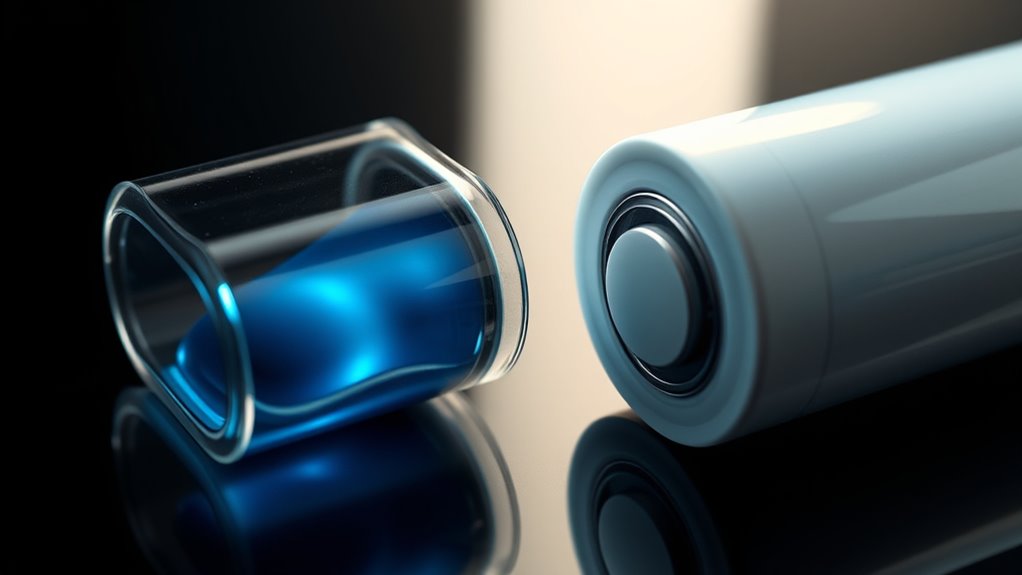
Battery technology has rapidly advanced in recent years, transforming how we power everything from smartphones to electric vehicles. These breakthroughs are driven by solid state advancements, which promise safer, more efficient, and longer-lasting batteries. Unlike traditional lithium-ion batteries that rely on liquid electrolytes, solid-state batteries use solid electrolytes, reducing risks of leaks or fires. This shift not only enhances safety but also allows for higher energy densities, meaning your devices can run longer on a single charge. As researchers refine these materials, you can expect more compact, powerful batteries that charge faster and last through more cycles, making them ideal for everything from portable electronics to electric cars.
Alongside these technological leaps, battery recycling has become a vital part of the conversation. As more batteries reach the end of their life, properly recycling them helps recover valuable materials like lithium, cobalt, and nickel, reducing the environmental impact of mining new resources. You might not see it every day, but responsible recycling efforts ensure that the materials in your batteries don’t end up in landfills, where they could cause pollution or waste valuable resources. Advances in recycling techniques now make it easier to extract these materials efficiently, supporting a more sustainable supply chain for batteries. This means that as the industry moves toward newer, more advanced batteries, the environmental footprint shrinks, and resource conservation takes center stage.
Recycling batteries recovers vital materials and reduces environmental impact, supporting a sustainable future for energy storage.
The integration of solid state advancements with improved recycling processes is steering the industry toward a cleaner, more sustainable future. You’ll benefit from batteries that are not only more powerful but also more environmentally friendly. Manufacturers are investing heavily in these innovations, aiming to produce batteries that are easier to recycle and safer to use. Think about how your electric vehicle could soon charge in minutes, last longer, and be part of a system that minimizes waste. The ongoing improvements in solid-state technology promise to make batteries lighter, more durable, and more eco-conscious, aligning with global efforts to reduce carbon emissions and resource depletion.
Furthermore, market demand for these advanced batteries continues to grow as consumers and companies prioritize sustainability and safety, encouraging further innovation.
In essence, the continuous evolution of battery technology is shaping a future where energy storage is safer, more efficient, and environmentally responsible. With solid state advancements leading the charge and recycling becoming a cornerstone of sustainability, you’re on the cusp of a new era where batteries power your world more intelligently and responsibly than ever before.
Frequently Asked Questions
How Long Will Solid-State Batteries Last Compared to Lithium-Ion?
Solid-state batteries typically last longer than lithium-ion ones because of improved battery longevity and stability. You can expect a solid-state battery’s lifespan to be 2-3 times greater, with fewer capacity losses over time. This lifespan comparison shows that solid-state technology offers better durability, making it a more reliable choice for long-term use. As a result, your devices or vehicles may require fewer replacements, saving you money and hassle down the line.
Are Solid-State Batteries Safer Than Current Lithium-Ion Options?
Yes, solid-state batteries are generally safer than lithium-ion options because they meet higher safety standards and offer better thermal stability. Unlike lithium-ion batteries, which can overheat and pose fire risks, solid-state batteries use solid electrolytes that reduce the chance of thermal runaway. This makes them less prone to catching fire or exploding, providing a safer energy storage solution for future devices and vehicles.
What Are the Main Environmental Impacts of New Battery Types?
You might think new battery types are completely eco-friendly, but they still leave a huge environmental footprint. Using eco-friendly materials helps, but recycling challenges grow with advanced batteries like solid-state ones. They often contain rare, hard-to-recycle materials that can pollute if not properly handled. So, while they promise cleaner energy, you should be aware that their environmental impacts can be just as complex and demanding as traditional lithium-ion batteries.
How Affordable Will Future Solid-State Batteries Become?
You’ll likely see solid-state batteries become more affordable as cost reduction efforts accelerate and market adoption grows. As production scales up and manufacturers optimize processes, prices should drop considerably, making them competitive with current lithium-ion options. This increased affordability will encourage wider adoption, boosting innovation and making electric vehicles and other tech more accessible to consumers. Overall, expect solid-state batteries to become a cost-effective, popular choice in the near future.
Can Current Manufacturing Facilities Be Adapted for Solid-State Batteries?
Imagine you’re upgrading a vintage jukebox; your current manufacturing facilities can be adapted for solid-state batteries, but you’ll face manufacturing challenges like retooling equipment and handling new material sourcing. You’ll need to invest in specialized machinery and guarantee high-quality materials. While some facilities might be easier to adapt, others may require significant modifications, making the transition complex but feasible with strategic planning and investment.
Conclusion
You’ve seen the evolution from lithium-ion to solid-state batteries, understanding the potential they hold. You recognize the promise of greater safety, higher energy density, and longer-lasting power. You see the shift happening, the innovations accelerating, and the future unfolding. You’re part of this journey, shaping a world where batteries are safer, smarter, and more sustainable. Embrace the change, fuel the innovation, and be ready to power the future—because battery technology is evolving, and so are you.