
To stop robot vacuums from chewing or pulling on your rug tassels, try the simple fringe hack. Carefully tuck the fringes inward, then secure them with double-sided tape, fabric glue, or gentle adhesive to keep them out of the vacuum’s path. This prevents damage and keeps your tassels intact. Want step-by-step instructions and tips for perfect results? Keep going to learn how you can protect your rug and enjoy hassle-free cleaning.
Key Takeaways
- Tuck tassels inward and secure them with double-sided tape or fabric glue to prevent robot vacuum contact.
- Trim fringes to shorter lengths to reduce snagging and minimize damage from robot brushes.
- Use boundary markers or physical barriers to keep robot vacuums away from tassel areas.
- Opt for rugs with tightly woven or pet-resistant fringes made of durable materials like nylon or polypropylene.
- Regularly check and adjust tassel positioning to prevent tangling or pulling during cleaning sessions.
Why Do Robot Vacuums Eat Rug Tassels?

Robot vacuums often target rug tassels because their brushes and sensors can mistake them for dirt or debris. This behavior is driven by the vacuum’s need to clean what it perceives as messes, but tassels can confuse its sensors, prompting it to pull or chew on them. You might notice your vacuum repeatedly getting stuck or tugging at the fringes, which is a common vacuum behavior. To protect your tassels, it’s essential to implement tassel protection strategies, like tying or trimming the fringes. Understanding this interaction helps you prevent damage and keep your rug’s tassels intact. Additionally, safety precautions should be taken when using vacuum cleaners near delicate tassels to prevent accidents. Proper rug maintenance can also help reduce the likelihood of your vacuum targeting tassels in the first place. Employing protective measures such as using a gentle vacuum setting can further safeguard your tassels from damage. Regularly inspecting and adjusting your vacuum’s brush height can also minimize unwanted interactions. Recognizing the sensor limitations of robot vacuums can help you better understand why tassels are often targeted.
What Makes Rug Fringes Vulnerable to Vacuum Damage?
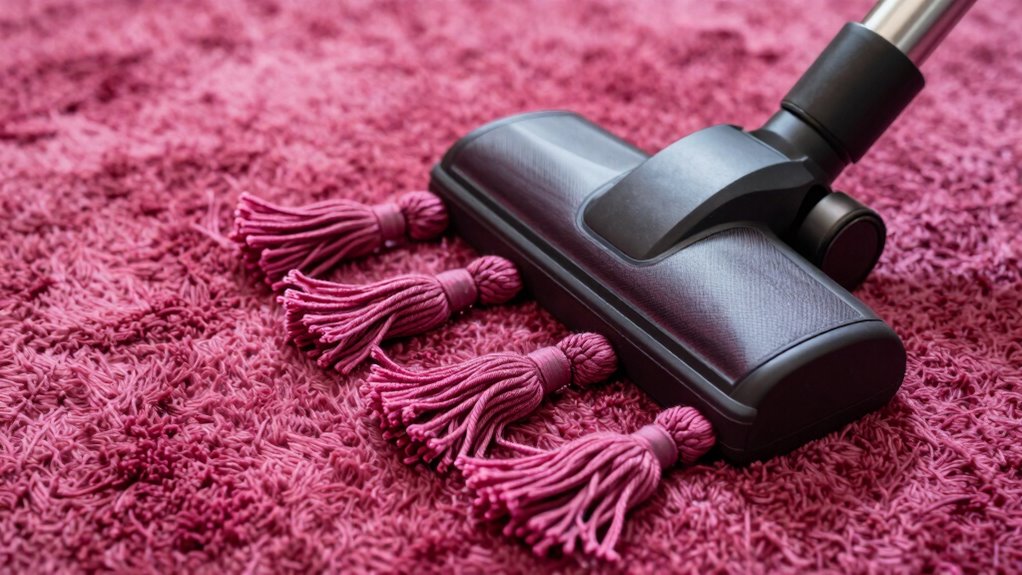
Rug fringes are particularly vulnerable to vacuum damage because their loose, exposed fibers easily catch in brushes and beater bars. The fiber durability of tassels varies; weaker fibers break or fray with repeated agitation. The tassel design also plays a role—longer, thinner fringes are more prone to damage than tightly woven or shorter styles. Here’s a quick comparison:
| Tassel Style | Fiber Durability | Damage Susceptibility |
|---|---|---|
| Long, thin tassels | Lower | Easily snagged and frayed |
| Short, dense tassels | Higher | Less likely to catch |
| Twisted tassels | Moderate | Moderate risk |
Understanding these factors helps you protect your rug fringes from vacuum mishaps. Being mindful of fiber durability and choosing the right tassel style can significantly reduce damage risk. Additionally, using a vacuum attachment designed for delicate surfaces can further minimize the chances of snagging or tearing. Recognizing the importance of proper vacuum technique can also make a substantial difference in maintaining fringe integrity. Being aware of vacuum settings and adjusting them appropriately can help prevent unnecessary stress on the fibers.
How the Rug Fringe Hack Stops Vacuum Munching
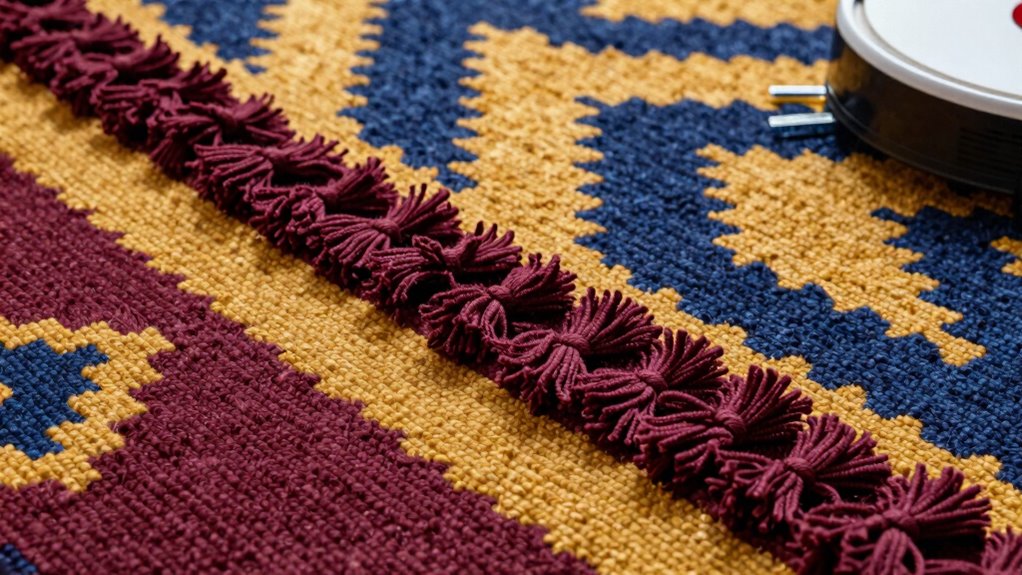
Your rug’s fringe length can influence how easily your vacuum gets caught. Using proper tucking techniques helps keep the fringes out of the vacuum’s path. When you manage these details, you prevent damage and keep your rug looking its best. Additionally, maintaining appropriate humidity levels can reduce fiber fraying and preserve the integrity of the fringe over time. Incorporating free floating techniques in your rug placement can also help minimize stress on the fringes, preventing unnecessary wear. Properly securing the fringes can also contribute to better soundproofing by reducing loose fibers that may rattle or cause noise during vacuuming, and understanding regional flavors can inspire unique rug designs that complement your decor style. Being aware of fringe maintenance practices further extends the lifespan of your rug’s decorative edges and enhances their appearance.
Fringe Length Matters
If the fringe on your rug is too long, it can easily get caught in your vacuum cleaner, causing frustration and potential damage. Shorter fringe improves tassel durability by reducing the risk of tearing or unraveling. Longer fringe is more prone to snagging, which can weaken fibers over time. By trimming your fringe to an appropriate length, you make it less likely to get sucked into the vacuum’s brush or be pulled apart. This simple adjustment preserves the integrity of your tassels and keeps your cleaning routine smooth. Remember, the right fringe length balances aesthetic appeal with practicality, ensuring your rug stays intact while still looking attractive. Proper fringe length lets your vacuum do its job without munching on your tassels or causing unnecessary wear. Additionally, understanding surface compatibility can help you find effective ways to showcase your rugs and maintain their appearance over time. Being aware of rug construction can also help you choose the best cleaning methods to protect your fringe and overall rug quality. Knowing fiber resilience can further guide you in selecting the most gentle and effective cleaning techniques for your specific rug material. Furthermore, selecting the correct vacuum settings can prevent unnecessary stress on your fringes during routine cleaning.
Proper Tucking Techniques
To prevent vacuum munching on fringe, carefully tucking the tassels beneath the rug’s edge is an effective technique. This simple step enhances fringe styling and protects your rug during routine rug maintenance. To do it right:
- Fold the tassels inward, aligning them with the rug’s backing.
- Use your fingers to smooth the fringe flat against the underside.
- Tuck the tassels securely under the rug’s edge, avoiding loose ends.
- Repeat along the entire length for a uniform look.
- Properly tucked fringes can also reduce the buildup of dust and debris, making cleaning easier and maintaining the rug’s appearance.
This method keeps the fringe out of the vacuum’s reach, reducing damage and preserving the rug’s appearance. Proper tucking not only prevents robot vacuum interference but also prolongs the life of your tassels, making your rug maintenance easier and more effective. Additionally, ensuring the fringe is well-tucked can improve the overall surface reflectivity and appearance of your rug.
How to Apply the Fringe Hack at Home in Easy Steps
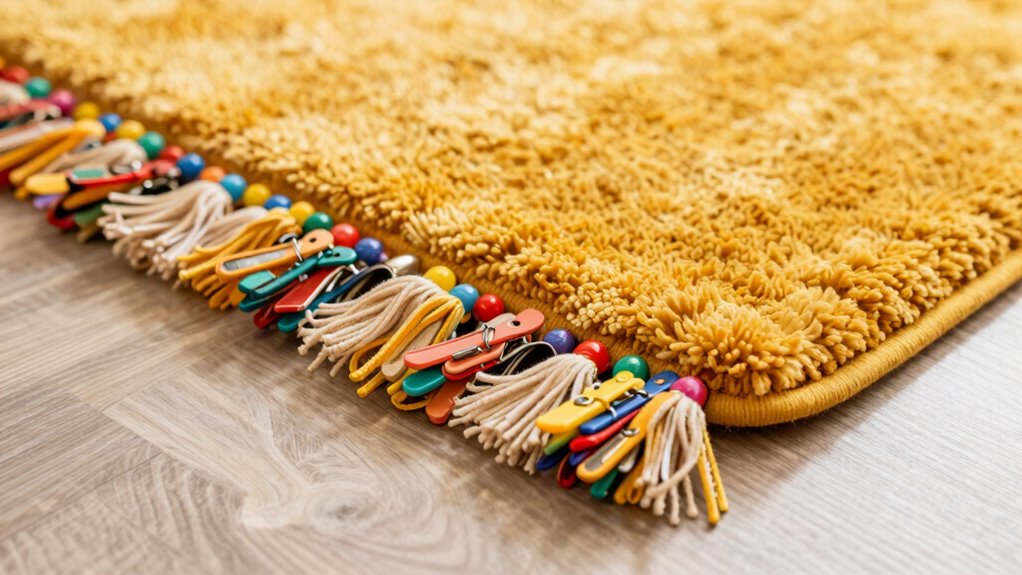
Applying the fringe hack at home is simple and quick with just a few basic tools. First, gather a pair of scissors, some double-sided tape or fabric glue, and a clean cloth. Start by gently brushing the tassels to remove dust and dirt, ensuring better adhesion. Cutting the fringe to your desired length, if needed, can also help improve fringe durability and reduce the risk of unraveling. Next, apply small dabs of fabric glue or place double-sided tape along the edges of the tassels to secure them. Press the fringe firmly onto the rug’s edge and hold for a few seconds. Let it dry completely before using the rug. This quick hack keeps tassel maintenance manageable and prevents fraying, helping your rug look fresh and protected. Additionally, understanding material properties can help you select the best adhesive for your specific rug fibers. Knowing fiber composition can also influence how well the adhesive bonds and lasts over time, ensuring a durable fix. Being aware of rug construction can further improve the longevity of your repair by choosing appropriate application techniques. Moreover, considering adhesive compatibility can prevent damage to delicate or sensitive fibers, extending the life of your repair.
Best Rugs and Fringes for Protecting Tassels
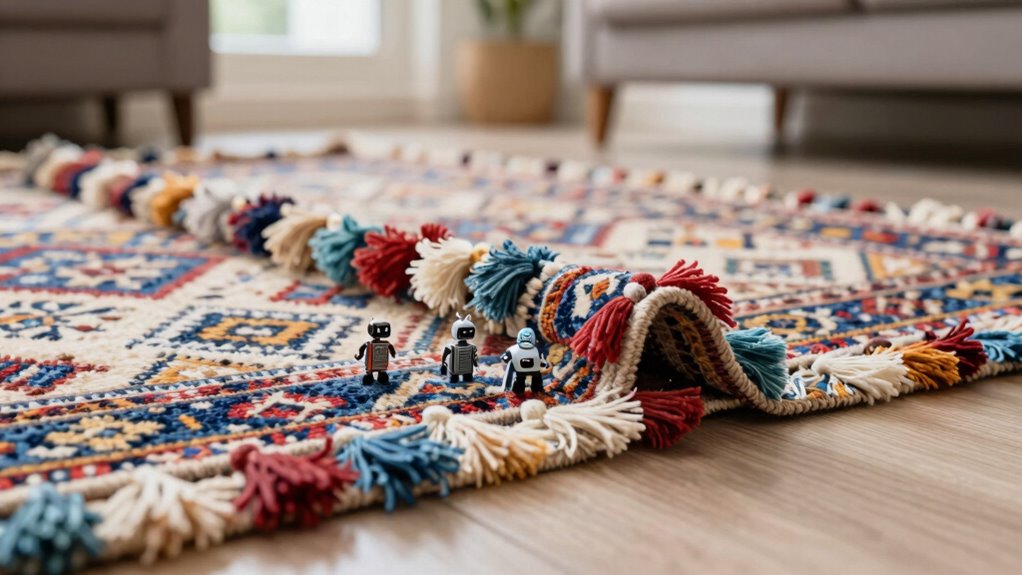
Choosing the right rug and fringe combination is essential for protecting tassels and maintaining your rug’s appearance. To keep your tassels safe from curious pets and robot hoovers, look for rugs with sturdy decorative trims that deter nibbling. Consider these options:
- Rugs with tightly woven edges reduce pet hair buildup and make pet hair removal easier.
- Rugs with synthetic fibers resist damage from claws and chewing.
- Fringes made from durable materials like polypropylene or nylon are less appealing to pets.
- Rugs with minimal or no fringes eliminate the risk of tassel damage altogether.
- Selecting pet-resistant materials can further enhance the durability and longevity of your tassels and fringes.
- Proper rug maintenance can also help prevent damage and prolong the life of your tassels and fringes.
These choices help prevent robot and pet interference, keeping tassels intact longer. Combining strong, pet-resistant rugs with decorative trims ensures your tassels stay protected and your rug stays beautiful.
How to Care for Your Rugs After the Hack

Once you’ve implemented the fringe trick, it’s important to give your rugs proper care to preserve their new look and durability. Regular fringe cleaning helps keep tassels looking fresh and prevents dirt buildup that can cause fraying. Use a gentle brush or vacuum with a soft brush attachment to clean the tassels without damaging them. Avoid harsh chemicals or soaking the fringe, as this can weaken the fibers and compromise tassel preservation. If spills occur, blot gently with a clean cloth and mild detergent, then air dry completely. Proper care ensures your tassels stay intact and vibrant, maintaining the rug’s aesthetic and longevity. Consistent, gentle maintenance is key to protecting your investment and enjoying your rug for years to come.
Common Mistakes When Using the Fringe Hack: and How to Avoid Them
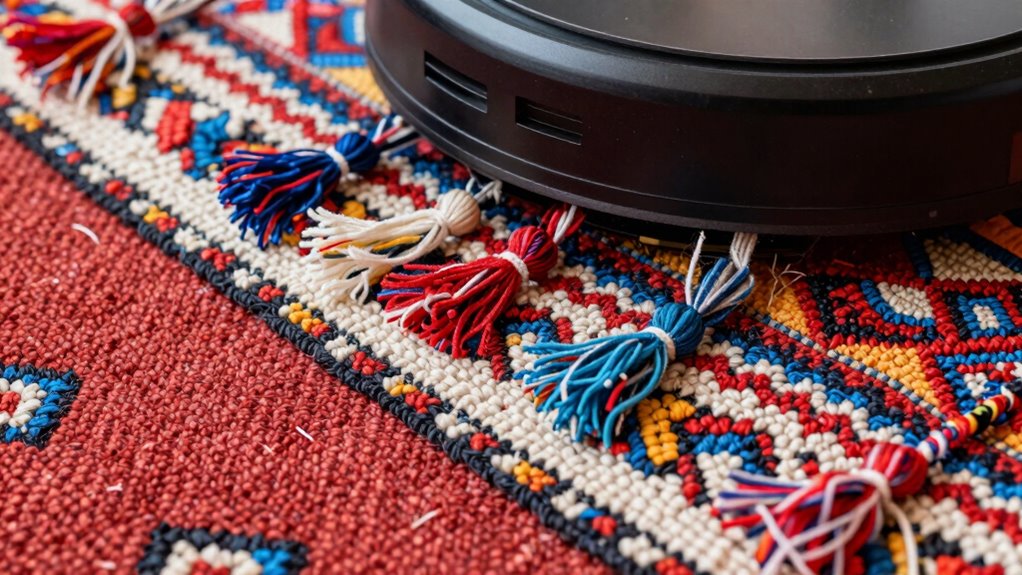
Even with the best intentions, it’s easy to make mistakes when using the fringe hack that can undo your efforts or damage your rug. One common error is neglecting proper fringe styling, which may cause tassels to become tangled or uneven. Second, not considering vacuum compatibility can lead to damage; using a vacuum with a beater bar risks pulling out or fraying tassels. Third, applying too much tape or adhesive can leave residue or pull on the fringe when removed. Lastly, forgetting to regularly check and adjust the fringe can result in uneven wear or accidental snagging. To avoid these mistakes, guarantee your fringe styling is neat, use a gentle vacuum suited for tassels, apply minimal adhesive, and keep an eye on fringe condition for ideal protection.
Other Ways to Keep Your Tassels Safe From Robots

To protect your tassels from robots, you should use deterrents that are both effective and unobtrusive. Keeping your tassel visibility high helps robots recognize and avoid them easily. By combining these strategies, you can better safeguard your fringe from robotic interference.
Use Robotic Deterrents Effectively
Are robotic sensors and cameras a real threat to your delicate tassels? To use robotic deterrents effectively, you need a strategic approach. First, adjust your robot vacuum’s noise settings; louder noises can scare the robot away before it reaches your tassels. Second, modify your tassel design by adding thicker fringes or protective wraps to make them less appealing. Third, place physical barriers like small decorative fences or furniture around tassels to block sensors. Fourth, regularly update your robot’s software to improve its obstacle detection. These steps help guarantee your tassels stay safe while keeping the robot’s navigation smooth. By combining noise management, tassel design, physical barriers, and software updates, you make your deterrents more effective and preserve your tassels’ beauty.
Maintain Tassel Visibility
While designing your space to keep tassels visible is important, there are additional strategies to guarantee they stay safe from robotic vacuums. Regularly checking for pet hair buildup around tassels can prevent it from triggering the robot’s sensors or clogging the vacuum. Keep tassels in direct sight and avoid hiding them behind furniture or rugs, which can cause the robot to bump into and damage them. Additionally, managing vacuum noise levels can make robotic cleaners less aggressive or confused, reducing accidental damage. Using boundary markers or invisible fences around tassels can also serve as visual cues for the robot to avoid those areas. By maintaining visibility and minimizing pet hair and noise interference, you help ensure your tassels stay intact and robot-proof.
Troubleshooting: When the Hack Doesn’t Work and Next Steps
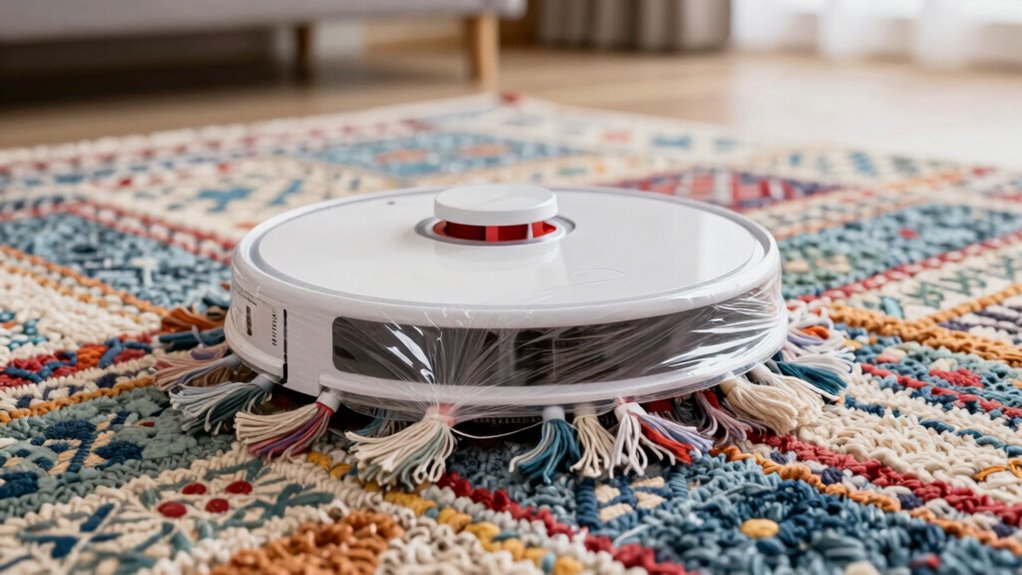
Sometimes, despite following the steps carefully, your rug fringe hack may not produce the desired results. If robots still nibble on your tassels, consider these next steps:
Even with careful steps, robots may still nibble; try adjusting settings or checking fringe for damage.
- Adjust your vacuum settings—try lowering suction or switching to a gentle mode to prevent the fringe material from attracting attention.
- Check the fringe material—if it’s too soft or slippery, it may be more appealing; consider adding a protective covering or replacing it with a less enticing fabric.
- Inspect the fringe for loose threads or damage that might make it easier for robots to grab.
- Test different vacuum attachments aimed at delicate surfaces to see if gentler cleaning helps protect the tassels.
Frequently Asked Questions
Can the Fringe Trick Damage My Robot Vacuum’s Sensors?
The fringe trick generally won’t cause sensor interference or fringe damage if you use it properly. Make sure the fringe is positioned carefully and isn’t too close to the sensors. If you place the fringe too close or use sharp materials, it could potentially interfere with sensors or cause damage. Always check your robot vacuum’s manual for specific guidance, and monitor the device during initial use to prevent any issues.
Will This Hack Work on All Types of Rug Fringes?
About 60% of rug types with fringes can benefit from this hack, but it doesn’t work on all fringe materials. Synthetic fringes and tightly woven rugs respond well, while delicate or plush fringes might get damaged. You should test the trick on a small area first. So, whether it’s cotton, wool, or synthetic, consider your rug’s fringe material before applying this hack to guarantee safety and effectiveness.
How Long Does the Fringe Hack Last Before Needing Replacement?
The fringe hack typically lasts about 2 to 4 weeks before you need to reapply it, depending on your rug’s fringe durability and how often your robot vacuum runs. If your robot is particularly aggressive or the fringe wears quickly, you’ll need to redo the hack sooner. Regularly checking and reapplying guarantees the hack remains effective, maintaining fringe protection and extending its overall hack longevity.
Does the Hack Affect the Overall Appearance of the Rug?
Imagine you’re a Victorian lady in a modern tech world—your rug’s aesthetic impact remains largely intact. The hack doesn’t substantially affect fringe visibility or overall appearance if applied carefully. You might notice a slight difference in texture, but the visual charm stays. As with any hack, it’s best to assess your rug’s style and your preference to ensure the aesthetic impact aligns with your decor.
Are There Safety Concerns With Applying This Hack at Home?
Yes, there are safety concerns when applying this hack at home. You should check electrical safety by ensuring no exposed wires or short circuits, especially if using electrical devices nearby. Also, verify material compatibility; some materials might react poorly to the hack, causing damage or hazards. Always follow manufacturer instructions, and consider consulting a professional if you’re unsure, to guarantee your safety and your rug’s integrity.
Conclusion
Just like the clever Odysseus guarding his treasures, your rug tassels deserve protection from relentless vacuum beasts. With the fringe hack, you can outsmart their munching instincts and keep your decor pristine. Remember, a little preventative magic goes a long way—so don’t let your rugs fall prey to robotic mischief. Take these simple steps, and your tassels will stand strong, proving that even in a world of robots, cleverness still wins the day.