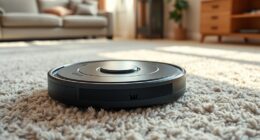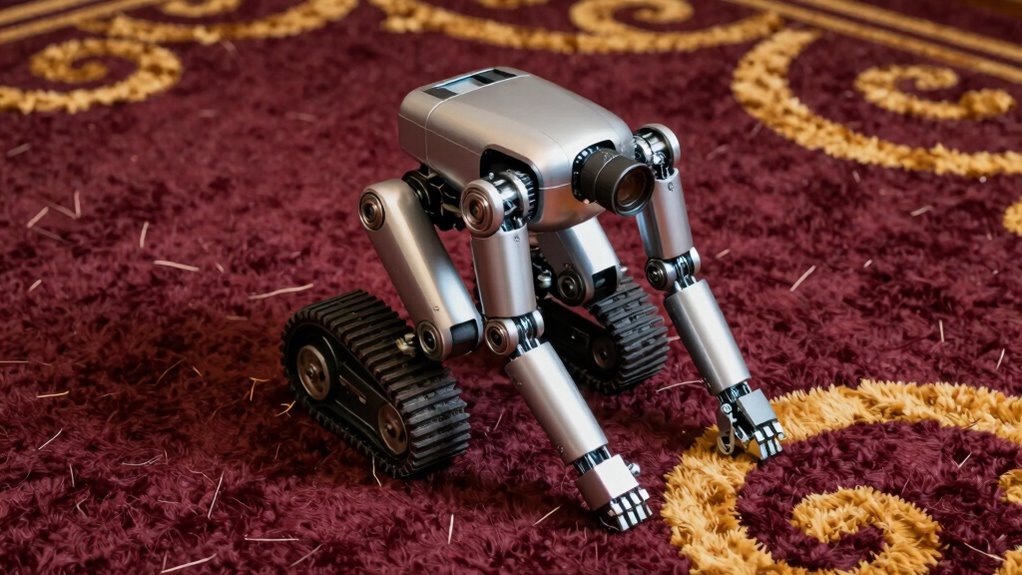

Robots struggle on plush carpets mainly because thick fibers tend to clog their brushes and block airflow, which reduces suction and makes it hard to pick up dirt embedded deep in the fibers. The dense pile also causes sensors to misjudge distances, leading to navigation issues, while soft surfaces can cause wheels to slip or get stuck. If you want to discover ways to overcome these challenges and improve your robot’s performance, keep exploring further.

Get cleaning gear delivered free with Prime
- Fast, free delivery on millions of items
- Prime Video, Amazon Music and more included
- Member-only deals all year
Key Takeaways
- Dense fibers create a barrier that impedes suction and dirt pickup, reducing robot cleaning effectiveness on plush carpets.
- Thick pile fibers wrap around brushes and clog filters, hindering airflow and cleaning performance.
- Sensors often misjudge distances due to plush textures, leading to navigation errors and missed spots.
- Wheel traction decreases because soft, thick fibers cause slipping, affecting movement and coverage.
- Insufficient suction and improper settings struggle to dislodge embedded dirt from dense, plush fibers.
Products Worth Considering

Roborock Qrevo S Pro Robot Vacuum and Mop, 18,500 Pa Suction

Dreame L40 Ultra Gen 2 Robot Vacuum and Mop

Roborock Q7 M5+ Robot Vacuum and Mop
As an affiliate, we earn on qualifying purchases.
Why Do Plush Carpets Challenge Robot Vacuums?
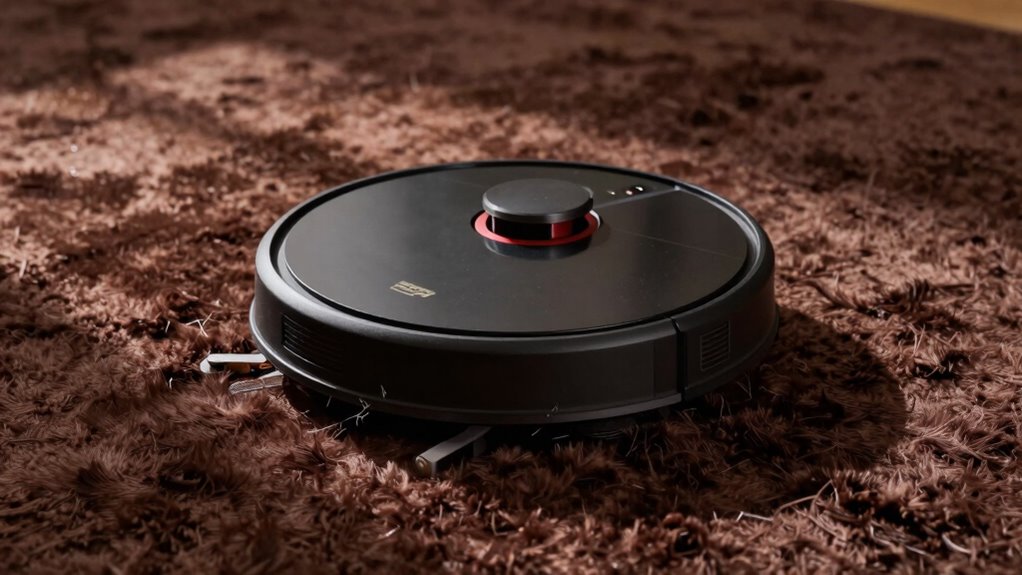
Plush carpets often pose a significant challenge for robot vacuums because their thick, dense fibers can impede the device’s ability to effectively pick up dirt and debris. These carpet fibers create a barrier that makes it harder for the vacuum’s suction power to reach deep into the pile. The dense nature of plush carpets means the vacuum has to work harder to generate enough suction to lift debris from the fibers. If your robot vacuum isn’t equipped with strong suction power, it may struggle to dislodge dirt embedded in the thick pile. Additionally, household safety tips recommend regularly maintaining and inspecting the vacuum’s brushes and filters to ensure optimal performance. Improving your robot vacuum’s ability to handle plush carpets can also involve adjusting cleaning settings to increase suction or brush agitation for better debris removal. Using specialized brushes designed for deep cleaning can further enhance performance on plush surfaces. This combination of dense fibers and insufficient suction hampers thorough cleaning and leaves your plush carpet less than spotless. Proper vacuum maintenance can also help prevent clogs and ensure consistent suction power, making it easier for the vacuum to tackle challenging carpets. Regularly checking for clogged filters is essential to maintain optimal suction and cleaning efficiency.
How Thick Carpet Fibers Clog Vacuum Brushes and Reduce Suction
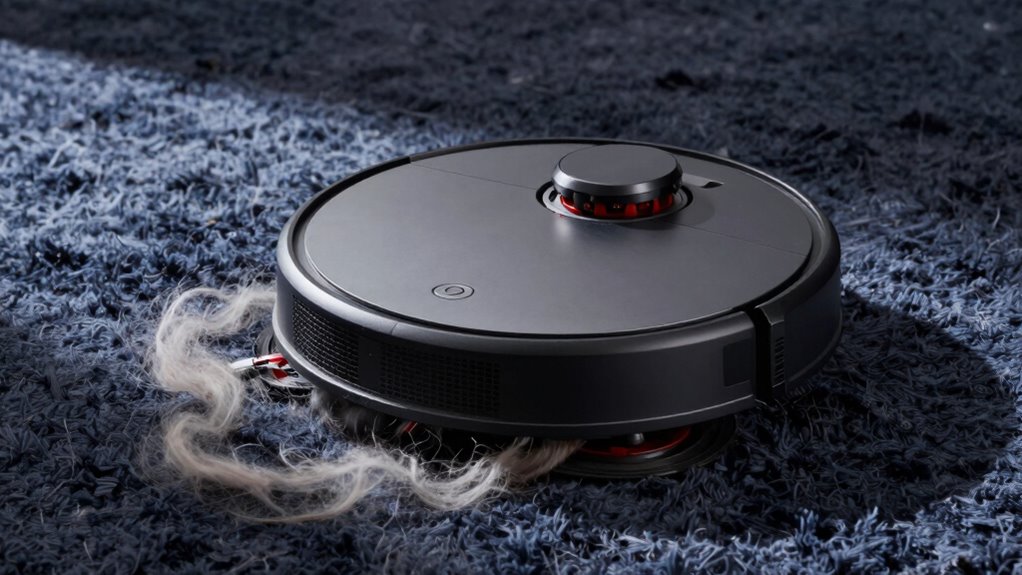
Thick carpet fibers can quickly clog your vacuum brushes, substantially reducing suction and cleaning effectiveness. When fibers wrap around the brush roll, fiber clogging occurs, preventing the brush from spinning freely. This buildup blocks airflow, leading to suction reduction. As fibers accumulate, your vacuum struggles to pick up dirt and debris, making cleaning less efficient. The dense, plush nature of thick carpets means more fibers are available to clog the brushes, especially if the vacuum isn’t designed for heavy pile. Regularly cleaning or replacing the brush roll helps minimize fiber clogging. Proper cabling solutions and regular maintenance are essential to keep your vacuum functioning effectively on plush carpets. Without proper maintenance, vacuum suction diminishes, leaving carpets less clean. Understanding how thick fibers interfere with your vacuum’s performance can help you take proactive steps to maintain ideal suction and cleaning power. Additionally, using the appropriate vacuum settings can reduce the likelihood of fiber buildup and improve overall cleaning performance.
Do Sensors Fail on Soft, Thick Flooring? Understanding Navigation Limitations
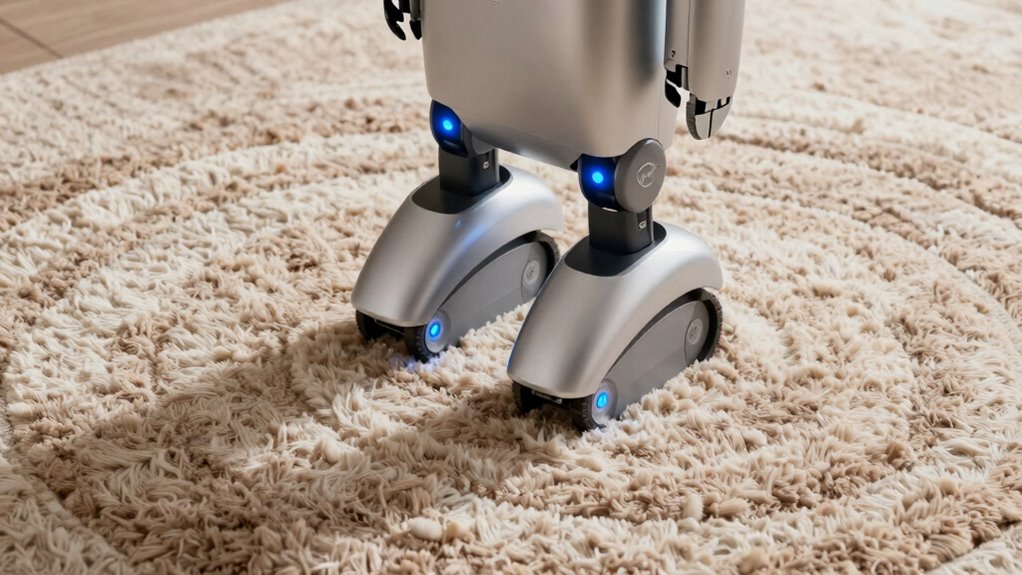
Soft, thick flooring can pose significant challenges for robotic vacuum sensors, often causing navigation issues. When sensors struggle with soft surface detection, they may misjudge distances or fail to recognize obstacles, leading to missed spots or repeated passes. This is often due to sensor calibration issues caused by the dense fibers and plush texture, which interfere with accurate readings. To improve performance, guarantee your robot’s sensors are properly calibrated and clean. Additionally, understanding sensor limitations on various surfaces can help in selecting appropriate cleaning strategies. Recognizing how surface textures impact sensor accuracy can guide you in optimizing your robot’s navigation. Some robots incorporate adaptive navigation features designed to better handle complex flooring types, which can significantly enhance overall effectiveness and reduce navigation errors. Being aware of how hive structures and floor composition influence sensor function can also assist in troubleshooting and improving robot performance.
Wheel Design: Do They Get Stuck on Plush Surfaces?
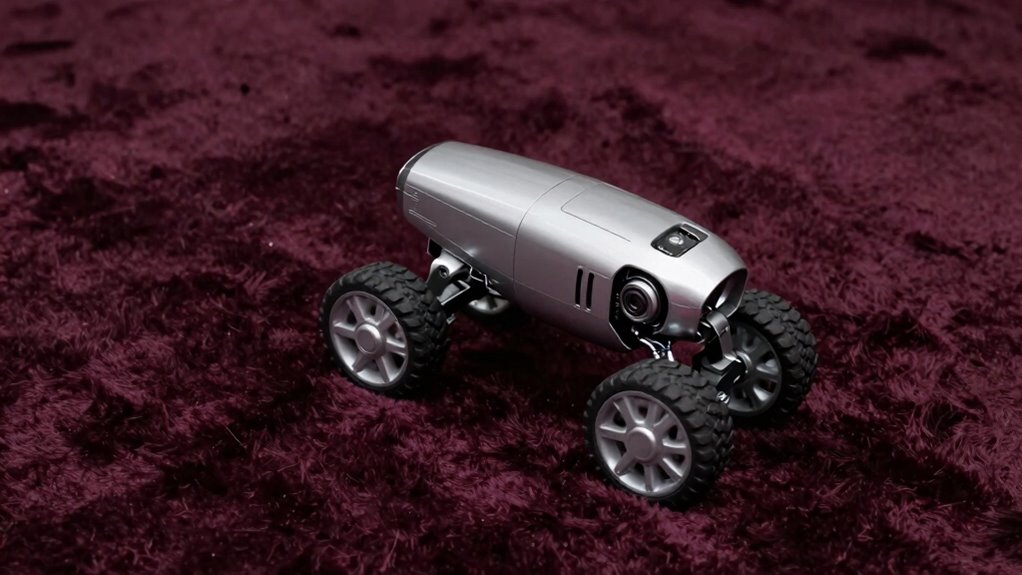
Have you noticed that wheel tread patterns can influence a robot’s ability to move smoothly on plush carpets? The suspension system’s efficiency also plays a vital role in preventing wheels from getting stuck or slipping. By examining these design features, you can better understand why some robots struggle on soft, thick surfaces. Additionally, choosing the right wheel material can significantly improve traction and reduce the chances of getting stuck. Optimizing traction control is essential for enhancing performance on plush carpets. Incorporating adaptive traction systems can further help robots navigate challenging surfaces more effectively, especially when combined with proper suspension design to absorb uneven terrain. Understanding surface interaction is crucial for developing robots that can effortlessly traverse soft, plush surfaces.
Wheel Tread Patterns
When it comes to maneuvering plush carpets, wheel tread patterns play a crucial role in preventing your robot vacuum from getting stuck. Tread design affects tire grip, helping your robot maintain traction on thick, plush fibers. Deeper treads provide better grip, allowing the wheels to dig into soft surfaces without slipping. Shallow or smooth treads often fail to grip well, causing your robot to spin or lose momentum. The pattern also influences how debris is expelled from the wheels, reducing clogging. A well-designed tread pattern balances grip and smoothness, ensuring your robot navigates seamlessly. By choosing wheels with appropriate tread depth and pattern, you improve traction, minimize slippage, and prevent frustrating stalls on plush carpets. Additionally, understanding world clock functionality can help users schedule cleaning times effectively across different time zones. Regular maintenance of wheel treads, such as cleaning debris buildup, can further enhance traction and prevent performance issues. Incorporating optimized wheel design principles from automotive performance parts can also lead to improved durability and efficiency of your robot’s wheels.
Suspension System Efficiency
A well-designed suspension system can considerably improve a robot vacuum’s ability to navigate plush carpets without getting stuck. Proper suspension tuning allows the wheels to adapt to uneven surfaces, maintaining consistent contact and traction. Shock absorption is crucial for smoothing out the bumps and dips typical of plush carpets, preventing wheels from lifting or slipping. When the suspension absorbs shocks effectively, the robot can better maneuver over thick fibers and uneven textures. This is especially important because water damage and rug cleaning often involve dealing with damp or uneven surfaces that can further challenge mobility. Additionally, a flexible suspension system can help protect internal components from damage caused by impacts and vibrations, extending the lifespan of the device. Moreover, optimizing suspension can also contribute to battery efficiency by reducing unnecessary motor strain during navigation. Properly calibrated suspension also enhances traction and grip, which is vital on soft, fluffy textures that tend to be slippery for rigid wheels. An effectively tuned suspension system not only improves movement but also reduces wear and tear on both the wheels and internal parts, promoting durability. Ultimately, optimized suspension design enhances overall navigation, making cleaning more thorough and less frustrating on challenging, fluffy carpets.
Practical Tips to Improve Your Robot Vacuum on Thick Carpets

To get your robot vacuum to perform better on thick carpets, start by adjusting its settings for more power and suction. Increasing suction helps it lift embedded dirt, especially with rug styling that traps debris. Additionally, confirm the vacuum’s brush roll is set to the appropriate height for plush surfaces. You can also improve navigation by clearing clutter and creating clear paths, making it easier for your robot pet to move efficiently. Consider using boundary strips to restrict it from areas where thick carpets are less common. Regularly cleaning filters and brushes maintains peak performance. Remember that affiliate disclosures can influence product recommendations, so choose equipment that aligns with your cleaning needs. Ensuring your robot vacuum has the right performance settings can significantly enhance its cleaning efficiency on plush carpets. These simple tweaks boost cleaning efficiency and help your robot pet tackle plush carpets more effectively, ensuring thorough cleaning without getting stuck or missing spots.
Which Robot Vacuums Handle Plush Carpets Best?

If you want a robot vacuum that excels on plush carpets, look for models equipped with strong suction power and adjustable brush heights. These features help the vacuum dig deep into thick fibers for effective cleaning. Battery life is also vital—opt for models with longer runtime so you can cover large areas without recharging. Keep in mind, more powerful motors and larger batteries can increase noise levels, so if you prefer quieter operation, check reviews for noise ratings. Some vacuums balance strong cleaning capabilities with lower noise, making them ideal for homes with pets or bedtime routines. Ultimately, the best robot vacuum for plush carpets combines high suction, adjustable brushes, and sufficient battery life, while maintaining acceptable noise levels.
Future Tech: How Innovations Will Make Cleaning Thick Carpets Easier
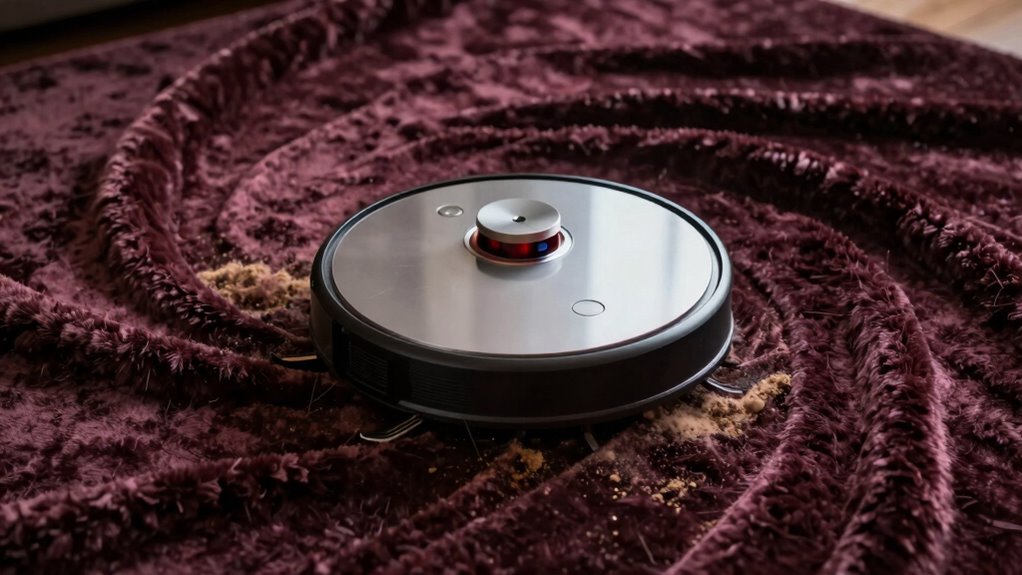
Advancements in robotics and sensor technology are paving the way for smarter, more effective solutions for cleaning thick carpets. Future innovations will enable robots to better navigate and clean dense fibers without getting stuck or tangled. Improved sensors will allow your robot to detect carpet thickness and adjust its suction and brush intensity accordingly. This means less manual maintenance and more reliable cleaning schedules. Additionally, new self-maintenance features will help robots identify when they need cleaning or part replacement, reducing downtime. Enhanced AI algorithms will allow robots to learn your home’s layout and optimize routes for thorough cleaning. These tech advances promise a future where thick carpets no longer pose a significant challenge, ensuring your robot maintains peak performance with minimal intervention.
Frequently Asked Questions
Can Robot Vacuums Adjust Their Cleaning Height Automatically on Plush Carpets?
Yes, robot vacuums can adjust their cleaning height automatically on plush carpets. They use sensor calibration to detect the type of surface and activate automatic height adjustment, ensuring ideal cleaning performance. When you set your vacuum to clean plush carpets, it intelligently adapts its brush height, preventing damage and deep cleaning fibers. This feature makes your vacuum more efficient and effective, especially on thick, plush surfaces.
Do Plush Carpets Cause More Wear and Tear on Robot Vacuum Components?
Plush carpets can cause more wear and tear on your robot vacuum components because their thick fibers strain the motor and brushes. This impacts robot durability over time, especially if you don’t perform regular carpet maintenance. You might notice increased motor noise or shorter cleaning cycles. To protect your device, consider adjusting cleaning settings or using models with better suction and brush systems designed for plush carpets.
How Do Different Carpet Pile Types Affect Robot Vacuum Performance?
You might think all carpets are the same, but fiber density and pile type dramatically change your robot vacuum’s performance. Low-pile carpets let your robot glide effortlessly, while high-pile or shaggy fibers turn cleaning into a battle. Dense fibers require more power and a smarter cleaning pattern to reach every speck. So, understanding your carpet’s pile type helps your robot work smarter, not harder, ensuring a thorough clean every time.
Are There Specific Robot Vacuum Brands Better Suited for Thick, Plush Carpets?
Yes, some robot brands like Roborock and iRobot Roomba are better suited for thick, plush carpets. These brands offer superior robot brand compatibility with high-pile carpets and allow cleaning schedule customization to optimize performance. By choosing a model designed for plush carpets, you guarantee better suction power and brush handling, making your cleaning routine more effective. Always check specific model features to match your carpet type for best results.
Will Future Robot Vacuums Be Able to Fully Automate Cleaning on All Carpet Types?
Future robot vacuums will almost certainly fully automate cleaning on all carpet types. With advanced robot vacuum sensors and sophisticated carpet fiber analysis, they’ll adapt seamlessly to different textures and depths. Imagine a device so smart, it’s like having a personal cleaning army in your home. As technology evolves, these vacuums will become more versatile, tackling even the plushest carpets effortlessly, making manual cleaning a thing of the past.
Conclusion
To keep your plush carpets spotless, you need the right tools, the right techniques, and the right mindset. Understand the challenges, adjust your expectations, and choose a robot vacuum designed for thick fibers. Regular maintenance, strategic placement, and future innovations will help you conquer stubborn textures. By staying proactive, staying informed, and staying persistent, you’ll transform your cleaning routine from frustrating to flawless—making your plush carpets look pristine and feeling inviting every time.