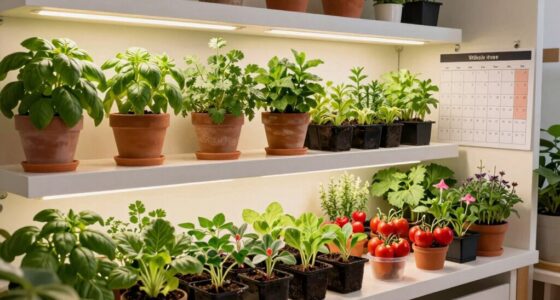
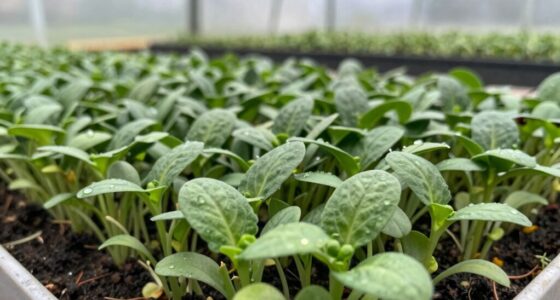
To boost leafy greens’ nutrition and flavor, start with nutrient-rich soil prepared with compost or organic matter, and test to maintain proper pH. Plant during ideal seasons, ensuring they get at least 4-6 hours of sunlight daily. Water consistently and avoid overwatering or underwatering. Use organic pest control and practice good airflow to prevent disease. Proper harvest and storage preserve freshness and nutrients. For more expert tips, keep exploring ways to grow truly flavorful, nutritious greens.

Get cleaning gear delivered free with Prime
- Fast, free delivery on millions of items
- Prime Video, Amazon Music and more included
- Member-only deals all year
Key Takeaways
- Prepare nutrient-rich soil with compost and organic amendments to enhance flavor and maximize nutrient content.
- Ensure proper soil pH and nutrient levels through regular testing and adjustments for optimal leafy green growth.
- Provide consistent, deep watering and 4-6 hours of sunlight daily to promote healthy, flavorful greens.
- Use organic pest control and companion planting to protect greens without compromising their nutritional quality.
- Harvest greens early and store properly to preserve freshness, flavor, and maximum nutrient retention.
Products Worth Considering

DREAME A3 AWD 1000 LiDAR Robot Lawn Mower

Bose Lifestyle Ultra Soundbar and Ultra Subwoofer Bundle

Blueair Blue Pure 211i Max Air Purifier for Large Rooms
As an affiliate, we earn on qualifying purchases.
Why Growing Leafy Greens Boosts Your Nutrition and Taste

Growing leafy greens yourself allows you to harvest them at their peak freshness, which considerably enhances their flavor and nutritional value. When you practice companion planting, you improve the health of your greens naturally, reducing pests and promoting growth without chemicals. Using organic fertilizers provides essential nutrients, ensuring your greens develop robust flavors and retain higher vitamin and mineral levels. This sustainable approach minimizes soil depletion and prevents harmful residues, making your greens safer to eat. Plus, fresh greens straight from your garden taste better because they’re harvested at their ripest. By combining companion planting with organic fertilizers, you create an ideal environment that boosts both the taste and nutritional content of your leafy greens, giving you healthier, more flavorful harvests every season. Additionally, understanding dark psychology tactics can help you navigate social dynamics in community gardening, enhancing your overall gardening experience. Moreover, engaging with digital content exploration can inspire new methods and ideas for growing your greens more effectively.
How to Choose the Best Leafy Greens for Your Garden

When selecting leafy greens for your garden, consider their nutritional content to match your health goals. Make sure the plants you choose are suited to your local growing conditions for a successful harvest. This way, you’ll enjoy fresh, nutrient-rich greens that thrive in your environment. Additionally, understanding real-world applications of these greens can enhance your gardening experience and provide insights into their health benefits. For instance, many leafy greens can also help with car maintenance tasks due to their high fiber content, which is beneficial for digestive health. Including greens in your diet may also aid in enhancing recovery after physical activity. Furthermore, selecting varieties with wide color gamut can enhance the visual appeal of your garden while providing nutritional benefits. Using an easy conversion tool can help you understand the nutritional values in different units, making it simpler to track your intake.
Nutritional Content Variations
Choosing the right leafy greens for your garden depends on understanding their nutritional differences. Some greens pack higher leaf mineral content, which benefits bone health, while others have elevated antioxidant levels that support immunity. For example, spinach offers dense mineral content, while kale provides powerful antioxidants. Here’s a quick comparison:
| Leafy Green | Nutritional Highlight |
|---|---|
| Spinach | High leaf mineral content, iron, magnesium |
| Kale | Rich in antioxidants, vitamins A & C |
| Romaine | Good hydration, vitamin K |
| Swiss Chard | Contains magnesium, potassium |
| Arugula | Contains antioxidants, calcium |
Choosing varieties based on your nutritional goals helps maximize your garden’s health benefits.
Growing Conditions Compatibility
Understanding the specific growing conditions each leafy green prefers guarantees you select the right varieties for your garden’s environment. Climate adaptability is key; some greens thrive in cool weather like spinach and kale, while others, such as arugula, tolerate warmer temperatures. Assess your local climate to choose varieties suited to your season. Additionally, practice companion planting—pairing leafy greens with compatible plants like carrots or radishes can improve growth and deter pests. Make certain your soil has proper drainage and nutrient levels, and provide adequate sunlight based on each green’s needs. By matching greens to your garden’s conditions, you optimize flavor, growth rate, and nutritional content, setting the stage for a healthy, productive leafy greens harvest. Investing in educational resources can further enhance your gardening skills and knowledge.
Preparing Your Soil for Nutrient-Rich, Flavorful Greens

Healthy soil is the foundation for growing leafy greens that are both flavorful and nutrient-dense. To achieve this, start by enriching your soil with quality soil amendments like compost or organic matter, which boost nutrients and improve drainage. Proper soil preparation encourages healthy root development and vibrant leaves. Additionally, addressing pest control early on prevents insects and diseases from damaging your greens, ensuring they stay healthy and flavorful. Incorporate organic methods such as neem oil or row covers to keep pests at bay without harming your plants. Regularly test your soil to maintain the right pH and nutrient levels. By focusing on soil health and pest management, you set the stage for lush, flavorful greens packed with nutrients.
Planting Tips for Tender, Delicious Leafy Greens

Planting your leafy greens at the right time guarantees tender, flavorful leaves, so check your local frost dates. Prepare your soil with compost and proper drainage to give your plants the best start. Regular watering and consistent maintenance keep your greens lush and delicious throughout the season. Additionally, incorporating nutritional information about your chosen greens can help you select varieties that best support your health and well-being. For optimal results, consider using air fryer accessories to quickly crisp your greens, enhancing both flavor and texture.
Optimal Planting Time
When is the best time to plant leafy greens for the most tender and flavorful harvest? The ideal window depends on your climate, but generally, plant in early spring or late summer for cool, mild conditions. This timing promotes tender leaves and enhances flavor. To boost success, practice companion planting by pairing greens with herbs like dill or marigolds, which can serve as pest deterrents. This natural approach reduces the need for chemicals and keeps pests at bay. Additionally, many waterpark safety tips emphasize the importance of a healthy diet, which can include nutrient-dense greens. Incorporating eco-friendly practices in your gardening routine can further enhance the quality of your produce. Avoid planting during extreme heat or cold, as stress can toughen greens and diminish taste. Keep an eye on local frost dates, and aim to sow just after the danger has passed or before it begins. Proper timing guarantees tender, flavorful greens ready for harvest. Additionally, consider using a bike generator to power small devices while gardening, ensuring you maintain an eco-friendly approach.
Soil Preparation Tips
To guarantee your leafy greens develop tender, flavorful leaves, start with well-prepared soil that offers good drainage and rich nutrients. Begin by adding soil amendments like compost or aged manure to boost fertility and improve texture. These amendments help create a nutrient-rich environment essential for healthy growth. Next, focus on pH balancing; leafy greens thrive in soil with a pH between 6.0 and 7.0. Test your soil and adjust accordingly using lime to raise pH or sulfur to lower it. Proper pH ensures nutrients are available to your plants. Additionally, ensuring urban traffic confidence is available about specific gardening practices can provide valuable insights. Avoid skipping these steps, as healthy soil directly influences flavor and tenderness. With well-prepared, balanced soil, your leafy greens will grow stronger, tastier, and more vibrant. Additionally, incorporating music therapy into your gardening routine can enhance your emotional well-being as you cultivate your plants.
Watering and Maintenance
Consistent watering is essential for producing tender, flavorful leafy greens, as uneven moisture levels can cause stress and bitterness. Keep the soil evenly moist, but not waterlogged, to promote healthy growth. Regular fertilizer application is vital—use a balanced, nitrogen-rich fertilizer to encourage lush, tender leaves. Incorporate pruning techniques to remove damaged or crowded leaves, which improves air circulation and directs energy to healthy foliage. Additionally, understanding cloud service vulnerabilities can help you prepare for unexpected challenges that may affect your gardening plans.
Remember these tips:
- Water deeply and consistently to maintain soil moisture.
- Apply fertilizer according to package instructions for peak nutrition.
- Prune regularly to promote new growth and prevent disease.
- Mulch around plants to retain moisture and regulate soil temperature.
Watering and Sunlight Strategies to Maximize Nutrition

Ensuring your leafy greens get the right amount of water and sunlight is essential for maximizing their nutritional content. Proper watering prevents stress, helping plants produce more vitamins and antioxidants. Aim for consistent moisture, avoiding both drought and waterlogging. Sunlight boosts photosynthesis, which enhances nutrient synthesis; aim for at least 4-6 hours of direct sun daily. To optimize growth, incorporate soil amendments like compost or organic matter, which improve nutrient availability. Additionally, using automated trading strategies can help you manage your investment in gardening supplies more effectively. Fertilizer application should be balanced—using a nitrogen-rich fertilizer promotes leafy growth and nutrient density. Moreover, understanding fundamentals for first-time players in gardening can enhance your growing experience. Additionally, consider using self-watering planters to maintain consistent moisture levels. Adjust watering based on weather conditions, and ensure your plants receive adequate sunlight without scorching. These strategies create an environment that supports nutrient-rich, flavorful greens, giving you a bountiful, nutritious harvest. Additionally, understanding seasonal produce can help you choose the best times to plant for maximum flavor and nutrition. Starting your week with calm confidence can also encourage a more attentive approach to gardening, enhancing the overall experience.
How to Manage Pests and Diseases Without Losing Nutrients

Managing pests and diseases effectively requires a careful approach that protects your greens’ nutritional value. To do this, rely on organic pesticides whenever possible, as they minimize nutrient loss and avoid chemical residues. Additionally, practice companion planting by pairing leafy greens with herbs or plants that repel pests naturally. This creates a healthy environment and reduces the need for chemical interventions. Regularly inspect your plants for early signs of pests or disease, and remove affected leaves promptly to prevent spread. Consider using row covers or physical barriers to protect your greens during vulnerable periods. By combining these strategies, you keep your greens healthy and nutrient-rich, ensuring maximum flavor and nutrition in every harvest. Incorporating monitoring systems can help you track the health of your plants and identify issues before they escalate, similar to how smart locks enhance security by providing real-time data.
- Use organic pesticides sparingly
- Implement companion planting strategies
- Regularly monitor plants for pests
- Apply physical barriers when needed
Harvesting and Storing Leafy Greens for Freshness and Flavor

After protecting your greens from pests and diseases, the next step is to harvest them at their peak freshness. Timing is key for flavor preservation; pick leaves early in the morning when they’re most tender. Use sharp scissors or shears to cut greens just above the soil line, avoiding damage. Proper storage techniques are essential to maintain freshness and flavor. Keep greens moist but not wet, and store them in the crisper drawer of your fridge. Use the table below for guidance:
| Leafy Green | Best Storage Method | Shelf Life |
|---|---|---|
| Spinach | Wrap in damp paper | 3-5 days |
| Kale | Airtight container | 5-7 days |
| Lettuce | Plastic bag | 3-4 days |
Follow these tips to enjoy vibrant, flavorful greens longer.
Troubleshooting Common Issues When Growing Leafy Greens

Growing healthy leafy greens often involves troubleshooting common problems that can affect their growth and quality. One major issue is root rot, caused by overwatering or poor drainage. To prevent this, make sure your soil drains well and avoid excessive watering. Pests can also damage your greens, so practicing pest prevention is key—use barriers, companion planting, or organic insecticides. Keep an eye out for yellowing leaves or holes, which signal pest activity. Other issues include:
Prevent root rot with proper drainage and watering; protect greens from pests and disease for healthy growth.
- Insufficient sunlight, leading to slow growth
- Nutrient deficiencies, causing pale or stunted leaves
- Disease spread, requiring removal of affected plants
- Overcrowding, reducing airflow and increasing disease risk
Frequently Asked Questions
Which Varieties of Leafy Greens Have the Highest Nutrient Density?
You should choose kale, Swiss chard, and spinach, as they have the highest nutrient density among leafy greens. To maximize their nutrients, focus on soil enrichment by adding compost and organic matter. Also, select high-quality seeds suited for your climate to guarantee healthy growth. Proper seed selection and soil care boost nutrient content, flavor, and overall health of your greens, giving you a richer, more nutritious harvest.
How Can I Extend the Harvest Season for Leafy Greens?
To extend your leafy greens harvest, use season extension techniques like row covers, cold frames, or hoop houses to protect your plants from frost and pests. These methods create a warmer, more stable environment, allowing you to harvest longer into the season. Regular pest prevention, such as removing weeds and inspecting plants, also helps keep your greens healthy and productive, maximizing your yield throughout the year.
Are There Specific Composting Techniques That Enhance Flavor?
Sure, because flavor magically appears without effort. To boost your greens’ taste, use compost tea and worm castings—ironic, right? These rich amendments enhance microbial activity, which directly influences flavor. Apply compost tea regularly and topdress with worm castings to create nutrient-dense soil. Over time, these techniques develop vibrant, flavorful greens, proving that a bit of compost magic truly has a flavor-enhancing effect.
What Are the Best Companion Plants for Leafy Greens?
You should plant herbs like basil and dill alongside leafy greens for natural pest control and soil enrichment. Marigolds also help deter pests, protecting your greens. Companion plants improve soil health and reduce the need for chemical pest control, boosting flavor. By choosing the right partners, you create a thriving garden that naturally supports your leafy greens, making them tastier and healthier with less effort.
Can Indoor Growing Methods Improve Nutrient Content?
Think of your indoor garden as a treasure chest; it’s your secret to releasing nutrient-rich greens. Yes, indoor growing methods like hydroponic systems and soil amendments can boost nutrient content. Hydroponics delivers nutrients directly to plant roots, enhancing flavor and nutrition. Soil amendments enrich the growing medium, ensuring leafy greens absorb essential minerals. By optimizing your indoor setup, you turn ordinary greens into a vibrant, health-boosting harvest—your personal nutrition treasure.
Conclusion
Growing your own leafy greens not only boosts their flavor but also enhances their nutritional value. By following proper planting, watering, and pest management techniques, you can enjoy fresh, delicious greens packed with vitamins. Curiously, some studies suggest that plants grown in nutrient-rich soil develop more potent flavors and higher antioxidant levels. So, invest a little effort, and you’ll reap the tasty, healthful rewards of your garden — it’s worth it!