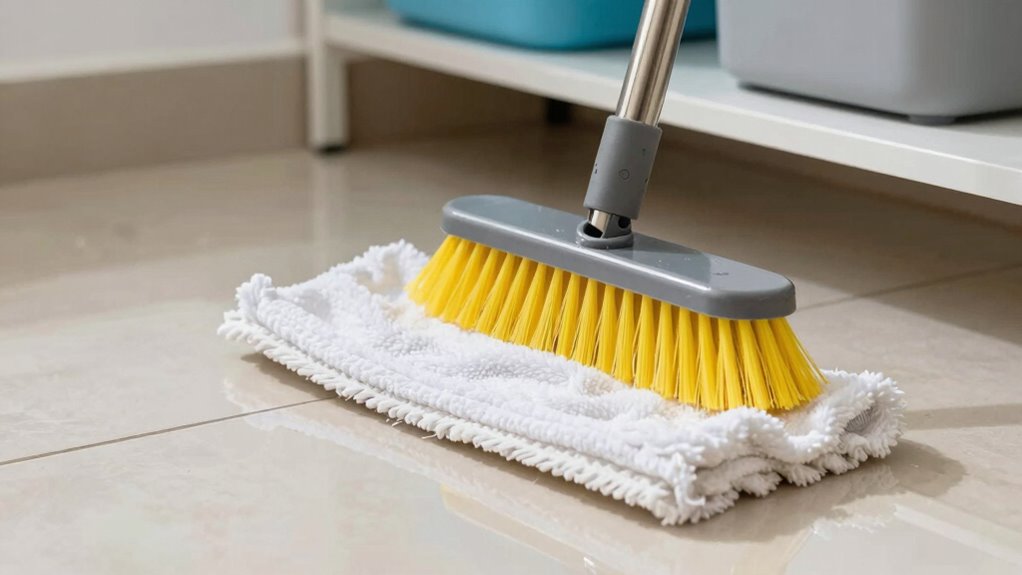

To keep your brush and mop combo in top shape, clean and rinse them thoroughly after each use, then dry completely in a well-ventilated space. Disinfect weekly with a vinegar or bleach solution to prevent mold and bacteria. Remove hair and debris regularly and store tools upright or hanging to avoid odors and damage. If you follow these steps, you’ll extend their lifespan and maintain a hygienic cleaning routine. Keep going to learn more tips!
Key Takeaways
- Rinse and thoroughly dry brushes and mops after each use to prevent mold and bacterial buildup.
- Disinfect tools weekly using vinegar, bleach solutions, or commercial disinfectants for optimal hygiene.
- Store tools in well-ventilated, dry areas, hanging or upright to facilitate drying and prevent damage.
- Regularly inspect for wear, replace damaged bristles or handles, and remove debris to maintain effectiveness.
- Perform deep cleaning and maintenance weekly, including cleaning storage spaces and checking for mold or odors.
Why Regular Maintenance Extends the Life of Your Brushes and Mops
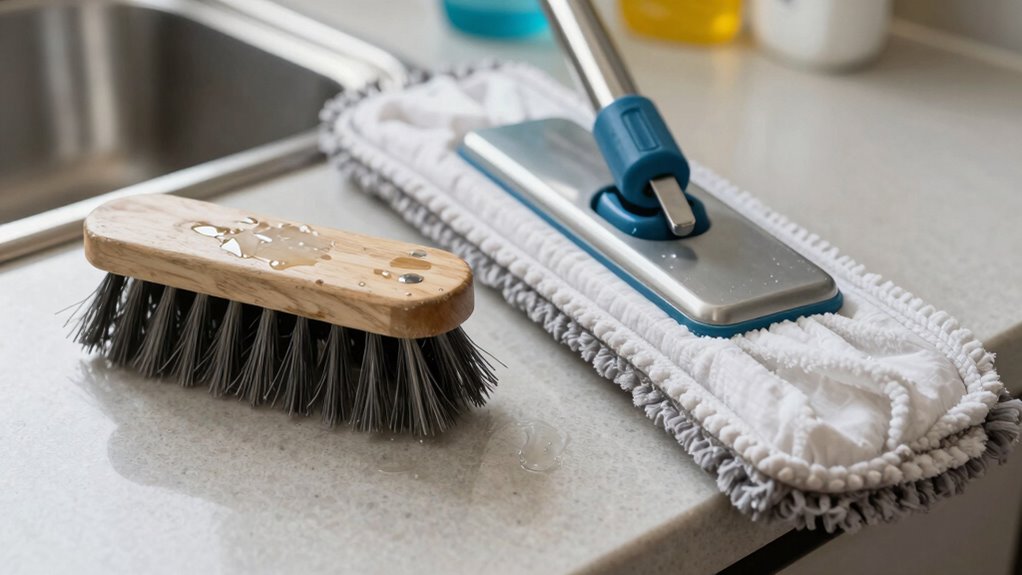
Regular maintenance is essential because it keeps your brushes and mops in ideal condition, preventing dirt, grime, and bacteria from building up. Proper brush bristle care ensures the bristles stay flexible and effective, avoiding fraying or splaying that diminishes cleaning power. Handle maintenance is equally important; check for cracks or looseness, and clean the handle regularly to prevent rust or deterioration. When you care for the handle, you prolong its lifespan and ensure a comfortable grip during use. Consistent upkeep also helps you spot damage early, saving you money and time in replacements. By maintaining both the bristles and handles, you ensure your tools perform at their best, last longer, and stay hygienic, making cleaning more efficient and less costly over time.
How to Properly Rinse and Dry Your Cleaning Tools
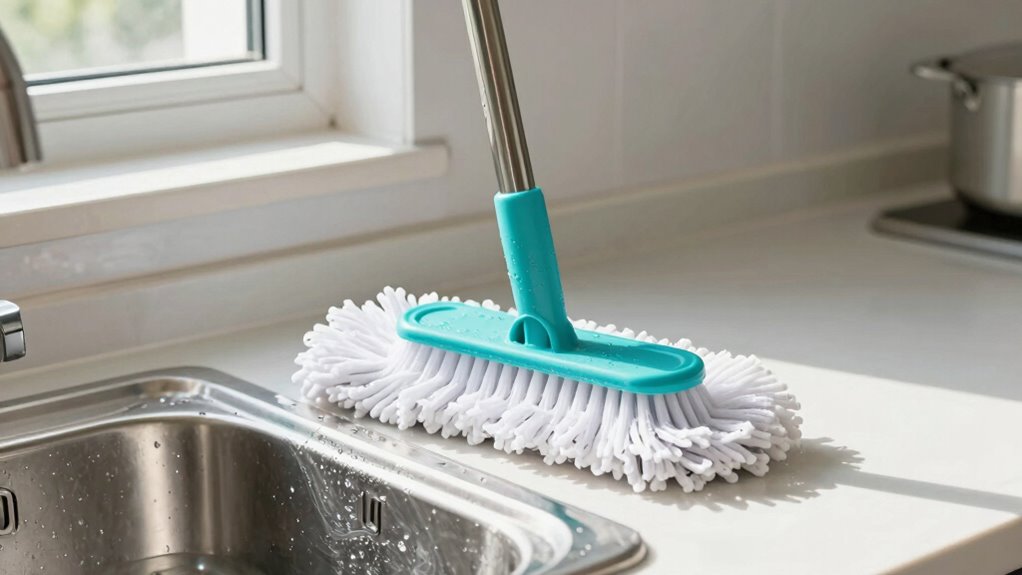
To guarantee your brushes and mops stay in top shape, it’s important to rinse them thoroughly after each use. Use warm water to remove dirt, debris, and cleaning residues, ensuring no buildup remains. After rinsing, gently squeeze out excess water without twisting, which can damage the bristles or fibers. Next, dry your tools by hanging them in a well-ventilated area or laying them flat to prevent mold and mildew. Proper drying promotes longevity and keeps your tools ready for the next cleaning session. For better tool organization, consider storage solutions that keep brushes and mops upright and separated. This prevents cross-contamination and maintains their shape. Regular calibration of measurement tools ensures ongoing accuracy, even in routine cleaning tasks. Additionally, proper storage techniques help extend the life of your cleaning tools by preventing unnecessary wear and tear. Incorporating regular maintenance routines can further enhance the durability and effectiveness of your cleaning tools. Consistent rinsing and drying are simple steps that considerably extend your tools’ lifespan and keep your cleaning routine effective. Maintaining appropriate cleaning environment conditions can also help prevent damage from humidity or temperature fluctuations. Implementing these proper care practices will contribute to longer-lasting, more reliable cleaning tools.
How Often Should You Disinfect Your Brushes and Mops?

Wondering how often you should disinfect your brushes and mops? The disinfection frequency depends on your cleaning schedule and usage. Typically, it’s best to disinfect your tools weekly if you use them regularly, especially in high-traffic areas or for cleaning bathrooms and kitchens. If you only use them occasionally, disinfect after every few uses to prevent bacteria buildup. Regular disinfection helps eliminate germs, mold, and odors that accumulate over time. Make it part of your routine to scrub with disinfectant or soak your tools in a bleach solution, then rinse thoroughly. Proper sanitation practices are essential for maintaining a healthy living environment. Using effective cleaning solutions can ensure thorough elimination of contaminants and extend the life of your cleaning tools. Incorporating hygienic cleaning methods into your routine further reduces the risk of cross-contamination. Staying consistent with your disinfection schedule guarantees your brushes and mops stay hygienic, prolongs their lifespan, and helps prevent bacterial growth from developing on your tools. Additionally, implementing appropriate storage techniques can help keep your tools cleaner between disinfecting sessions.
How to Remove Hair, Debris, and Grime Effectively From Your Tools

To keep your brushes and mops working their best, you need to remove hair and debris after each use. Use your fingers or a comb to pull out hair and loosen stuck particles. For built-up grime, scrubbing with warm water and a mild detergent will help restore your tools’ cleanliness and effectiveness.
Clearing Hair and Debris
Hair, debris, and grime can quickly accumulate on your cleaning tools, making them less effective over time. To keep your brush and mop functioning well, focus on thorough debris collection and hair removal. First, use your fingers or a comb to remove hair tangled in bristles or fibers. Second, rinse the tools with warm water to loosen stubborn debris and grime. Third, use a stiff brush or scraper to dislodge debris stuck deep within the bristles or mop fibers. Regularly clearing hair and debris prevents buildup that hampers cleaning efficiency. Additionally, Free Floating techniques can help distribute cleaning agents evenly and ensure thorough rinsing. Proper tool maintenance also extends the lifespan of your cleaning equipment. Incorporating a durable survival gear mindset ensures your cleaning tools remain in optimal condition over time. Paying attention to the filtration and suction system of your tools can further enhance their performance and longevity. Regular inspection and cleaning of these components can prevent clogging and maintain optimal operation.
Removing Built-Up Grime
Built-up grime can considerably reduce your cleaning tools’ effectiveness, but with the right approach, you can restore their performance. To tackle grime buildup, start by rinsing your brush and mop thoroughly with hot water. For stubborn stains and stubborn grime, use a mixture of warm water and a mild detergent or a vinegar solution. Scrub gently with a brush or sponge to loosen debris stuck in the bristles and fibers. Pay special attention to the base and edges where grime tends to accumulate. After scrubbing, rinse thoroughly to remove any residue. If grime persists, soak your tools in a cleaning solution for 10-15 minutes before rinsing again. Regularly removing grime buildup ensures your tools stay effective and prolongs their lifespan. Proper maintenance also helps prevent buildup and keeps your tools performing at their best. Incorporating routine inspection and tool care practices can further enhance cleaning efficiency and extend the life of your equipment. Additionally, understanding dog breed characteristics can help tailor your cleaning routines to specific needs, such as managing shedding or dirt from active breeds.
Tips for Preventing Odors and Mold in Your Cleaning Tools
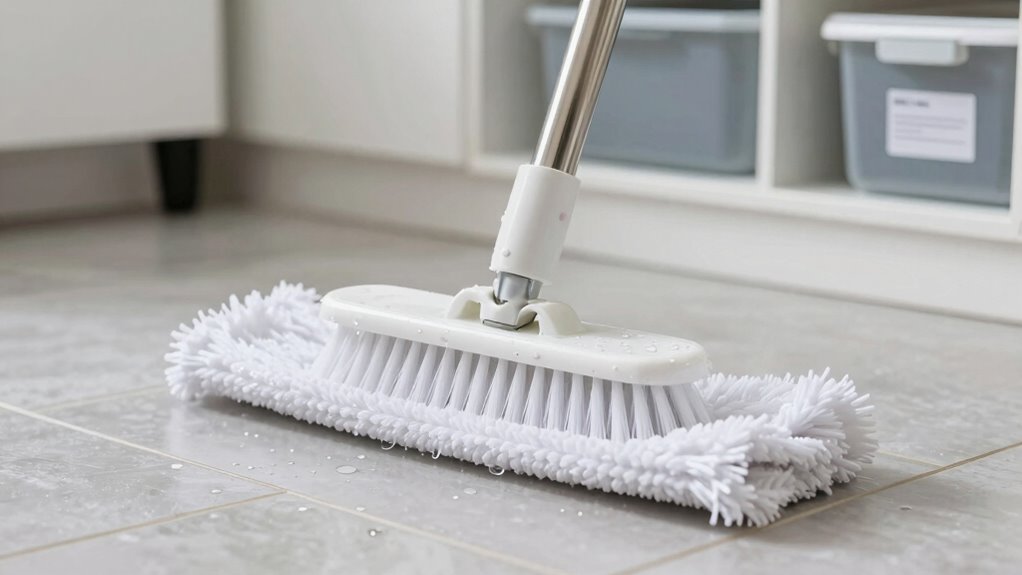
Keeping your cleaning tools fresh and odor-free requires regular attention, especially since mold and unpleasant smells can develop quickly if you’re not careful. To achieve effective odor prevention and mold control, follow these tips:
- Always let your tools dry completely after use to prevent moisture buildup.
- Store them in a well-ventilated area to promote airflow and reduce humidity.
- Regularly disinfect with a vinegar solution or a mild bleach rinse to eliminate bacteria and mold spores. Using appropriate cleaning solutions ensures thorough sanitation and extends the lifespan of your tools.
- Incorporating ergonomic storage solutions can also make it easier to keep your cleaning tools organized and dry. Additionally, choosing ventilated storage containers can further aid in moisture control and airflow, reducing the risk of mold growth.
- Implementing regular maintenance routines can further help in detecting early signs of mold or odors before they become problematic.
How to Deep Clean Your Brushes and Mops Weekly
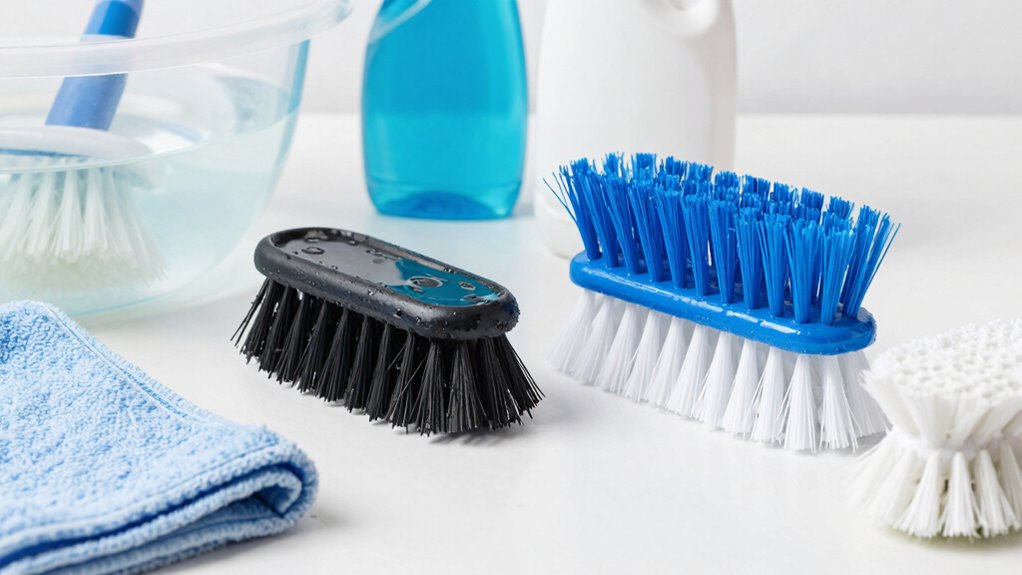
Every week, you should remove debris and residue from your brushes and mops to keep them effective. Then, disinfect them thoroughly to eliminate germs and bacteria. To prevent the growth of mold and unpleasant odors, ensure your tools are completely dry before storing. Making this a regular part of your cleaning routine helps maintain the performance of cleaning tools and prevents buildup that can compromise their effectiveness. Incorporating proper maintenance practices ensures the longevity and optimal performance of your cleaning tools, much like maintaining urban infrastructure for peak performance. Regularly inspecting and repairing any damage to your tools also helps prevent wear and tear, extending their lifespan and ensuring safe, effective cleaning. Additionally, employing proper drying techniques can further minimize moisture retention and reduce the risk of mold growth.
Remove Debris and Residue
Wondering how to guarantee your brushes and mop heads are truly clean? Removing debris and residue is essential for effective cleaning. First, rinse your brushes and mop heads under warm water to loosen dust buildup and loose debris. Next, use a brush or comb to dislodge stubborn dirt trapped in bristles or fibers, aiding in stain removal. Finally, soak them in a mixture of warm water and mild detergent for 10-15 minutes, then rinse thoroughly. This routine ensures you eliminate hidden debris and residue that can harbor bacteria and reduce cleaning efficiency. Regularly removing debris keeps your tools in top shape and guarantees they’re ready for your next cleaning task. Keeping your brushes and mops free of debris is a simple, vital step for proper maintenance. Maintaining cleanliness of cleaning tools is a key part of responsible safety and hygiene practices.
Disinfect Thoroughly and Dry
After removing debris and residue, it’s time to disinfect your brushes and mops thoroughly. To do this, submerge them in a disinfectant solution or a mixture of hot water and vinegar. This step guarantees effective brush sterilization, killing bacteria and germs. Look for brushes with antimicrobial coatings, which provide ongoing protection against microbes. After soaking, rinse them well with clean water. Shake off excess moisture and allow your tools to dry completely in a well-ventilated area. Proper drying prevents mold growth and maintains hygiene. For added protection, consider regularly applying antimicrobial coatings to your brushes and mops, which help keep them cleaner for longer. Consistent deep cleaning and drying are essential for safe, effective cleaning tools.
Choosing the Best Cleaning Solutions for Your Brushes and Mops

Choosing the right cleaning solutions for your brushes and mops is essential to keep them effective and lasting longer. You should select solutions based on your cleaning needs and environmental preferences. Here are three options to consider:
- Use eco friendly solutions to minimize environmental impact and ensure safety for your household.
- Opt for commercial grade cleaners when tackling tough stains or heavy soil, especially for mops used in commercial settings.
- Combine natural disinfectants like vinegar or baking soda with water for regular maintenance, keeping tools sanitized without harsh chemicals.
Always follow manufacturer instructions for proper dilution and application. By choosing suitable cleaning solutions, you’ll extend the lifespan of your tools and maintain optimal cleaning performance.
How to Store Your Cleaning Tools for Longevity and Hygiene

Proper storage of your brushes and mops not only extends their lifespan but also helps maintain a hygienic cleaning environment. To achieve this, use effective storage solutions like wall-mounted racks, caddies, or hanging hooks that keep tools off the floor and well-ventilated. Always guarantee brushes are stored bristle-side up to prevent deformation, and mops are hung to allow thorough drying. Implement hygiene practices such as cleaning tools thoroughly before storing and allowing them to dry completely. Avoid leaving brushes and mops in damp or enclosed spaces, which can promote mold and bacteria growth. By organizing your cleaning tools properly, you reduce the risk of cross-contamination and ensure your tools stay in good condition longer. Proper storage is a simple yet essential step in effective cleaning routines.
Troubleshooting Common Problems With Brushes and Mops

You might notice your brushes or mops aren’t performing as well as they should. Common brush issues, like frayed bristles or uneven cleaning, can be frustrating, while mop maintenance tips help keep them in top shape. Let’s explore how to troubleshoot these problems and keep your tools working effectively.
Common Brush Issues
Brush and mop issues can disrupt your cleaning routine, but many problems are easily fixable. Common brush issues include brush bristle damage, which leads to ineffective cleaning, and mop handle wear, making it harder to maneuver. To troubleshoot:
- Check for brush bristle damage, and replace the brush if bristles are frayed or missing.
- Inspect the mop handle for wear or cracks, and switch it out if it feels loose or unstable.
- Clean the brush and mop regularly to prevent buildup and extend their lifespan.
Addressing these issues promptly keeps your cleaning tools functioning properly. Replacing damaged brushes or worn handles not only restores efficiency but also prevents further damage, saving you time and effort in the long run.
Mop Maintenance Tips
Regular maintenance is key to keeping your mop in top condition and preventing common issues from disrupting your cleaning routine. If your mop’s fabric softeners are leaving residue or the brush bristles are frayed, it’s time for a fix. To troubleshoot, regularly rinse and scrub the mop head after use, removing dirt and buildup. Avoid using fabric softeners when washing the mop, as they can coat the fibers and reduce absorbency. When cleaning brush bristles, ensure they are fully dry before storage to prevent mold. Here’s a quick guide:
| Problem | Solution | Tips |
|---|---|---|
| Frayed brush bristles | Trim or replace the brush | Use gentle cleaning methods |
| Residue from softeners | Rinse thoroughly with water | Skip fabric softeners during washes |
| Mold or odor | Air dry completely and disinfect | Store in a dry, ventilated area |
Set Up a Weekly Routine to Keep Your Cleaning Tools Fresh
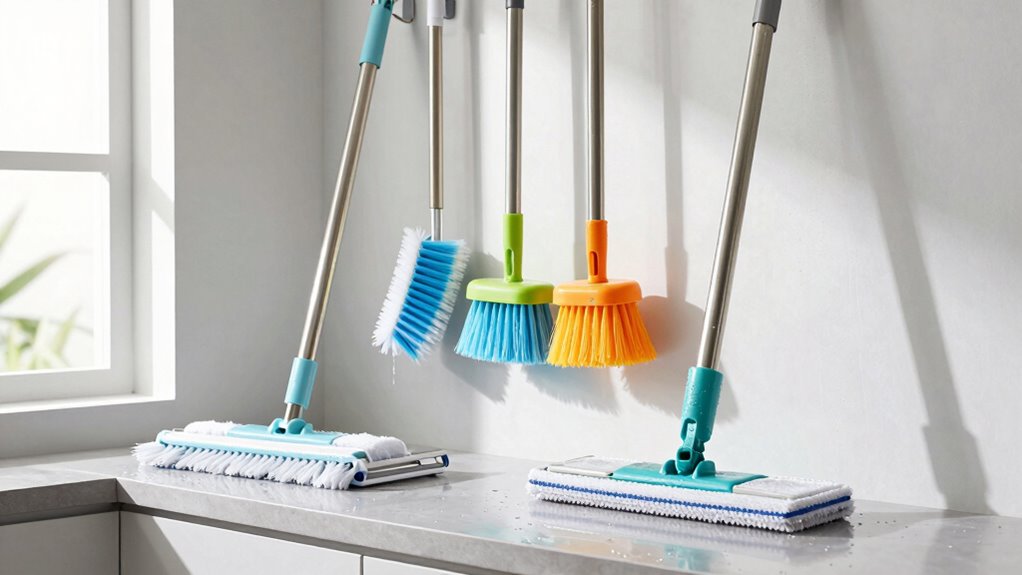
Establishing a weekly routine for your cleaning tools guarantees they stay effective and hygienic. Consistent cleaning schedules help prevent bacteria buildup and extend tool longevity. To do this effectively, consider:
- Washing your brushes and mops thoroughly after each use to remove debris and residue.
- Disinfect your tools weekly with a mild bleach solution or vinegar to eliminate germs.
- Allow everything to dry completely before storing to prevent mold and odor.
Frequently Asked Questions
How Can I Prevent My Brushes and Mops From Developing Mold?
To prevent mold on your brushes and mops, guarantee good air circulation and moisture control. After each use, rinse them thoroughly and squeeze out excess water. Store them in a well-ventilated area, ideally hanging or standing upright to promote airflow. Regularly disinfect and dry them completely before storage. These steps help keep moisture levels low, preventing mold growth and keeping your cleaning tools fresh and ready to use.
What Are the Best Storage Practices to Prolong Tool Lifespan?
Think of your tools as treasures needing protection; proper storage keeps them in prime condition. After cleaning, use proper drying techniques to prevent moisture buildup, then store brushes and mops in ventilated containers like mesh bags or stands. Avoid damp areas, and keep them off the floor to prevent mold. Well-chosen storage prolongs their lifespan, ensuring they’re ready when you need them most, just like a trusty sword in battle.
How Do I Identify When My Brushes or Mops Need Replacing?
You can tell your brushes or mops need replacing when you notice brush deterioration or mop fraying. If the bristles are bent, broken, or losing their stiffness, it’s time for a new brush. For mops, look for frayed fibers or uneven cleaning performance. Persistent odors or difficulty in cleaning also indicate it’s time to replace your tools, ensuring effective cleaning and maintaining hygiene.
Can I Use the Same Cleaning Solution for Brushes and Mops?
Yes, you can use the same cleaning solution for brushes and mops if it’s compatible with their materials and you follow proper cleaning frequency. Check the solution’s label for compatibility to avoid damage. Regularly clean and disinfect your tools to prevent buildup and bacteria. Using a consistent solution simplifies your routine and guarantees both tools stay effective and clean, making maintenance easier and more efficient.
What Signs Indicate My Cleaning Tools Are Harboring Bacteria?
You’ll notice bacterial growth or mold indicators like a foul odor, slimy texture, or discoloration on your cleaning tools. If brushes or mops feel sticky, look fuzzy, or develop dark spots, it’s a sign bacteria are thriving. These signs mean it’s time to disinfect or replace your tools to prevent the spread of germs and maintain a hygienic cleaning routine. Regular cleaning helps keep bacteria and mold at bay.
Conclusion
By sticking to a regular routine, you’ll keep your brushes and mops in tip-top shape, like well-oiled machines ready for action. Consistent cleaning, proper storage, and timely disinfection are your best tools to prevent odors and damage. Think of your cleaning tools as your loyal sidekicks—taking good care of them guarantees they’ll be by your side, ready to tackle messes and keep your space sparkling like a shining jewel.