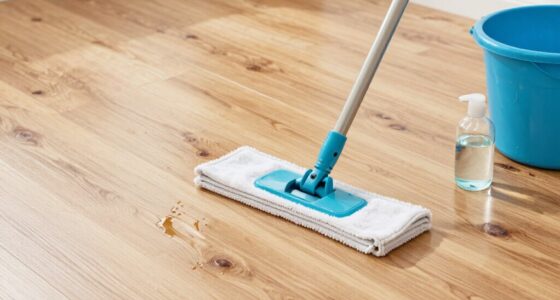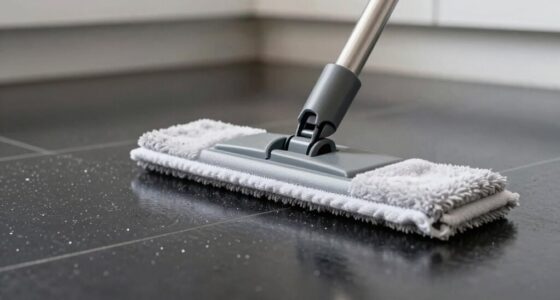
Even after washing, your mop pads can still smell because residues from detergents, fabric softeners, and scent boosters trap dirt, bacteria, and mold in the fibers. Insufficient wash cycles, low temperatures, and damp drying methods allow microbes to thrive, causing persistent odors. To truly eliminate smells, you need to focus on proper cleaning, thorough drying, and knowing when to replace your pads. Keep exploring to discover effective tips that will keep your mop pads fresh longer.

Get cleaning gear delivered free with Prime
- Fast, free delivery on millions of items
- Prime Video, Amazon Music and more included
- Member-only deals all year
Key Takeaways
- Residues from fabric softeners and scent boosters can trap bacteria and dirt, causing persistent odors.
- Inadequate washing practices, such as low temperatures and short cycles, leave bacteria and grime behind.
- Damp or improperly dried pads promote bacterial and mold growth, leading to ongoing smells.
- Organic debris and moisture retention feed microbes, which produce odors even after washing.
- Overused or damaged pads may require replacement if odors persist despite thorough cleaning.
Why Do My Mop Pads Still Smell After Washing?

Even after washing, your mop pads might still emit a foul odor, which can be frustrating. One reason is that using fabric softeners can leave a residue that traps dirt and bacteria, making it harder to eliminate odors. Similarly, scent boosters might add a pleasant smell temporarily but can also cling to fibers, creating a breeding ground for bacteria if not rinsed properly. Over time, these products can build up, preventing your mop pads from fully cleaning out odors. Additionally, if you’re using too much detergent or washing at low temperatures, bacteria and grime may not be fully removed, contributing to lingering smells. To keep your mop pads fresh, it’s best to avoid fabric softeners and scent boosters, and focus on thorough rinsing and proper drying. Understanding how bacterial growth can develop in damp environments can help you take more effective steps to prevent odors from returning. Regularly sanitizing your mop pads with hot water or vinegar can also help inhibit bacterial development, removing residues, and maintain freshness. Ensuring proper drying techniques can further reduce moisture that encourages bacterial proliferation.
How Do Detergents and Wash Cycles Fail to Remove Odors?

Detergents can struggle to fully remove odors from mop pads, especially if they don’t break down bacteria or trapped grime. Sometimes, the wash cycle itself isn’t effective enough, with insufficient agitation or temperature that lets odors linger. proper cleaning techniques can significantly improve odor removal by targeting bacterial buildup more effectively. Using an air purifier in your laundry area can help reduce airborne bacteria and prevent odors from settling on clean items. Additionally, selecting the right wash cycle settings tailored for heavily soiled items can enhance cleaning performance. Ensuring proper temperature control during washing can also play a vital role in eliminating persistent odors by killing bacteria more effectively, as understanding heat buffering techniques can help prevent bacteria from surviving the wash.
Detergent Limitations in Removing Odors
While detergents are designed to clean, they often fall short when it comes to removing stubborn odors from mop pads. Many cleaning agents focus on breaking down dirt and grease but aren’t equipped to eliminate persistent smell-causing bacteria. Fabric softeners, although they make fabrics feel fresh, can actually trap odors instead of removing them. This buildup creates a barrier that prevents detergents from penetrating deep into the fibers, leaving behind lingering smells. Additionally, some detergents lack enzymatic components needed to break down organic compounds responsible for odors. As a result, even after washing, your mop pads may still harbor bacteria and odor molecules, making them smell unpleasant. To truly eliminate odors, you might need specialized cleaning agents or alternative methods beyond standard detergents. Incorporating enzymatic cleaners can help target and break down odor-causing organic compounds more effectively, especially since they are formulated to combat bacteria and fungi that standard detergents might miss.
Ineffective Wash Cycle Factors
Many factors within your wash cycle can prevent odors from being fully removed, despite using the right cleaning agents. If your rinse cycles are too short or ineffective, soap and debris can remain trapped in the fibers, leading to lingering smells. Using fabric softeners might seem helpful, but they can actually coat fibers and trap bacteria and odors, making the problem worse. Additionally, running an overloaded wash cycle limits water circulation, preventing thorough cleaning. Failing to select the appropriate cycle for your mop pads can leave residues behind. To combat odors, confirm your rinse cycles are thorough and long enough, avoid overloading the machine, and skip fabric softeners when washing mop pads. These adjustments help dislodge trapped grime and reduce persistent smells. A thorough understanding of testing methodologies can help in diagnosing and fixing issues within your washing process to ensure odors are eliminated effectively. Optimizing detergency effectiveness can also play a key role in preventing odors from lingering after washing. Proper detergent selection tailored to the type of grime can enhance overall cleaning results. Additionally, ensuring proper drying practices can prevent mold and mildew growth that contribute to odors.
Are Bacteria and Mold Making Your Mop Pads Smell?

Bacteria and mold thrive in damp mop pads, causing persistent odors even after washing. You can spot mold development through discoloration or a musty smell, indicating growth. Proper drying techniques and understanding growth factors help prevent these issues and keep your mop fresh. Additionally, using protective accessories like antimicrobial covers can further inhibit bacterial growth and maintain cleanliness. Ensuring proper ventilation and airflow can also significantly reduce moisture buildup, which is critical in preventing mold. Maintaining the correct balance of moisture and airflow is essential for moisture control, helping to keep your cleaning tools free of odor-causing microbes. Incorporating moisture management strategies can further enhance the longevity and freshness of your mop pads, as understanding environmental conditions is key to controlling microbial growth.
Bacteria Growth Factors
When mop pads aren’t dried thoroughly after cleaning, bacteria and mold can quickly start to grow. These microbes thrive in damp environments, making your cleaning efforts less effective and causing lingering odors. To prevent this, focus on deep cleaning your mop pads regularly and ensuring they dry completely before storage. Additionally, avoiding moisture retention by proper drying techniques can significantly reduce microbial growth. Using air circulation methods to dry your mop pads faster can further inhibit bacteria development. Proper cleaning methods are essential to remove organic residue and keep microbial growth at bay. Promoting ventilation in your storage area can also help prevent the buildup of moisture and additional microbial growth. Maintaining adequate airflow around your cleaning tools is crucial for reducing moisture and microbial activity. Here are four bacteria growth factors to keep in mind:
- Moisture retention—keeps bacteria alive and multiplying.
- Organic residue—food particles and dirt feed bacteria and mold.
- Warmth—accelerates microbial growth.
- Lack of airflow—traps moisture, creating the perfect breeding ground.
Mold Development Signs
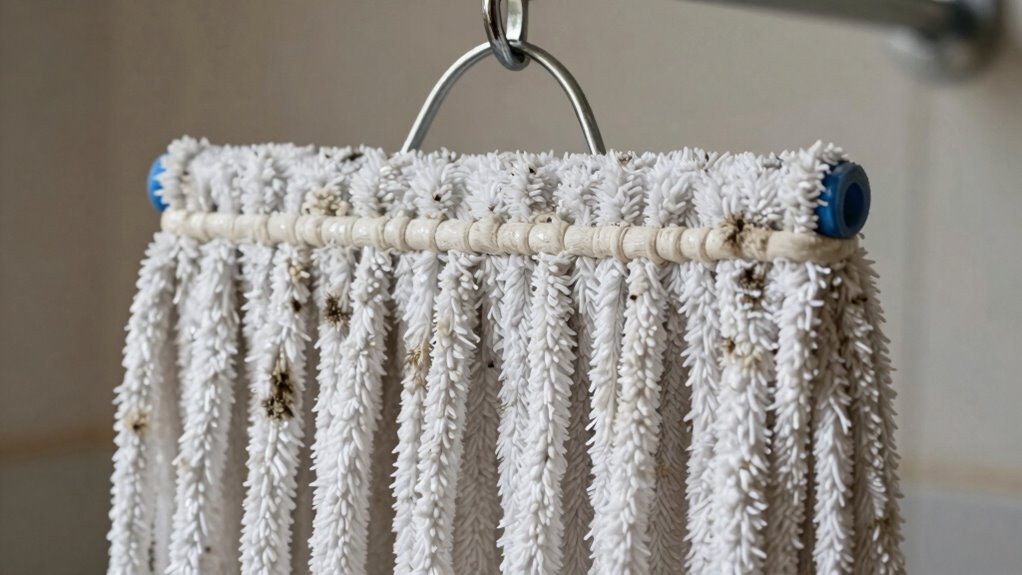
If your mop pads continue to smell despite regular washing, it’s a sign that mold development might be occurring. Mold growth often produces a musty odor that persists even after cleaning. Look for visible signs like dark spots or fuzzy patches on your pads, which indicate mold presence. You may also notice a lingering smell that doesn’t go away after washing, signaling that bacteria and mold are thriving in damp areas. Early detection is key to odor prevention, so inspect your pads regularly. If you spot signs of mold development, it’s essential to thoroughly clean and dry your mop pads to stop mold from spreading further. Taking these steps helps eliminate odors at their source and keeps your cleaning tools fresh.
Proper Drying Techniques
Proper drying techniques are essential to prevent mold and bacteria from thriving on your mop pads. Proper air drying guarantees moisture evaporates completely, reducing the chances of unpleasant odors. To keep your pads fresh and fabric softness intact, follow these steps:
- Hang your mop pads in a well-ventilated area to promote thorough air drying.
- Avoid leaving them in damp or enclosed spaces that trap moisture.
- Flip and spread out the fabric to maximize exposure to air.
- Never store damp pads, as this invites bacteria growth and bad smells.
What Are the Best Ways to Remove Odor From Mop Pads?
To eliminate lingering odors from your mop pads, you need to target the bacteria and buildup that cause the smell in the first place. Effective mop pad cleaning involves using hot water and choosing the right cleaning agents, such as vinegar or baking soda, which are great for odor elimination. Soak your mop pads in a solution of warm water mixed with vinegar for 15-30 minutes, then wash thoroughly. Adding a cup of baking soda to your laundry can also help neutralize odors. Avoid using fabric softeners, as they can trap residues and make odors worse. Make sure to dry your mop pads completely after cleaning, as moisture encourages bacteria growth. These steps will help keep your mop pads smelling fresh and odor-free.
How Can I Keep My Mop Pads Smelling Fresh Longer?

After thoroughly cleaning your mop pads, the next step is to maintain their freshness over time. To keep them smelling good longer, try these tips:
- Use a fabric softener during the rinse cycle—it helps reduce static and keeps fibers smelling fresh.
- Allow your mop pads to dry completely after each use to prevent odor absorption.
- Store your pads in a well-ventilated area to avoid dampness and mold growth.
- Regularly wash with odor-neutralizing solutions like vinegar or baking soda to combat persistent smells.
These simple steps help prevent odors from lingering and ensure your mop pads stay fresh, reducing the need for frequent replacements and keeping your cleaning routine pleasant.
When Should I Replace My Mop Pads for Better Hygiene?

Since mop pads can harbor bacteria and odors over time, it’s important to replace them regularly to maintain good hygiene. Typically, your mop pad lifespan depends on usage and cleaning frequency. Follow a consistent replacement schedule—such as after 10-15 washes or every 3-6 months—to prevent odor buildup and bacteria growth. Keep track of your mop pad changes with this handy guide:
| Usage Frequency | Replacement Interval | Signs to Replace |
|---|---|---|
| Light (weekly cleaning) | Every 6 months | Persistent odors, visible wear |
| Moderate (twice-weekly) | Every 4 months | Loss of absorbency, odor issues |
| Heavy (daily cleaning) | Every 2-3 months | Fraying, persistent smells |
| Visible damage | Immediately | Rips, tears, or fraying |
| Odor persists | After washing, if still smelly | No improvement after cleaning |
Frequently Asked Questions
Can Hard Water Contribute to Mop Pad Odors?
Yes, hard water can contribute to mop pad odors. Its mineral buildup can cause residue to cling to the pads, trapping dirt and bacteria. This buildup, along with residual soap residue from improper rinsing, can create a musty smell even after washing. To prevent this, use distilled or softened water, rinse thoroughly, and guarantee complete drying. Regular deep cleaning of your mop pads also helps eliminate lingering odors.
Are Fabric Softeners Bad for Mop Pad Cleanliness?
Using fabric softener on your mop pads is like pouring oil on a fire—it can cause buildup and trap residue. Fabric softener buildup leaves a film that prevents proper cleaning, making your mop pads retain odors even after washing. This residue clings to fibers, reducing absorbency and inviting bacteria. To keep your mop pads fresh, skip the softeners and opt for natural cleaning methods instead.
How Does Humidity Affect Odor Retention in Mop Pads?
High humidity buildup encourages mold growth on your mop pads, making odors stick around even after washing. When you don’t dry your pads thoroughly or store them in damp environments, moisture persists, providing the perfect conditions for mold to develop. This mold releases foul smells that are tough to eliminate. To prevent this, guarantee your mop pads dry completely and store them in a cool, dry place to reduce humidity buildup and mold growth.
Do Certain Cleaning Products Cause Mop Pad Smells?
Some cleaning agents act like stubborn weeds, leaving fabric residues that trap odors in your mop pads. These residues cling to fibers, creating a breeding ground for bacteria and mildew, even after washing. Harsh chemicals can also weaken fabric fibers, making it harder to fully rinse out residues. To prevent smells, choose gentle, enzyme-based cleaners and thoroughly rinse your mop pads to wash away lingering residues and odors.
Is It Better to Air Dry or Tumble Dry Mop Pads?
Tumble drying is usually better for mop pads, especially since it helps kill bacteria and dries them thoroughly. Depending on the mop pad materials, air drying might take longer, and some materials could retain moisture, leading to odors. For ideal results, check your mop’s care instructions, and if you choose to air dry, do so in a well-ventilated area. Tumble drying ensures quick, hygienic drying, which helps prevent smells.
Conclusion
To keep your mop pads smelling fresh, regular cleaning and proper drying are key. Did you know that bacteria and mold can develop within just 24 hours of use, causing persistent odors? By washing thoroughly, drying completely, and replacing your mop pads when needed, you can prevent unpleasant smells and maintain better hygiene. Staying on top of these habits guarantees your cleaning tools stay fresh, effective, and odor-free longer.
Fall Picks
fall essentials
As an affiliate, we earn on qualifying purchases.