To dry floors quickly after robot mopping, start by absorbing excess water with towels or absorbent mats in high-traffic areas. Improve airflow by using fans or opening windows to speed evaporation. Adjust your robot’s settings to reduce water flow or use dry mopping modes. Knowing your floor type helps—ceramic dries faster than hardwood. For more effective tips on speeding up drying and preventing moisture issues, explore the full guide below.
Key Takeaways
- Use absorbent towels or mats to quickly blot and remove excess water immediately after mopping.
- Increase air circulation with fans, open windows, or use dehumidifiers to accelerate evaporation.
- Adjust robot mopping settings to reduce water usage and avoid over-wetting floors.
- Prioritize quick-drying floor materials like ceramic or porcelain for faster moisture evaporation.
- Maintain proper cleaning techniques by wringing out mops thoroughly and avoiding excess water during cleaning.
What Are the Risks of Wet Floors After Robot Mopping?
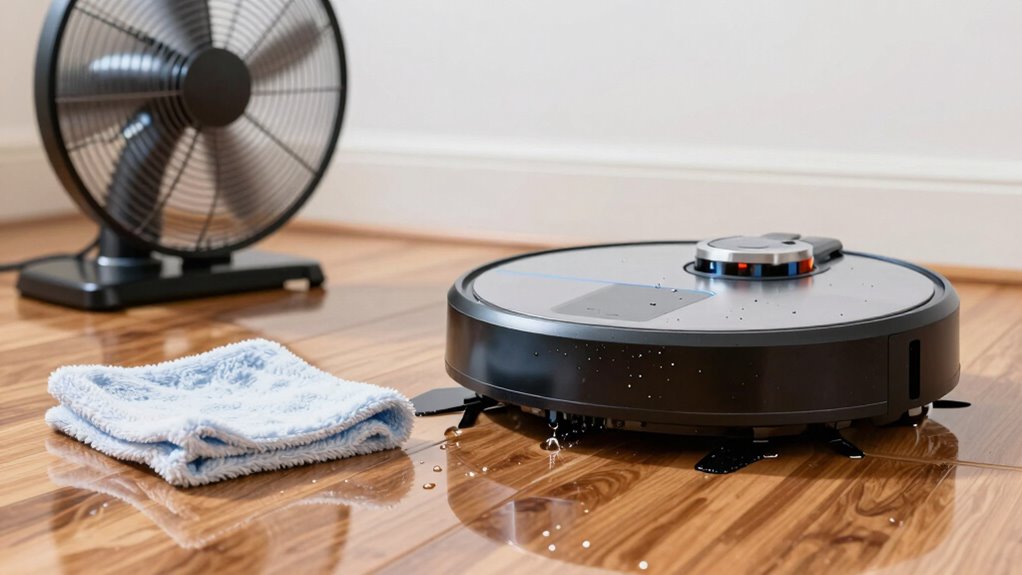
Wet floors left after robot mopping can pose serious safety hazards, especially if they remain unnoticed. Slips and falls are common accidents caused by wet floors, which can lead to injuries. To minimize these risks, spills prevention should be a priority, ensuring that any excess water is promptly addressed. Maintaining consistent cleaning schedules helps you identify areas that need extra attention, preventing puddles from forming. It’s essential to check the floor’s dryness regularly after robot mopping, particularly in high-traffic zones. Ignoring wet spots can result in costly injuries or damage to flooring. By staying vigilant and implementing effective spills prevention measures, you can create a safer environment and reduce the chances of accidents caused by lingering moisture.
How Fans and Ventilation Speed Up Floor Drying?
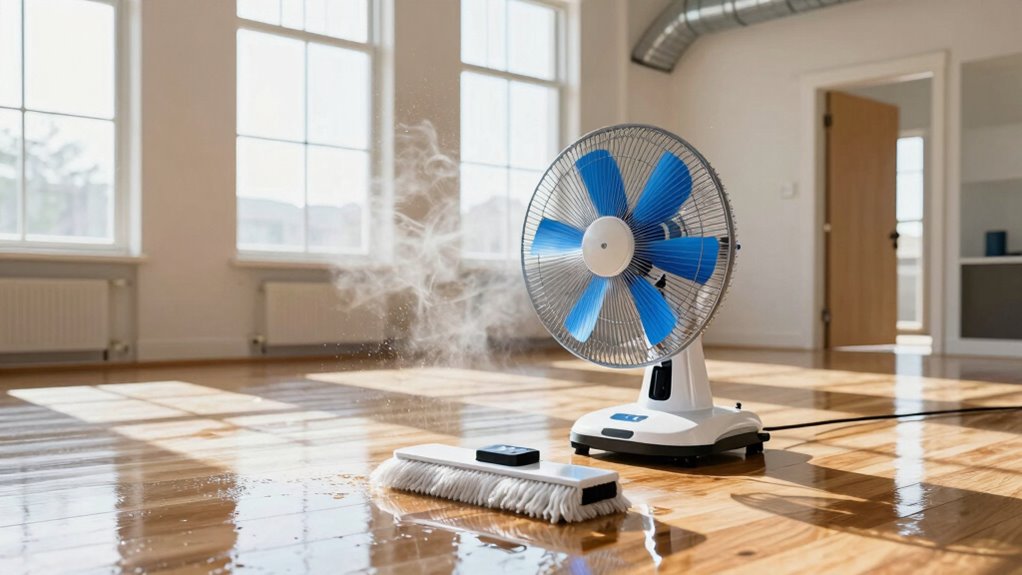
Fans and ventilation systems play a crucial role in speeding up the drying process after robot mopping. They circulate air, reducing moisture on the floor surface quickly. Using a combination of fans and a dehumidifier helps remove excess humidity, preventing mold and damage. An air purifier can improve air quality by filtering airborne particles, making the environment healthier during drying. Proper ventilation directs moist air out of the room, accelerating evaporation. To optimize drying, position fans to blow across wet areas and keep doors or windows open. Additionally, air circulation techniques can further enhance drying efficiency. Effective airflow management ensures that moisture is uniformly distributed and removed from the environment. Properly managing indoor air quality during the drying process not only speeds up moisture removal but also contributes to a healthier living space. Incorporating ventilation strategies can significantly reduce the drying time, especially in poorly ventilated areas. Here’s a quick comparison:
| Device | Benefits |
|---|---|
| Fan | Circulates air, speeds evaporation |
| Dehumidifier | Removes moisture from air, prevents mold |
| Air Purifier | Improves air quality during drying |
| Ventilation System | Ensures continuous airflow, quickening moisture removal |
| Combination | Most effective for rapid, thorough drying |
Quick Ways to Absorb Excess Water and Speed Drying
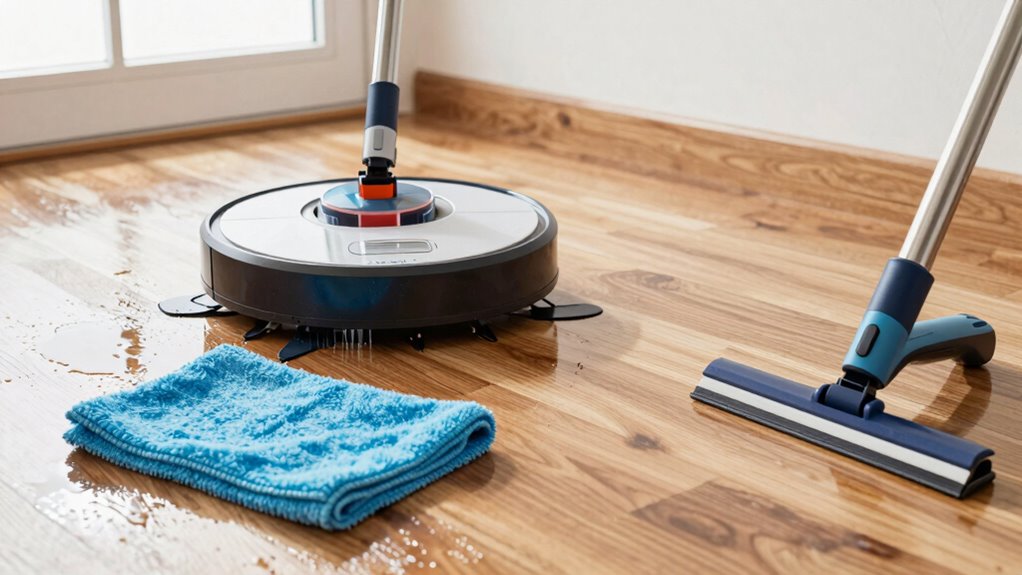
To speed up drying, start by blotting the floor with a clean towel to remove excess water quickly. Placing absorbent mats in key areas can soak up remaining moisture and prevent puddles. Enhancing air circulation with fans or vents helps evaporate moisture faster, making the floor dry in no time.
Towel Blotting Techniques
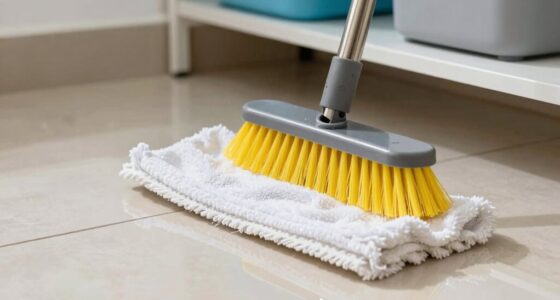
After robot mopping, grabbing a clean, absorbent towel allows you to quickly remove excess water from the floor’s surface. Towel blotting is an effective method to speed up drying, especially on stubborn wet spots. Use absorbent cloths designed for quick water absorption, and gently press them against the floor in a blotting motion. Avoid dragging or wiping, which can spread water or damage the surface. Focus on areas with pooling water or thinner wetness to prevent slipping. Regularly fold or replace the towel to ensure maximum absorption. This technique minimizes residual moisture, reducing drying time. Proper technique ensures that water is removed efficiently without risking damage to your flooring. Incorporating appropriate cleaning tools, such as microfiber cloths or specialized absorbent towels, can further enhance your drying efficiency. Additionally, selecting high-quality towels can improve absorption and overall drying speed.
Use of Absorbent Mats
Using absorbent mats is an efficient way to quickly soak up excess water and accelerate the drying process. Place these mats directly on wet areas after your robot mops, allowing them to absorb moisture rapidly. Their high absorbency makes them ideal for achieving quick drying, especially on large or heavily soaked surfaces. This method prevents water from pooling or seeping into floors, reducing drying time considerably. Absorbent mats are simple, cost-effective tools that help you control excess moisture without the need for fans or additional equipment. Understanding water absorption can help you select the best mats for your needs and optimize drying efficiency. Proper placement and moisture control are essential for preventing water damage and maintaining a safe, dry environment. Additionally, choosing high-quality absorbent mats ensures maximum effectiveness in moisture removal. For optimal results, selecting mats with superior absorbency capacity can significantly enhance your drying process. By using them strategically, you ensure your floors dry faster, minimizing downtime and preventing water damage. Employing efficient drying techniques can further enhance the effectiveness of your moisture management strategies.
Air Circulation Enhancement
Enhancing air circulation is one of the quickest ways to speed up floor drying after robot mopping. By adjusting airflow patterns in the room, you can direct more air over wet surfaces, encouraging faster evaporation. Use fans or open windows to create consistent airflow, which helps disperse humid air and prevents moisture buildup. Proper airflow also aids humidity management, reducing the ambient moisture that can slow drying. Position fans strategically to avoid stagnant zones and ensure even air movement across the entire floor. Maintaining good ventilation accelerates water absorption and minimizes dampness. Increasing airflow efficiency can further improve drying times and prevent long-term moisture issues. Additionally, using humidity control techniques can significantly improve drying times and improve overall moisture management. Optimizing ventilation methods ensures that moist air is effectively replaced with drier air, further expediting the drying process.
How to Adjust Your Robot Mopping Settings for Faster Drying?
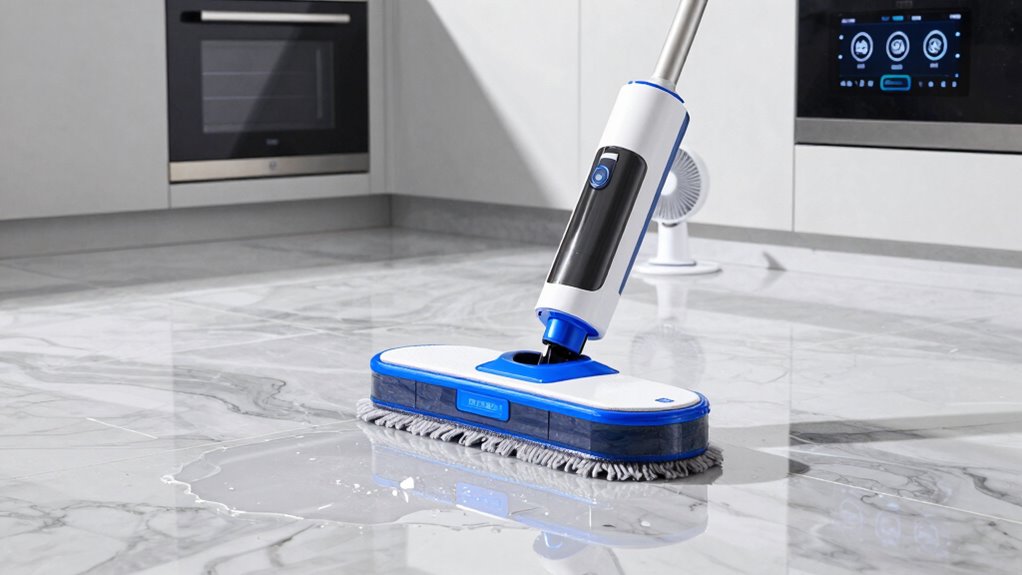
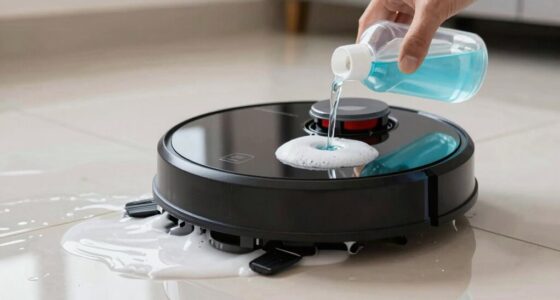
Adjusting your robot mopping settings can considerably reduce drying time, especially if you want your floors to be ready quickly. Start by reducing the mopping frequency to prevent over-wetting, which extends drying time. Check your robot’s cleaning schedule and set it for fewer passes or shorter mopping sessions. Additionally, ensure your robot is well-maintained; clean the mopping pads and sensors regularly to improve efficiency and prevent excess water use. Some robots allow you to modify water flow or choose a dry mopping mode, which helps minimize moisture on the floor. These adjustments help control the amount of water deposited during cleaning, making the floors dry faster. Proper mopping frequency and routine robot maintenance are key to speeding up the drying process. Regularly robot maintenance also ensures optimal performance and helps prevent issues that could prolong drying time. Additionally, adjusting the commercial kitchen equipment settings can influence water distribution and drying efficiency, especially in professional environments. Understanding how different water flow settings impact moisture levels can further optimize your drying times and ensure a quicker turnaround. To maximize drying speed, consider ventilation techniques that promote faster evaporation of moisture from the floor surface. Incorporating air circulation methods can significantly enhance the drying process and reduce downtime.
Which Floor Materials Dry Faster and Stay Dry Longer?
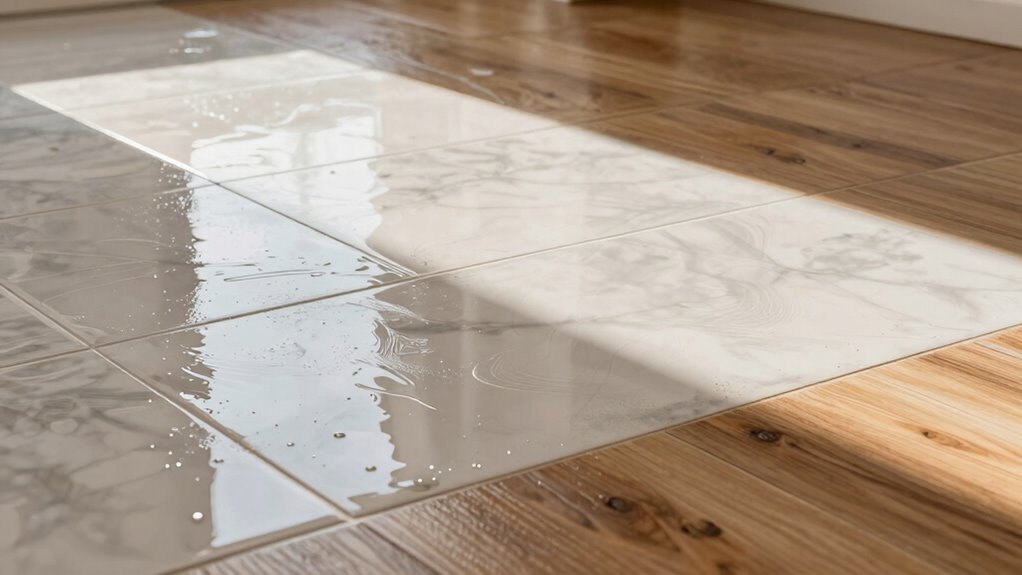
Porcelain and ceramic floors tend to dry quickly and stay dry longer because of their resilience. Hardwood and laminate floors, however, often take more time to dry and may remain damp longer. Understanding these differences helps you choose the best materials for faster, longer-lasting dryness. Additionally, using appropriate cleaning techniques tailored to each surface can further reduce drying times and prevent damage. Selecting resilient flooring materials can also contribute to quicker drying and improved overall durability.
Porcelain and Ceramic Resilience
Porcelain and ceramic floors are known for their durability and resistance, making them popular choices in busy households. Their porcelain durability ensures they withstand heavy foot traffic and frequent cleaning without damage, while ceramic resistance helps prevent scratches and stains. These qualities mean that, after robot mopping, they tend to dry faster and stay dry longer because their glazed surfaces repel water effectively. Their low porosity reduces water absorption, speeding up the drying process and minimizing moisture retention. You’ll notice that floors made of porcelain and ceramic are less prone to water spots or streaks, helping them maintain a clean, dry appearance. Overall, their resilience makes them ideal for high-traffic areas where quick drying and long-lasting dryness are priorities.
Hardwood and Laminate Speed
Hardwood and laminate floors tend to dry faster after robot mopping because their surfaces are less porous and more resistant to water absorption. Their smooth design allows water to evaporate quickly, reducing drying time. To optimize drying efficiency, you should adjust your robot’s design features, like increasing airflow or using faster-drying microfiber pads. Implementing a strategic cleaning schedule also helps—mopping during warmer, low-humidity times encourages quicker evaporation. Additionally, make certain your robot’s settings minimize excessive water use, reducing moisture retention. By choosing the right robot design and maintaining consistent cleaning schedules, you can keep hardwood and laminate floors dry longer and prevent water damage. This approach ensures your floors stay beautiful and dry after each cleaning session.
Common Mistakes That Slow Down Floor Drying
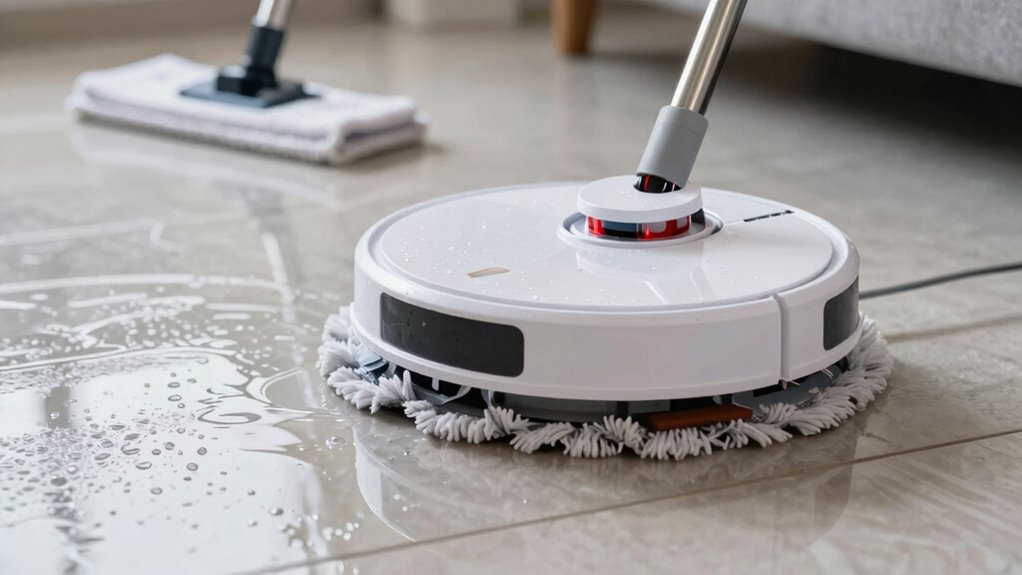
One common mistake that slows down floor drying is leaving excessive water on the surface after mopping. This happens when you use too much water or inappropriate cleaning solutions, making it harder for floors to dry quickly. Additionally, infrequent mopping can cause dirt and grime buildup, trapping moisture longer. Using the wrong cleaning solutions may leave residues that retain water or create sticky surfaces. Failing to adjust mopping frequency based on foot traffic or spills can prolong drying times. Finally, rushing through mopping without proper wringing or not using a dry mop afterward leaves excess moisture. To speed up drying, use less water, choose suitable cleaning solutions, and ensure proper mopping techniques. Avoid these mistakes to keep floors dry and ready faster.
Tips to Keep Floors Dry and Prevent Water Problems in the Future
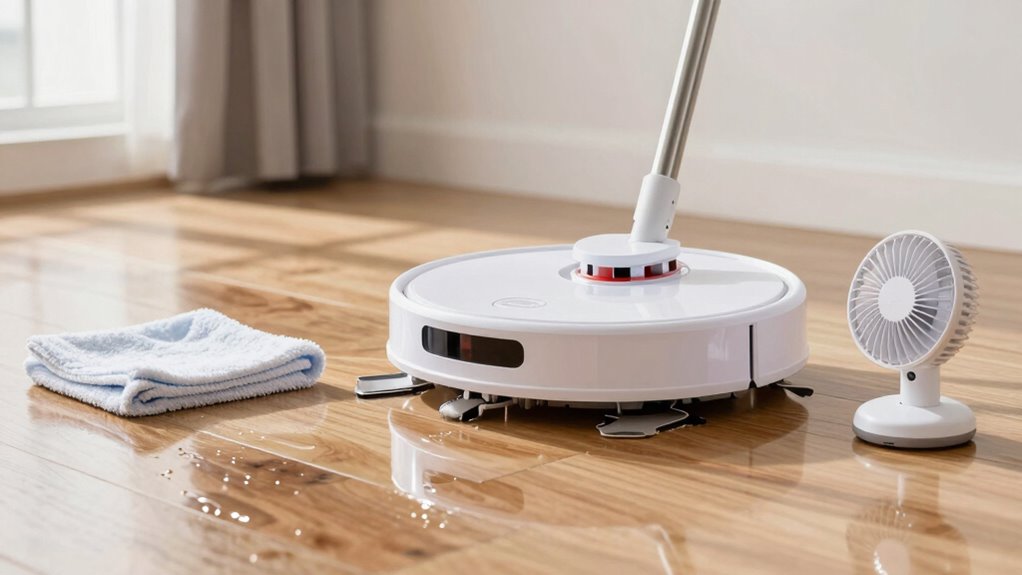
To keep floors dry and avoid water-related issues in the future, adopting proactive habits can make a big difference. Establishing regular cleaning schedules ensures you spot and address spills or moisture quickly, preventing water buildup. Consistently dry mopped or vacuumed floors reduce the risk of long-term damage. Additionally, consider applying floor sealing, which creates a protective barrier against moisture seepage and stains. Sealed floors are less prone to water absorption, making cleanup easier and maintaining their integrity over time. Pay attention to high-traffic areas, and reapply sealant as needed. These simple steps help keep your floors dry, extend their lifespan, and prevent future water problems, ensuring a cleaner, safer environment.
Frequently Asked Questions
Can Using Heat Improve the Floor Drying Process After Robot Mopping?
Yes, using heat can improve the floor drying process after robot mopping. Applying gentle heat accelerates evaporation, especially on absorbent floor materials like hardwood or tile. However, you should be cautious with heat application to avoid damage or warping. Use a controlled heat source, like a space heater or a fan set to low, to safely speed up drying without harming your floors.
Are There Specific Cleaning Solutions That Help Floors Dry Faster?
You can use cleaning agents designed to speed up drying, like those with built-in drying accelerants. These solutions help floors dry faster by reducing moisture retention. Look for products labeled as quick-drying or fast-evaporating. When you apply them, make certain you follow manufacturer instructions for the best results. This way, your floors will be ready to walk on sooner, saving you time and effort after robot mopping.
How Long Does It Typically Take for Different Floor Types to Dry Completely?
Imagine stepping onto your freshly mopped floor, eager to walk across it. Floor drying times vary with floor type variability, but generally, tile or laminate floors dry in 30-60 minutes, while hardwood or vinyl may take 1-2 hours. Factors like humidity and ventilation influence this. You can speed things up by opening windows or using fans. Patience ensures your floor’s surface is truly dry and safe to walk on.
Is It Safe to Walk on Floors Immediately After Robot Mopping and Drying?
It’s generally safe to walk on floors immediately after robot mopping and drying, but you should still check for wet spots to verify floor safety. Be cautious of slippery areas that might reduce foot traction, especially on smooth surfaces like tiles or hardwood. If the floor feels damp, wait a few minutes or use a fan to help it dry faster, reducing the risk of slips and falls.
Do Humidity Levels Affect the Speed of Floor Drying After Mopping?
Yes, humidity levels impact how quickly your floors dry after mopping. Higher humidity slows down the evaporation rate, meaning it takes longer for the floor to dry completely. To speed up drying, reduce indoor humidity with fans or air conditioning, and guarantee good airflow. Lower humidity creates a drier environment, helping your floors dry faster, so keeping the air dry is key for quicker evaporation.
Conclusion
By mastering these tips, you’ll dry your floors faster than lightning strikes! Say goodbye to soggy messes and endless waiting—your floors will be so dry, they’ll squeak with happiness. No more slipping or water stains, just sparkling, perfectly dry floors in record time. With the right tricks, you’ll outpace any robot or weather delay. Get ready to turn your home into a dry, safe sanctuary faster than you ever thought possible!